MELBOURNE — The sinking of the Iranian navy frigate IRIS Dena by a US submarine off the coast of Sri Lanka has sparked controversy in the Indo-Pacific, as Australia and India grapple with the impacts of the attack that have dragged both countries into the fallout.
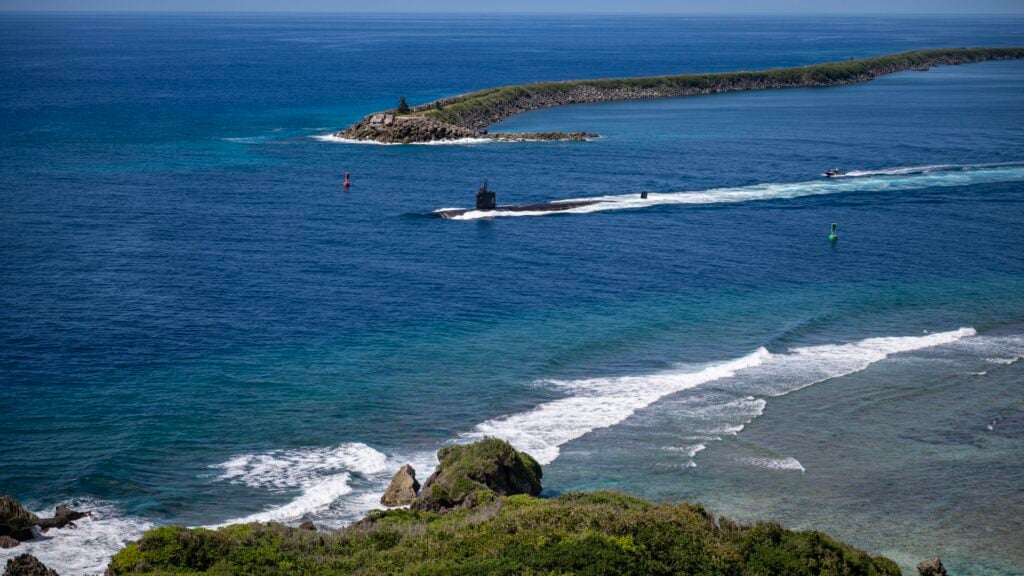
AUKUS ally Australia has confirmed that three Australian sailors were on board the nuclear-powered attack submarine when it struck the Iranian frigate, though Prime Minister Anthony Albanese has denied that they took part in the action. The attack left 148 of the IRIS Dena crew dead or missing.
“I can confirm also, though, that no Australian personnel have participated in any offensive action against Iran,” Albanese said in a television interview. “These are long-standing third country arrangements that have been in place for a long period of time, and what they do is ensure that Australian Defence Force personnel, where they’re embedded in third countries’ defence assets, they act in accordance with Australian law, with Australian policy, and that, of course, is taking place across the board.”
Royal Australian Navy personnel have been rotationally stationed on board the US Navy’s Pearl Harbor-based submarines in preparation for Australia acquiring its own nuclear-powered submarines under the AUKUS agreement.
There has been criticism in Australia about the presence on Australians on board the submarines during hostilities, with Australian Greens Party Senator David Shoebridge arguing that their presence alone meant that they were involved in the war with Iran.
Euan Graham, a senior fellow at the Australian Strategic Policy Institute (ASPI), told Breaking Defense that these revelations were “embarrassing,” given that Australia did not consider itself to be involved in the conflict with Iran.
And while he doubted if the Australians on board would have actively taken part in the attack without express permission from the Australian government, Graham added that “there is a question about how practically feasible it is for Australian crew to play passive roles given that a nuclear submarine has limited space and all crew members have important onboard functions, even if they are not directly involved in targeting or weapons release.”
Meanwhile, there has also been criticism of the attack from some quarters in India, as the Iranian ship had just taken part in a fleet review and multinational naval exercise in India before its sinking. Opposition Congress Party spokesperson Pawan Khera during a press conference accused Prime Minister Narendra Modi of maintaining a “criminal silence” over the killing of its guests in its “front yard.”
Graham said that the sinking of the frigate so soon after it had taken part at events in India would have likely irritated the South Asian country and believes that political and military ties between the US and India may be impacted for the duration of the war between the US and Iran.
Collin Koh, senior fellow and coordinator of projects (Naval/Maritime Affairs) at Singapore’s S. Rajaratnam School of International Studies agreed that domestic pressure could result in strains in the ties between the US and India, although it’s unlikely that it would result in the severing of security ties between both countries.
He also told Breaking Defense that the Iranian ship was a legitimate target and did not enjoy immunity just because it had been a guest at a foreign event, and it was not sailing in a location where combat was forbidden under international laws on maritime conflict.
“It doesn’t at all fall under any of the categories exempt from attack according to the San Remo Manual (on International Law Applicable to Armed Conflicts at Sea) and the ship is outside the territorial sea of Sri Lanka and nowhere in UNCLOS [United Nations Convention on the Law of the Sea] are there provisions that forbid military actions from taking place,” he said.
Breaking Defense Video