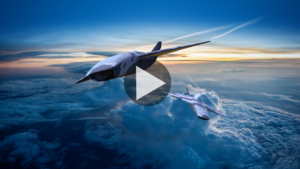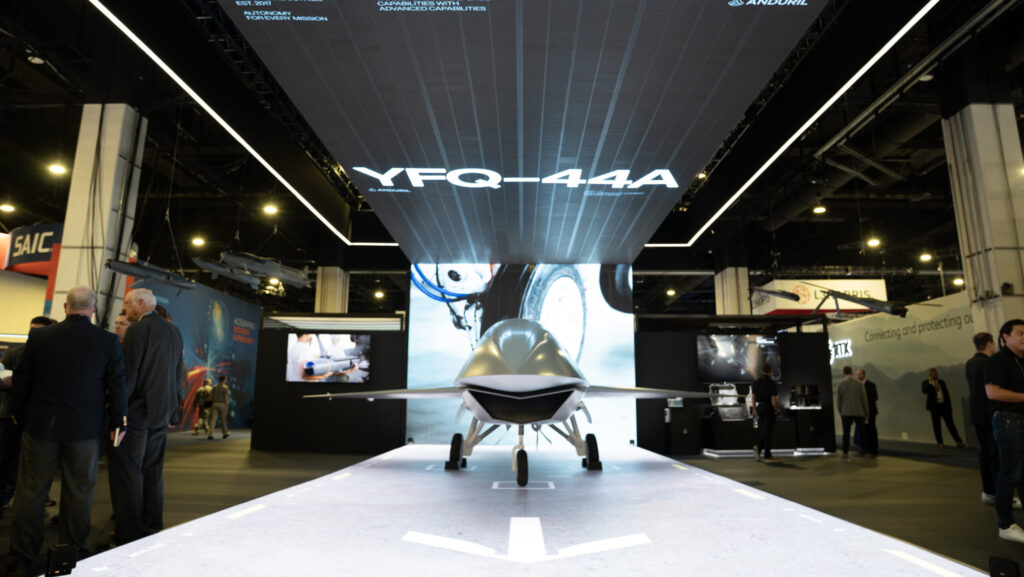
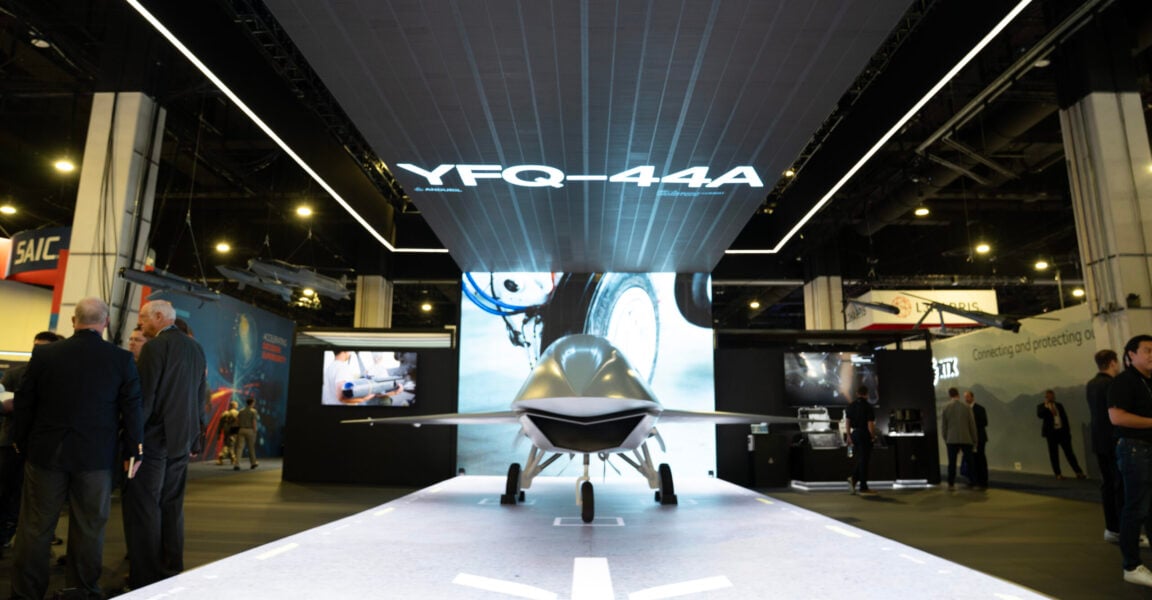
AFA 2025 — Anduril’s collaborative combat aircraft will most likely be ready to take its first flight in mid-October, the Air Force’s top civilian said Monday, as Anduril officials pointed to software as the major factor that will determine exactly when its YFQ-44A flies.
“The goal is to also get to a semi-autonomous first flight, which means takeoff and landing will be done via push of a button,” Diem Salmon, Anduril’s vice president for Air Dominance and Strike, said during a Monday briefing to reporters at the Air & Space Forces Association Air, Space and Cyber conference. “There is no stick and throttle. It will be able to execute the actual first flight profile pre-planned, using autonomy software on the vehicle.”
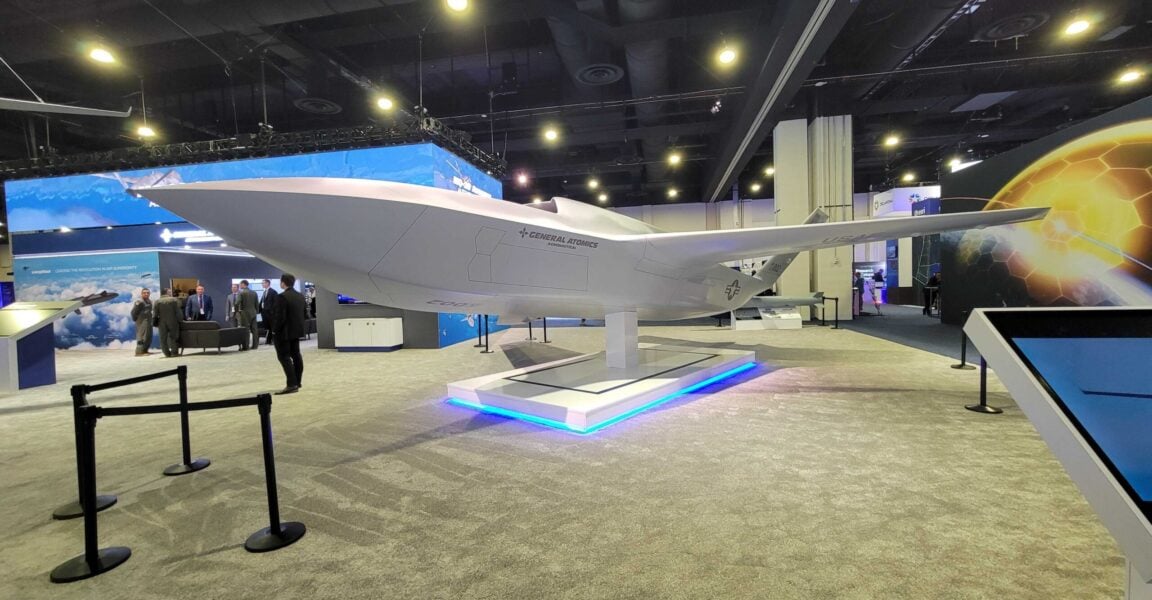
Both Anduril and General Atomics — the other company contracted to build an autonomous drone prototype for the first increment of the CCA competition — had previously set a target date of summer 2025 for first flight. In August, General Atomics’s YFQ-42A became the first of the two CCA competitors to hit the skies, raising questions about the timing for the inaugural flight for Anduril’s variant.
In a later roundtable with reporters, Air Force Secretary Troy Meink said that the YFQ-44A “should fly [in the] middle of October,” but provided no other details regarding ongoing testing of the drone.
Although the YFQ-44A’s first flight has slipped past the summer target date, Salmon said that the company is still “well ahead of the program schedule” for the milestone.
“There’s just a little bit more on the software development side that needs to get wrung out. So that’s what’s currently driving our schedule right now,” she said. “But again, I think that’s going to allow us to kind of leapfrog the overall test plan, because we are kind of tackling that hard part first.”
For the YFQ-42A, General Atomics could have conducted a semi-autonomous first flight, but the company’s philosophy is that every inaugural sortie is piloted by a human being, said Dave Alexander, the president of the company’s aeronautics unit.
Specifically, General Atomics has relied on its chief test pilot to manually operate its drones for almost every first flight in the company’s history, which allows the company to get additional feedback particularly for the ground handling of the aircraft.
“We’ve been doing this for like, 33 years. We know what we’re doing. And the way you move careful and the way you move quick, is you test when you can, as soon as you can, and learn. Don’t put off learning one day,” he told Breaking Defense in an interview. “So our tradition is that we manually fly every first flight.”
Alexander declined to comment on how many flights the YFQ-42A has performed so far, but said that initial feedback from flight tests has resulted mostly in slight tweaks to the aircraft’s software, not any major redesign requirements.
“So we learn from that, and within half a dozen flights, we’ll be back into full, semi-autonomous flight,” he said.
Unlike General Atomics, which has incrementally incorporated more autonomy into its drones over decades of operation, startup Anduril would have had to build additional infrastructure to have a human pilot fly the YFQ-44A. Specifically, it would have had to build a separate ground control station for human-controlled take off and landings, said Jason Levin, Anduril’s senior vice president of engineering for its Air Dominance and Strike unit.
“That would have had to be a new capability to develop. And actually we thought it would have been a step backwards, because we really want to get to the semi-autonomous thing,” he said.
New Details On Navy CCAs
Both General Atomics and Anduril — along with Northrop Grumman and Boeing — are also under contract for design concepts for the Navy’s CCA program, Breaking Defense reported earlier this month. Unlike the well-publicized Air Force CCA competition, the Navy’s program has remained largely under wraps and is still in its nascent stage, and both Alexander and Levin declined to provide specific details about the Navy contract.
In Anduril’s case, any future drone development efforts would involve a different air vehicle than the Fury, the design that was the basis for the Air Force’s CCA, Levin said.
“Instead they would use a lot of the capabilities inside Fury, which might be some of the avionics boxes, maybe some of the software, and then basically the design process and build process, [we] would leverage,” he said. “But if we were to build a Navy CCA, it would probably look nothing like a Fury.”
General Atomics has previously revealed concept art for a carrier-based drone known as Gambit 5, part of the company’s family of CCA designs it is marketing to the US military and other customers.
Alexander declined to comment on whether Gambit 5 would be the company’s offering for the Navy’s CCA program, stating that it would depend on the Navy’s final requirements. However, the company will draw on its experience building and flying YFQ-42A, along with previous design work on carrier-based drone competitions like the Navy’s MQ-25 uncrewed tanker, for any future Navy CCA design efforts, he said.
Michael Marrow contributed to this report.
PHOTOS: AFA 2025

 Gallery





Breaking Defense Video