Space

NRO needs AI to manage more than 200 (and counting) satellites, director says

Chris Scolese envisions an NRO constellation user saying, “‘I want to know how many ships are in the Taiwan Strait’ ... and then the system could go off and do it.”

ULA's Atlas V 551 rocket, carrying the SILENTBARKER/NROL-107 mission for the National Reconnaissance Office (NRO) and United States Space Force’s Space Systems Command (SSC), was successfully launched Sept. 10, 2023 from Cape Canaveral Space Force Station, Florida. (Photo credit: United Launch Alliance)

NATIONAL HARBOR, Md. — One of America’s most secretive spy agencies is wrestling with an embarrassment of riches, and it needs AI to help.

The National Reconaissance Office now has so many satellites in orbit — especially in its new and rapidly growing “proliferated Low Earth Orbit” (pLEO) constellation — that traditional, labor-intensive ground control can’t efficiently manage them all, said NRO director Chris Scolese.

“We need to use the benefits of artificial intelligence … to control our constellations, to make it a lot easier for the user,” Scolese told the INSA-AFCEA Intelligence & National Security Summit here.

“In 24 to 30 months … we’ve launched over 200 satellites,” he said. “We’re going to be launching several more, hopefully on Monday” — weather delays have made the schedule somewhat uncertain — “and then we have more yet to go this year.”

That 200 figure includes large numbers of pLEO birds but also many other types, including research satellites testing new AI and autonomy technologies on orbit.

“They’re on a couple of satellites called Big Impact that are testing autonomous operations of space systems, where they can make decisions,” Scolese said.

There’s little public information on Big Impact, and Scolese didn’t dive in further. But in July remarks [PDF] to the Potomac Officers Club, NRO’s deputy director said that “BIG IMPACT 2” had been launched in the first three months of 2025 and “consisted of two 6U CubeSats that the tested the use of small-scale optics and artificial intelligence applications on-orbit.”

Not all NRO AI is so exotic. As with many other national security agencies, much of its AI growth so far has been in the “back office,” using systems similar or even identical to commercial business software. But the agency is also moving out on more bespoke and secretive applications.

“We use AI a lot,” Scolese said. “We use it everywhere, from our personnel systems [to] our financial systems, [but] we also use it to, you know, monitor our constellations and … to help the user community better use our constellations.”

Historically, each satellite would be individually remote-controlled by human operators on the ground: “satellite X, do this,” as Scolese put it. Where NRO wants to go is to have the ability to ask a question, in plain English, of the satellite constellation as a whole, then have the AI figure out which individual sensors to turn to what angles at what times to capture the necessary data, then combine it into a single, clear report.

For example, he said, a user might say, “‘I want to know how many ships are in the Taiwan Strait’ … and then the system could go off and do it.”

A more automated approach has become essential for an agency that historically relied on manageably small numbers of large, expensive, and “exquisite” satellites, but which has ridden the boom in commercial space to launch large numbers of smaller, cheaper birds. More satellites gives more options to track more targets at once, study high-priority points of interest from multiple angles over longer times, and work around the loss of any one satellite to accident, breakdown, or hostile action.

But it also takes a lot more work to coordinate all those moving objects — satellites in medium to low orbits must move at roughly 7,000 to 17,000 mph to avoid falling out of the sky — and keep each sensor looking in the right direction at the right time. More satellites also generate much more data to make sense of, especially since multiple sensors may be gathering data of different types from different angles on the same target, and that target itself may be moving.

“They’re looking in the same region, but it’s going to look different each time they get there. How do you stitch all that data?” Scolese said, turning to the contractors in the audience. “Where do we need help? [It’s] taking in all of that data.”

Theresa Hitchens contributed to this report from Maui. Rough life.

PHOTOS: AFA 2025

PHOTOS: AFA 2025

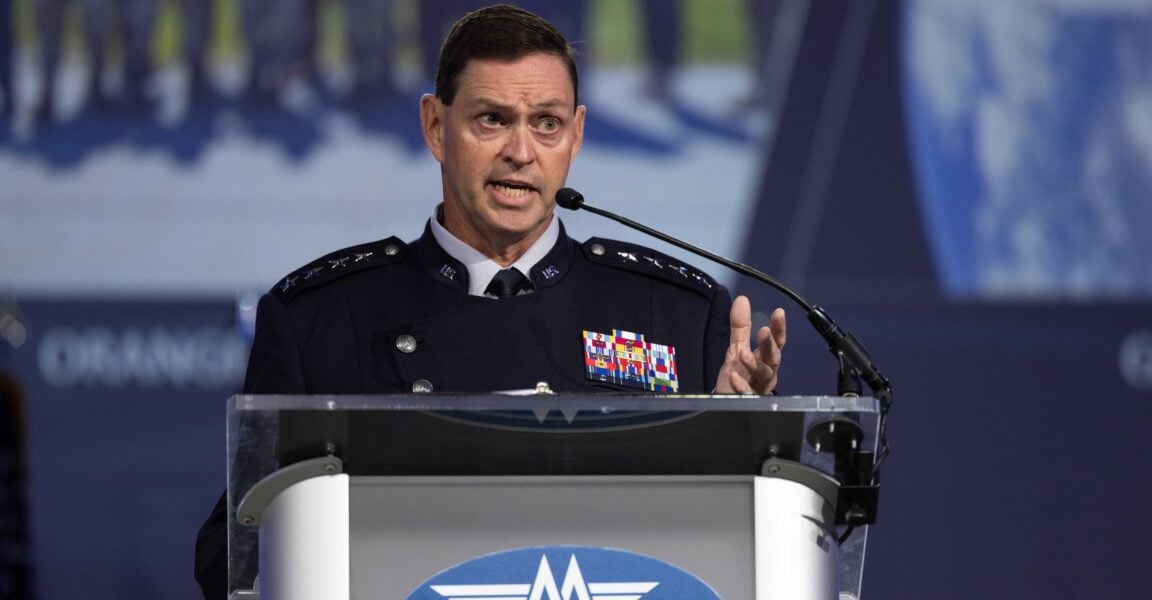
Space Force Chief of Space Operations Gen. B. Chance Saltzman delivers his keynote address, Sept. 23, 2025. (Jud McCrehin/Air & Space Forces Association)
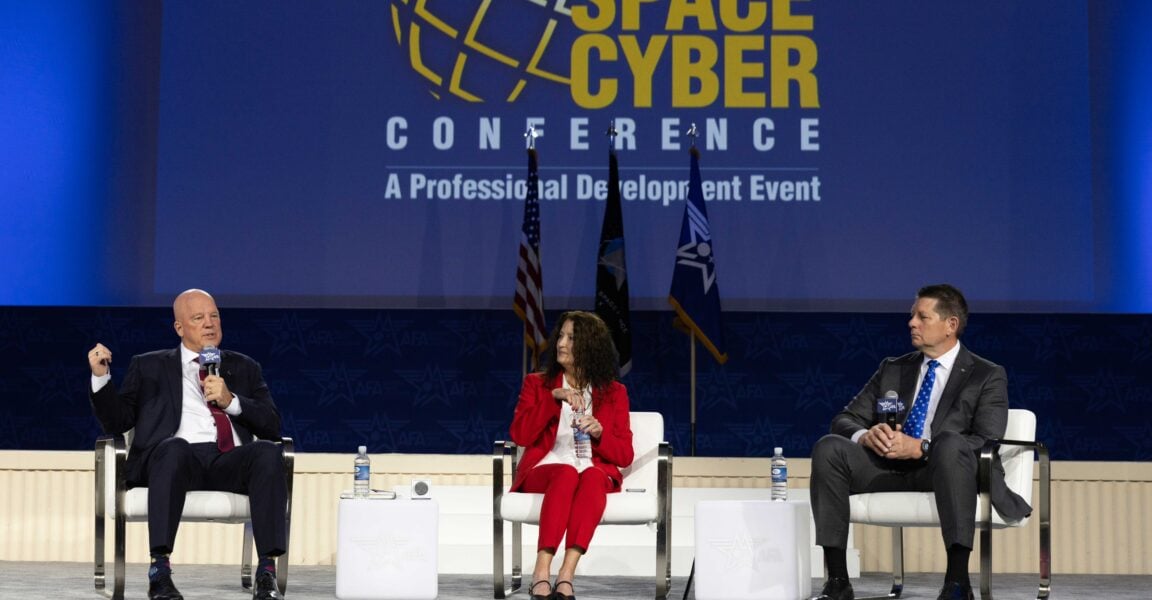
Jay Raymond (left), former Space Force chief of space operations, and David Thompson, former vice chief of space operations, speak on a panel moderated by Nina Armagno, former Space Force staff director, Sept. 23, 2025. (Jud McCrehin/Air & Space Forces Association)
Griffon Aerospace displays its Valiant vertical takeoff-and-landing drone, designed for field reconnaissance on the go, Sept. 23, 2025. (Aaron Mehta/Breaking Defense)
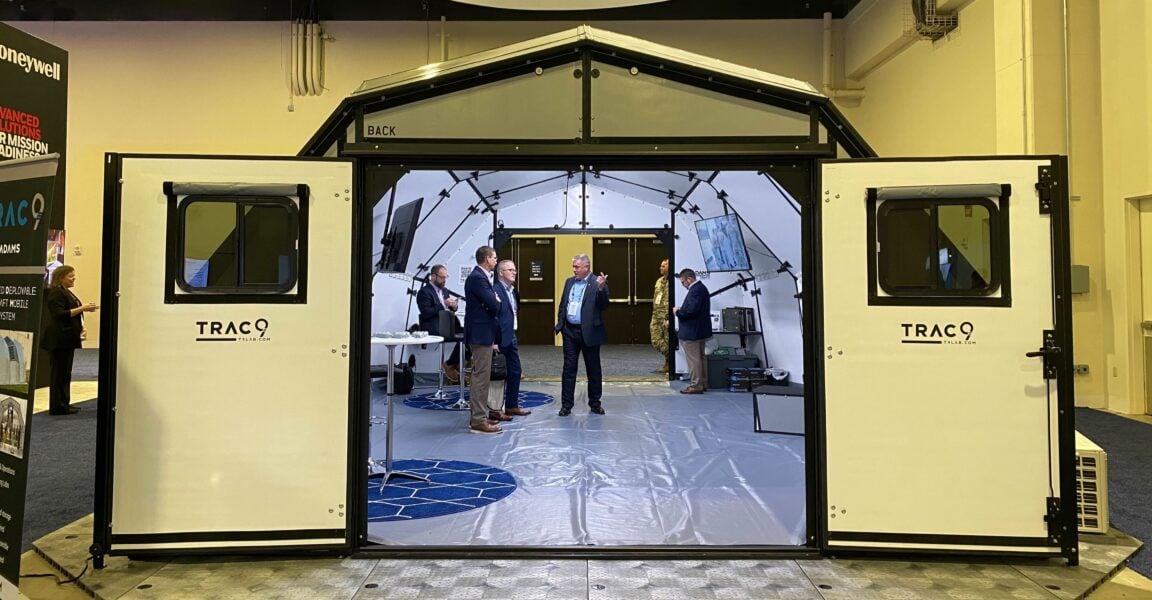
Trac9 shows its Advanced Deployable Aircraft Mobile System, a portable hangar, Sept. 23, 2025. (Aaron Mehta/Breaking Defense)
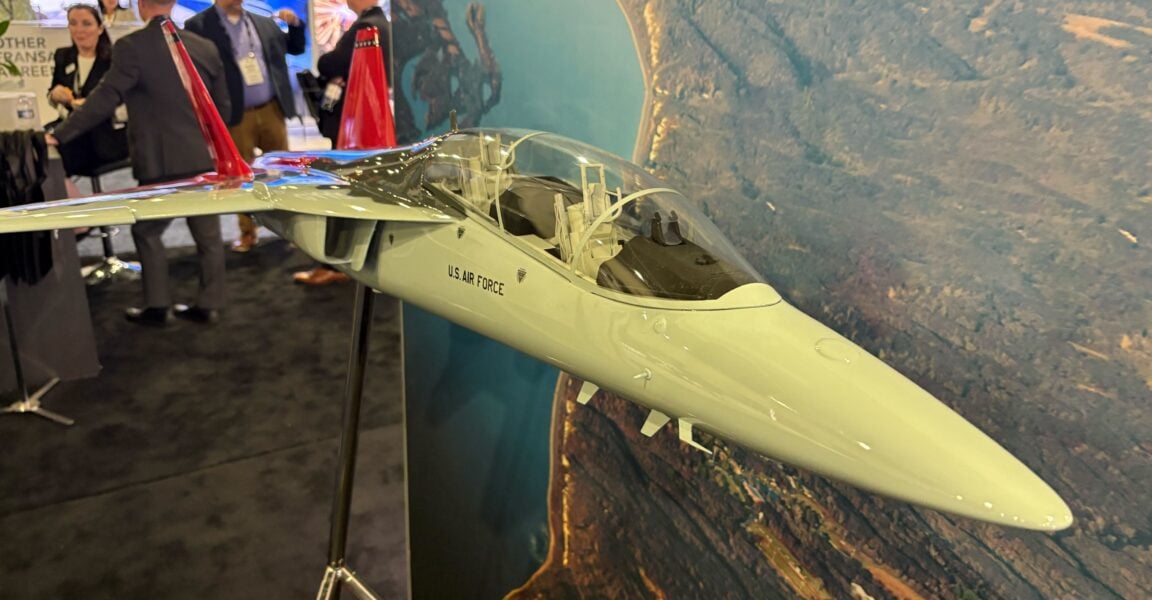
A model of Saab-Boeing's T-7 Red Hawk jet trainer, Sept. 23, 2025. (Daniel Woolfolk/Breaking Defense)
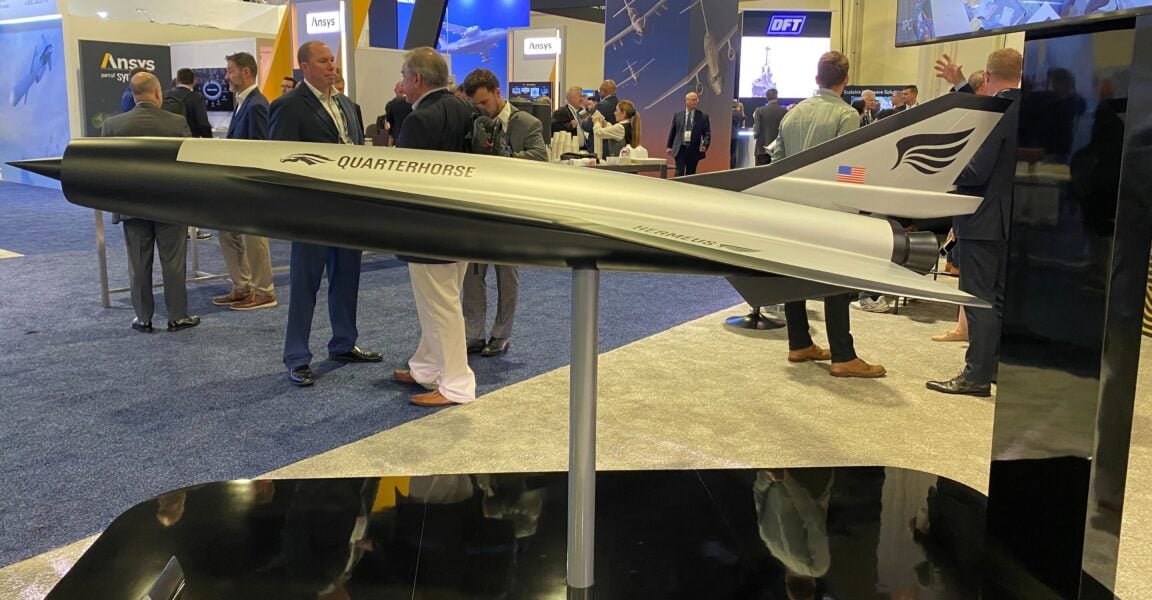
A 1/6th-size model of the Hermeus supersonic jet sits below a live feed of the company's production line in Atlanta, Ga., Sept. 23, 2025. (Aaron Mehta/Breaking Defense)
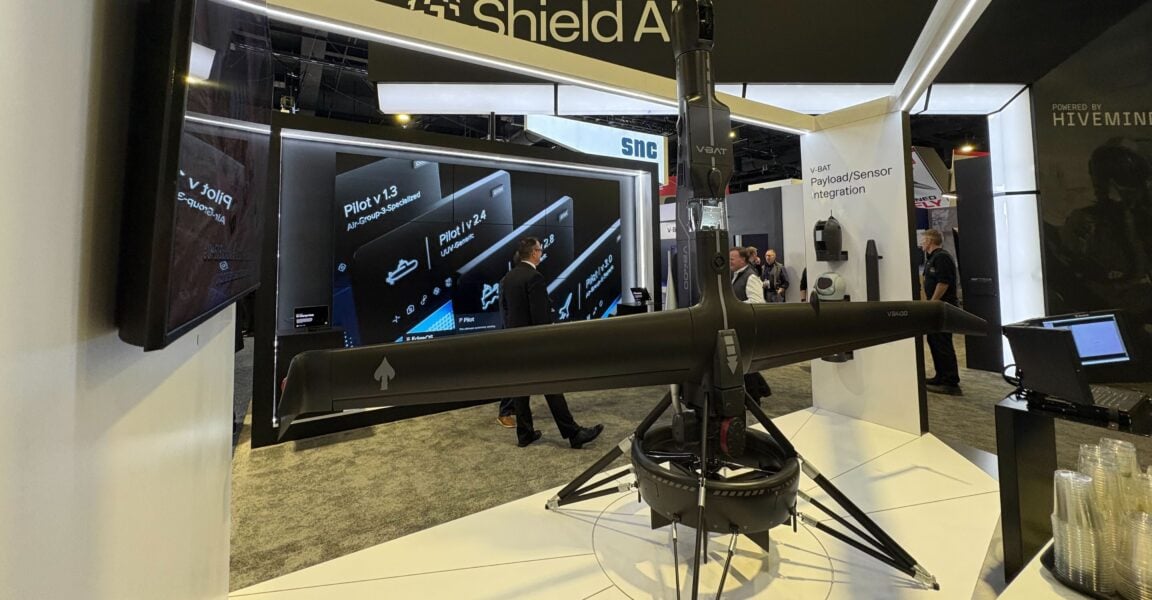
Shield AI's V-BAT vertical takeoff-and-landing drone, sits on display, Sept. 23, 2025. (Daniel Woolfolk/Breaking Defense)
The Air Force Research Laboratory displays a missile designed under its "Angry Tortoise" program, a partnership with Ursa Major, that looks to develop hypersonic missiles that can be deployed en masse for millions of dollars less than more traditional munitions, Sept. 22, 2025. (Rachel Cohen/Breaking Defense)
Anduril’s YFQ-44A Fury drone, an entrant in the Collaborative Combat Aircraft drone wingman program, sits on display, Sept. 22, 2025. (Daniel Woolfolk/Breaking Defense)
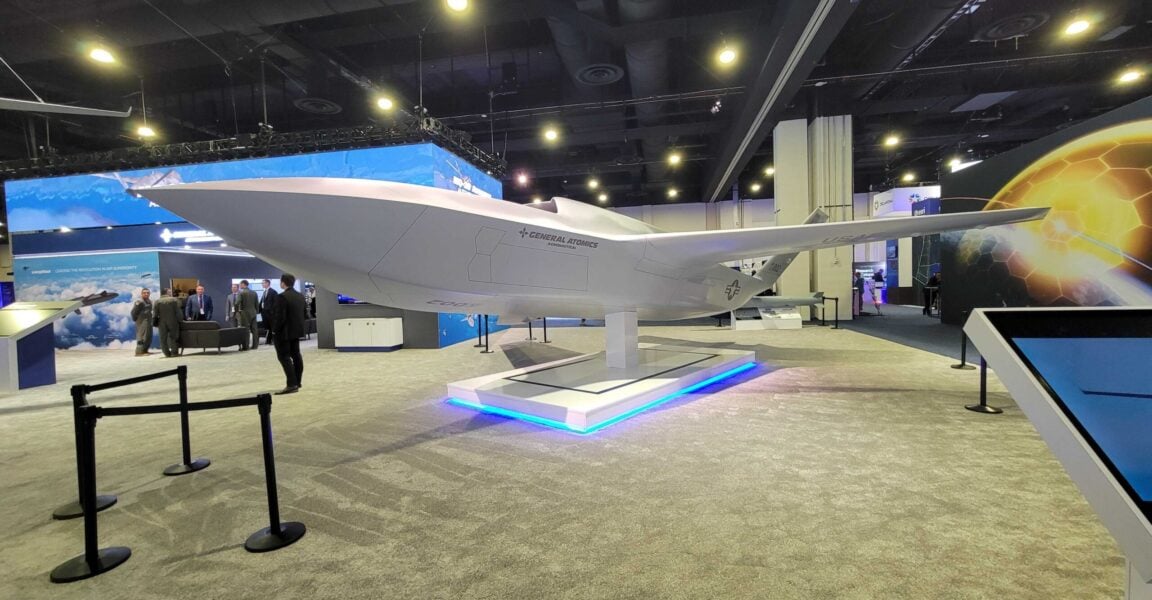
General Atomics’ YFQ-42A, another CCA entrant, sits on display, Sept. 22, 2025. (Rachel Cohen/Breaking Defense)
JetCat shows several small jet engines designed to power munitions or kamikaze drones at a fraction of the cost of larger engines, Sept. 22, 2025. (Rachel Cohen/Breaking Defense)
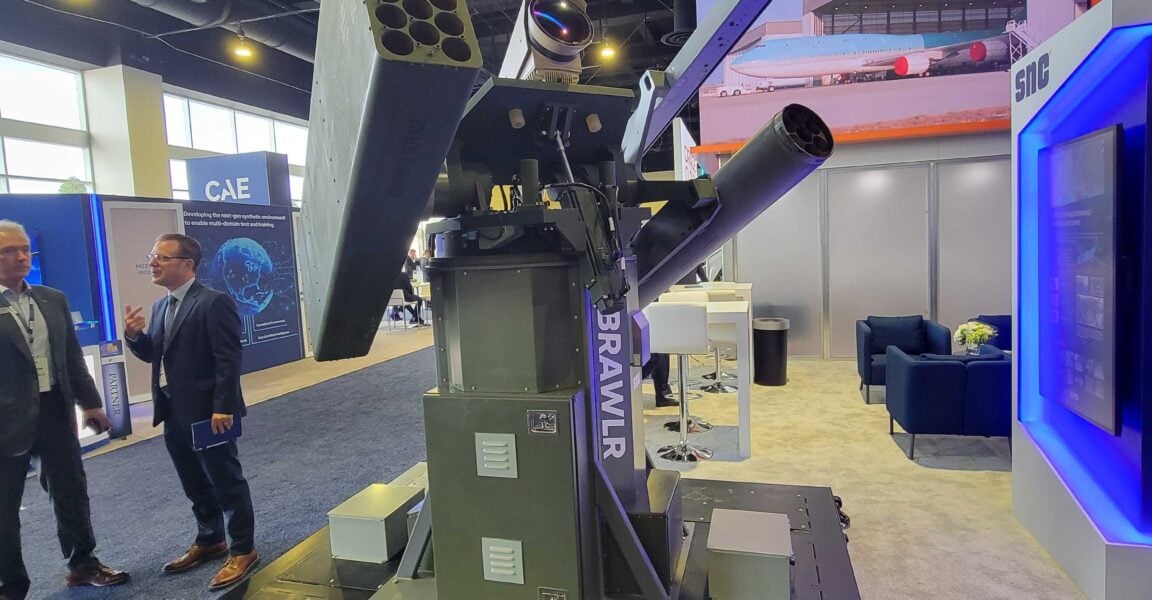
Sierra Nevada Corp.’s Battery Revolving Adaptive Weapons Launcher (BRAWLR), a reconfigurable counter-drone system in use by at least one classified foreign customer, makes its defense trade show debut, Sept. 22, 2025. (Rachel Cohen/Breaking Defense)
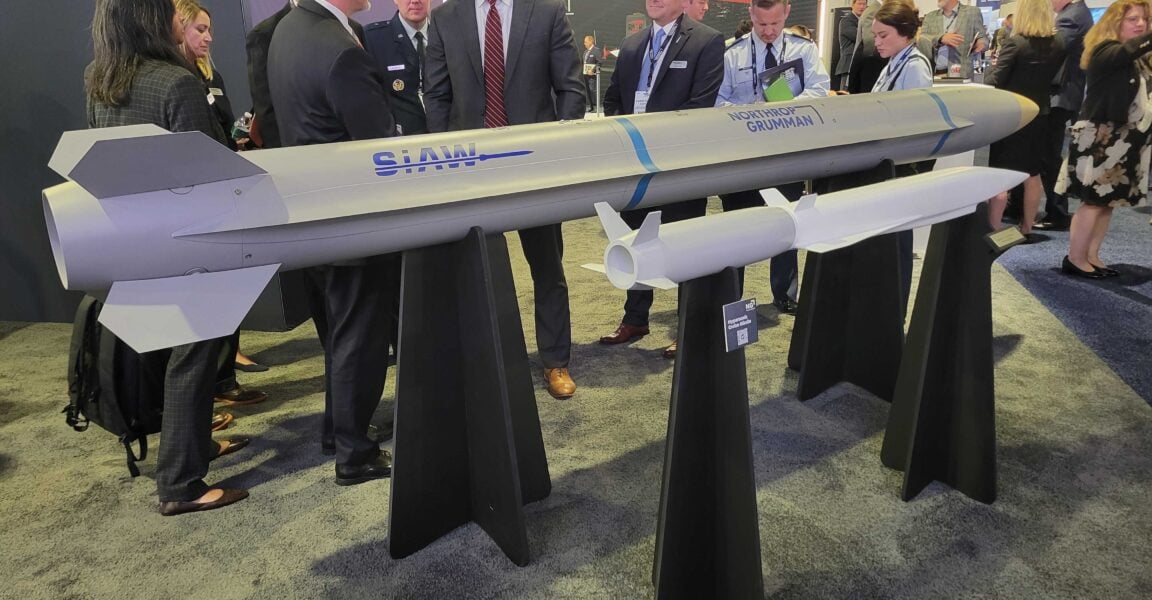
Air Force Undersecretary Matt Lohmeier visits the Northrop Grumman booth, where the Stand-In Attack Weapon and Hypersonic Cruise Missile are on display, Sept. 22, 2025. (Rachel Cohen/Breaking Defense)
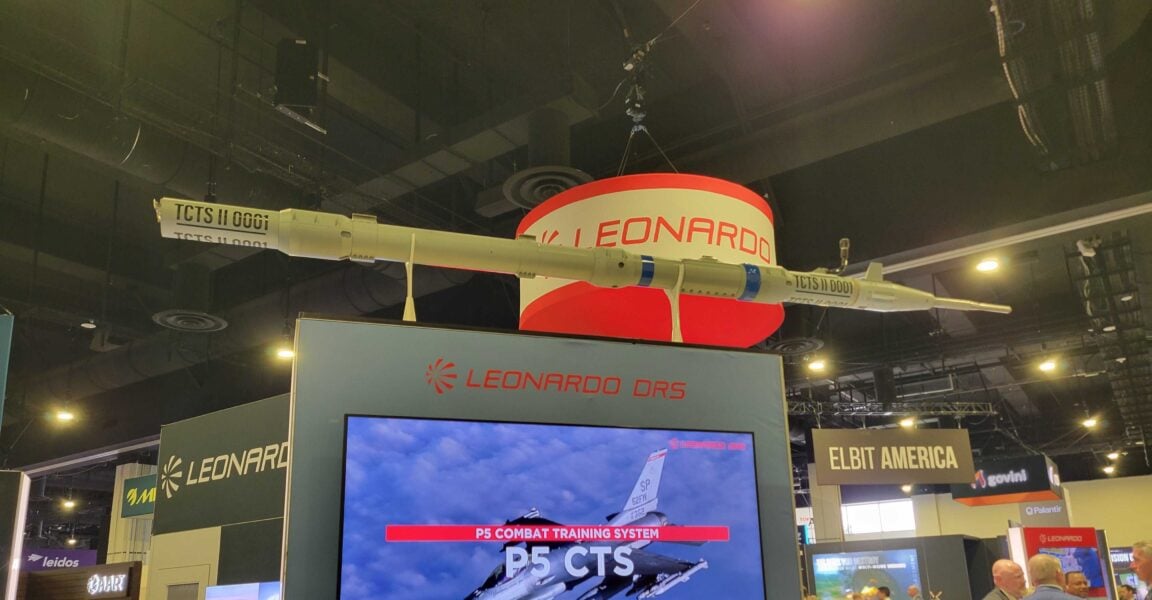
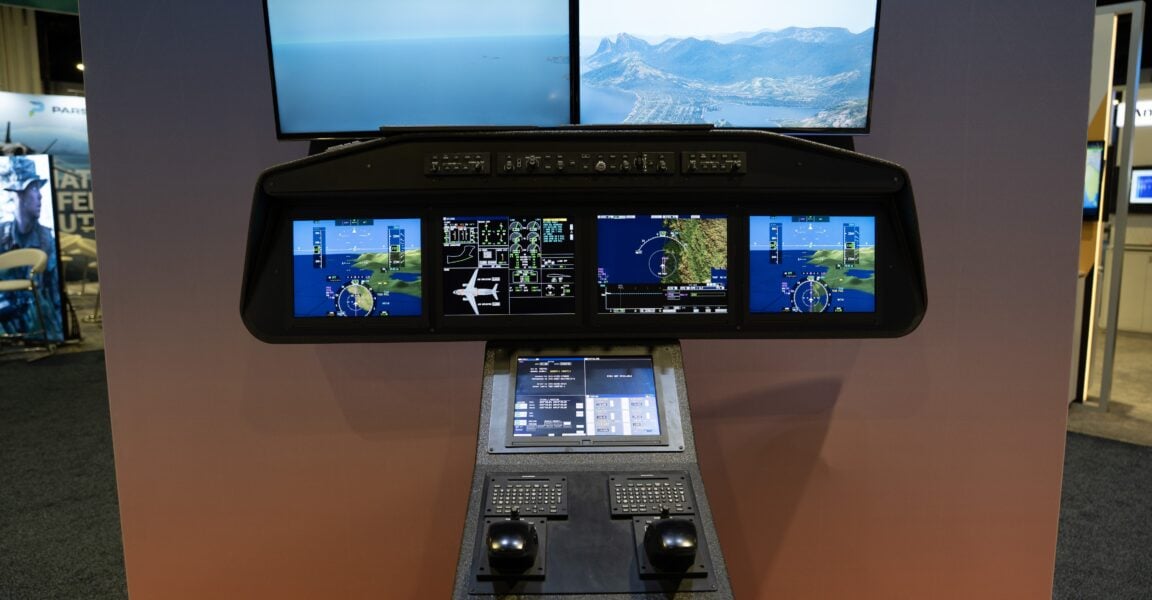
The Tactical Combat Training System Increment II connects live aircraft to a simulator in training, allowing remote troops to practice in real-world conditions. (Rachel Cohen/Breaking Defense)

Could you fly Embraer’s C-390? (Daniel Woolfolk/Breaking Defense)

Embraer aims to convince the Air Force that its C-390, shown in miniature on Sept. 24, 2025, could be a boon to the service’s airlift fleet. (Daniel Woolfolk/Breaking Defense)
J.P. Nauseef, president and chief executive officer of JobsOhio speaks during ASC, Sept. 24, 2025. (Jud McCrehin/Air & Space Forces Association)
Attendees traverse the show floor on the final day of the conference, Sept. 24, 2025. (Daniel Woolfolk/Breaking Defense)
Attendees mill about near the main show floor doors at the Gaylord National Resort & Convention Center, Oxon Hill, Md., Sept. 24, 2025. (Daniel Woolfolk/Breaking Defense)
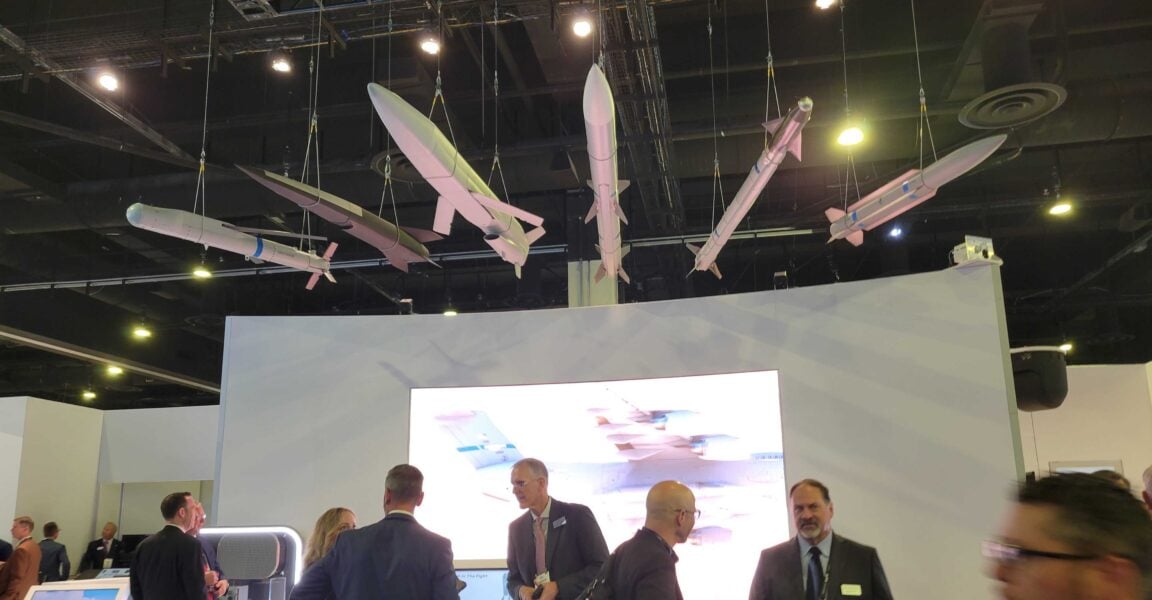
RTX shows off munitions at its booth on the show floor, Sept. 22, 2025. (Rachel Cohen/Breaking Defense)

PHOTOS: AFA 2025

PHOTOS: AFA 2025

Space Force Chief of Space Operations Gen. B. Chance Saltzman delivers his keynote address, Sept. 23, 2025. (Jud McCrehin/Air & Space Forces Association)
Jay Raymond (left), former Space Force chief of space operations, and David Thompson, former vice chief of space operations, speak on a panel moderated by Nina Armagno, former Space Force staff director, Sept. 23, 2025. (Jud McCrehin/Air & Space Forces Association)
Griffon Aerospace displays its Valiant vertical takeoff-and-landing drone, designed for field reconnaissance on the go, Sept. 23, 2025. (Aaron Mehta/Breaking Defense)
Trac9 shows its Advanced Deployable Aircraft Mobile System, a portable hangar, Sept. 23, 2025. (Aaron Mehta/Breaking Defense)
A model of Saab-Boeing's T-7 Red Hawk jet trainer, Sept. 23, 2025. (Daniel Woolfolk/Breaking Defense)
A 1/6th-size model of the Hermeus supersonic jet sits below a live feed of the company's production line in Atlanta, Ga., Sept. 23, 2025. (Aaron Mehta/Breaking Defense)
Shield AI's V-BAT vertical takeoff-and-landing drone, sits on display, Sept. 23, 2025. (Daniel Woolfolk/Breaking Defense)
The Air Force Research Laboratory displays a missile designed under its "Angry Tortoise" program, a partnership with Ursa Major, that looks to develop hypersonic missiles that can be deployed en masse for millions of dollars less than more traditional munitions, Sept. 22, 2025. (Rachel Cohen/Breaking Defense)
Anduril’s YFQ-44A Fury drone, an entrant in the Collaborative Combat Aircraft drone wingman program, sits on display, Sept. 22, 2025. (Daniel Woolfolk/Breaking Defense)
General Atomics’ YFQ-42A, another CCA entrant, sits on display, Sept. 22, 2025. (Rachel Cohen/Breaking Defense)
JetCat shows several small jet engines designed to power munitions or kamikaze drones at a fraction of the cost of larger engines, Sept. 22, 2025. (Rachel Cohen/Breaking Defense)
Sierra Nevada Corp.’s Battery Revolving Adaptive Weapons Launcher (BRAWLR), a reconfigurable counter-drone system in use by at least one classified foreign customer, makes its defense trade show debut, Sept. 22, 2025. (Rachel Cohen/Breaking Defense)
Air Force Undersecretary Matt Lohmeier visits the Northrop Grumman booth, where the Stand-In Attack Weapon and Hypersonic Cruise Missile are on display, Sept. 22, 2025. (Rachel Cohen/Breaking Defense)
The Tactical Combat Training System Increment II connects live aircraft to a simulator in training, allowing remote troops to practice in real-world conditions. (Rachel Cohen/Breaking Defense)

Could you fly Embraer’s C-390? (Daniel Woolfolk/Breaking Defense)

Embraer aims to convince the Air Force that its C-390, shown in miniature on Sept. 24, 2025, could be a boon to the service’s airlift fleet. (Daniel Woolfolk/Breaking Defense)
J.P. Nauseef, president and chief executive officer of JobsOhio speaks during ASC, Sept. 24, 2025. (Jud McCrehin/Air & Space Forces Association)
Attendees traverse the show floor on the final day of the conference, Sept. 24, 2025. (Daniel Woolfolk/Breaking Defense)
Attendees mill about near the main show floor doors at the Gaylord National Resort & Convention Center, Oxon Hill, Md., Sept. 24, 2025. (Daniel Woolfolk/Breaking Defense)
RTX shows off munitions at its booth on the show floor, Sept. 22, 2025. (Rachel Cohen/Breaking Defense)