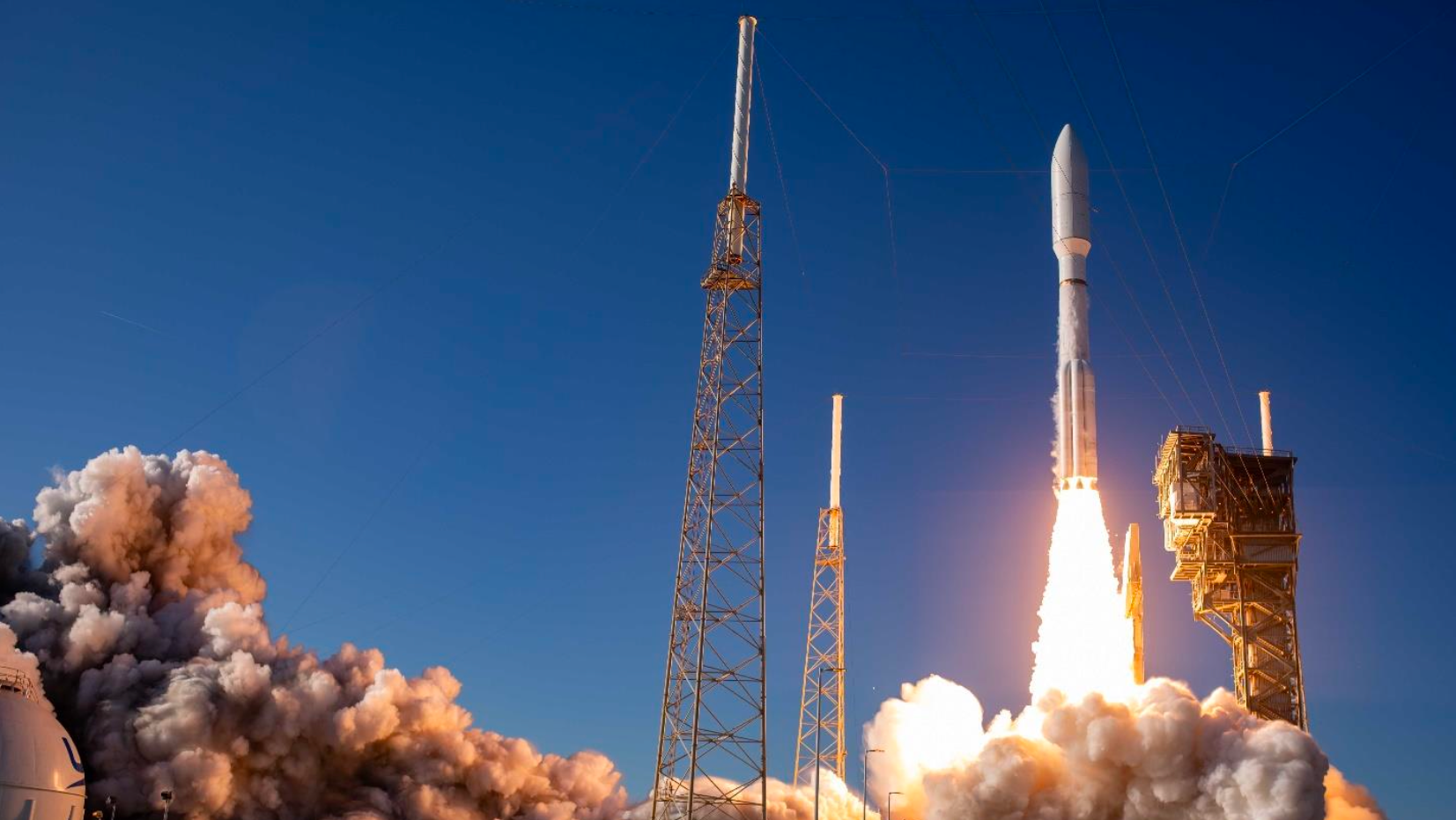
Space Force taps SpaceX, ULA for first set of critical launches beyond FY27
SpaceX was assigned seven NSSL Phase 3 Lane 2 launches under a contract worth $714 million; ULA two launches worth $428 million.
Both of the newly named companies are focusing heavily on the national security market for space-related capabilities.
Chris Scolese envisions an NRO constellation user saying, “‘I want to know how many ships are in the Taiwan Strait’ ... and then the system could go off and do it.”
The bill also directs the Director of National Intelligence to appoint a single official to oversee the acquisition of commercially available information by all IC agencies.
Lt. Gen. DeAnna Burt, the Space Force’s deputy chief of space operations for operations, cyber and nuclear, also said the service expects to complete an analysis of alternatives by this fall for a separate but related effort to track airborne targets from the heavens.
Contracts for the next-generation Tranche 3, which will replace the earliest Transport Layer satellites, have been paused until the Space Force study is completed, five sources with knowledge of the program told Breaking Defense.
The MILNET contract with SpaceX is being paid for by the Space Force but managed by the National Reconnaissance Office, sources said.
The June 16 letter asserts that the cuts will undercut the Pentagon's Golden Dome plan to create an air and missile defense shield over the US homeland.
Beyond the potential consequences for the US industry, a reduction in NRO acquisition of commercial imagery also could directly impact US and allied military commanders in the field and US agencies charged with disaster relief, industry and government officials warned.
Based on its orbital pattern, independent astronomer Marco Langbroek said he suspected the new satellite is joining other Russian "sleeping interceptors."
Muon Space CEO Jonny Dyer told Breaking Defense that while the five-year-old startup is working in both the civil and defense sectors, the growth trend is on the defense side.
Chief of Space Operations Gen. Chance Saltzman stressed that the commercial imagery the Space Force gathers will not be used directly for targeting, rather to allow commanders to rapidly understand evolving situations.
During a HASC strategic forces subcommittee meeting Wednesday, Ranking Member Rep. Seth Moulton, D-Mass., expressed concern that OMB has "slashed" NRO's budget for acquiring commercial imagery.
"Going back to pre-Ukraine supplemental procurement levels would see the USG buying only a small fraction of the US commercial SAR capacity available; hardly enough to support combat operations or sustain a healthy US industrial base," said David Gauthier.