Air Warfare

Why Anduril, RTX are pushing new ground-launched munition variants

“Over the past several months, it's been very clear that the priority for” Pentagon and congressional leadership “is fixing our munitions gap,” said Anduril’s Diem Salmon.

Anduril's Barracuda missile (left) and RTX's Stormbreaker (right), both newly launched from the ground in these handout photos. (Original images Anduril, RTX; Graphic Breaking Defense)

WASHINGTON — Defense contractors Anduril and RTX both unveiled ground-launched versions of existing munitions at the AFA conference outside Washington last week, pointing to growing market demand for the weapons amid trials on the modern battlefield.  

Some of that demand is coming from the US government. Just one day after the conference ended, the Republican majority for the Senate Armed Services Committee on Thursday praised Anduril’s offering in particular, pledging that a dedicated military program would procure the new capability.

“There is currently no program for these types of missiles, but there will be soon,” the Republican SASC account posted on X, adding that $25 million set aside in President Donald Trump’s One Big Beautiful Bill will “accelerate development” of the class of weapons.

Anduril announced at the AFA conference that it is updating the company’s Barracuda-500 cruise missile to launch from the ground. When the Barracuda-500’s air-launched version was announced last year, the company said the weapon could offer a range over 500 nautical miles and carry more than 100 pounds of payload. 

“Over the past several months, it’s been very clear that the priority” for Pentagon and congressional leadership “is fixing our munitions gap,” Diem Salmon, Anduril’s vice president for Air Dominance and Strike, said in a briefing with reporters Tuesday. “I think this has picked up actually in terms of prioritization and focus recently, and the desire is to finally fix what has been a problem in our missile inventory that’s decades old at this point.”

RTX subsidiary Raytheon also adapted one of its own existing munitions for a surface-launched role and unveiled it at AFA: the GBU-53/B StormBreaker, also known as the 250-pound class Small Diameter Bomb II, that can be launched from Air Force and Navy aircraft. 

“Recent global conflicts have highlighted the need for a smart, ground-launched, precision strike weapon that can perform in GPS-contested areas,” Sam Deneke, Raytheon’s president of Air & Space Defense Systems, said in a company press release published on Wednesday. “StormBreaker is a composable weapon, which allows it to be customized to meet mission demands. Using the foundational components of air-launched StormBreaker allowed us to move faster than ever before, going from concept to test flight in under two months.”

The Pentagon and foreign customers have shown keen interest in the StormBreaker. For example, an Air Force notice published last year that outlined a plan for the next dozen production lots set an annual manufacturing rate target of up to 2,240 units.

The war in Ukraine in particular has highlighted the need for various munitions, and modes of launching them, that can strike long-distance targets. Ukrainian defense firm Fire Point, for example, recently unveiled a ground-launched cruise missile called Flamingo that can carry a roughly 2,500-pound warhead and travel over 1,800 miles. 

Steve Milano, Anduril’s senior director for advanced effects, said alongside Salmon in the Tuesday briefing that the company is poised to manufacture thousands of Barracuda-500s as early as next year, cautioning that “demand needs to solidify for us to make the investments that are necessary.”

A key opportunity, according to Milano, is the Air Force’s new Family of Affordable Mass Missiles program, which fiscal 2026 budget documents showed a desire to buy approximately 3,000 units using One Big Beautiful Bill funds, otherwise known as reconciliation. Beyond the Pentagon, Milano said that there’s “a lot” of demand from international customers, leading to co-development agreements like one underway with Taiwan.

PHOTOS: AFA 2025

PHOTOS: AFA 2025

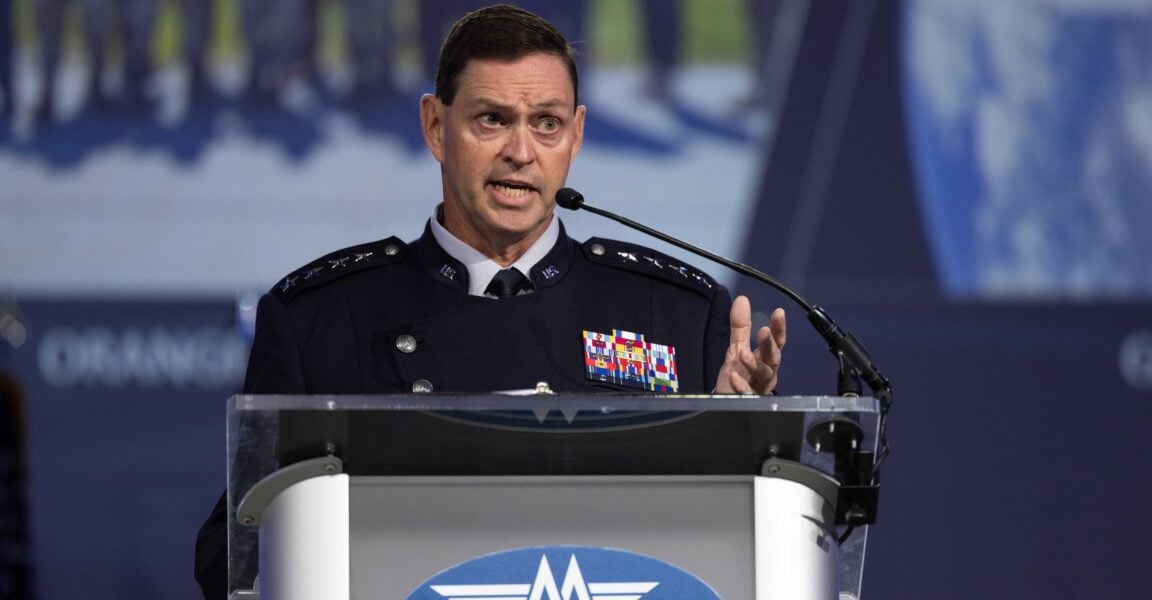
Space Force Chief of Space Operations Gen. B. Chance Saltzman delivers his keynote address, Sept. 23, 2025. (Jud McCrehin/Air & Space Forces Association)
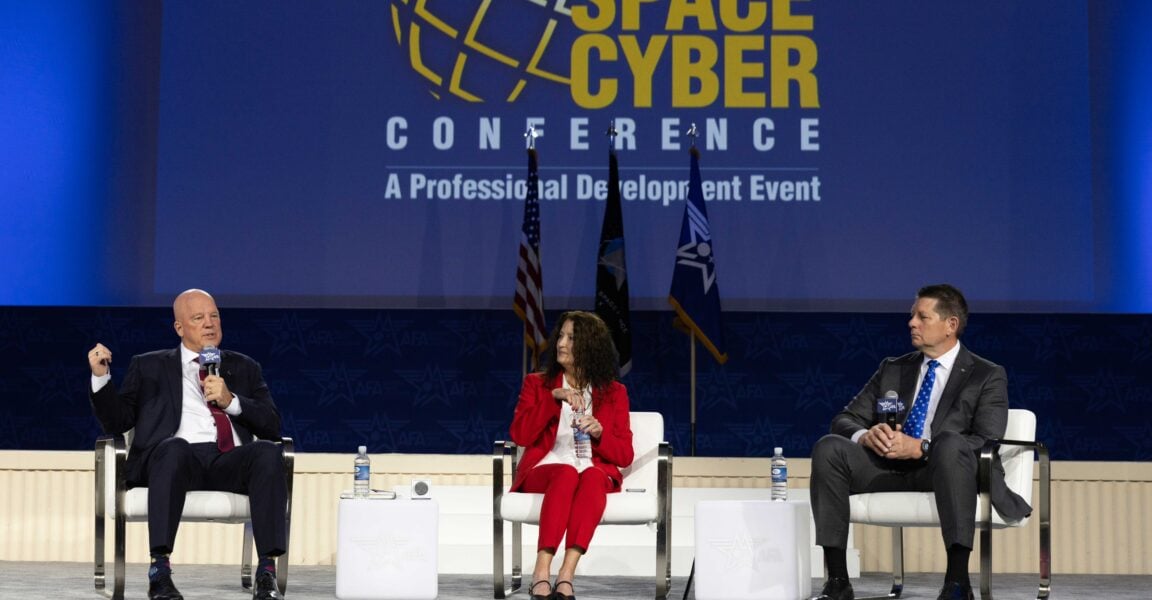
Jay Raymond (left), former Space Force chief of space operations, and David Thompson, former vice chief of space operations, speak on a panel moderated by Nina Armagno, former Space Force staff director, Sept. 23, 2025. (Jud McCrehin/Air & Space Forces Association)
Griffon Aerospace displays its Valiant vertical takeoff-and-landing drone, designed for field reconnaissance on the go, Sept. 23, 2025. (Aaron Mehta/Breaking Defense)
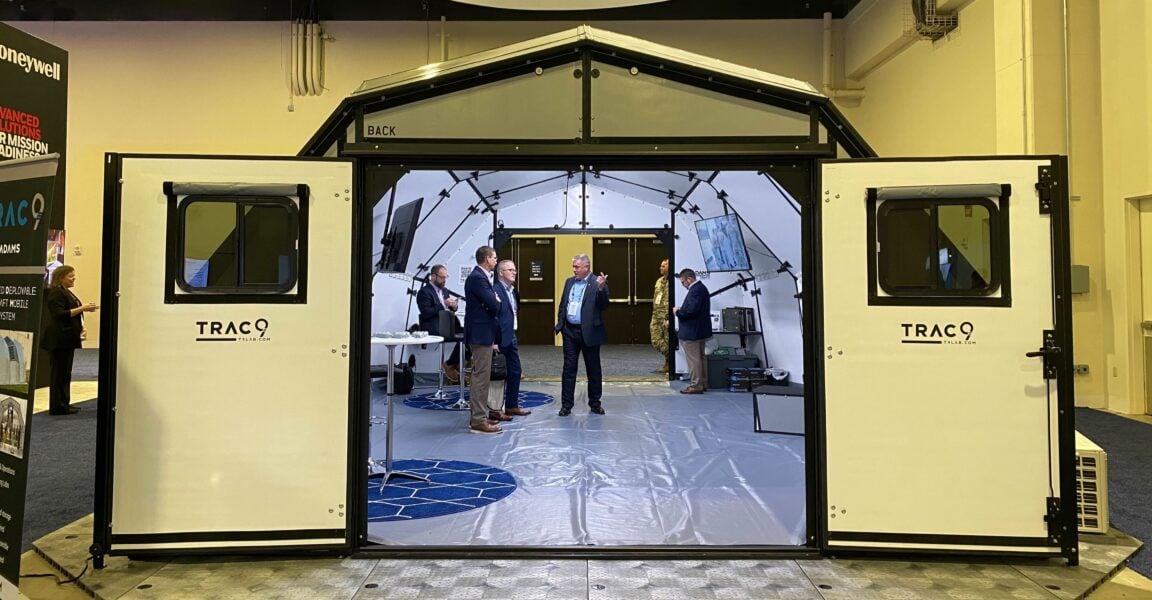
Trac9 shows its Advanced Deployable Aircraft Mobile System, a portable hangar, Sept. 23, 2025. (Aaron Mehta/Breaking Defense)
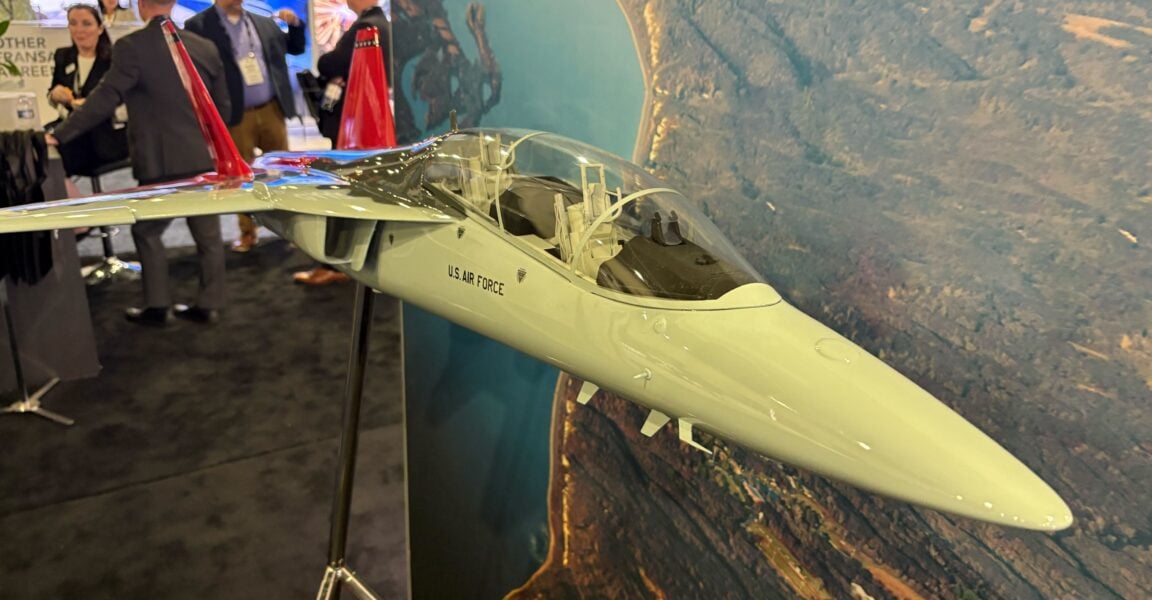
A model of Saab-Boeing's T-7 Red Hawk jet trainer, Sept. 23, 2025. (Daniel Woolfolk/Breaking Defense)
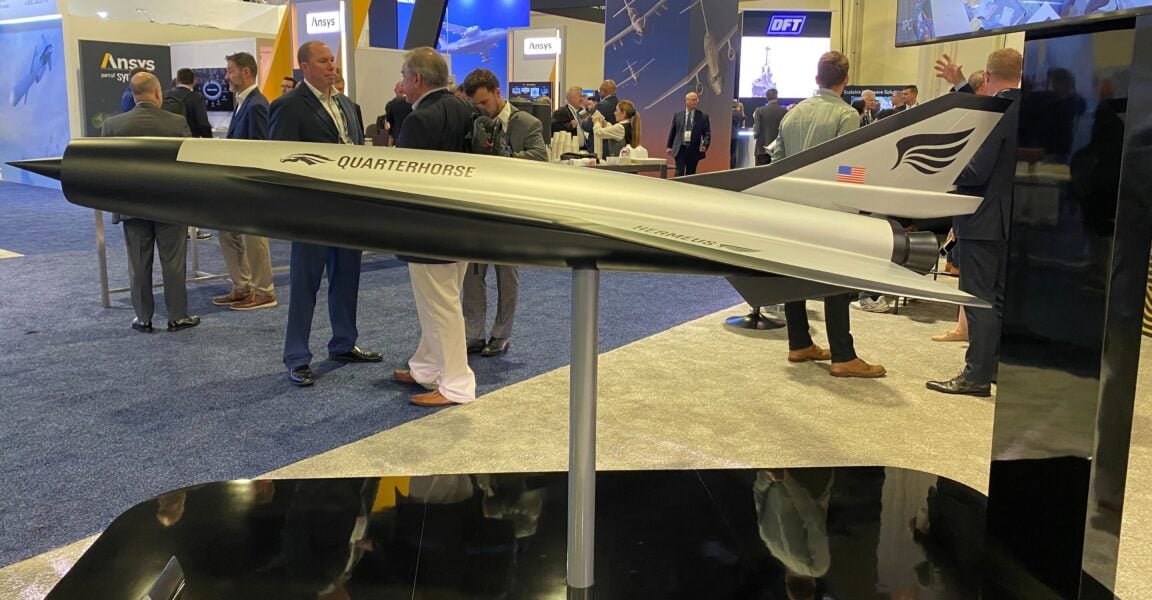
A 1/6th-size model of the Hermeus supersonic jet sits below a live feed of the company's production line in Atlanta, Ga., Sept. 23, 2025. (Aaron Mehta/Breaking Defense)
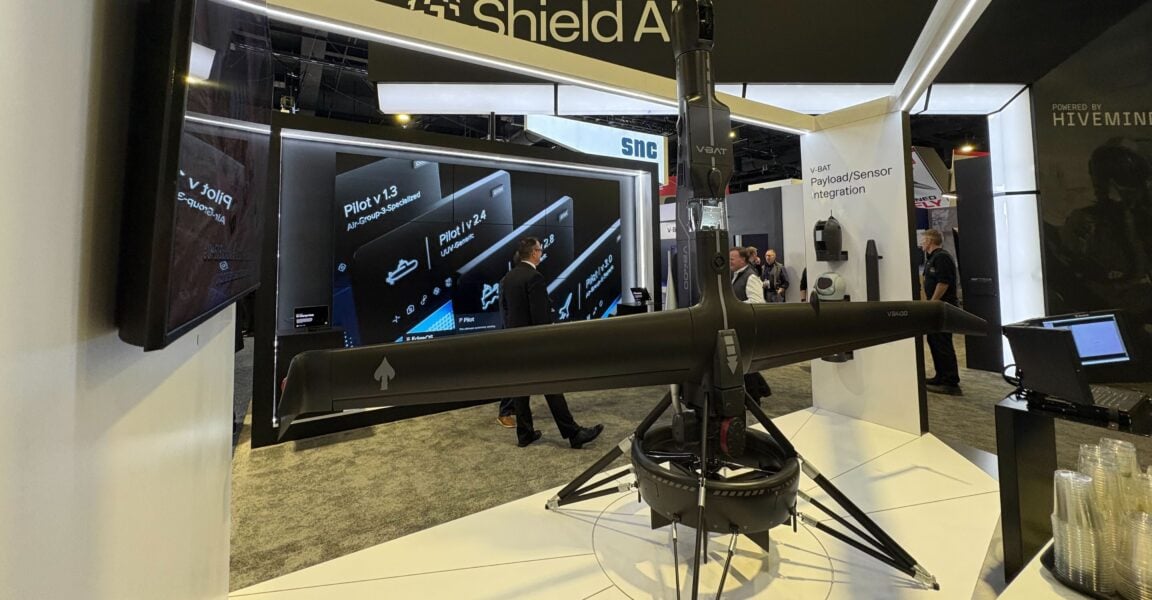
Shield AI's V-BAT vertical takeoff-and-landing drone, sits on display, Sept. 23, 2025. (Daniel Woolfolk/Breaking Defense)
The Air Force Research Laboratory displays a missile designed under its "Angry Tortoise" program, a partnership with Ursa Major, that looks to develop hypersonic missiles that can be deployed en masse for millions of dollars less than more traditional munitions, Sept. 22, 2025. (Rachel Cohen/Breaking Defense)
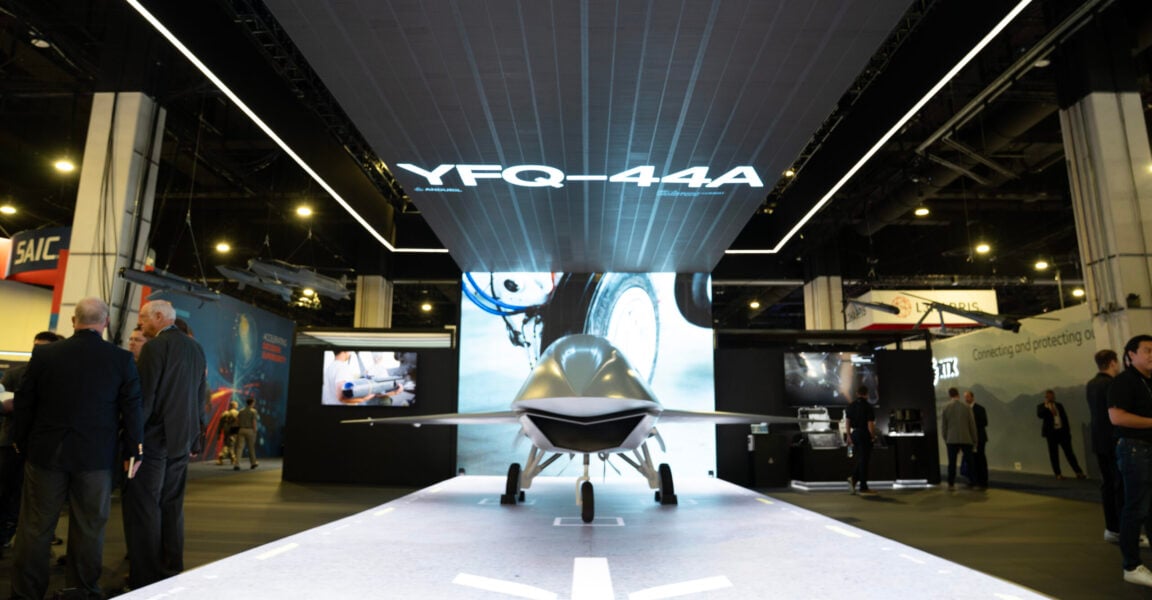
Anduril’s YFQ-44A Fury drone, an entrant in the Collaborative Combat Aircraft drone wingman program, sits on display, Sept. 22, 2025. (Daniel Woolfolk/Breaking Defense)
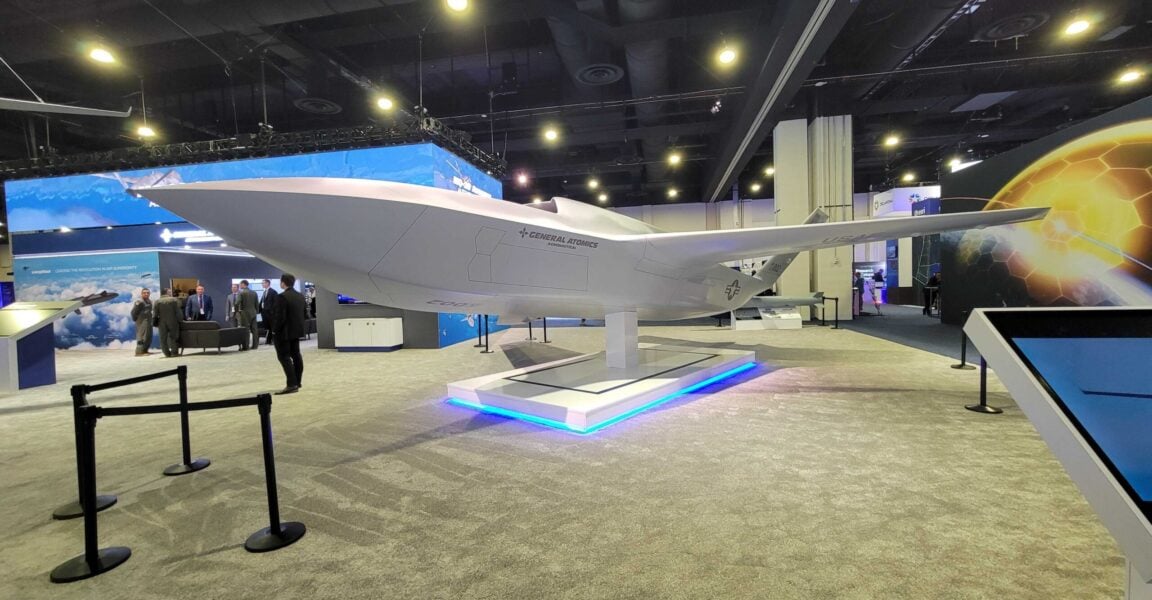
General Atomics’ YFQ-42A, another CCA entrant, sits on display, Sept. 22, 2025. (Rachel Cohen/Breaking Defense)
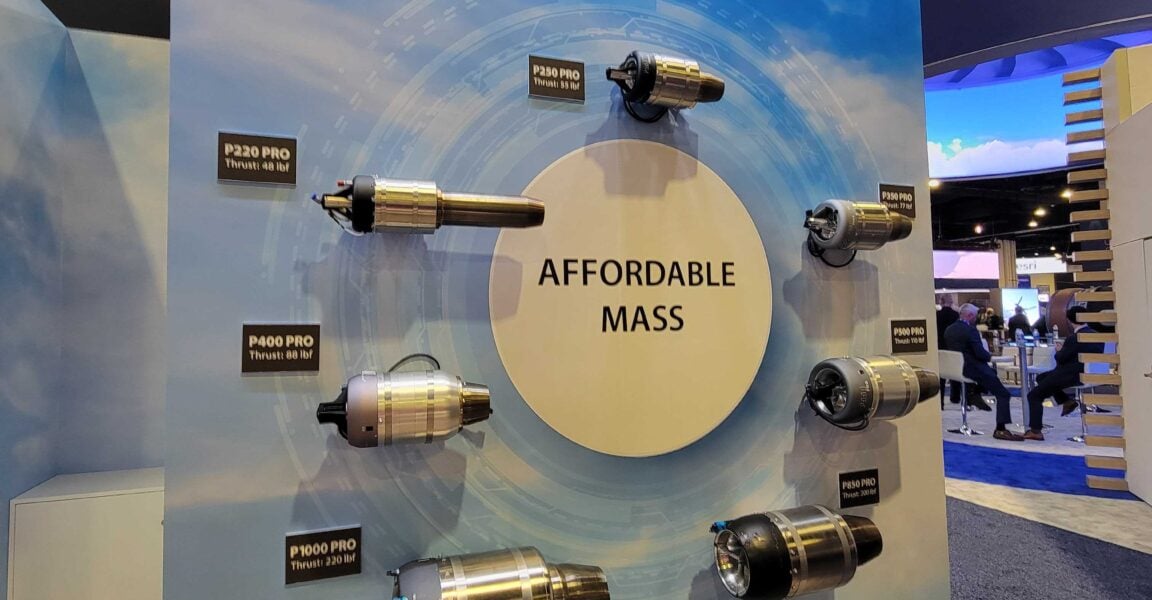
JetCat shows several small jet engines designed to power munitions or kamikaze drones at a fraction of the cost of larger engines, Sept. 22, 2025. (Rachel Cohen/Breaking Defense)
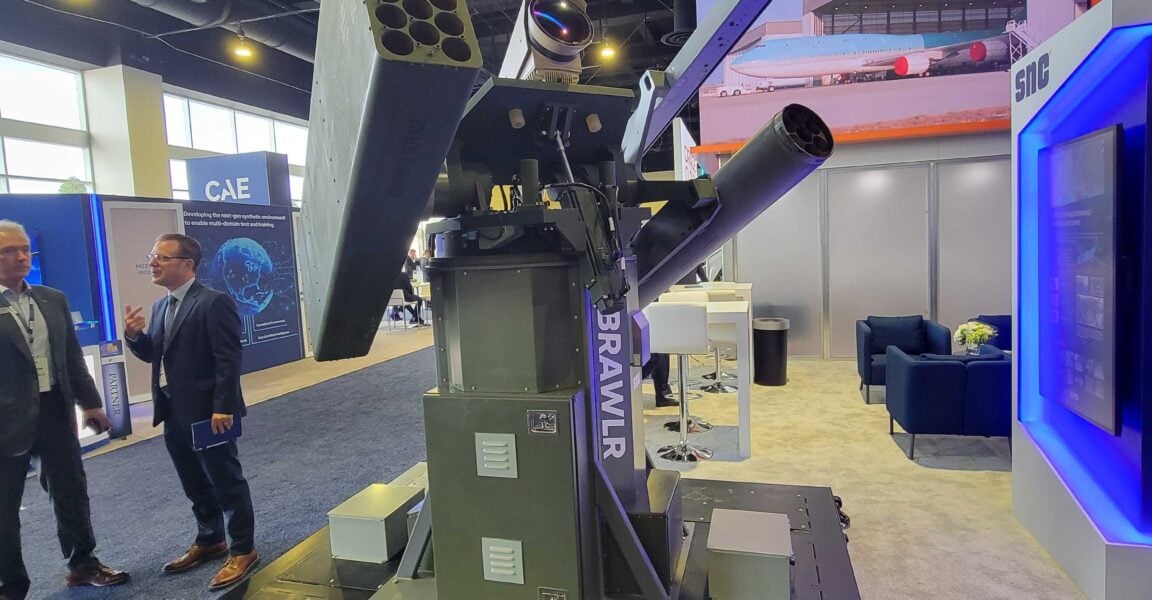
Sierra Nevada Corp.’s Battery Revolving Adaptive Weapons Launcher (BRAWLR), a reconfigurable counter-drone system in use by at least one classified foreign customer, makes its defense trade show debut, Sept. 22, 2025. (Rachel Cohen/Breaking Defense)
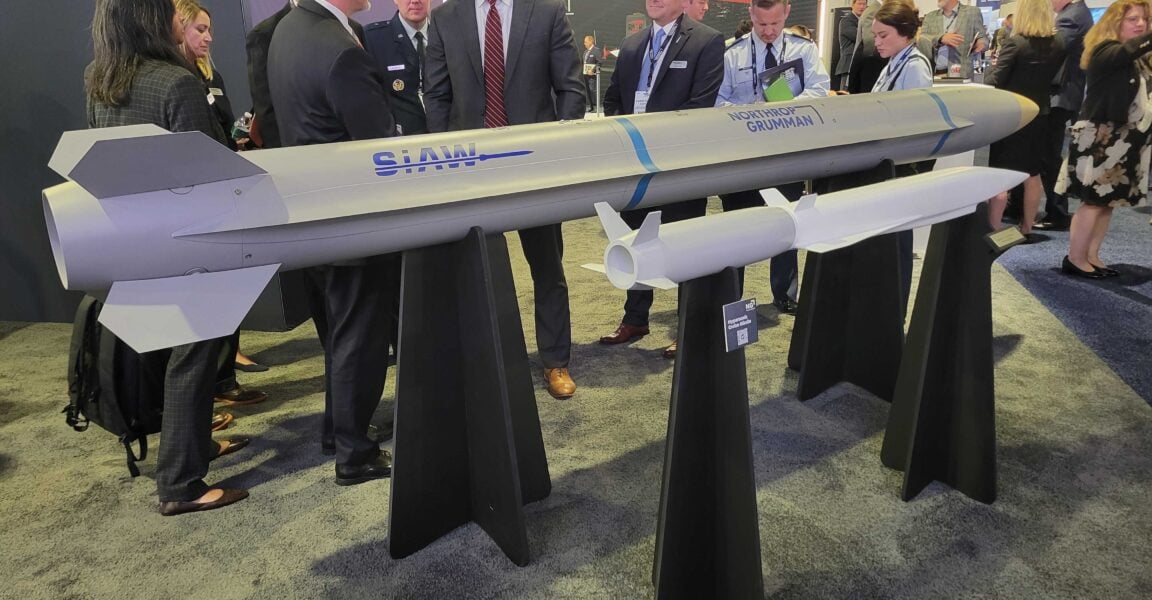
Air Force Undersecretary Matt Lohmeier visits the Northrop Grumman booth, where the Stand-In Attack Weapon and Hypersonic Cruise Missile are on display, Sept. 22, 2025. (Rachel Cohen/Breaking Defense)
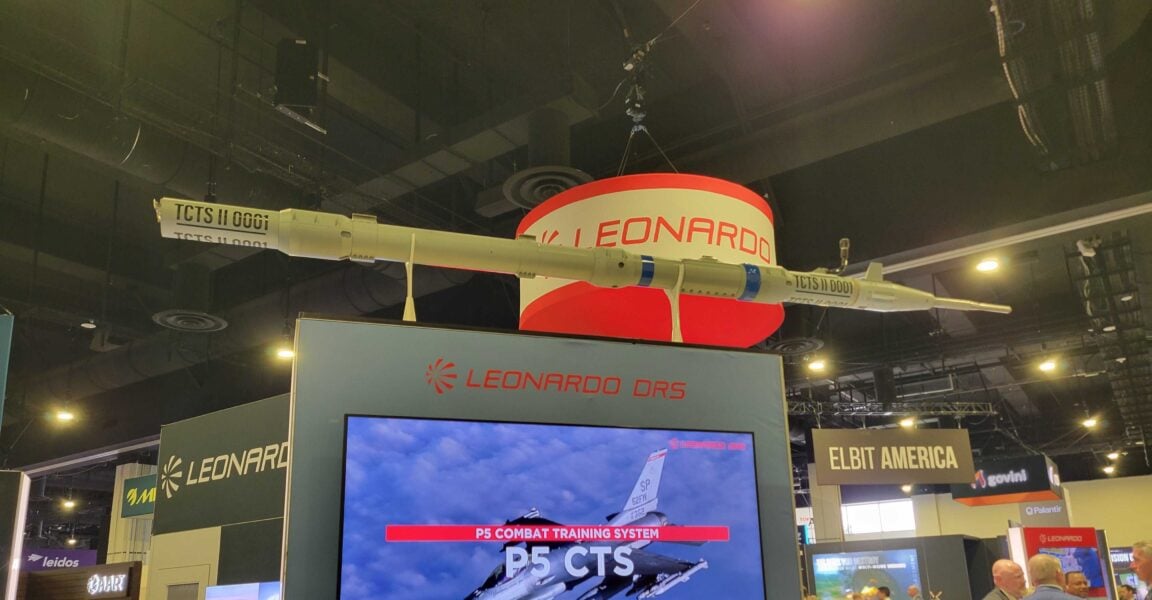
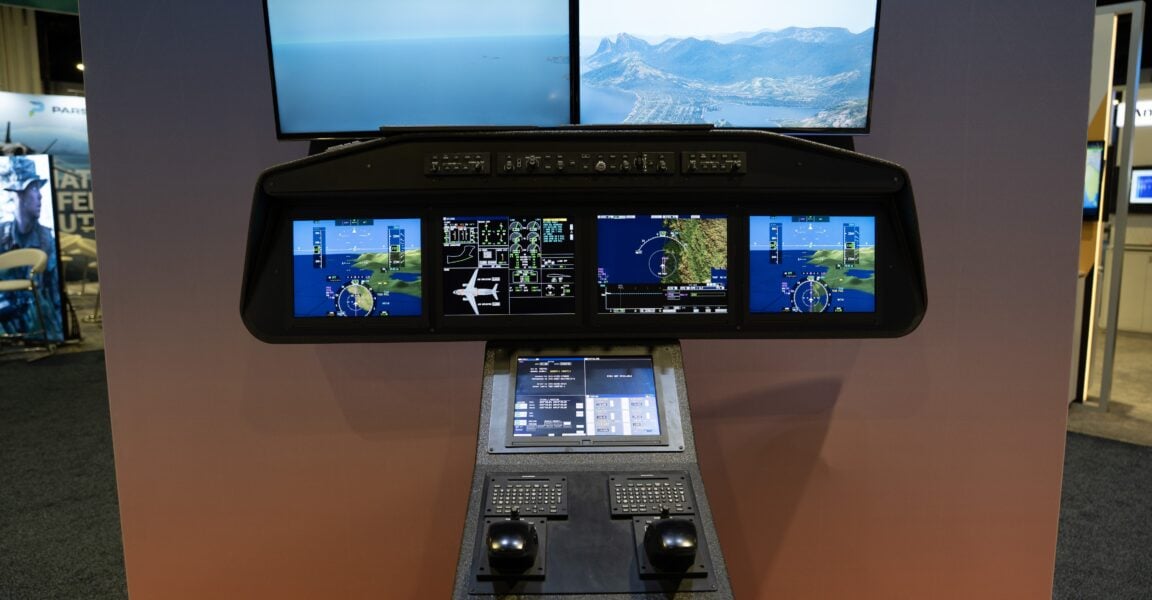
The Tactical Combat Training System Increment II connects live aircraft to a simulator in training, allowing remote troops to practice in real-world conditions. (Rachel Cohen/Breaking Defense)

Could you fly Embraer’s C-390? (Daniel Woolfolk/Breaking Defense)

Embraer aims to convince the Air Force that its C-390, shown in miniature on Sept. 24, 2025, could be a boon to the service’s airlift fleet. (Daniel Woolfolk/Breaking Defense)
J.P. Nauseef, president and chief executive officer of JobsOhio speaks during ASC, Sept. 24, 2025. (Jud McCrehin/Air & Space Forces Association)
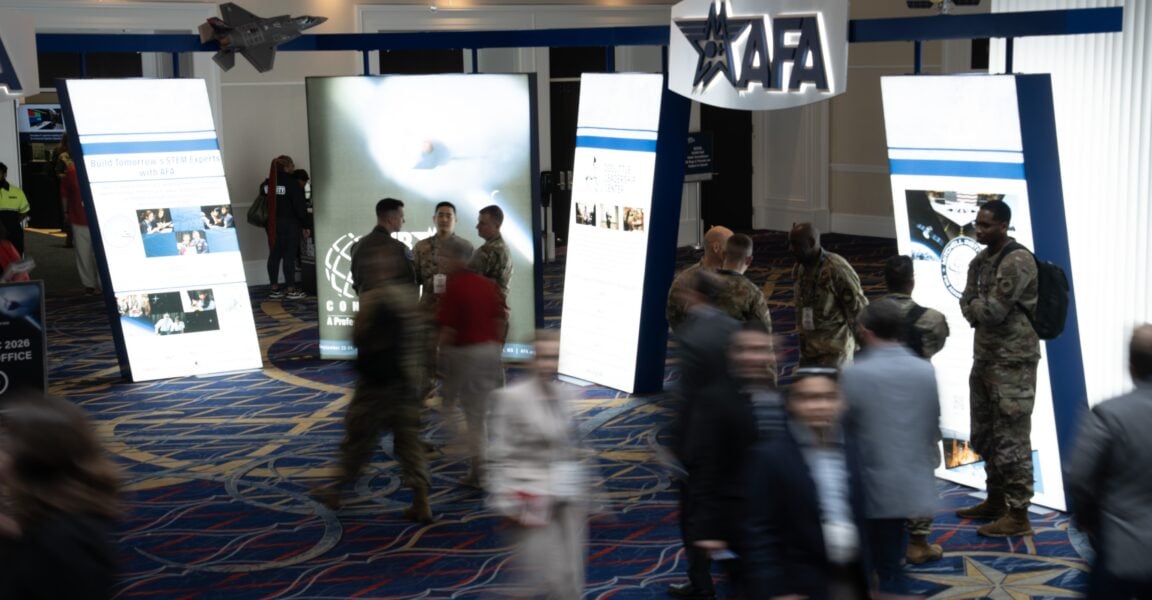
Attendees traverse the show floor on the final day of the conference, Sept. 24, 2025. (Daniel Woolfolk/Breaking Defense)
Attendees mill about near the main show floor doors at the Gaylord National Resort & Convention Center, Oxon Hill, Md., Sept. 24, 2025. (Daniel Woolfolk/Breaking Defense)
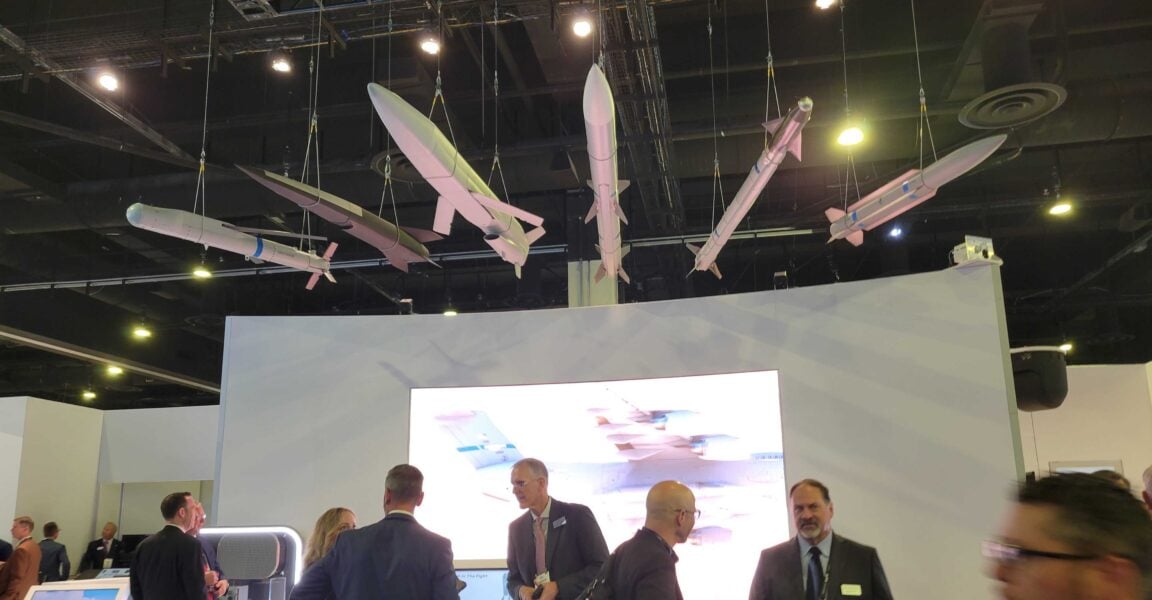
RTX shows off munitions at its booth on the show floor, Sept. 22, 2025. (Rachel Cohen/Breaking Defense)