Space

Army budget prioritizes counterspace for first time

Brig. Gen. Donald Brooks, deputy commander of Army Space and Missile Defense Command (SMDC), said the command's plan to stand up a new Space Branch is now "in the approval process" at the senior service level.

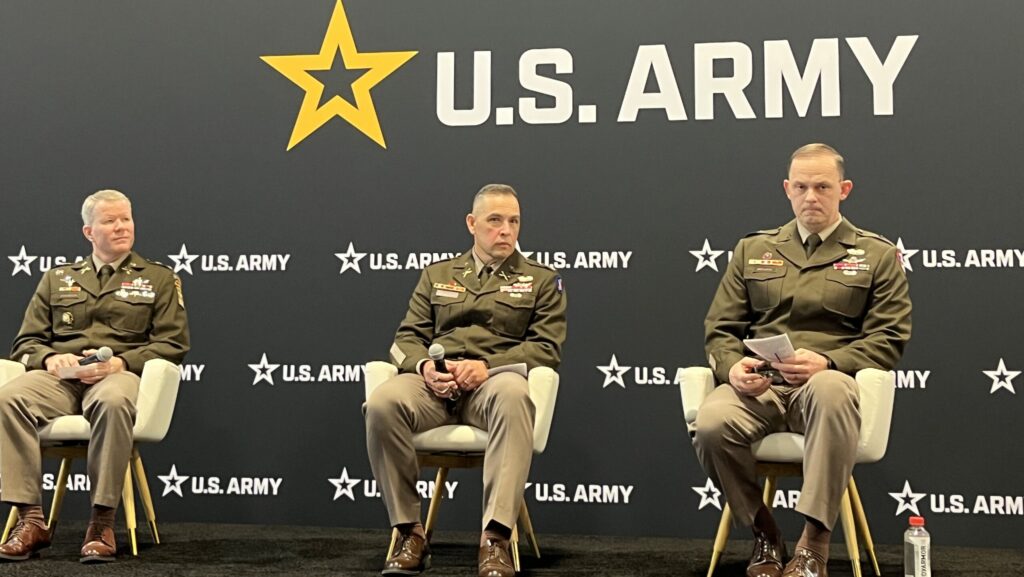
Army Col. Peter Atkinson, Col. Donald Kean, BG Donald Brooks at AUSA 2025.
Senior Army space officers -- Col. Peter Atkinson, space division chief with the Strategic Operations Directorate; Col. Charles Kean, head of the 1st Multi-Domain Task Force; and Brig. Gen. Donald Brooks, deputy head of Space and Missile Defense Command -- discuss the service's expanding roles in space Oct. 15, 2025 at the annual Association of the US Army conference. (Theresa Hitchens/Breaking Defense)

AUSA 2025 — The Army for the first time has included counterspace capabilities as a top priority in its five-year budget program starting in fiscal 2027 as it moves closer to establishing a new space branch, according to senior officials.

“This year during program budget review, we included counterspace capabilities for the first time in our strategic priority list. Again, that’s the Army prioritizing how important these consequential capabilities are in making sure that they get the requisite resources, a really consequential action,” Col. Pete Atkinson, space division chief at the Army Strategic Operations Directorate, said today during the annual Association of the US Army (AUSA) conference here in Washington, DC.

He stressed that the Army transformation memo signed by Defense Secretary Peter Hegseth in April actually calls out counterspace as one of several “consequential mission areas to accelerate” work on, along with precision long-range fires, air and missile defense capability, cyber, and electronic warfare.

“Calling it counterspace by name, is really important,” Atkinson said.

The Army’s 2024 Space Vision sets two main thrusts for its space activities: integrating space support capabilities — such as satellite communications (SATCOM), intelligence, surveillance and reconnaissance (ISR) and positioning, navigation and timing (PNT) — across the service and “interdiction” of adversary space capabilities.

“Interdiction is ubiquitous with counterspace. What it’s getting at is counter-satellite communications, counter surveillance and reconnaissance, [and] navigation warfare,” Atkinson said. “How do we protect friendly forces from threats emanating from the air and space domains? It’s really important for the Army. No one service has a monopoly on protection. We have to protect ourselves, and so we work as a team across the Army and the joint force to make sure we have the requisite capabilities.”

Meanwhile, the Army is getting close to standing up its own space branch, Brig. Gen. Donald Brooks, deputy commander of Army Space and Missile Defense Command (SMDC), said during the AUSA conference.

“It’s in the approval process,” he said. So far, he added, the plan has received “overwhelming affirmation” from general officers, and … the chief is all about Army Space Operations.”

SMDC last December approved the creation of a new military occupational speciality, or MOS, for enlisted personnel expected to double the number of service space specialists, called “40D Space Operations Specialist.”

Brooks said that MOS “activates in August of ’26.”

Those non-commissioned officers, along with space-specialist officers known as 40 Alphas, will be integrated across the service from brigade combat teams all the way up the chain “to make those warfighting formations more lethal,” he said.

Brooks explained SMDC has “been working over the last several weeks” on a proposal about how the command “will integrate people at the various echelons … not just down into the company level, but up into the Multi-Domain Task Force [and] the headquarters level.”

PHOTOS: AUSA 2025

PHOTOS: AUSA 2025

A view of a show floor at the 2025 Association of the US Army's Annual Meeting & Exposition in Washington, DC, Oct. 13, 2025. (Rachel Cohen/Breaking Defense)
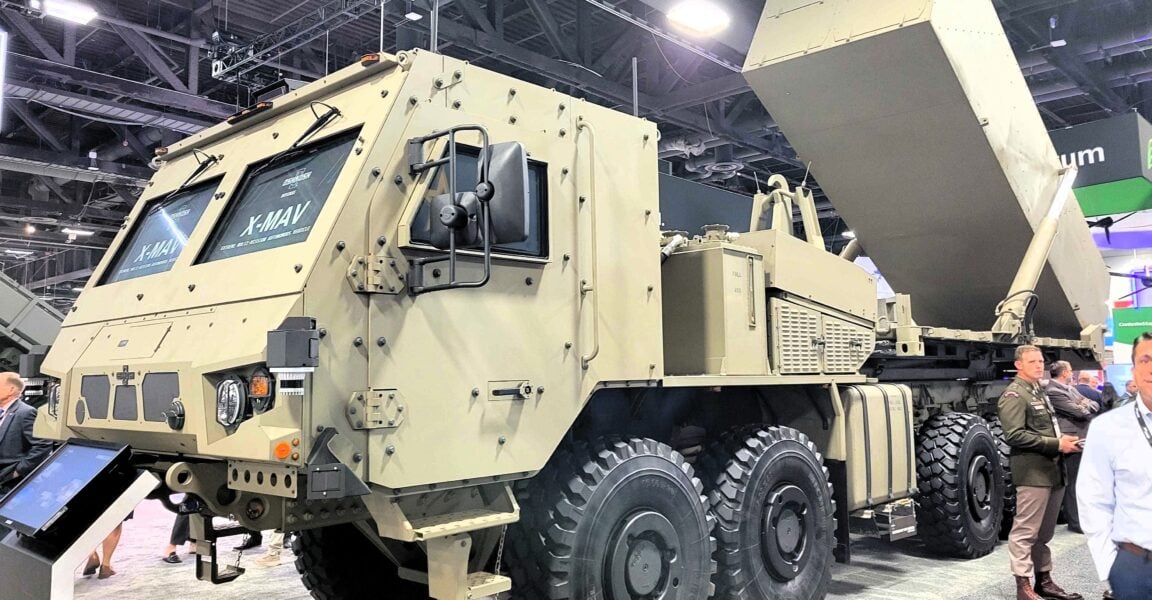
Oshkosh Defense debuts its Extreme Multi-Mission Autonomous Vehicle (X-MAV), an "autonomous-capable launcher solution that is engineered to support the future of long-range munitions," Oct. 13, 2025, at the Association of the US Army's Annual Meeting & Exposition in Washington, DC. (Rachel Cohen/Breaking Defense)
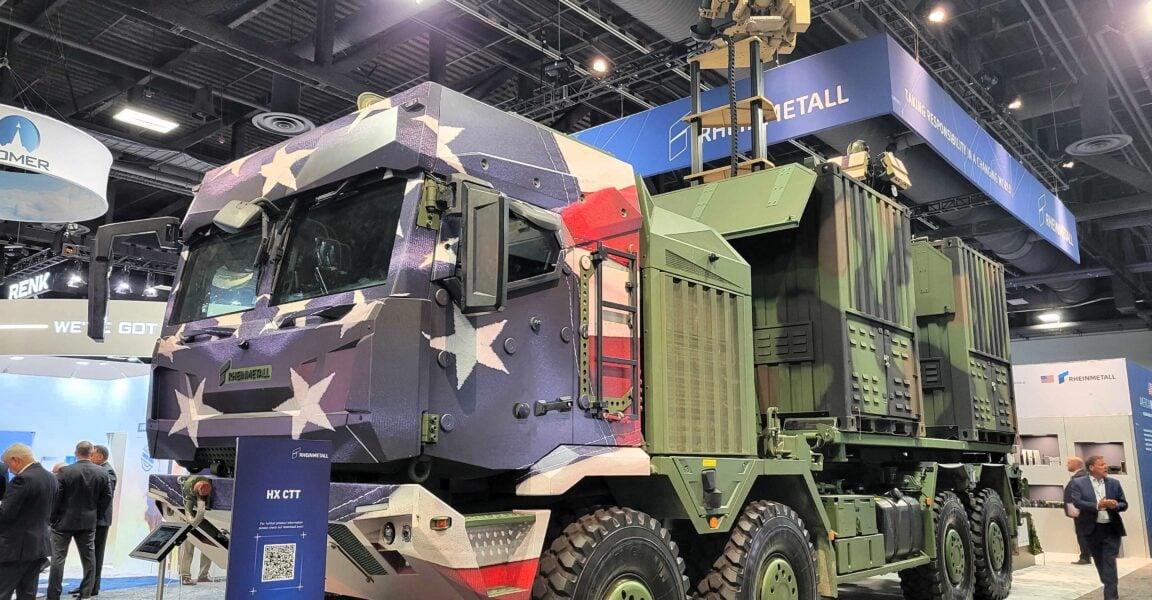
Rheinmetall brought its HX Common Tactical Truck, built in partnership with GM Defense, to the Association of the US Army's Annual Meeting & Exposition, Oct. 13, 2025. (Rachel Cohen/Breaking Defense)
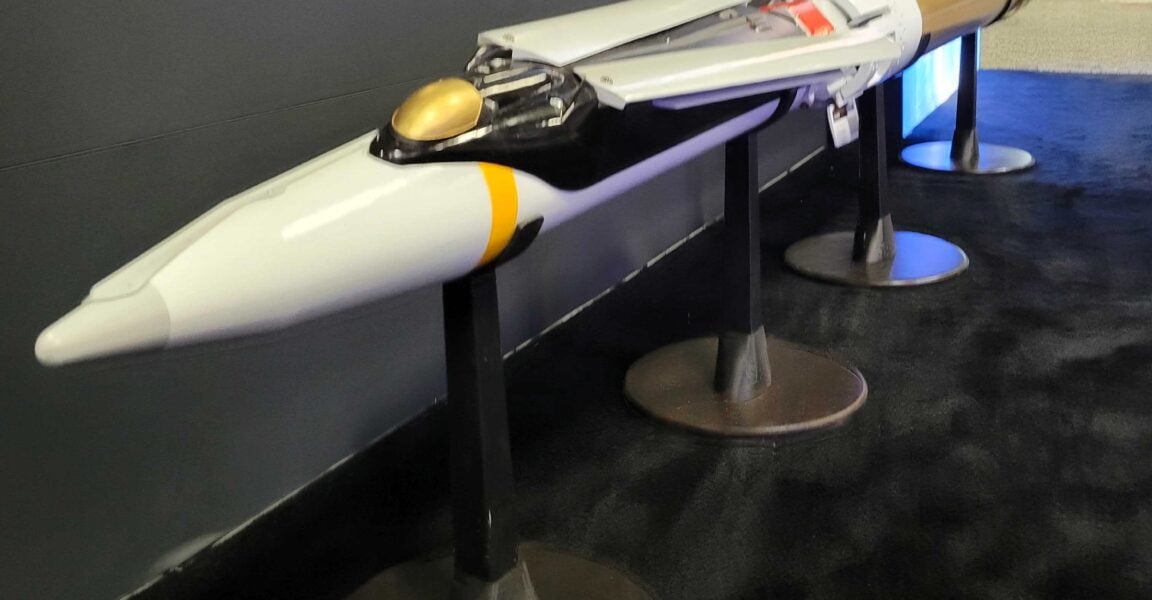
Saab's Ground-Launched Small Diameter Bomb is based on Boeing's SDB and Lockheed Martin's Multiple Launch Rocket System. (Rachel Cohen/Breaking Defense)
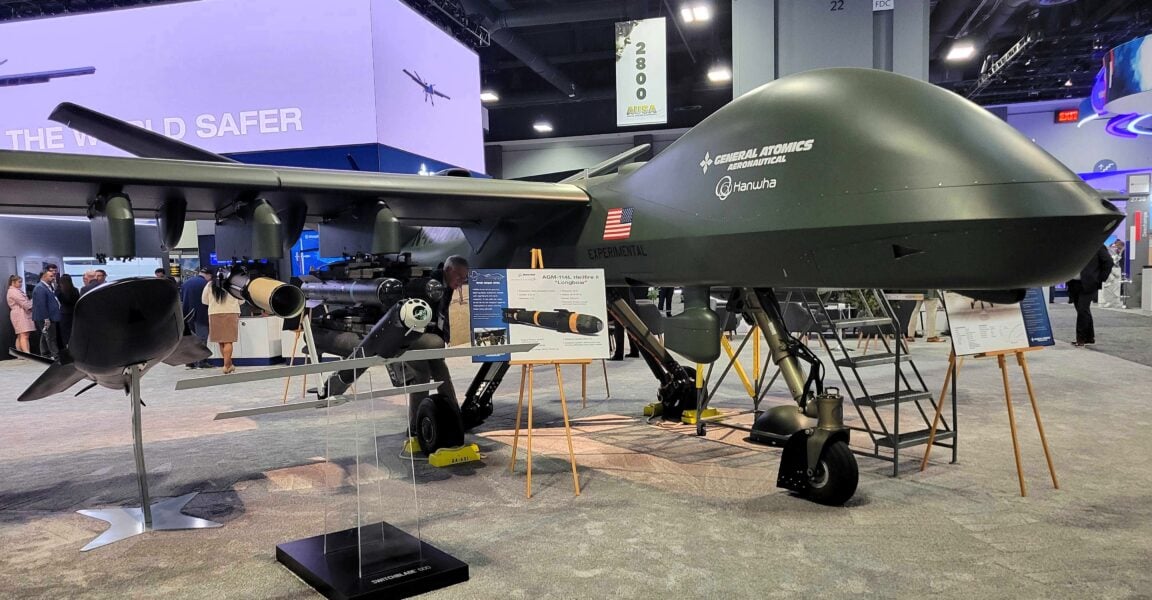
General Atomics Aeronautical Systems and Hanwha Aerospace are collaborating on a short takeoff-and-landing version of the MQ-1C Gray Eagle drone. (Rachel Cohen/Breaking Defense)
Rafael's Iron Beam is a 100kW-class laser weapon on track for operational use this year. (Aaron Mehta/Breaking Defense)
Honeywell's SAMURAI anti-drone system is one of myriad counter-drone technologies on display at AUSA 2025. (Daniel Woolfolk/Breaking Defense)
Hanwha Defense USA pitches its 155 mm, 52-caliber K9 Thunder self-propelled howitzer at the Association of the US Army's Annual Meeting & Exposition in Washington, DC. (Rachel Cohen/Breaking Defense)
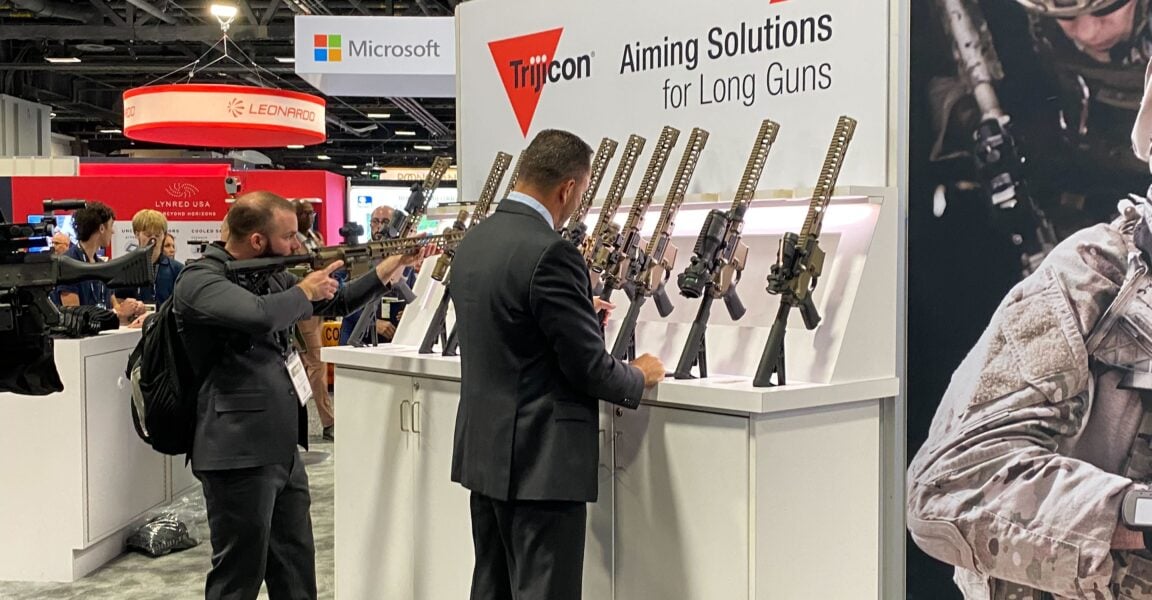
Conference attendees try out Trijicon's firearm sights and scopes. (Aaron Mehta/Breaking Defense)
Attendees roam the halls of the Walter E. Washington Convention Center in downtown Washington, DC, Oct. 13, 2025. (Daniel Woolfolk/Breaking Defense)
The Bell 505 Jet Ranger X is a contender for the Army's Flight School Next program. (Daniel Woolfolk/Breaking Defense)
GM Defense's Infantry Squad Vehicle-Utility is based on the Chevrolet Colorado ZR2 and can be adapted to carry mortars, counter-drone equipment and more. (Aaron Mehta/Breaking Defense)
Name a more iconic duo. I'll wait. (Aaron Mehta/Breaking Defense)
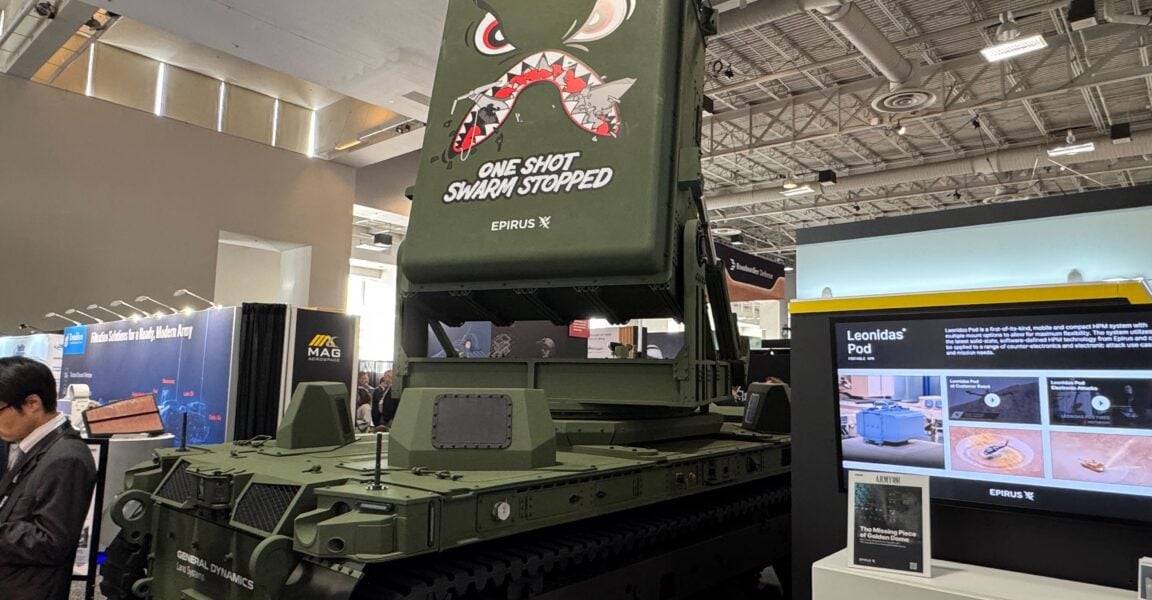
Epirus’s Leonidas high-powered microwave system is mounted on top of a General Dynamics land vehicle. (Michael Marrow/Breaking Defense)
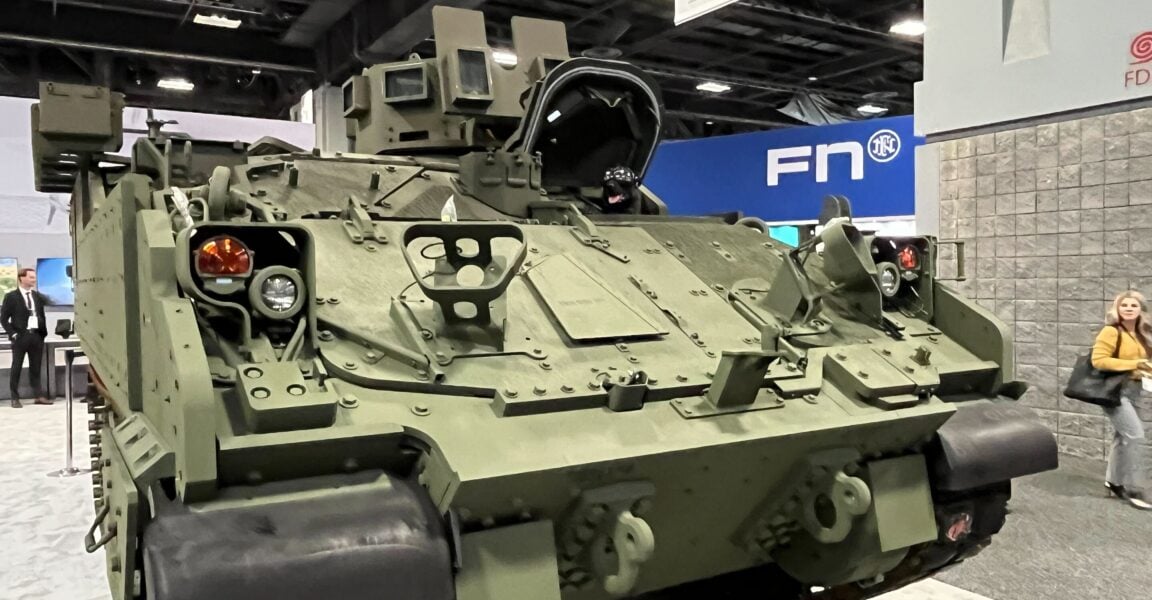
A four-legged attendee checks whether the infantry carrier variant of BAE Systems' Armored Multi-Purpose Vehicle can also carry canines. (Sydney Freedberg/Breaking Defense)
It wouldn't be a defense trade show in 2025 without a robot dog on hand. (Aaron Mehta/Breaking Defense)
Honeywell showcases a hybrid quadcopter/fixed-wing drone on the show floor. (Aaron Mehta/Breaking Defense)
RTX displays its missiles and a Lower Tier Air and Missile Defense Sensor. (Aaron Mehta/Breaking Defense)