WASHINGTON — Like many of you, the Breaking Defense editorial team took some much-needed rest at the end of last year. But despite our most sincere hopes, the news didn’t stop entirely — and that was before the gargantuan developments in Venezuela.
So as a public service, we asked our team to put together a quick roundup of a few stories that may have snuck under your radar as the world turned its eyes to the holidays.
F-35 report: The Pentagon inspector general on Dec. 19 released a report on the F-35 program that found the Defense Department “did not adequately oversee” manufacturer Lockheed Martin’s contracted maintenance for the tri-variant jet.
Specifically, the watchdog found that the F-35 Joint Program Office — contrary to prior practices — did not include aircraft readiness metrics as either incentives or requirements in the stealth fighter’s June 2024 sustainment contract. Along with other issues, the report says Lockheed was paid $1.7 billion for aircraft sustainment through July 1, 2025, despite fielded aircraft falling short of readiness targets.
Israeli F-15 contract: On Dec. 29, the Air Force officially issued Boeing a roughly $8.6 billion contract to build new F-15 fighter jets for Israel. The deal, long in the works, covers 25 Israeli versions of the jet dubbed the F-15IA, with options for up to 25 more. The Israeli defense ministry has previously said the new aircraft are partially financed by a US aid package passed last year.
CCA movement: A few days before that, on Dec. 22, the Air Force announced that Northrop Grumman’s internally funded Talon drone got an official military designation: the YFQ-48A — earning the same type of designation previously only bestowed upon drone wingmen prototypes under development by Anduril and General Atomics. The announcement could mean Northrop’s drone is poised to make a dark horse bid for a first production contract under the Collaborative Combat Aircraft program. (And if you missed it, Breaking Defense on Dec. 19 was the first to report that the service has awarded contracts to nine vendors for the second CCA round.)
FCAS drama continues: The political chaos around the Franco-German-Spanish FCAS next-gen fighter did not end on the positive note that had been hoped for. Despite a goal that the program would put to bed longstanding issues around workshare before the end of 2025, those problems will now roll over into 2026, according to reports.
Airbus, one of the leading FCAS industry contractors, received a new contract from the Spanish Ministry of Defence on Dec. 23 for 18 C295 transport aircraft, set to replace CN235 and C212 fleets for the Spanish air force. In all, the service is in line to operate a total of 46 C295 units covering transport, maritime patrol and surveillance missions, said Jean-Brice Dumont, head of air power at Airbus Defence and Space, according to a company statement.
Elsewhere in Europe, today Rheinmetall received a 30mm ammunition contract for Puma infantry fighting vehicles from the German Armed Forces — an order worth “several hundred million euros,” according to a statement from the manufacturer. It noted that the new deal is part of an extended framework contract finalized in 2022.
Japan’s defense spending: Over in the Indo-Pacific, Japan’s government on Dec. 30 approved a 9.04 trillion yen ($58 billion) defense budget for the coming Japanese fiscal year. The figure represents a 3.8 percent jump from the current budget, and includes funding for eight more Lockheed-Martin F-35As and three F-35B Lighting II fifth-generation stealth fighters as well as four General Atomics Aviation-built MQ-9B SkyGuardian unmanned systems for the Japan Maritime Self-Defense Force.
North Korea’s nuclear sub: North Korea on Dec. 25 unveiled the hull of what it says is its first nuclear-powered submarine, currently under construction. State media showed North Korean leader Kim Jong-un inspecting the hull. Neighbouring South Korea, which is still technically at war with the North, earlier this year announced that it was starting plans to build its own nuclear-powered submarine, though details remain unclear on that one.
China’s exercise around Taiwan: China’s ministry conducted a large-scale, two-day snap exercise in the waters and airspace surrounding Taiwan that included live firing of long-range artillery rockets. Taiwan’s defense ministry said that aircraft belonging to the People’s Liberation Army undertook more than 200 sorties over Dec. 29 and 30 while navy and coast guard vessels carried out a variety of training exercises. Taiwan’s military deployed its own aircraft, missiles and ships in response to the exercise, which China said was intended as a warning for Taiwanese “separatists.”
Grok comes to the Pentagon: Three days before Christmas, the Pentagon announced it was adding Xai’s Grok to GenAI.mil, the weeks-old website intended to bring a secure version of popular AI tools to all three million civil service, contractor, and military personnel in the Department of Defense. While GenAI.mil launched with just the government version of Google’s Gemini, bringing additional AI models onboard was always part of the plan.
But Grok is an interesting choice to bring on second, since it’s the brainchild of on-again, off-again Trump ally Elon Musk, who deliberately set out to make the chatbot anti-“woke,” leading it to occasionally spout right-wing conspiracy theories and, once, to proclaim itself “MechaHitler.”
SDA’s future remains a concern: The inclusion of $500 million in the Dec. 17 fiscal 2026 National Defense Authorization Act (NDAA) to restore funding for the Space Development Agency’s (SDA) next generation of data transport satellites signaled lawmaker concerns about a potential Pentagon move to axe the program. Gen. Chance Saltzman, the Space Force chief, confirmed in June that the service had paused SDA plans to buy 140 new Tranche 3 satellites for its planned Transport Layer in low Earth orbit, while the service studies whether to replace the constellation with the mysterious MILNET classified communications network.
While the NDAA does not set actual spending, as that is legislated via the annual appropriations bills, the $500 million add is significant in that it is the same amount included in the Senate Appropriations Committee version of the FY26 budget bill.
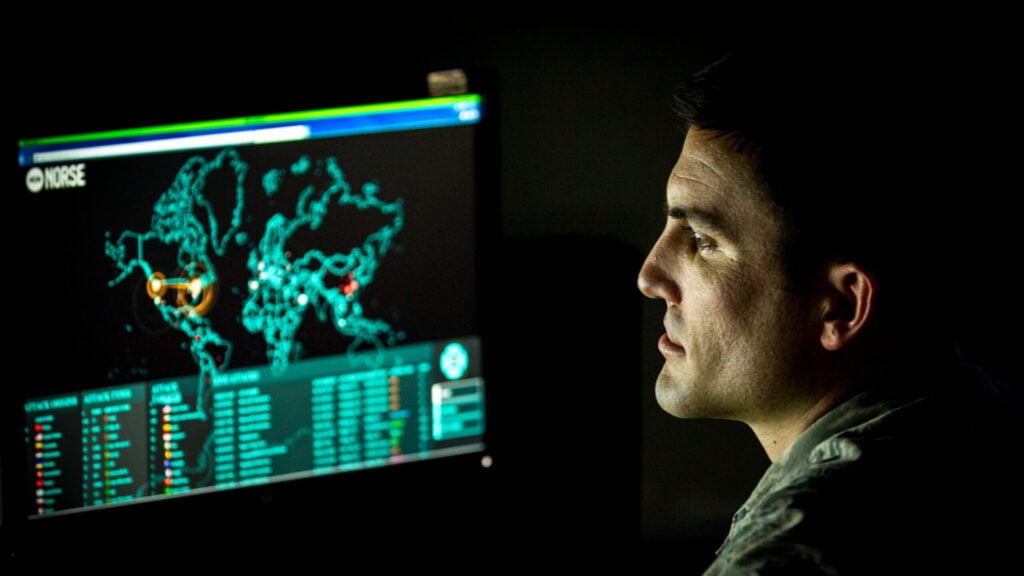
New names: While not something that happened during the break, this one slipped under the radar due to the sheer amount of news at the Space Force Association’s Spacepower 2025 conference in Orlando in mid-December. The Space Force is moving to institute a naming convention for its various weapon systems that include categories such as the Norse pantheon and mythological creatures. Saltzman announced the new schemata on Dec. 11. The seven weapons system categories are:
- Orbital warfare: Norse pantheon
- Electromagnetic warfare: Snakes
- Cyber warfare: Mythological creatures
- Navigation warfare: Sharks
- Satellite communications: Constellations
- Missile warning: Sentinels
- Space domain awareness: Ghosts

Movement on Army’s self-propelled howitzer program: The Army released a notice to industry on Dec. 23 calling for capable vendors to have ready-to-go prototype proposals for the service’s new self-propelled howitzer competition by the second quarter of the fiscal year, marking a significant step forward for the program which the Army has been attempting to find a solution for since 2024.
The new program will “replace the towed M777 howitzers initially within the Stryker Brigade Combat Teams, followed by the Mobile and Infantry Brigade Combat Teams,” the notice read, adding that the Army intends to award one contract to a single vendor via a “technical evaluation.”
Meanwhile in the Middle East: On New Year’s Eve Turkish Aerospace Industries (TAI) finally inked its first export contract for 30 Hurjet trainers to Spanish air and space forces in a deal worth €2.6 billion (approximately $3 billion). The deal had been in the making for some time now, and in July 2025 TAI entered a coproduction agreement with Airbus to jointly produce Hurjet trainer jets in Spain. Deliveries will commence in the last quarter of 2028 and be completed in 2036 according to TAI.
Also, during the holidays another Turkish firm, electronics giant Aselsan signed a contract worth $410 million to export electronic warfare systems to Poland further solidifying its exports to NATO states. While specifications about the EW package were not announced, Polish Deputy Prime Minister and Minister of National Defense Władysław Kosiniak-Kamysz pointed out that negotiations have been ongoing for a long period.
Some other major defense news we did manage to cover:
- Israel’s new laser system goes active
- China military buildup leaves US ‘increasingly vulnerable’: Pentagon report
- Trump announces new Trump-class ‘battleship’ as part of ‘Golden Fleet’
- CCA Round 2: Air Force picks 9 vendors for next batch of drone wingmen
- Trump nominates Marine general for top SOUTHCOM job
- MDA adds 1,086 firms to its SHIELD pool for Golden Dome-related tech
Breaking Defense Video