Land Warfare

Army’s Space and Missile Defense Command expands homeland defense mission

“The ground-based midcourse defense mission that we traditionally held under NORTHCOM has expanded to air and missile defense holistically,” said Lt. Gen. Sean Gainey.

Lt. Gen. Sean Gainey address the audience at SMD 2025. (US Army/ Jason B. Cutshaw)

AUSA 2025 — As part of the US Army’s emerging Western Hemisphere Command, a three-star general said the service’s Space and Missile Defense Command has expanded its purview and is now overseeing a larger portion of the service’s contribution to homeland air and missile defense mission.

“We did grow in responsibility,” SMDC head Lt. Gen. Sean Gainey told Breaking Defense on Tuesday. “The ground-based midcourse defense mission that we traditionally held under NORTHCOM has expanded to air and missile defense holistically” to include defense against other threats, including drones.

That also means SMDC has been given more organizational support. As of this month, the 32nd Army Air and Missile Defense Command, which historically supported US Central Command, and the 263rd Army Air and Missile Defense Command have both been assigned to SMDC.

“As we received the two [commands], our role changes from GMD [ground-based midcourse defense] … to AMD [air and missile defense],” Gainey said. “So, in that capacity, we now have all elements of the defense of the homeland … and to help plan and execute missions like the National Capital Region.”

“We inherit that responsibility,” the three-star general added. 

The move comes as part of the Army’s broader plan to stand up a Western Hemisphere Command, which will combine the Army North Command, Army South Command and Force Command (FORSCOM). The Trump administration is also expected to place an enhanced focus on homeland defense in the forthcoming National Defense Strategy, and is pursuing a more comprehensive Golden Dome strategy

In the meantime, the Army has also completed its new Air and Missile Defense (AMD) Strategy 2040, though the document is awaiting the blessing of Army Chief of Staff Gen. Randy George and Secretary Dan Driscosll. 

“It’s right now going through final staffing,” Gainey said. “We expect that to happen in November and be released in November timeframe.”

The revamped strategy, he explained, encompasses lessons from Ukraine and the Middle East, along with a shifting focus on homeland defense, and touches on the ever-growing drone threat. 

“It’s now more of an architecture approach where you have several systems with the ability to sense and engage several different places, because of the way the threat is offering the complexities,” Gainey said. “No longer are you going to be just [going to see] a tactical ballistic missile threat. No longer are you just going to [see] a cruise missile threat. You’re going to be in all of that at one time, so you need to have a system of systems approach as opposed to a specific, isolated system approach.”

Theresa Hitchens contributed to this report from Washington, DC.

PHOTOS: AUSA 2025

PHOTOS: AUSA 2025

A view of a show floor at the 2025 Association of the US Army's Annual Meeting & Exposition in Washington, DC, Oct. 13, 2025. (Rachel Cohen/Breaking Defense)
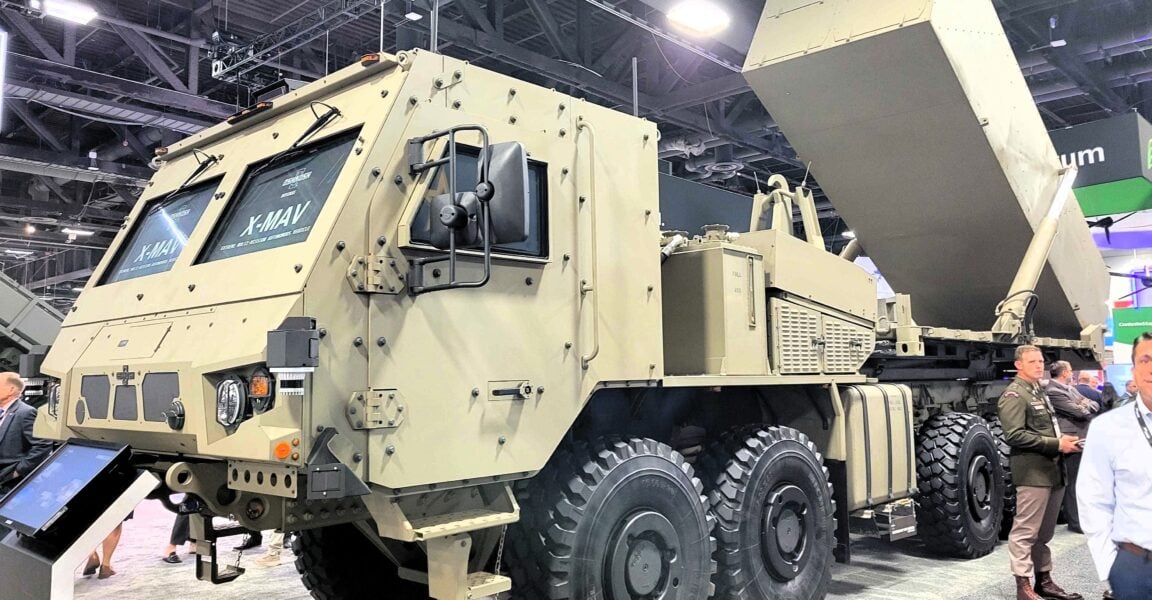
Oshkosh Defense debuts its Extreme Multi-Mission Autonomous Vehicle (X-MAV), an "autonomous-capable launcher solution that is engineered to support the future of long-range munitions," Oct. 13, 2025, at the Association of the US Army's Annual Meeting & Exposition in Washington, DC. (Rachel Cohen/Breaking Defense)
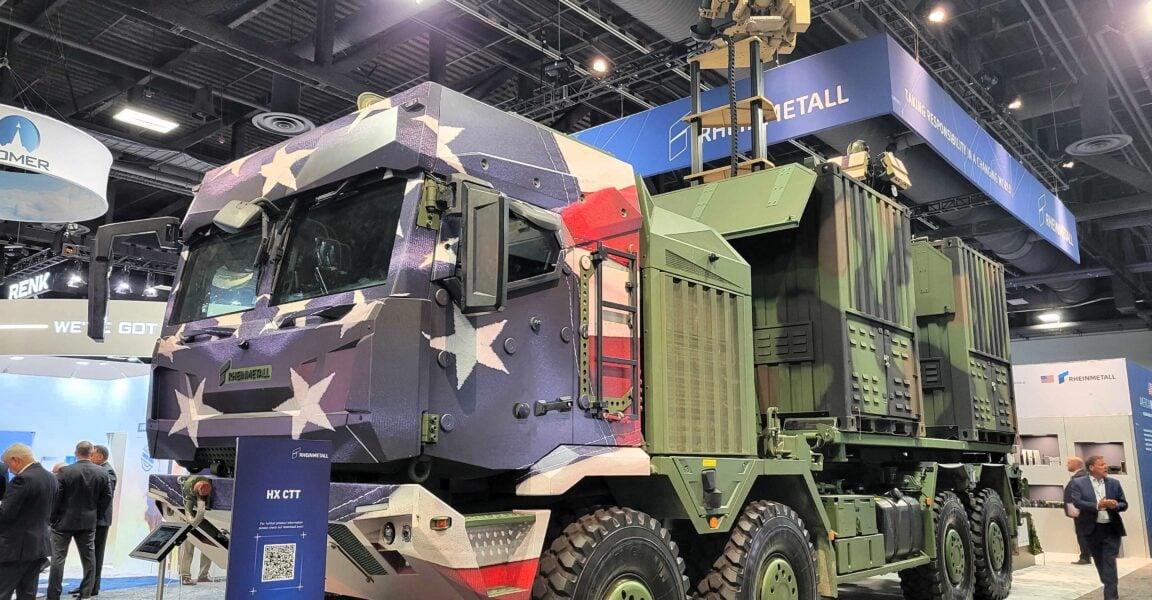
Rheinmetall brought its HX Common Tactical Truck, built in partnership with GM Defense, to the Association of the US Army's Annual Meeting & Exposition, Oct. 13, 2025. (Rachel Cohen/Breaking Defense)
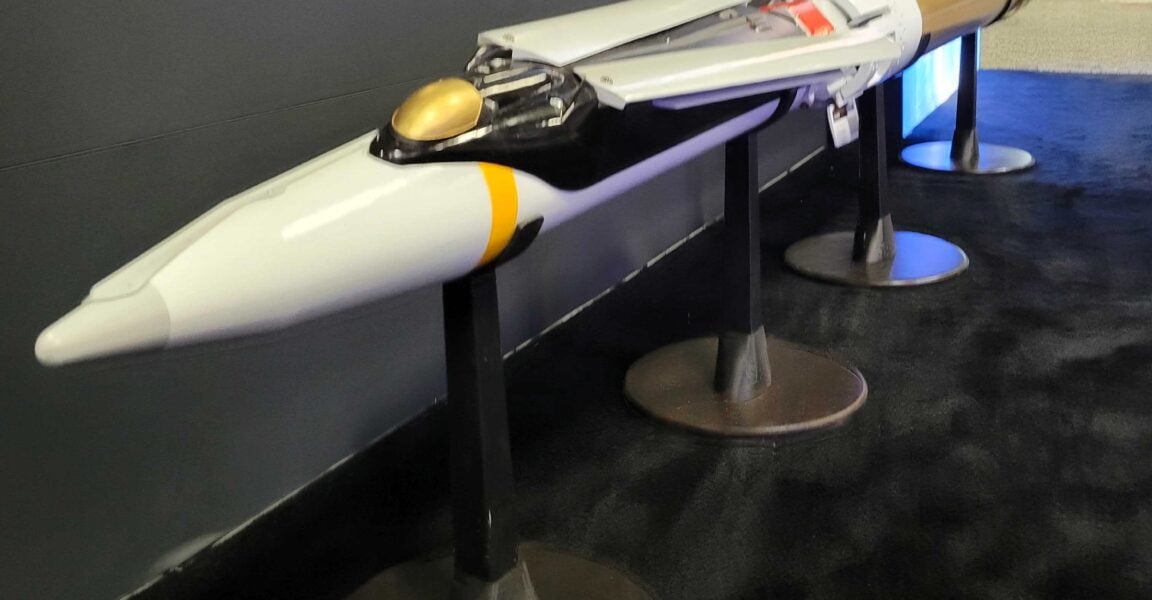
Saab's Ground-Launched Small Diameter Bomb is based on Boeing's SDB and Lockheed Martin's Multiple Launch Rocket System. (Rachel Cohen/Breaking Defense)
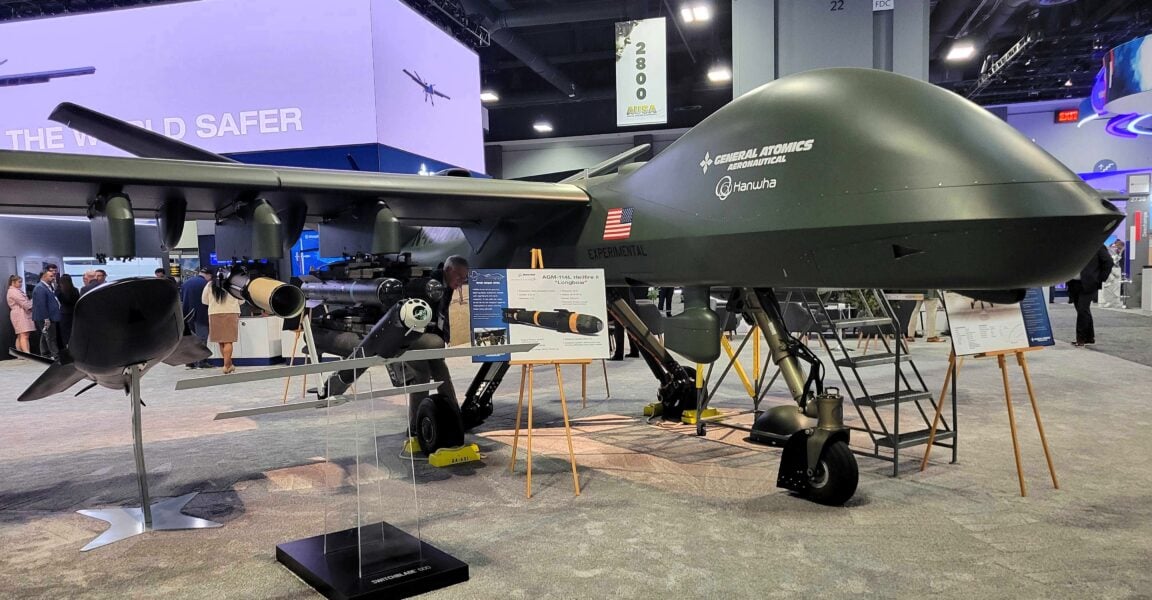
General Atomics Aeronautical Systems and Hanwha Aerospace are collaborating on a short takeoff-and-landing version of the MQ-1C Gray Eagle drone. (Rachel Cohen/Breaking Defense)
Rafael's Iron Beam is a 100kW-class laser weapon on track for operational use this year. (Aaron Mehta/Breaking Defense)
Honeywell's SAMURAI anti-drone system is one of myriad counter-drone technologies on display at AUSA 2025. (Daniel Woolfolk/Breaking Defense)
Hanwha Defense USA pitches its 155 mm, 52-caliber K9 Thunder self-propelled howitzer at the Association of the US Army's Annual Meeting & Exposition in Washington, DC. (Rachel Cohen/Breaking Defense)
Conference attendees try out Trijicon's firearm sights and scopes. (Aaron Mehta/Breaking Defense)
Attendees roam the halls of the Walter E. Washington Convention Center in downtown Washington, DC, Oct. 13, 2025. (Daniel Woolfolk/Breaking Defense)
The Bell 505 Jet Ranger X is a contender for the Army's Flight School Next program. (Daniel Woolfolk/Breaking Defense)
GM Defense's Infantry Squad Vehicle-Utility is based on the Chevrolet Colorado ZR2 and can be adapted to carry mortars, counter-drone equipment and more. (Aaron Mehta/Breaking Defense)
Name a more iconic duo. I'll wait. (Aaron Mehta/Breaking Defense)
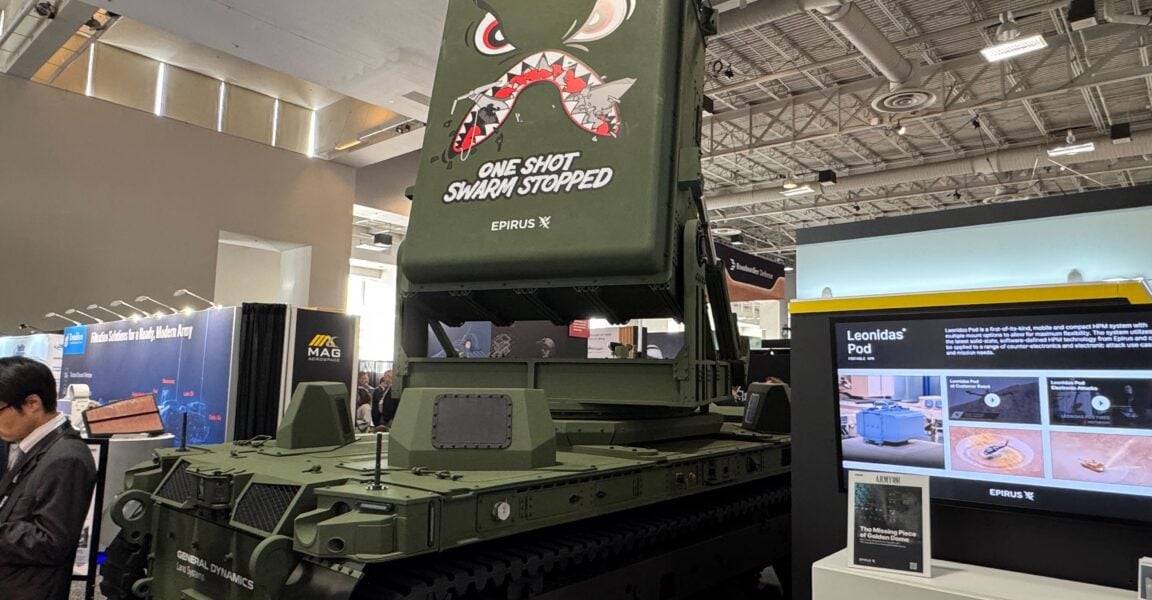
Epirus’s Leonidas high-powered microwave system is mounted on top of a General Dynamics land vehicle. (Michael Marrow/Breaking Defense)
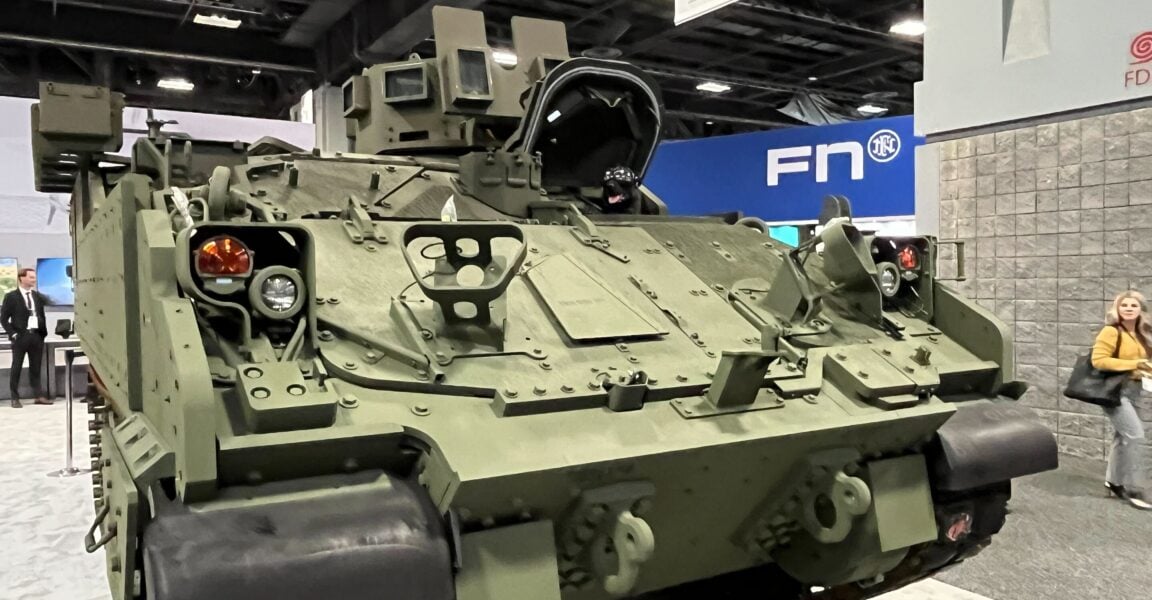
A four-legged attendee checks whether the infantry carrier variant of BAE Systems' Armored Multi-Purpose Vehicle can also carry canines. (Sydney Freedberg/Breaking Defense)
It wouldn't be a defense trade show in 2025 without a robot dog on hand. (Aaron Mehta/Breaking Defense)
Honeywell showcases a hybrid quadcopter/fixed-wing drone on the show floor. (Aaron Mehta/Breaking Defense)
RTX displays its missiles and a Lower Tier Air and Missile Defense Sensor. (Aaron Mehta/Breaking Defense)