Land Warfare

Gen. George says Army’s new Western Hemisphere Command to stand up in weeks

“Our Army has gotten smaller, and we have grown headquarters. I mean, so we have to reduce the headquarters, and I think we can become more efficient,” Army Chief of Staff Gen. Randy George said at AUSA 2025.

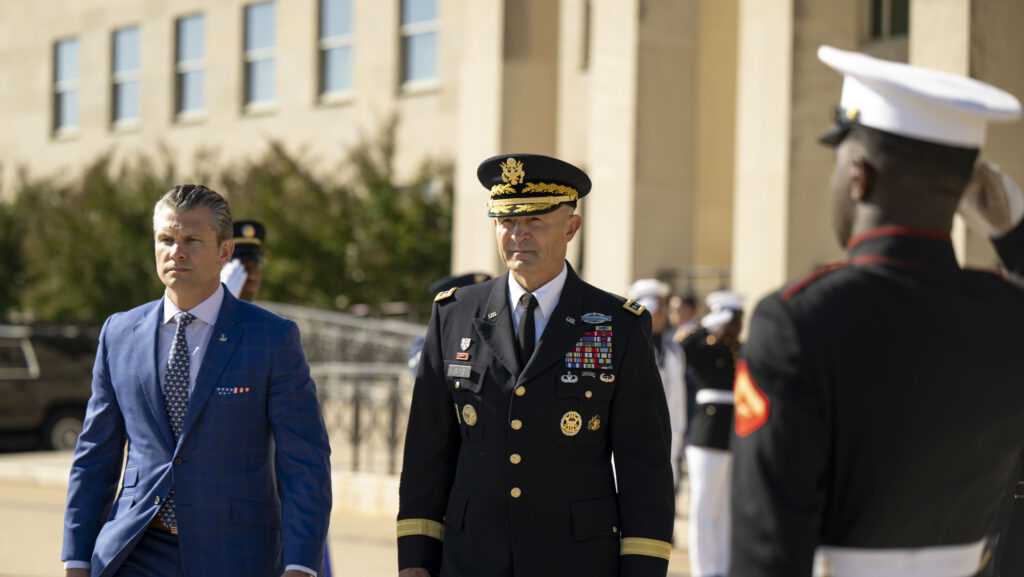
Secretary of War Pete Hegseth and U.S. Army Chief of Staff Gen. Randy George attend the 2025 National POW/MIA Recognition Day Ceremony at the Pentagon, Washington, D.C., Sept. 19, 2025. (DoW photo by U.S. Navy Petty Officer 2nd Class Aiko Bongolan)

Editor’s Note: Following Army Chief of Staff Gen. Randy George’s speech on Wednesday, an Army spokesperson told Breaking Defense that no decision has been made regarding the movement of personnel to or from Fort Bragg.

AUSA 2025 — The Army’s Chief of Staff Gen. Randy George announced Tuesday that Western Hemisphere Command, which will combine the Army North Command, Army South Command and Force Command (FORSCOM), will be stood up before the end of the year. 

The move to stand up the new command comes as the service has been making strides to slim down the size of its headquarters and cut the number of four-star general officer billets as part of its larger continuous transformation effort. Earlier this month, the Army combined Futures Command with Training and Doctrine Command (TRADOC), into one command dubbed the Transformation and Training Command, or T2COM.

“You should expect in […] about the next six to eight weeks, we are looking to do the same thing with Western Hemispheres Command, where we will actually have down at Fort Bragg, will be that four-star headquarters that is responsible for the Western Hemisphere, and Army North and Army South will merge into that headquarters as well, to make sure that we are condensing headquarters,” George said Tuesday at the AUSA conference here in Washington, DC. 

The new command will be “focused on homeland defense and partnerships with Western Hemisphere allies,” per an April memo that first announced the consolidation among other sweeping Pentagon changes.

In his remarks here, George argued that the push to shrink the Army’s headquarters doesn’t just let the service use funds for various priorities, but it also could make it “more efficient,” as leaders would do more with less. 

“Our Army has gotten smaller, and we have grown headquarters. I mean, so we have to reduce the headquarters, and I think we can become more efficient,” George said. 

“We started by saying that we were going to downsize our own [headquarters] by 1,000 people,” he added. “Instead of passing all the people [and] product around, I have been able, in my own office, to look at a smart board and make decisions, not ask for info papers [to] understand what’s happening inside of our formation. So, we need less people to do that.” 

Army North and Army South are currently headquartered in San Antonio, Texas. George said during his address that the new command will be headquartered in Fort Bragg in North Carolina, but following his speech an Army spokesperson clarified that no decision has yet been made regarding personnel moving to or from Fort Bragg.

UPDATE: 10/16/2025 at 3:36 p.m. ET. This story has been updated to reflect that the decision to move personnel to or from Fort Bragg is still in the decision space.

PHOTOS: AUSA 2025

PHOTOS: AUSA 2025

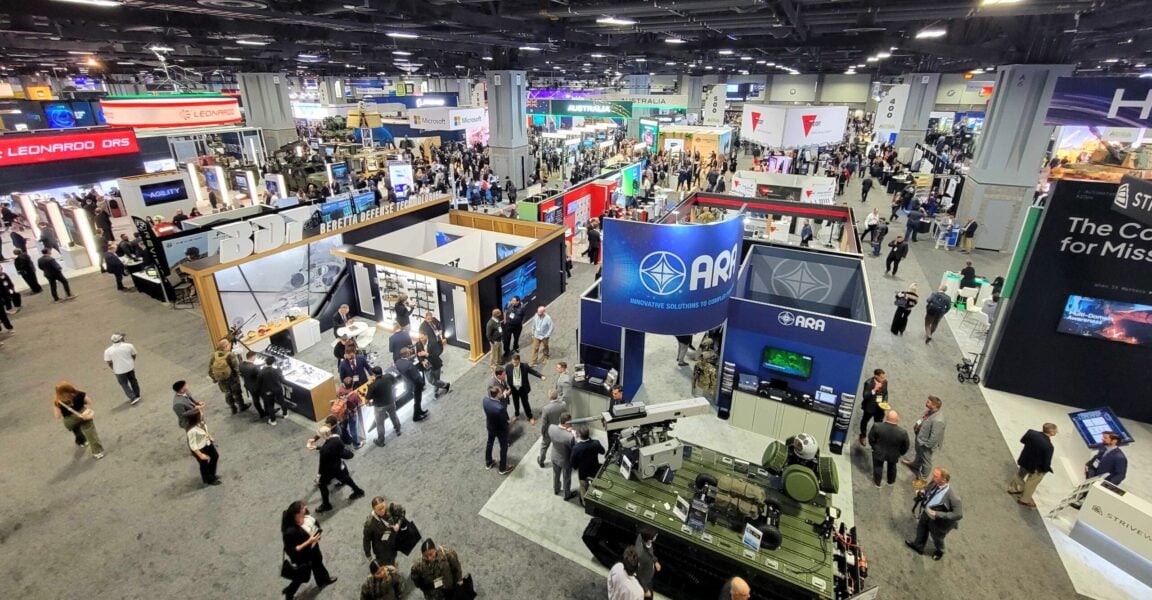
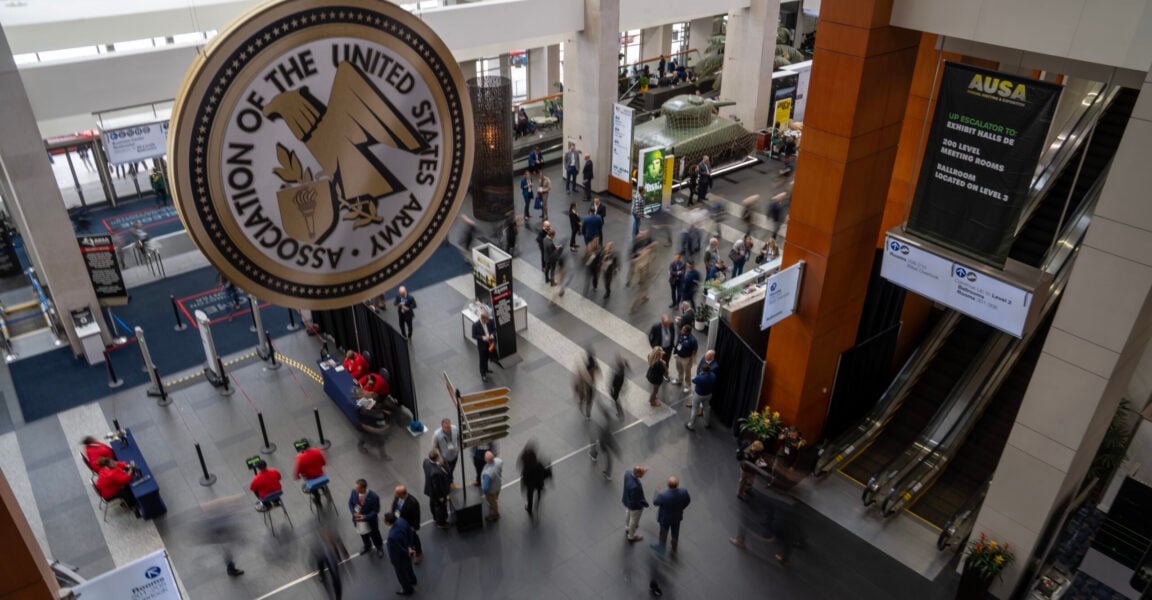
A view of a show floor at the 2025 Association of the US Army's Annual Meeting & Exposition in Washington, DC, Oct. 13, 2025. (Rachel Cohen/Breaking Defense)
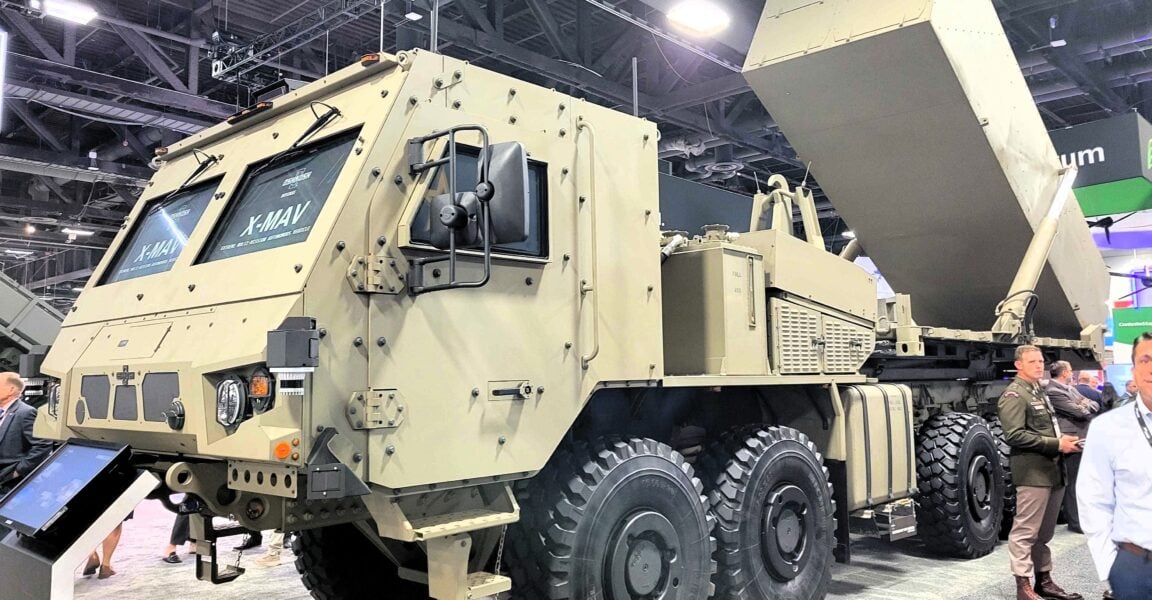
Oshkosh Defense debuts its Extreme Multi-Mission Autonomous Vehicle (X-MAV), an "autonomous-capable launcher solution that is engineered to support the future of long-range munitions," Oct. 13, 2025, at the Association of the US Army's Annual Meeting & Exposition in Washington, DC. (Rachel Cohen/Breaking Defense)
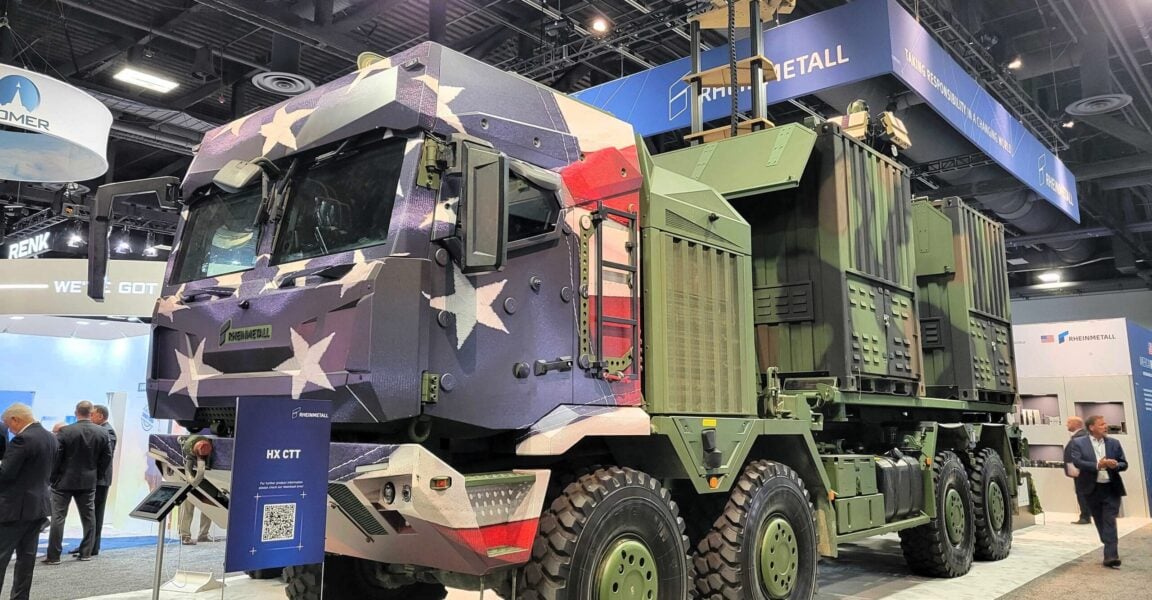
Rheinmetall brought its HX Common Tactical Truck, built in partnership with GM Defense, to the Association of the US Army's Annual Meeting & Exposition, Oct. 13, 2025. (Rachel Cohen/Breaking Defense)
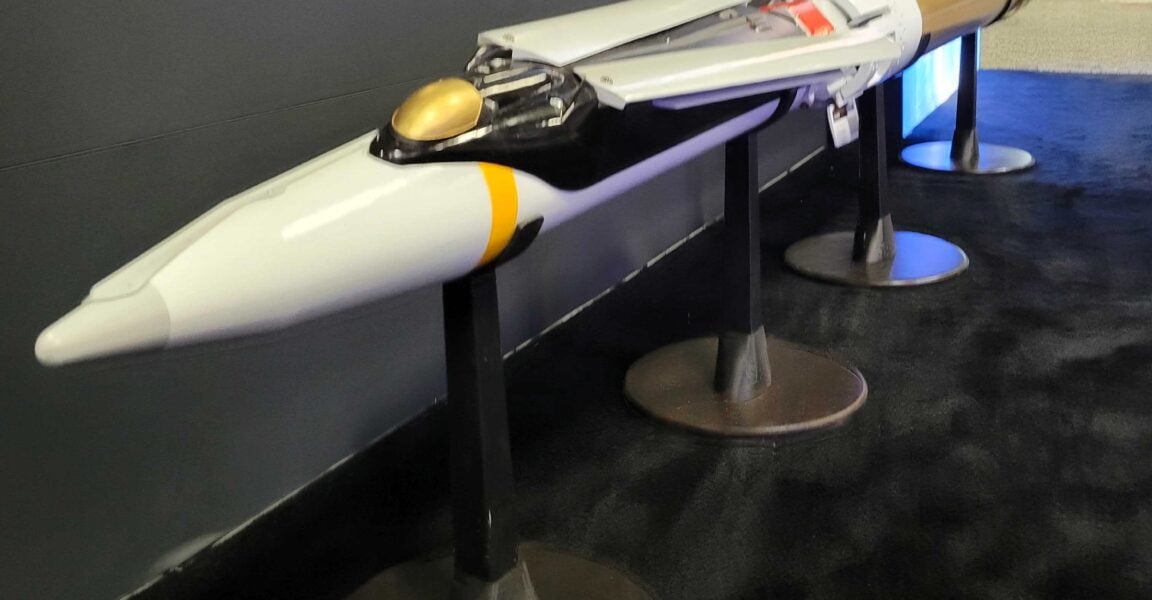
Saab's Ground-Launched Small Diameter Bomb is based on Boeing's SDB and Lockheed Martin's Multiple Launch Rocket System. (Rachel Cohen/Breaking Defense)
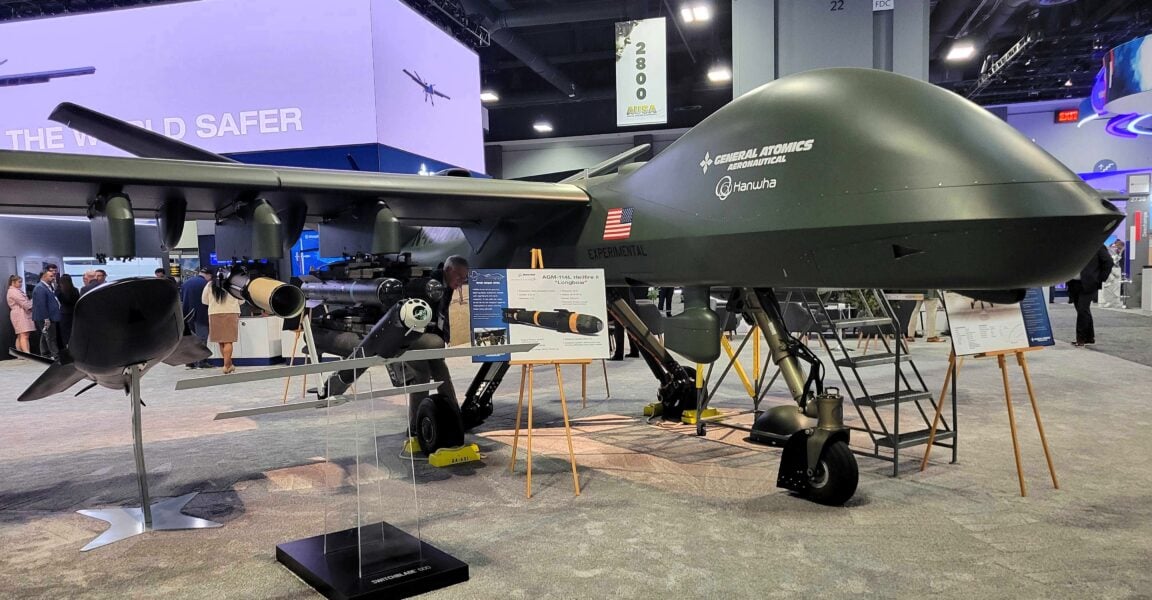
General Atomics Aeronautical Systems and Hanwha Aerospace are collaborating on a short takeoff-and-landing version of the MQ-1C Gray Eagle drone. (Rachel Cohen/Breaking Defense)
Rafael's Iron Beam is a 100kW-class laser weapon on track for operational use this year. (Aaron Mehta/Breaking Defense)
Honeywell's SAMURAI anti-drone system is one of myriad counter-drone technologies on display at AUSA 2025. (Daniel Woolfolk/Breaking Defense)
Hanwha Defense USA pitches its 155 mm, 52-caliber K9 Thunder self-propelled howitzer at the Association of the US Army's Annual Meeting & Exposition in Washington, DC. (Rachel Cohen/Breaking Defense)
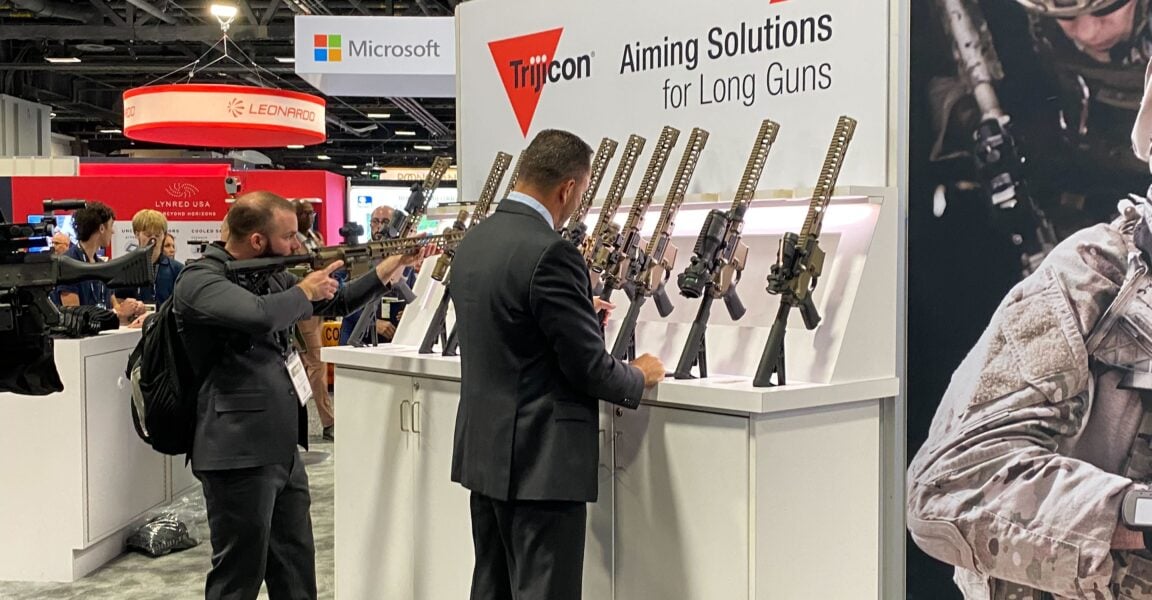
Conference attendees try out Trijicon's firearm sights and scopes. (Aaron Mehta/Breaking Defense)
Attendees roam the halls of the Walter E. Washington Convention Center in downtown Washington, DC, Oct. 13, 2025. (Daniel Woolfolk/Breaking Defense)
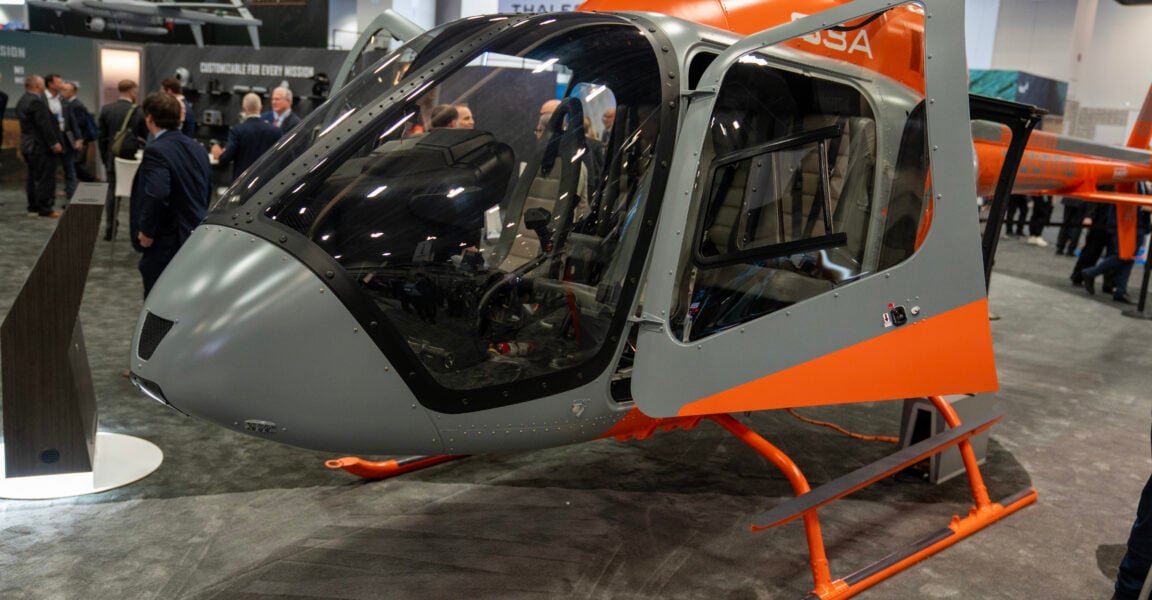
The Bell 505 Jet Ranger X is a contender for the Army's Flight School Next program. (Daniel Woolfolk/Breaking Defense)
GM Defense's Infantry Squad Vehicle-Utility is based on the Chevrolet Colorado ZR2 and can be adapted to carry mortars, counter-drone equipment and more. (Aaron Mehta/Breaking Defense)
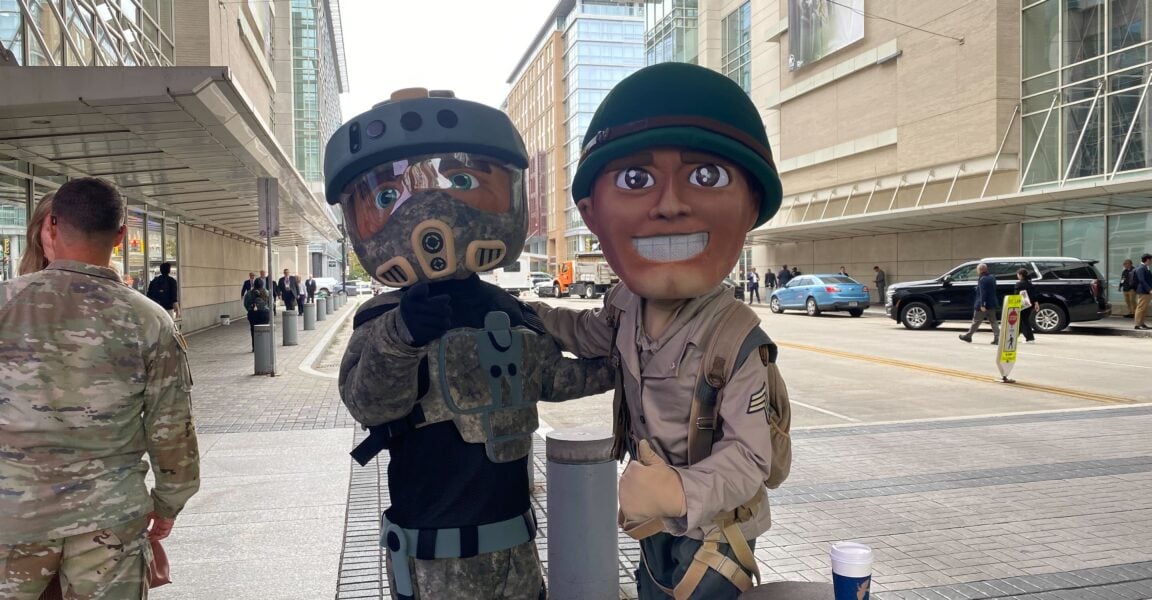
Name a more iconic duo. I'll wait. (Aaron Mehta/Breaking Defense)
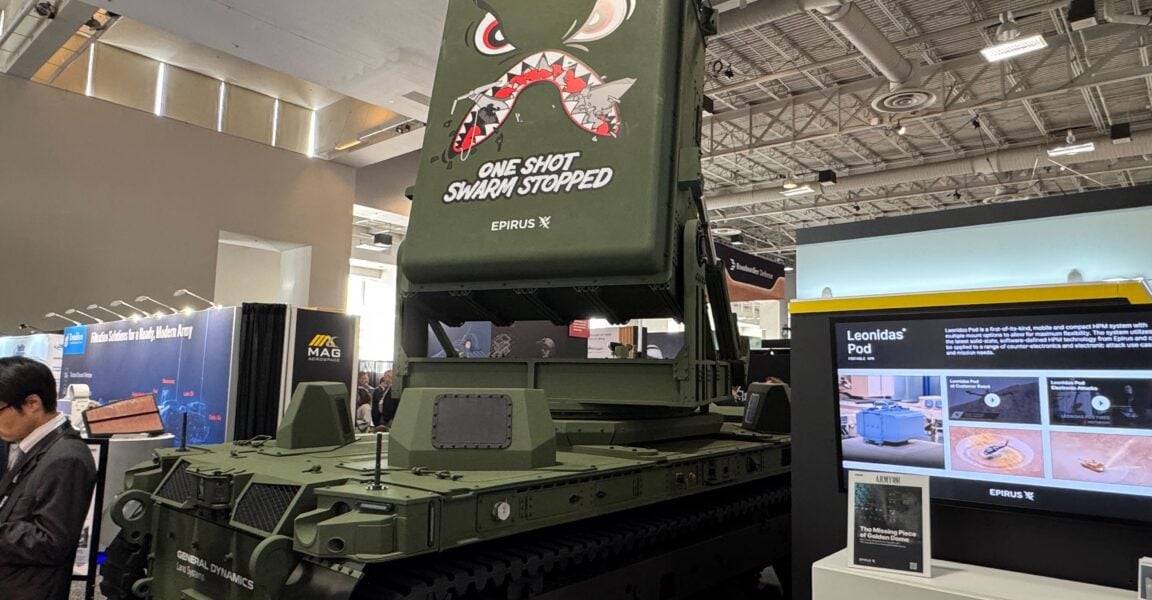
Epirus’s Leonidas high-powered microwave system is mounted on top of a General Dynamics land vehicle. (Michael Marrow/Breaking Defense)
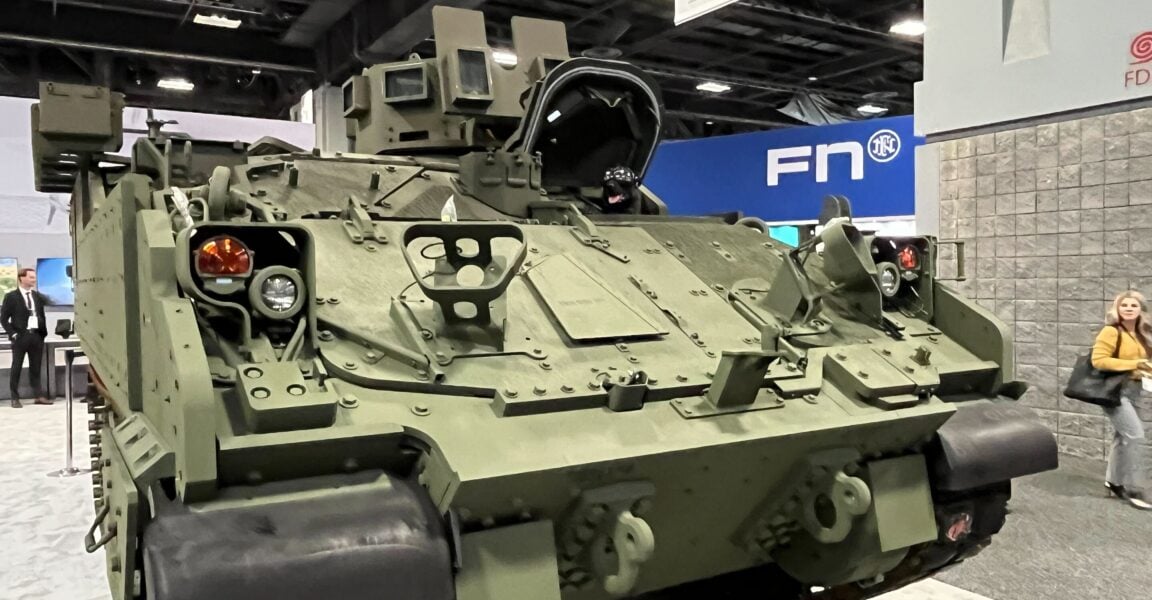
A four-legged attendee checks whether the infantry carrier variant of BAE Systems' Armored Multi-Purpose Vehicle can also carry canines. (Sydney Freedberg/Breaking Defense)
It wouldn't be a defense trade show in 2025 without a robot dog on hand. (Aaron Mehta/Breaking Defense)
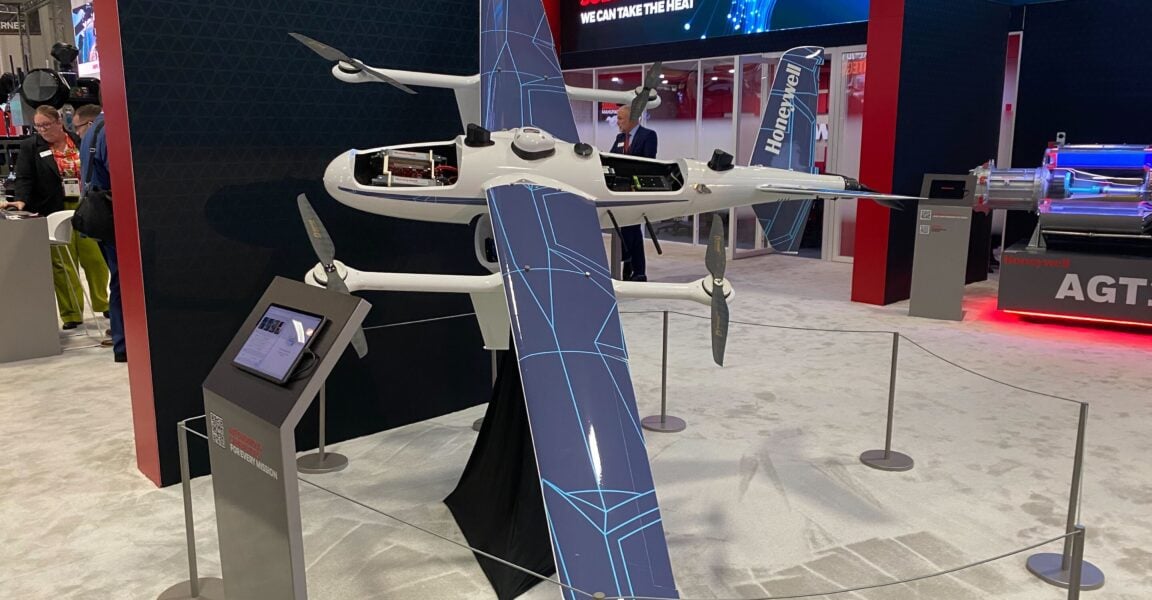
Honeywell showcases a hybrid quadcopter/fixed-wing drone on the show floor. (Aaron Mehta/Breaking Defense)
RTX displays its missiles and a Lower Tier Air and Missile Defense Sensor. (Aaron Mehta/Breaking Defense)