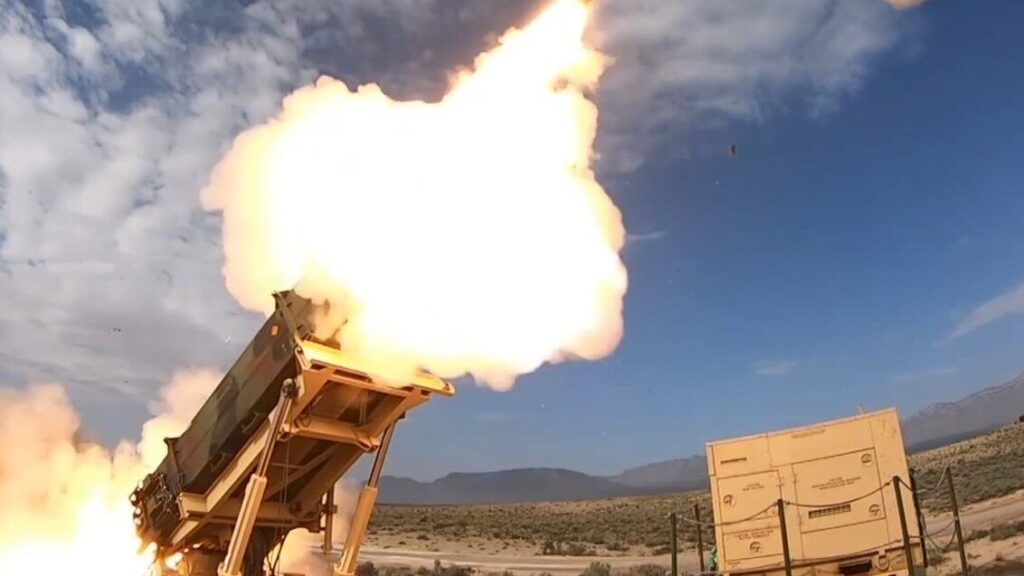
AUSA 2025 — A year after the program was cancelled, it looks like the Army could reverse course and back the development of a next-generation interceptor for the Patriot missile system, known as the Lower-Tier Future Interceptor (LTFI), the head of the Army’s missiles and space portfolio said today.
“There are some aspects of the LTFI program that are still somewhat pre-decisional, but I believe that we will get support for the program, and I may be in a position this time next year to begin program-of-record execution,” Maj. Gen. Frank Lozano, Program Executive Officer for Missiles and Space said during a panel discussion at the AUSA conference on Monday.
“I think right now the glass is probably half full that we’ll get to run that program, and so we’re really in the planning process in figuring out what that’s going to look like moving forward.”
At last year’s annual AUSA conference, Lozano told Defense News that the service was cancelling the LTFI program as it was “very expensive,” and instead was planning on upgrading the PAC-3 Missile Segment Enhancement currently made by Lockheed Martin. But with a new administration and more funding allocated for the program in this year’s defense budget, Lozano said he sees a way forward.
Demand for air defense systems, including the Patriot, has also surged as militaries the world over have looked to secure their skies after watching the effectiveness of drone and missile strikes everywhere from Ukraine to Qatar to Iran.
Should it go ahead, Lozano said he wants it to adopt a middle-tier acquisition approach to instill “rapid prototyping.” He added that he wants to get a “somewhat minimum viable capability” within three to five years of establishing a formal program of record.
“We are in a process right now to develop courses of action associated with different acquisition strategies that we could execute very quickly,” he added.
Before the program was cancelled last year, Lockheed Martin and Raytheon put their hats in the ring for the competition. This time around, Lozano said he wants to look as far and wide as he can.
“There’s a lot of new market entrants into this space and we’re gonna want to cast the widest net possible to try to get the best ideas out of industry on what may be feasible from a LTFI perspective,” he said.
PHOTOS: AUSA 2025

 Gallery