Land Warfare

Leonardo DRS, KNDS team up for US Army howitzer offering

After a long pause, the US Army is back on track in its search for new long-range artillery.

The French-made, truck-mounted Caesar artillery system, shown during a demonstration at Eurosatory 2022. (Photo: Christina Mackenzie/Breaking Defense)

AUSA 2025 — Leonardo DRS is partnering with European land defense specialist KNDS to throw their hat in the ring for the US Army’s forthcoming howitzer competition, the company announced.

The two signed a “strategic teaming agreement” to offer the Army the CAESAR self-propelled howitzer, a “combat-proven” system that Leonardo DRS said “addresses the U.S. Army’s need for greater range and improved mobility.” Though KNDS makes the CAESAR, Leonardo DRS, the US arm of Italian parent Leonardo, will be the integrator and prime for the project.

“The ability for soldiers to rapidly and reliably put artillery on target is a crucial mission the U.S. Army is addressing, and we are proud to use our deep experience in integrating best-of-breed capabilities to support this future mission,” Aaron Hankins, senior vice president and general manager of the Leonardo DRS Land Systems business unit, said in the company announcement on Monday.

The US Army’s quest for a new long-range artillery has progressed in fits and starts in recent years, most recently waiting through a months-long pause as the Army was “re-evaluating” its needs under the wide-ranging Army Transformation Initiative. Before the pause, Army officials had embarked on a globe-trotting tour to examine existing self-propelled howitzers, seeing at least five companies’ wares, though KNDS was not listed among them at the time.

But late last month the Army posted a fresh request for information, stating, “Comprehensive analysis has confirmed the importance of 155mm self-propelled artillery system-of-systems to the Army.”

The Leonardo DRS-KNDS team-up will likely face stiff competition from other artillery makers, including the five firms the Army singled out last year for demonstrations: Germany’s Rheinmetall, Israel’s Elbit, Britain’s BAE, South Korea’s Hanwha and America’s General Dynamics. For the foreign companies, however, it appears the Army could require a local partner or facilities.

Though the Army said “the scope and organization of a soldier experiment for self-propelled artillery is still being defined,” the September RFP suggested that the service is primarily looking for US-made and -manufactured solutions.

For example, the RFI directs respondents to “provide a summary of your current supply chain and current suppliers used in the USA, including a map of major supplier locations. Highlight major supplier locations outside of the USA.”

PHOTOS: AUSA 2025

PHOTOS: AUSA 2025

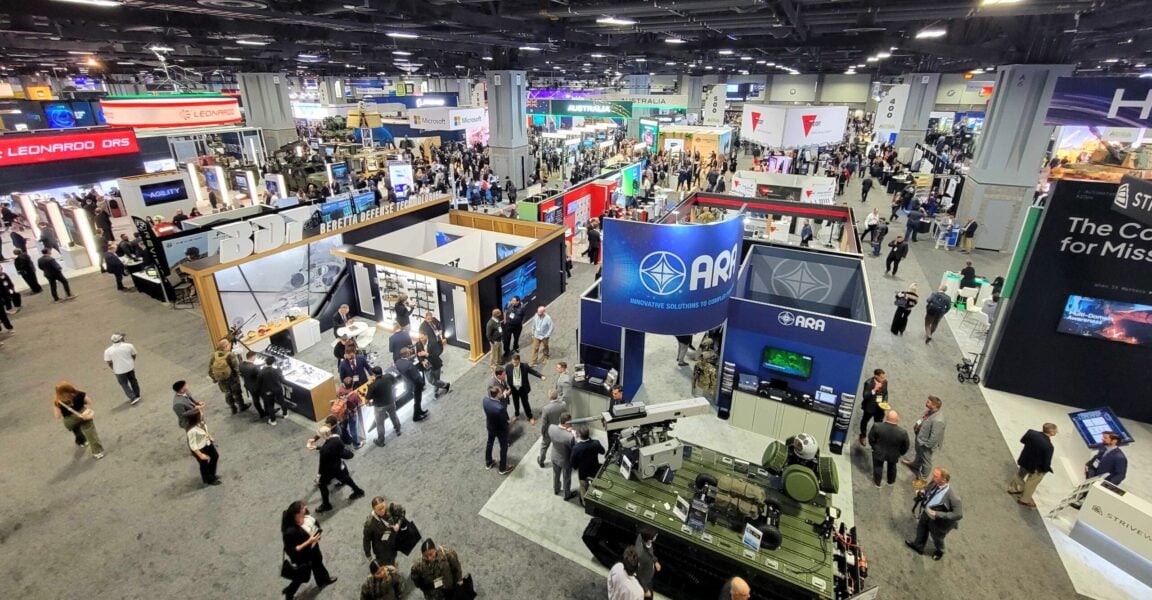
A view of a show floor at the 2025 Association of the US Army's Annual Meeting & Exposition in Washington, DC, Oct. 13, 2025. (Rachel Cohen/Breaking Defense)
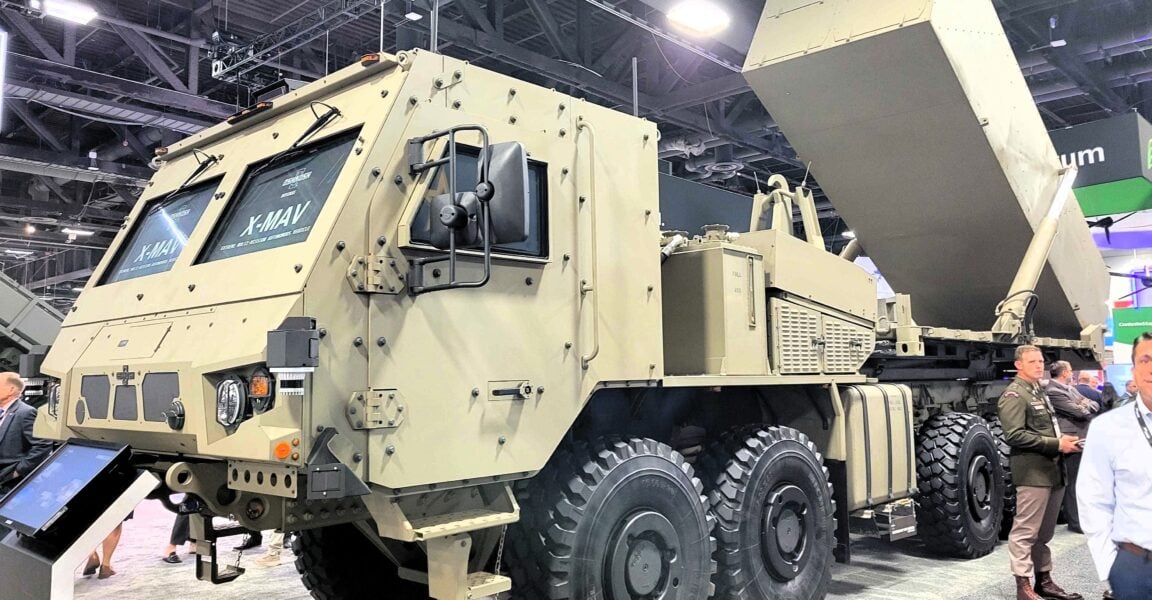
Oshkosh Defense debuts its Extreme Multi-Mission Autonomous Vehicle (X-MAV), an "autonomous-capable launcher solution that is engineered to support the future of long-range munitions," Oct. 13, 2025, at the Association of the US Army's Annual Meeting & Exposition in Washington, DC. (Rachel Cohen/Breaking Defense)
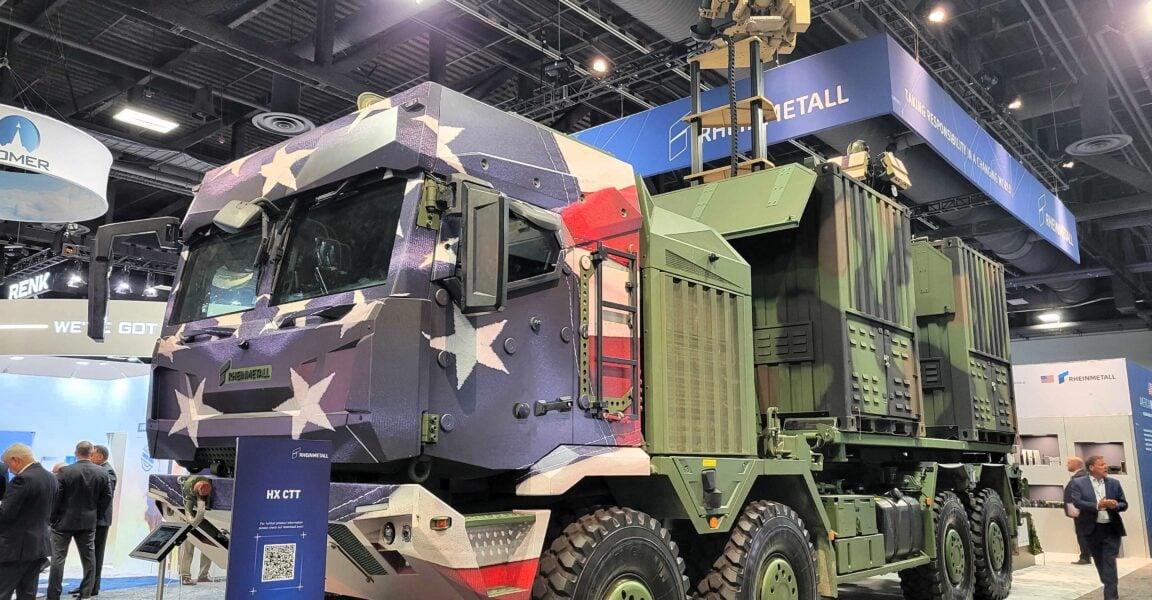
Rheinmetall brought its HX Common Tactical Truck, built in partnership with GM Defense, to the Association of the US Army's Annual Meeting & Exposition, Oct. 13, 2025. (Rachel Cohen/Breaking Defense)
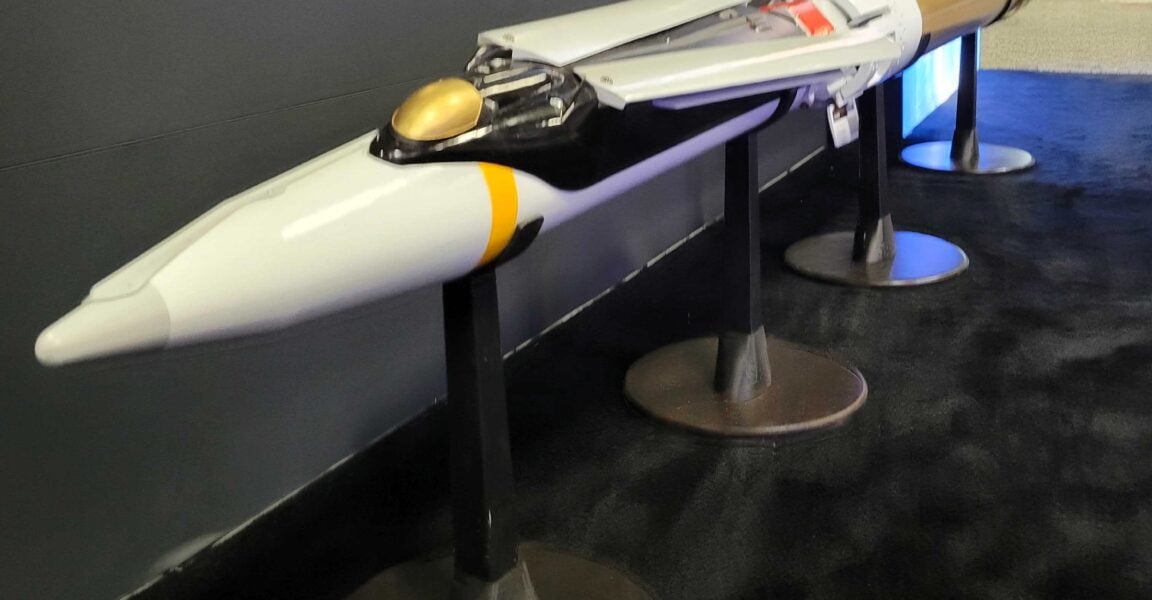
Saab's Ground-Launched Small Diameter Bomb is based on Boeing's SDB and Lockheed Martin's Multiple Launch Rocket System. (Rachel Cohen/Breaking Defense)
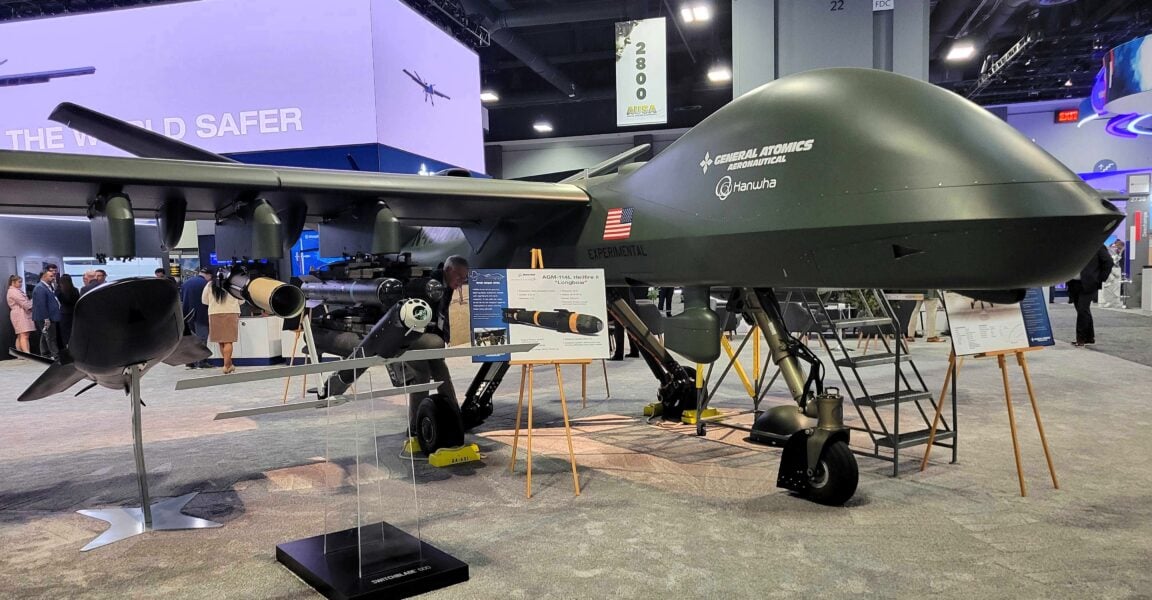
General Atomics Aeronautical Systems and Hanwha Aerospace are collaborating on a short takeoff-and-landing version of the MQ-1C Gray Eagle drone. (Rachel Cohen/Breaking Defense)
Rafael's Iron Beam is a 100kW-class laser weapon on track for operational use this year. (Aaron Mehta/Breaking Defense)
Honeywell's SAMURAI anti-drone system is one of myriad counter-drone technologies on display at AUSA 2025. (Daniel Woolfolk/Breaking Defense)
Hanwha Defense USA pitches its 155 mm, 52-caliber K9 Thunder self-propelled howitzer at the Association of the US Army's Annual Meeting & Exposition in Washington, DC. (Rachel Cohen/Breaking Defense)
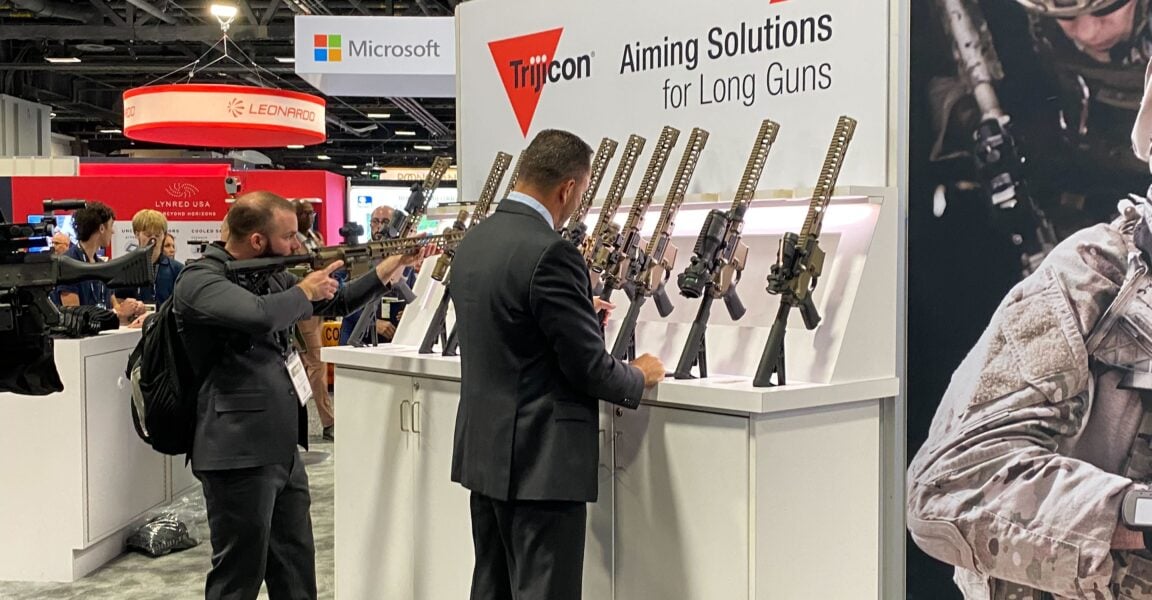
Conference attendees try out Trijicon's firearm sights and scopes. (Aaron Mehta/Breaking Defense)
Attendees roam the halls of the Walter E. Washington Convention Center in downtown Washington, DC, Oct. 13, 2025. (Daniel Woolfolk/Breaking Defense)
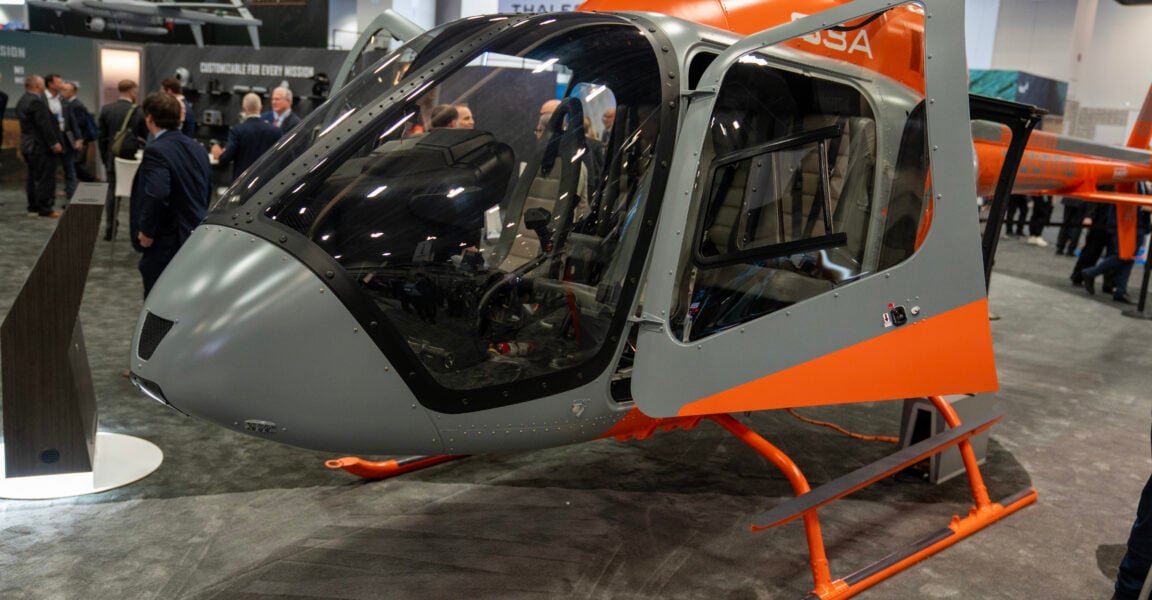
The Bell 505 Jet Ranger X is a contender for the Army's Flight School Next program. (Daniel Woolfolk/Breaking Defense)
GM Defense's Infantry Squad Vehicle-Utility is based on the Chevrolet Colorado ZR2 and can be adapted to carry mortars, counter-drone equipment and more. (Aaron Mehta/Breaking Defense)
Name a more iconic duo. I'll wait. (Aaron Mehta/Breaking Defense)
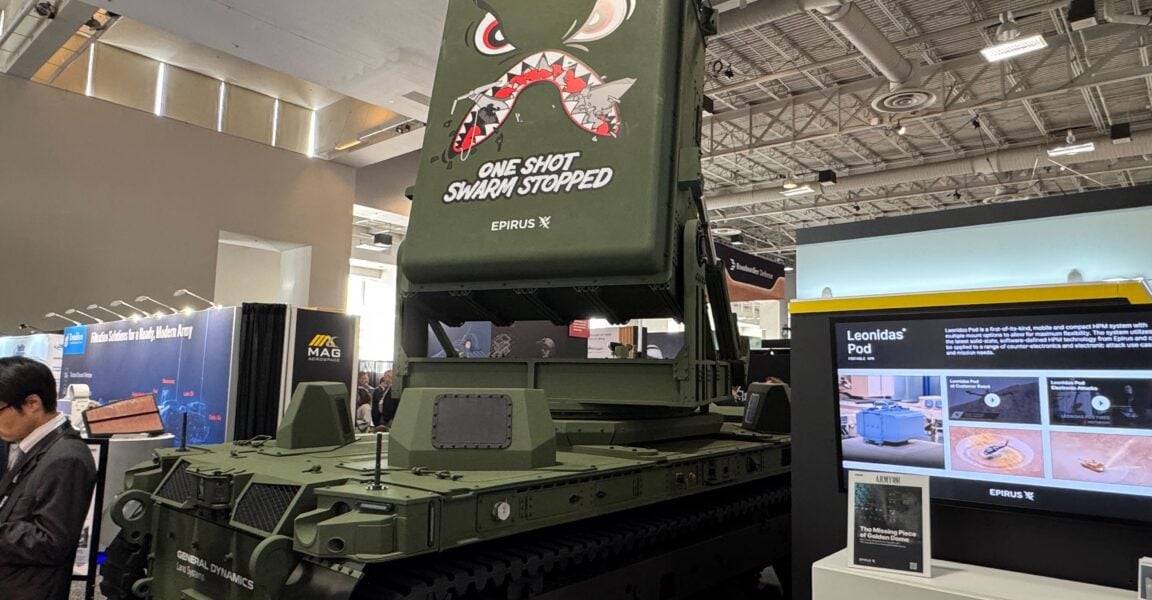
Epirus’s Leonidas high-powered microwave system is mounted on top of a General Dynamics land vehicle. (Michael Marrow/Breaking Defense)
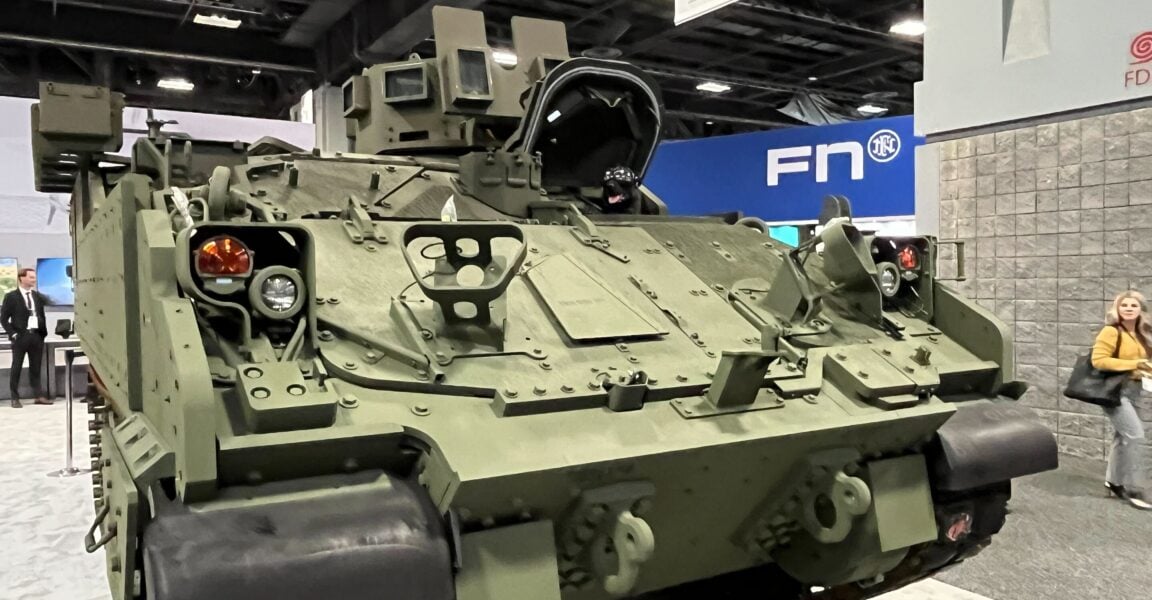
A four-legged attendee checks whether the infantry carrier variant of BAE Systems' Armored Multi-Purpose Vehicle can also carry canines. (Sydney Freedberg/Breaking Defense)
It wouldn't be a defense trade show in 2025 without a robot dog on hand. (Aaron Mehta/Breaking Defense)
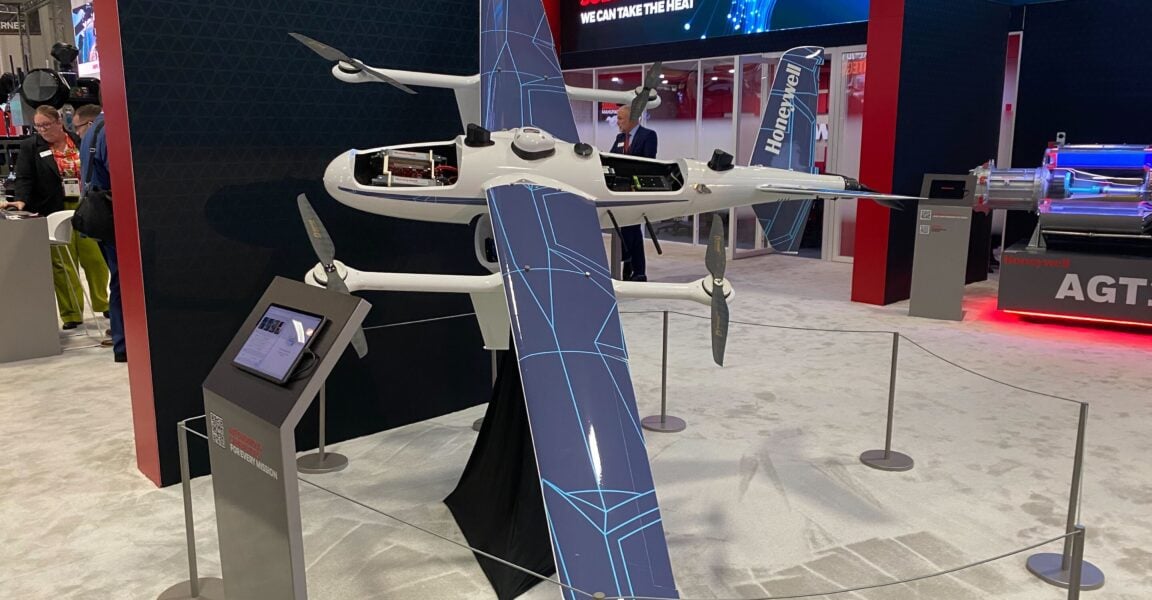
Honeywell showcases a hybrid quadcopter/fixed-wing drone on the show floor. (Aaron Mehta/Breaking Defense)
RTX displays its missiles and a Lower Tier Air and Missile Defense Sensor. (Aaron Mehta/Breaking Defense)