Networks & Digital Warfare

Rafael unveils new high-speed L-Spike 4X loitering munition

The company said the weapon combines “high-speed transit, seeker precision and mission persistence for contested operational environments."

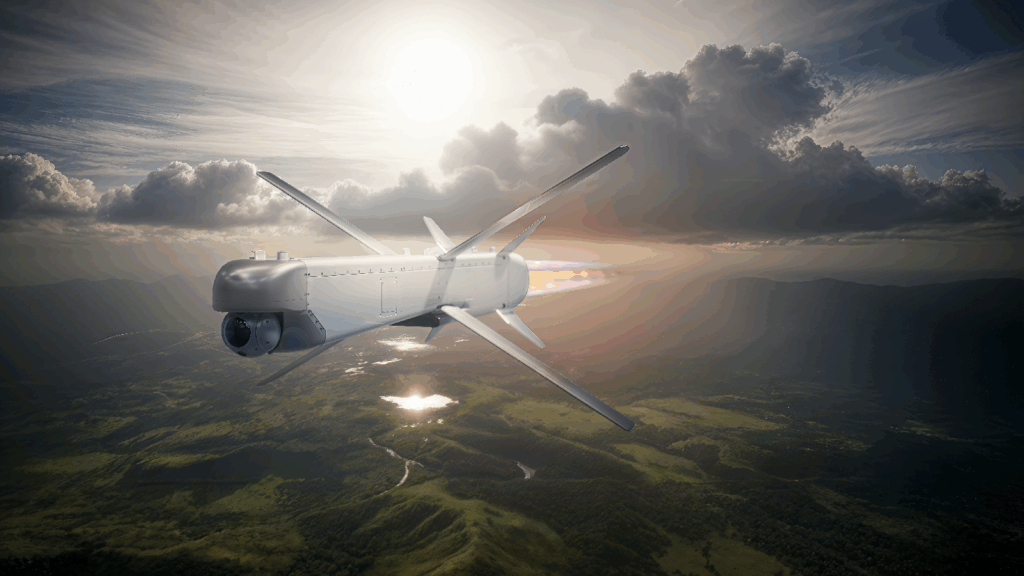
The American arm of Israeli firm Rafael announced a new rocket-powered loitering munition called L-Spike 4X ahead of AUSA in October 2025. (Rafael)

JERUSALEM — The American arm of Israeli defense firm Rafael has unveiled the newest entrant to its Spike family of missiles, this one a high-speed, rocket-powered loitering munition dubbed L-Spike 4X Launched Effect.

The company says the new munition can be fired from its Spike NLOS launchers like more traditional Spike missiles, but the L-Spike 4X adds the capability to loiter over a target before striking like a kamikaze drone. The missile combines “high-speed transit, seeker precision and mission persistence for contested operational environments,” the company said in a statement.

Yoav Tourgeman, the CEO and president of Rafael, said that “with L-SPIKE 4X we bring Spike’s missile pedigree into a new dimension — combining the speed and precision of a missile with the persistence of a Launched Effect.”

The new munition looks like a missile but with an optic in the nose and a cruciform wing design with four wings in the front and four in the rear. This design has commonalities with other loitering munitions and also has a similar wing design as the Spike NLOS, while being a different type of munition with a different body and forward portion. 

The company says that the new weapon, which is “intended for engagements at ranges of up to 40 km” or approximately 25 miles, is a missile with loitering capabilities “built in” and is not an unmanned aerial system that has a “retrofitted” warhead. 

Rafael USA said it will be offered in “two primary warhead configurations: Tandem HEAT and Multi-Purpose.” 

The missile can reach that 40km range in five minutes, which Rafael says is faster than “most electric loitering effects.” The weapon can also loiter over its target for up to 25 minutes. 

“The system is designed for operation in contested electromagnetic environments and GPS-denied environments and includes hardened communications to sustain control under interference,” the company said in a statement on Aug. 9. Drones and loitering munitions are increasingly facing the issue of GPS-denied environments and other types of jamming and spoofing.

The US Army has been testing launched effects over the last several years, including launching some from Black Hawks or from the ground. The US military has been increasing its procurement of various types of drones, loitering munitions and categories of launched effects as it seeks to expand its unmanned capabilities.

Rafael’s Spike family of missiles have been used by up to 45 countries, and are often used for anti-tank and similar types of missiles. 

Rafael also makes the Spike Firefly, which is a tactical loitering munition that has been used by the IDF. Unlike the new missile, the Firefly is a small munition that hovers using a series of blades similar to a helicopter.  

PHOTOS: AUSA 2025

PHOTOS: AUSA 2025

A view of a show floor at the 2025 Association of the US Army's Annual Meeting & Exposition in Washington, DC, Oct. 13, 2025. (Rachel Cohen/Breaking Defense)
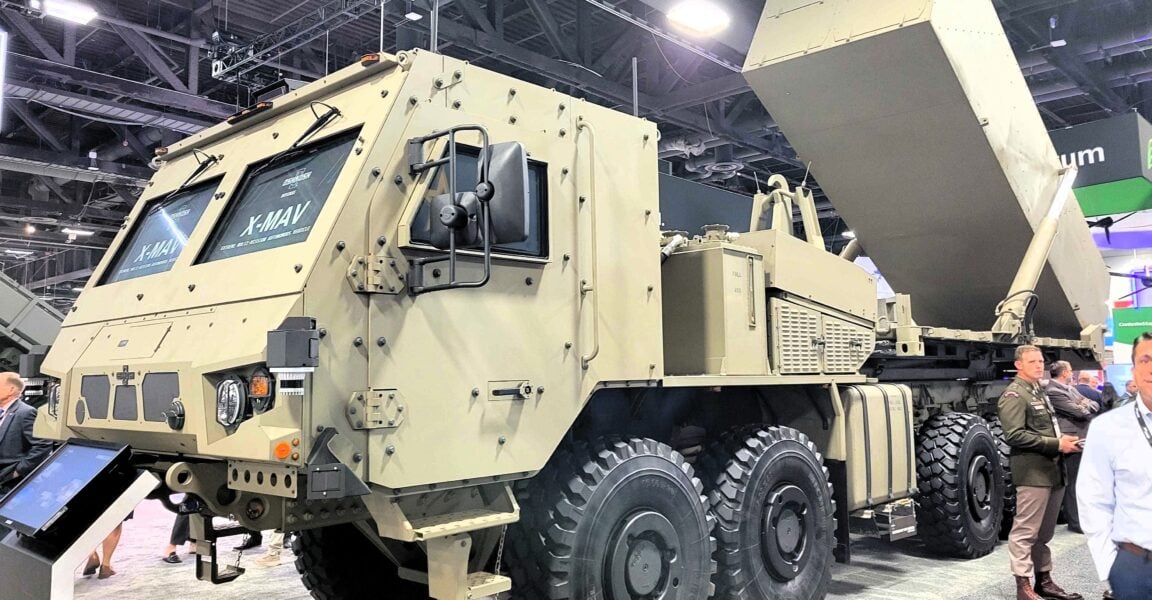
Oshkosh Defense debuts its Extreme Multi-Mission Autonomous Vehicle (X-MAV), an "autonomous-capable launcher solution that is engineered to support the future of long-range munitions," Oct. 13, 2025, at the Association of the US Army's Annual Meeting & Exposition in Washington, DC. (Rachel Cohen/Breaking Defense)
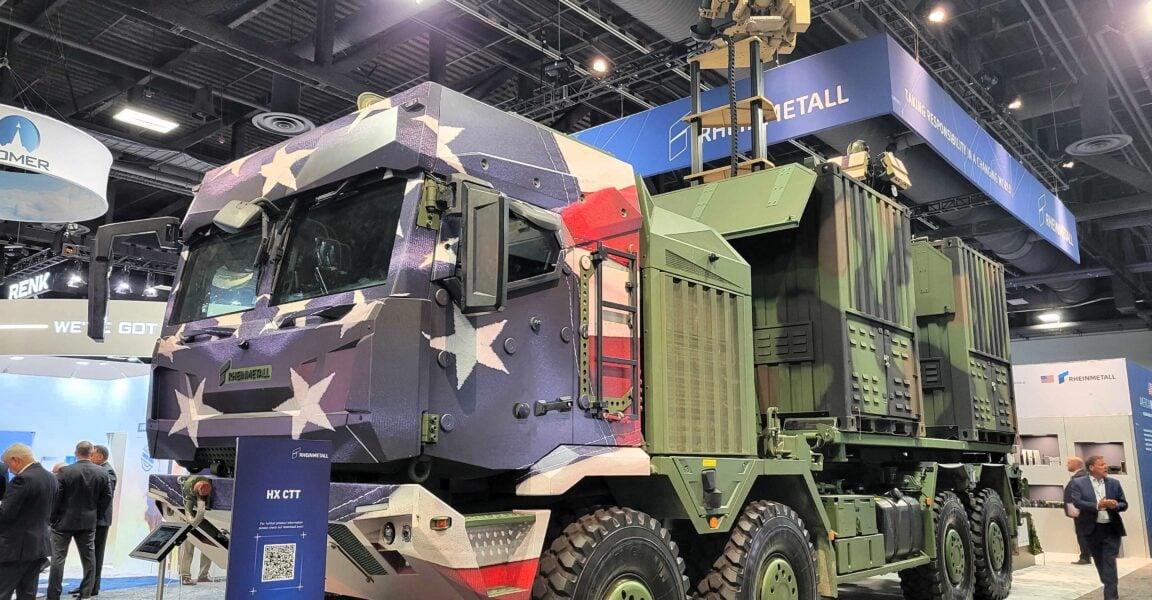
Rheinmetall brought its HX Common Tactical Truck, built in partnership with GM Defense, to the Association of the US Army's Annual Meeting & Exposition, Oct. 13, 2025. (Rachel Cohen/Breaking Defense)
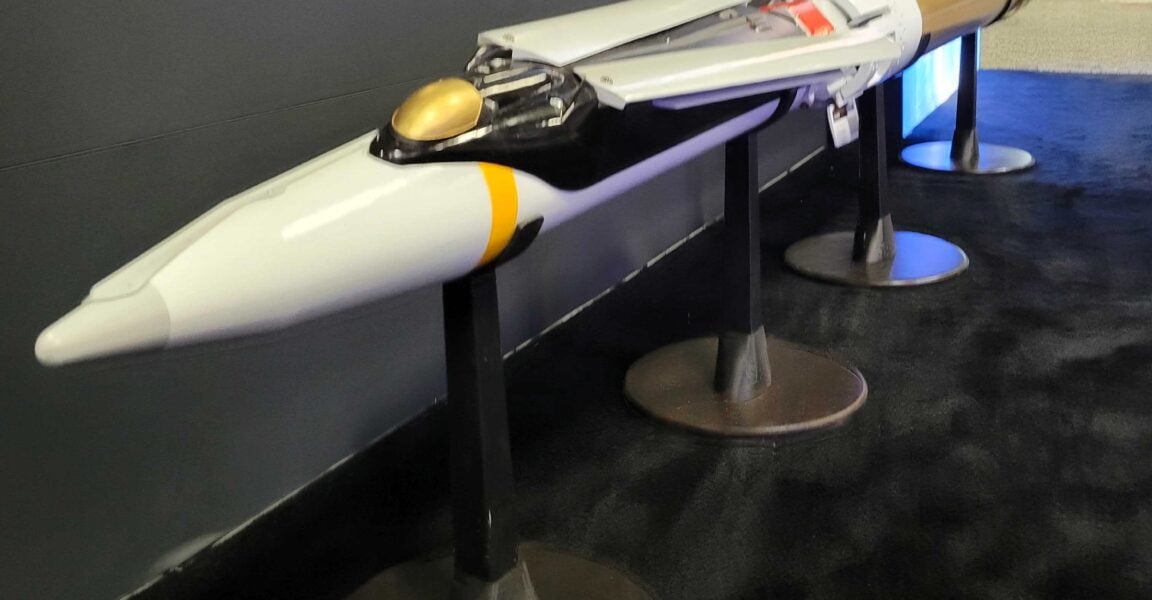
Saab's Ground-Launched Small Diameter Bomb is based on Boeing's SDB and Lockheed Martin's Multiple Launch Rocket System. (Rachel Cohen/Breaking Defense)
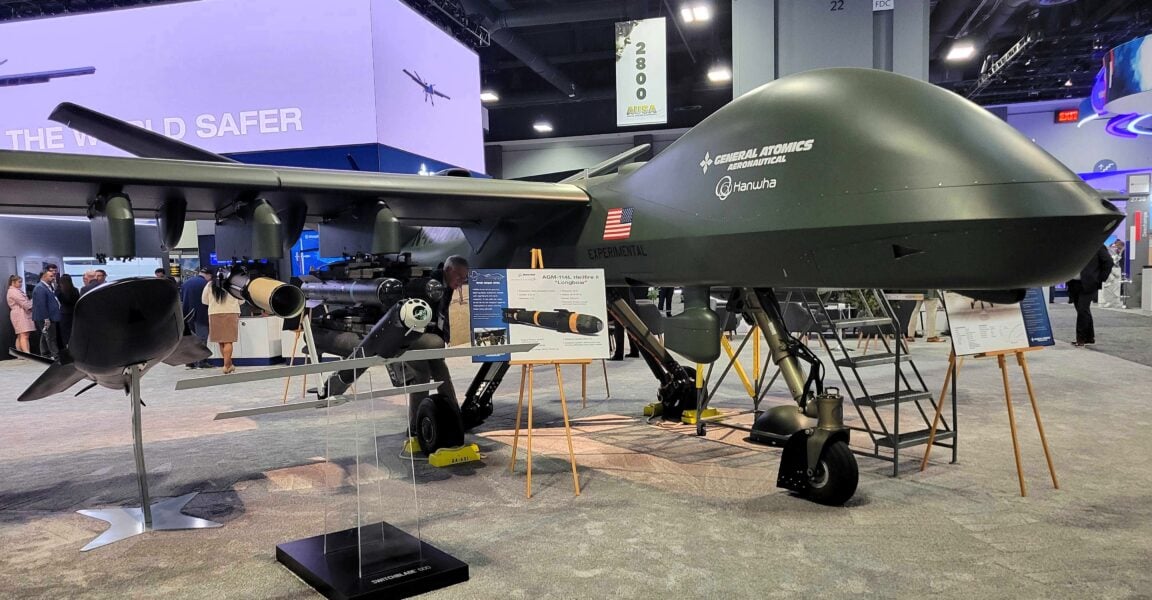
General Atomics Aeronautical Systems and Hanwha Aerospace are collaborating on a short takeoff-and-landing version of the MQ-1C Gray Eagle drone. (Rachel Cohen/Breaking Defense)
Rafael's Iron Beam is a 100kW-class laser weapon on track for operational use this year. (Aaron Mehta/Breaking Defense)
Honeywell's SAMURAI anti-drone system is one of myriad counter-drone technologies on display at AUSA 2025. (Daniel Woolfolk/Breaking Defense)
Hanwha Defense USA pitches its 155 mm, 52-caliber K9 Thunder self-propelled howitzer at the Association of the US Army's Annual Meeting & Exposition in Washington, DC. (Rachel Cohen/Breaking Defense)
Conference attendees try out Trijicon's firearm sights and scopes. (Aaron Mehta/Breaking Defense)
Attendees roam the halls of the Walter E. Washington Convention Center in downtown Washington, DC, Oct. 13, 2025. (Daniel Woolfolk/Breaking Defense)
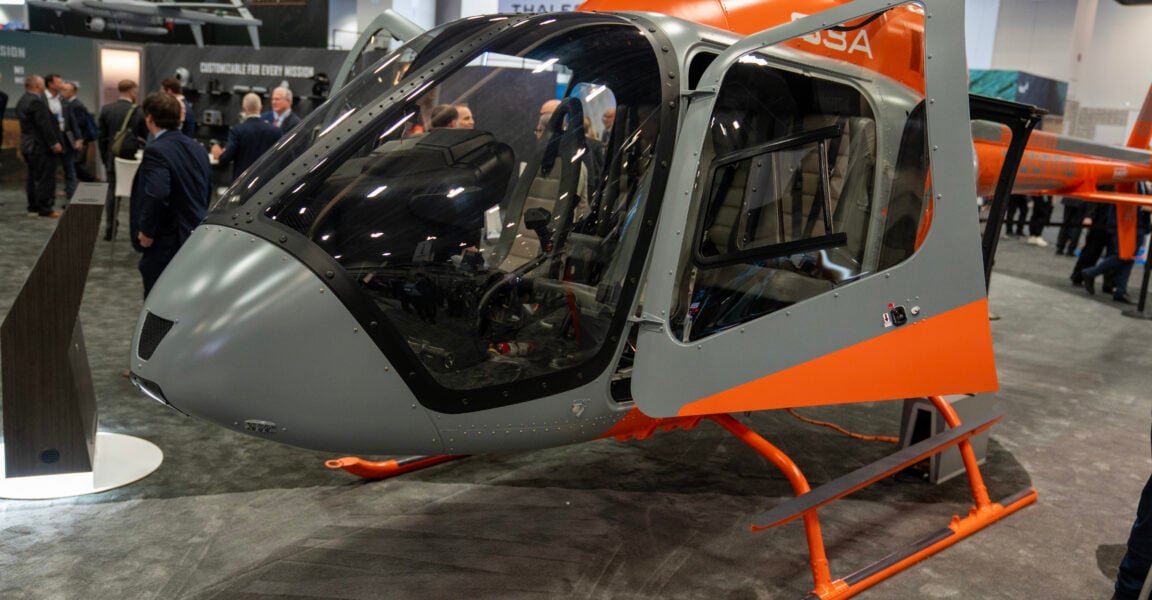
The Bell 505 Jet Ranger X is a contender for the Army's Flight School Next program. (Daniel Woolfolk/Breaking Defense)
GM Defense's Infantry Squad Vehicle-Utility is based on the Chevrolet Colorado ZR2 and can be adapted to carry mortars, counter-drone equipment and more. (Aaron Mehta/Breaking Defense)
Name a more iconic duo. I'll wait. (Aaron Mehta/Breaking Defense)
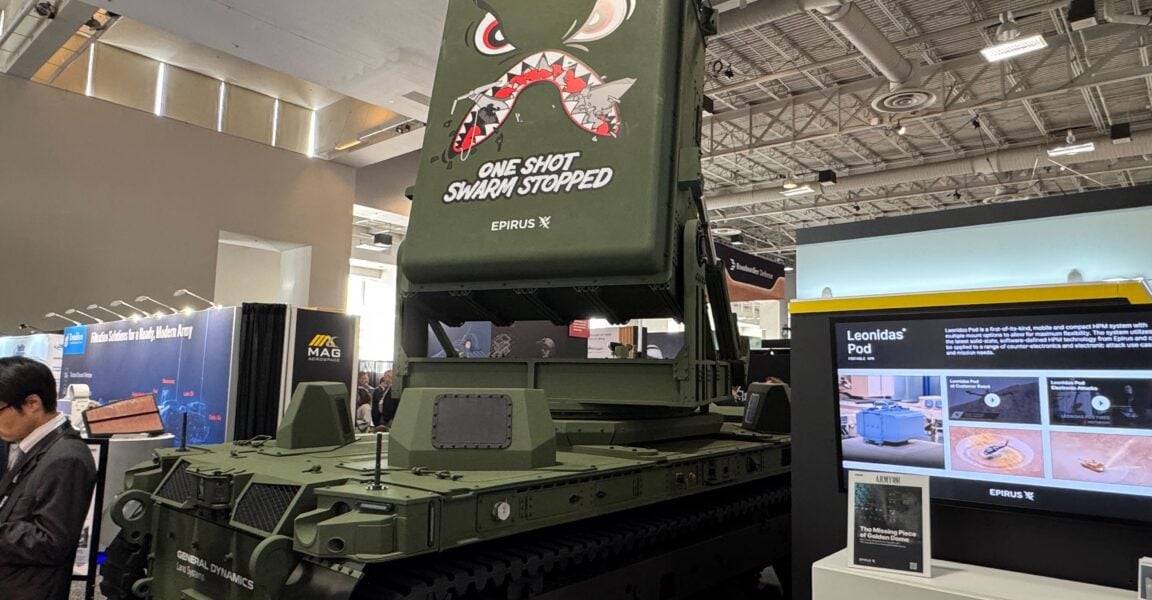
Epirus’s Leonidas high-powered microwave system is mounted on top of a General Dynamics land vehicle. (Michael Marrow/Breaking Defense)
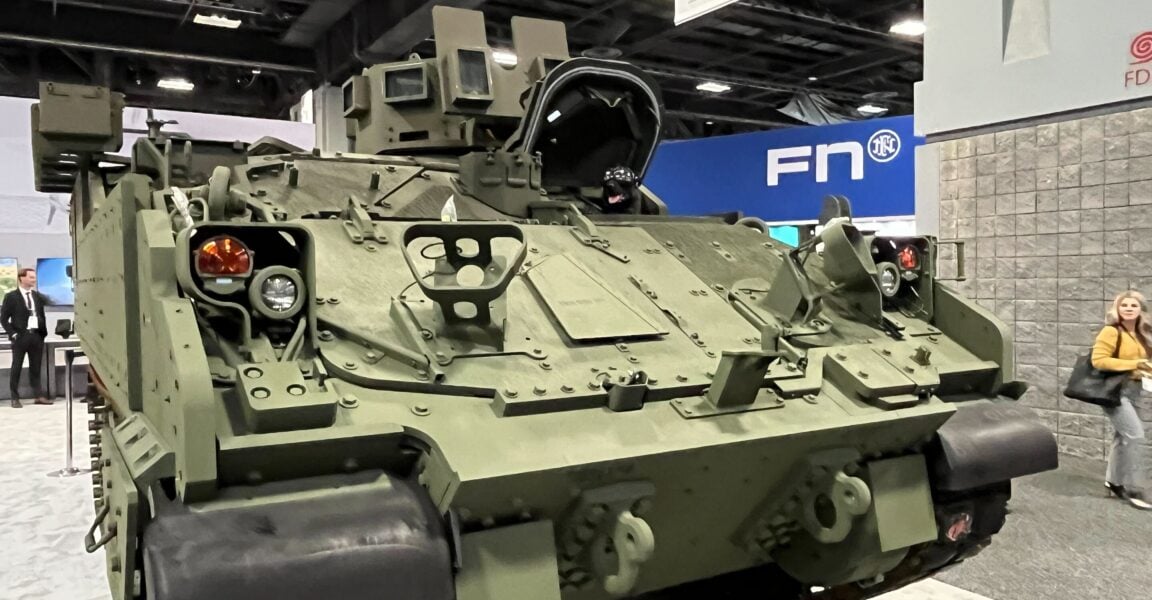
A four-legged attendee checks whether the infantry carrier variant of BAE Systems' Armored Multi-Purpose Vehicle can also carry canines. (Sydney Freedberg/Breaking Defense)
It wouldn't be a defense trade show in 2025 without a robot dog on hand. (Aaron Mehta/Breaking Defense)
Honeywell showcases a hybrid quadcopter/fixed-wing drone on the show floor. (Aaron Mehta/Breaking Defense)
RTX displays its missiles and a Lower Tier Air and Missile Defense Sensor. (Aaron Mehta/Breaking Defense)