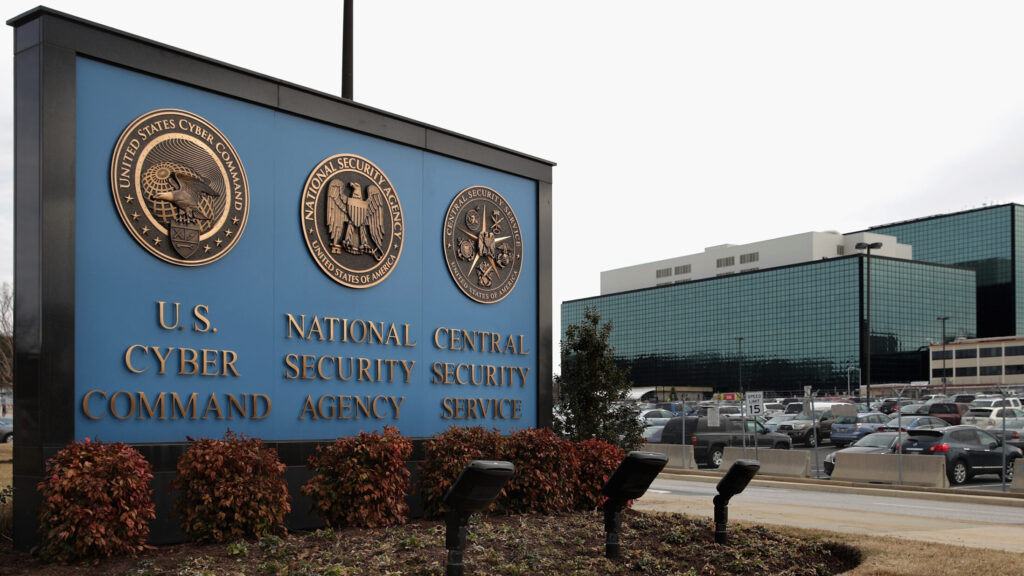
US Cyber Command turned 15 in May this year. It was also the year in which the organization saw the longest stretch without a permanent leader in its history.
In early April, the Trump administration fired Gen. Timothy Haugh, the CYBERCOM commander and director of the National Security Agency. To date, no reason has been given for the surprise firing.
The top spot will remain empty into its ninth month, something which experts and lawmakers have previously described as “heartbreaking” and an obstacle to the overall preparedness of the organization and its forces. However, there is hope that the seat will finally be filled come the new year in the form of Lt. Gen. Joshua Rudd, amid recent indications he’s in line for the post.
[This article is one of many in a series in which Breaking Defense reporters look back on the most significant (and entertaining) news stories of 2025 and look forward to what 2026 may hold.]
Historically, the incumbent commander simultaneously retires when the incoming commander takes over. The command’s deputy commander, Lt. Gen. William Hartman, has been serving as the acting commander during this time without a confirmed leader. Originally, he was thought to be a front runner for the permanent spot, but was ultimately not chosen, along with a few other names reportedly floated before Rudd emerged.
Rudd’s DoD biography shows he has no experience in cybersecurity or any other digital network portfolio, but he does have an extensive background in special operations. According to The Record, Republican Sen. Mike Rounds of South Dakota, a member of the Senate Armed Services and Intelligence committees, said during the Aspen Cyber Summit last month that an extensive history in cyberwarfare was not necessarily a requirement for the position.
The command marked another major birthday this year when its network defense arm turned 10. Created in 2015, Joint Force Headquarters-Department of Defense Information Networks served as a subordinate headquarters under CYBERCOM to protect and defend the Pentagon’s networks globally.
At its 10-year anniversary in January, its commander Lt. Gen. Paul Stanton said he was looking to evolve and mature the organization by improving how it conducts defense and even impose costs on adversaries. Then, in June it was elevated to a sub-unified command within CYBERCOM, per congressional direction, and changed its name to the DoD Cyber Defense Command (DCDC).
In addition to organizational milestones, the department sought to create new metrics around the cyber workforce. In November, the Pentagon published its long-awaited plan aimed at improving how the command and department develop and train cyber talent. It stemmed from an initiative dubbed CYBERCOM 2.0.
Looming over the cyber enterprise over the last few years remains the question of a possible stand alone Cyber Force, a seventh branch of the armed forces dedicated solely to cyberspace.
The Center for Strategic and International Studies kicked off a commission this year that seeks to lay out what a Cyber Force would look like. Setting it apart from previous efforts, the commission won’t be studying the pros and cons or viability of a study, but rather, operating under the assumption it has already been ordered as a means of giving the DoD a head start in the event the president orders its creation. The commission is comprised of several former generals and admirals that served in a variety of cyber roles, including the former chief of naval operations, Adm. Michael Gilday.