WASHINGTON — Now that the AUKUS arrangement has officially survived a much-anticipated Trump administration review, defense leaders from the US, UK and Australia met today to reaffirm their commitment to the trilateral deal.
“This is a big moment. It’s a big moment for AUKUS. It’s a big moment for three nations together,” John Healey, the UK’s Secretary of State for Defense, said according to a transcript released after the meeting. “It is, as President [Donald] Trump has said, the moment of full steam ahead for AUKUS. And it’s right that all three governments, as newly elected governments, have carried out a review of AUKUS.”
Healey went so far as to call it a “reboot” with a “new commitment and a new determination” while standing alongside Australia’s Deputy Prime Minister and Minister of Defense Richard Marles and US Defense Secretary Pete Hegseth.
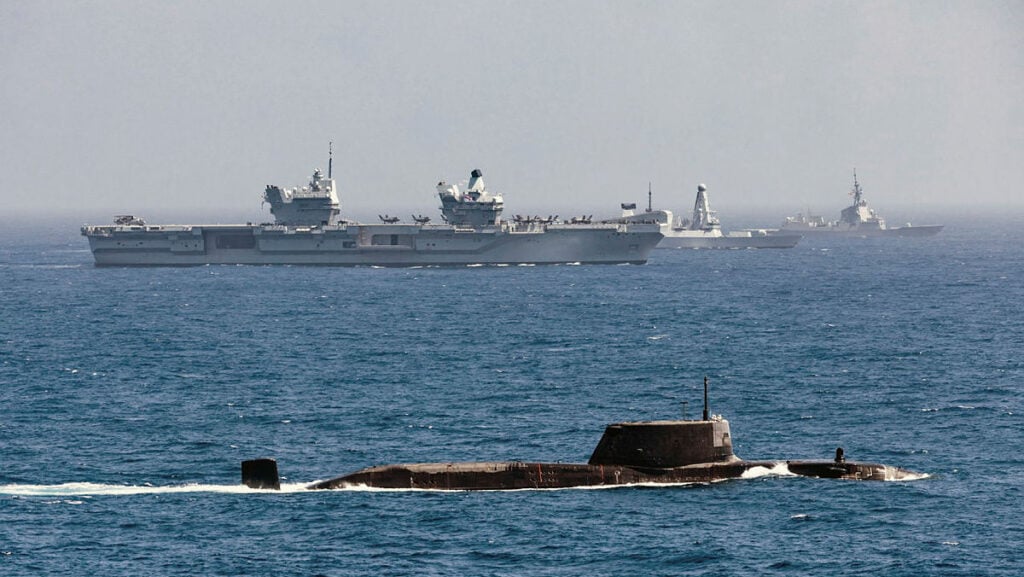
The trio sat down just days after the Pentagon officially announced it had wrapped up its review AUKUS Pillar I of the arrangement — a review that caught lawmakers and world leaders by surprise this summer when it was revealed. That first pillar outlines the sale of at least three US-made Virginia-class submarines to Australia followed by the creation of SSN AUKUS nuclear-powered submarines for both the UK and Australia.
RELATED: Pentagon’s AUKUS review unlikely to break trilateral program, analysts say
For his part, Hegseth said the AUKUS review supports “continued commitment to a pragmatic practical application of hard power between our countries.”
What isn’t clear is what changes, if any, the US has requested or if alterations were made at the behest of either Australia or the UK. The Pentagon did not immediately respond to questions about today’s meeting or any pending AUKUS changes.
In October John Noh, the Deputy Assistant Secretary of Defense for East Asia, told members of the Senate Armed Services Committee that the department was reviewing “common sense” ways to “strengthen” AUKUS.
Just weeks later during a White House meeting Trump affirmed US commitment to the trilateral deal, asserting he would even like to accelerate submarine deliveries to Canberra. However, at least one possible sticking point for Pillar I has revolved around shipbuilding capacity. The prospect of Washington selling Virginia-class subs has prompted concerns from seapower advocates that the US industrial base is strained just keeping up with US Navy demands.
While details about today’s meeting and any possible AUKUS changes are not readily available, Healy said the trio of nations are now ready to move out.
“The reviews are done. It’s time to deliver,” Healy added.