
The United States is currently the world’s leader in unmanned technology, allowing it to both support allies in the Indo-Pacific and implement new capabilities that industries in allied nations develop. But China is investing heavily in manufacturing infrastructure to develop new technologies that will allow it to build a strategic advantage in the region.
Autonomy and artificial intelligence (AI) are key capabilities of unmanned systems, and the surface of what those tools can provide is only being scratched. But they are also still somewhat limited in what they can do without human direction, so developing and implementing unmanned systems is a comprehensive effort that isn’t simply coming up with a new tool and turning it loose, said Stayne Hoff, director of business development, Red Cat.
“Autonomy is in and on everything,” said Hoff. “It’s changing loitering munitions, all classes of UAS, ground systems, and surface warfare. AI is amazing, but the devil’s in the details of how to put it together so that it’s reliable, deterministic, and effective, and can operate in contested or denied environments with trusted levels of resilience.”
China is pursuing these tools and other capabilities as it looks to expand its influence in both the Indo-Pacific and the Global South. By leveraging its economic might and closed economic ecosystem, China can throw almost limitless resources at challenges, and it is showing a willingness to do so. The future of the region may well rest on whether the US and its allies can keep pace with China’s expansion goals, especially as it relates to manufacturing and infrastructure.
China’s economic might
China has developed itself into an economic powerhouse, and it is not content to sit on its laurels as the second-largest economy in the world, said Shihoko Goto, vice president of programs and director of the Asia Program at the Foreign Policy Research Institute.
“China has grown successfully by taking advantage of the liberal international economic order, but they are looking to overhaul that even though they have been able to benefit tremendously, if not benefit the most from it,” said Goto. “They are also looking to grow out of simply being the factory to the world.
“The question is: where does China want to go moving forward? How do they see themselves as winning in this global competition?”
Goto said that China’s goal is to be the predominant technology superpower in the world, and it is pursuing that goal with a focus on building a technology base that is the equal of or superior to any other country, while also keeping a close hold on it to ensure adversaries or potential adversaries can’t benefit.
“If we are in a Fourth Industrial Revolution that is focused on the digital economy, they want to be able to dominate and call the shots,” Goto said. “What that means is establish the rules and norms of governance and not simply be a production site.
“They are prepared to invest the money, the people, the infrastructure, an all-across-the-country type of mobilization toward this goal. If they are able to do so, what does that mean? It means that not only is the gap between the United States and China in producing advanced semiconductors going to continue to shrink and perhaps China actually overtakes, they are also going to be able to dominate when it comes to establishing data centers.”
That creates a challenge for other countries in the region, as they simply do not have the economic power necessary to compete with China. They have to rely on the US or other allies to help them keep pace with China, and they have to do that while constantly wondering whether China is saber-rattling or preparing to make a major move in the region.
Hoff said that the variables involved in keeping pace with technology advancements by China go beyond just a technology base or the economic capabilities of a country such as Taiwan, which can build and supply unmanned systems to its partners in the region, but may be cut off from doing so if China gets aggressive.
“The challenge with Taiwan is that it’s an island, so it’s easy to imagine a naval blockade making it difficult for them to sustain supplying a regional ally with UAS,” said Hoff. “Given that, mainland suppliers might be favored for such a role. It’s likely going to be driven by geography to some extent, but it’s like asking how you create a Silicon Valley somewhere else? Many ingredients are needed in the right proportions, at or above a critical mass, to create a self-sustaining market leader position.”
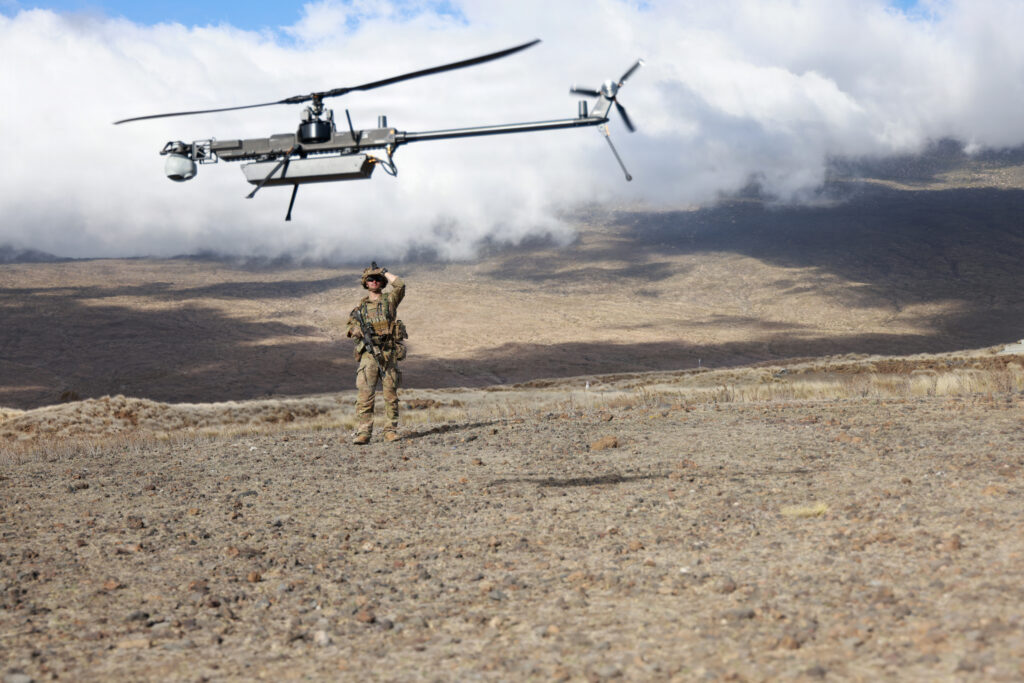
Goto pointed out that unmanned technology is a key consideration in the dynamics between Taiwan and China, as Taiwan is pushing for technologies to build up its defensive capabilities, even though she said she sees a deliberate invasion of Taiwan by China as unlikely.
“That does not take away from the fact that they are taking other actions, not necessarily kinetic, but other actions, Goto said.” They come in the form of cyberattacks and the like. Drone technology in terms of surveillance, drone technology in terms of the capabilities it has to be on the offense, these are areas that China is building up, but countries like Japan and Korea are, as well.”
Beyond the Indo-Pacific, China is expanding its reach into other parts of the world. While China does not usually cooperate with other countries in the traditional sense, it is making an effort to build systems that will have countries in Africa and the Global South dependent on Chinese technology and money, said Goto.
“The African nations’ technology dependence on China is only growing and it will continue in that vein,” Goto said. “That’s where I see the vision of China saying: we can push back against any retaliatory effort that Europe, the US is pushing, and also other countries, other emerging markets. The Global South is more dependent on China now than on the United States.”
The role of AI and other advanced tech
Companies around the world are exploring AI and other advanced technologies to push the envelope of what unmanned systems can do. Part of that is understanding that sometimes the best way to quickly incorporate a new capability is by partnering with other companies instead of trying to do everything alone.
“All technology businesses are perpetually running (or at least walking fast) to keep their products up to date and future-focused,” said Hoff. “A lot of companies are trying to do the same thing, so if you’re not innovating, you’ll be obsolete in a couple of years.
“When we’re working to get new capabilities onto our systems, we generally look to procure from multiple sources, especially if it’s an emerging technology where it’s not clear who will become the industry leader.”
That same philosophy works between countries, said Goto.
“There’s also great opportunity for those types of established institutions to look into the possibility of greater coordination and investment in new technologies, as well. We’ve had NATO investing in innovation funds,” said Goto. “We have efforts for the United States to work closely with Japan on infrastructure development and investment in new technology. This is certainly one of the areas that is ripe for coordination.”