MELBOURNE — Australia has outlined plans to boost its defense spending to three percent of its Gross Domestic Product in the coming years, while reaffirming that the US remains its closest ally and principal strategic partner.
The country’s defense department released its National Defence Strategy (NDS) and Integrated Investment Plan (IIP) earlier today, outlining a plan to get defense spending to $96.6 billion AUD, or three percent of GDP, by 2033. That total is calculated through NATO methodology, which includes figures from defense-related spending in areas like pensions.
But the department also set an even more ambitious goal, targeting spending of $113 billion AUD by 2036, which would mark an increase of $53 billion AUD over previous projections.
The boost in defense spending comes with a warning that the coming decade will likely be defined by continuing fracture of the global rules-based global order “which has underpinned Australia’s security and prosperity” with the resultant end state “difficult to predict,” the report reads.
“The net effect is that Australia will face elevated levels of geopolitical risk over the coming decade and our exposure to force projection and military coercion will reach levels not seen since the Second World War.”
It noted that China’s “growing national power and increasingly potent military capabilities remain the primary driver of changes to Indo-Pacific security dynamics” and warned that its “regional strategic weight will increase with the growth of its national power and its quest for greater strategic depth.”
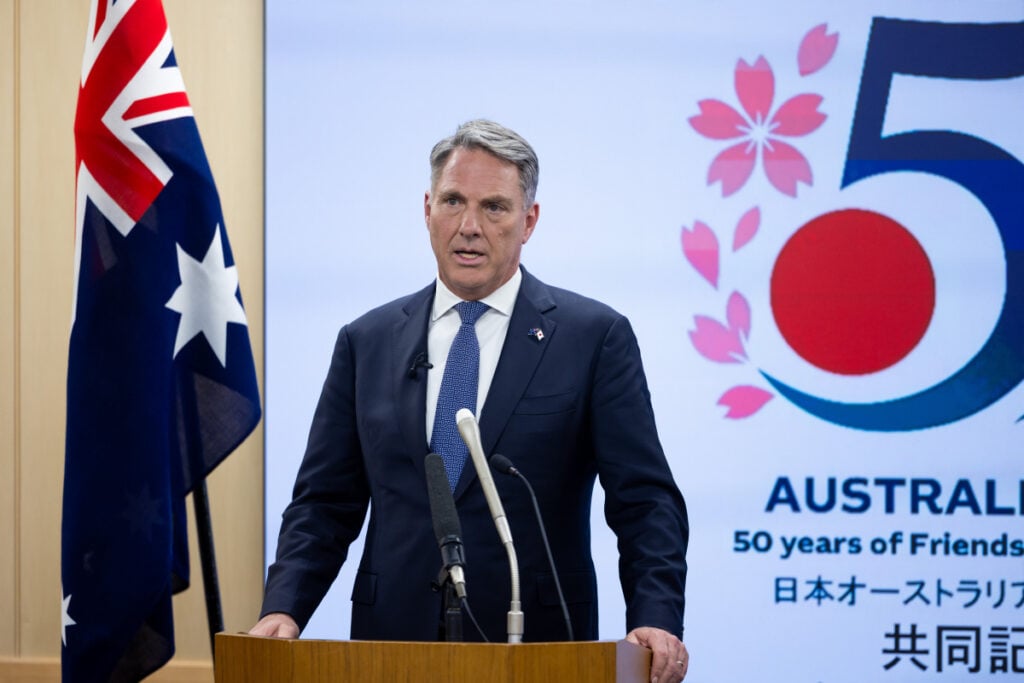
Speaking at an Australian national press club event for the release of NDS and IIP, Australian defense minister Richard Marles emphasised that only the continued presence of the United States in the Indo-Pacific will bring about an effective balance of power
Nevertheless, the NDS acknowledged that the US expected its allies and partners to invest more and increase their contributions to collective defense.
Australia, it says, will maintain its strong contribution to the alliance through increased investment in defense capability and continued force posture cooperation with the US, particularly in hosting US military forces.
It will also continue to strengthen industrial base collaboration with the US, including through AUKUS and Australia’s Guided Weapons and Explosive Ordnance enterprise (GWEO), with the IIP projecting up to A$36 billion in planned investment in the program to manufacture and sustain guided missiles along with other precision munitions in Australia.
It will also seek to increase Australia’s stockpiles of weapons such as the AGM-88G Advanced Anti-Radiation Guided Missile-Extended Range (AARGM-ER) and AIM-260 Joint Advanced Tactical Missile, which Australia has just been cleared to acquire.
Like minded partners
The NDS also paid attention to Australia’s partnership with other countries within and beyond the region, calling its “bilateral, trilateral and multilateral defence arrangements” critical components of the country’s global engagement.
It highlighted cooperation with NATO, emphasized by the announcement the same day the NDS was released that NATO held its first ever meeting with the Australian defense department to discuss opportunities to increase defense industrial cooperation and capabilities.
This staff-to-staff meeting focused on how to enhance NATO’s cooperation with Australia, including through multinational projects and standardisation, supply chain security as well as other possible areas for cooperation.
Japan was also mentioned with the NDS, with the country referred to as an “indispensable partner for achieving regional peace and prosperity.” Further efforts to deepen defense ties outlined include enhancing high-end interoperability and increased information sharing between both militaries.
Australia has announced Japan’s Mogami-class frigate as the winner of its Project SEA 3000 general purpose frigate program last year, and Japanese defense minister Shinjiro Koizumi is expected to sign the contract during his visit to Australia this weekend.
India also got a shout out, with Australia’s ambassador to New Delhi, Philip Green, saying on X that the NDS “reaffirms India as a top-tier security partner—and our most important defence partner in the Northeast Indian Ocean.”
Breaking Defense Video