TAMPA, Fla. — The wildly complex, surprise operation to capture then-Venezuelan leader Nicolas Maduro set a “new standard” for multi-layered joint operations – and provided a glimpse of the “future of special operations” for years to come, according to the leader of US Special Operations Command.
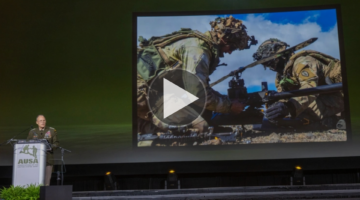
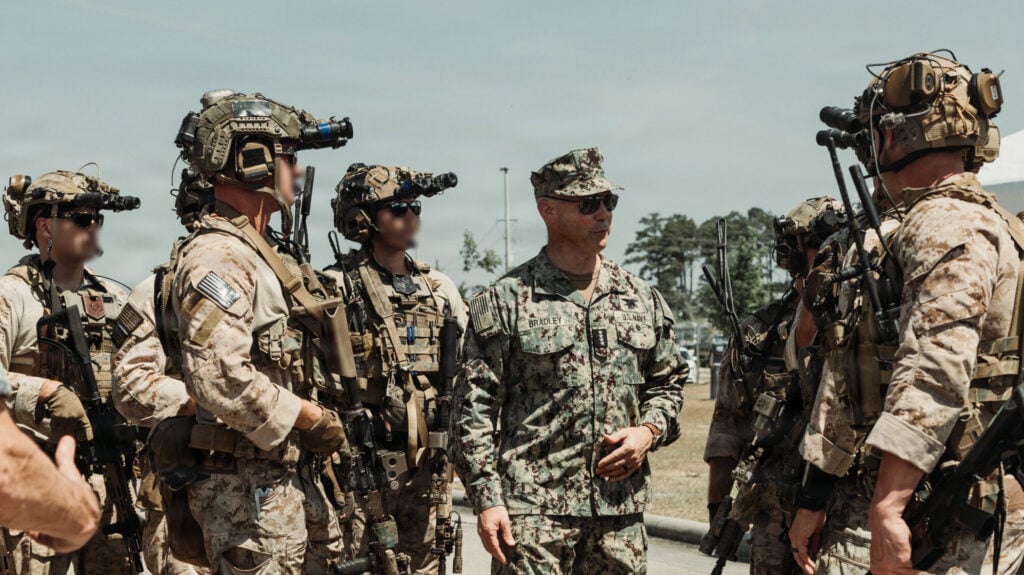
“On the night of Jan. 3, the world watched as Operation Absolute Resolve unfolded. What I will posit today and suggested then, was that it has been, is, and will be the most sophisticated, integrated, interagency joint force raid that we have ever conducted,” Adm. Frank Bradley told the audience full of special operators, support staff and industry at SOF Week 2026 on Tuesday.
Echoing Chairman of the Joint Chiefs of Staff Gen. Dan Caine, Bradley said that more than 150 aircraft launched from the “Western Hemisphere had converged on a single point over the city of Caracas.”
“Space, cyber, air force and navy, all delivering layered effects to create a virtual pathway through defended airspace” for the assault force, he said. The ground force was reportedly composed of Delta Force operators carried in by the special operations helicopter aces at the 160th Special Operations Aviation Regiment could make their way to Maduro.
Bradley continued: “Interagency partners provided the intelligence architecture that made every one of those decisions possible. Gen. Caine said it best at the press conference that next morning, when he said that the word ‘integration’ does not explain the sheer sophistication of such a mission, and he was right.
“In fact, it has defined a new standard for power projection and for synchronization, virtual and physical domain maneuver interwoven as an integrated, interagency, joint force as the core element that is the future of what SOF operations will look like,” said the admiral, who took the reins of the command in October. (The New York Times reported earlier this week that, according to US intelligence, Russian and Chinese officials have acknowledged their own militaries could not have pulled off such an audacious mission.)
Still, Bradley said that to continue to succeed in a new era of combat, special operations forces are going to need the right kit and weapons: a mixture of “exquisite and attritable effects” in particular.
“In another mark of the evolving character of warfare, the state-of-the-art in lethal munitions is no longer the property of the state. It is increasingly also the property of the market,” he said, before suggesting a $5,000 first person-view (FPV) drone could be more effective than a $100,000 “military-procured artillery round.”
“We’ve seen the cost exchange challenge play out in real time on the battlefields today. That’s exactly why we need abundant, attritable, scalable systems that can generate a new kind of mass,” Bradley warned.
“We don’t solve this simply by fueling cheaper hardware though. We solve it by compounding sophistication. We need creatively layered effects, synchronizing kinetic strikes with electronic warfare and digital intrusion in real time. Take a handful of disparate commercial sensors and attritable systems and turn them into an integrated package that dismantles an exquisite defense,” Bradley concluded.
Breaking Defense Video