WASHINGTON — The White House sent a $87.6 billion supplemental spending request to Capitol Hill today, with $67.1 billion in defense funds to cover expenses associated with the war in Iran.
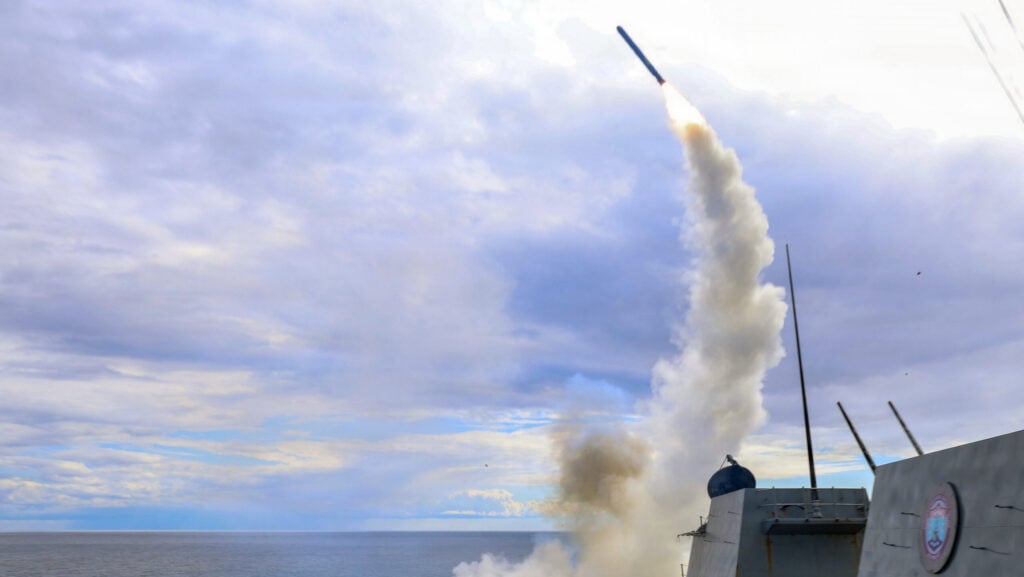
The request includes $21 billion to recoup munitions expenditures, $5.1 billion for cybersecurity and autonomy, $2.4 billion for drones, $4 billion for systems related to airborne moving target indication and the space data network backbone, and $12.1 billion for classified programs, according to the request, which was obtained by Breaking Defense. The document does not provide additional details on what specific weapon systems or capabilities would receive a funding injection if the request is approved.
The supplemental also requests $17.3 billion for operational costs, $1.7 billion for readiness needs, $1.5 billion for fuel costs, $1.2 billion for unspecified “Administration priorities” and $800 million for National Guard Support.
“Under President [Donald] Trump’s leadership, the United States executed a successful operation to deter the threat of a nuclear armed Iranian regime and massively degrade the regime’s ability to project power in the region,” Office of Management and Budget director Russ Vought wrote in a letter to House Speaker Mike Johnson.
“Accordingly, the Administration’s request addresses operational costs incurred by the Department of War (DOW) during OEF, including funding for military personnel and readiness expenses, operational costs to rebuild stocks expended by DOW, classified programs, and other key expenses,” Vought continued, using an accepted but unofficial term for the Department of Defense. “The request also provides $21 billion for DOW to support critical capabilities, munitions procurement, and strengthen the U.S. industrial base.”
Beyond the defense request, the supplemental also includes about $2 billion for the Coast Guard “to support Department of War (DOW) / Operation Epic Fury efforts and fill in the gaps where DOW assets are not available to support Western Hemisphere operations,” including at the southern border.
The National Nuclear Security Agency, which is housed under the Department of Energy, would get $768 million “for complete and verifiable termination of Iran’s ability to develop or acquire a nuclear weapon, including the disposition of proliferation sensitive material, technology, equipment, and infrastructure,” the supplemental states.
The remaining funds would go toward other Trump administration priorities in areas like disaster relief, farm aid and responding to the Ebola outbreak.
Republican leadership on the House Appropriations Committee immediately released a statement supportive of the request
“Delivering a decisive blow against the world’s largest state sponsor of terror was not without cause or operational cost,” House Appropriations Chairman Tom Cole and Rep. Ken Calvert, the head of the committee’s defense subpanel, said in a joint statement. “Our forces performed their mission with extraordinary precision and professionalism, and we must now ensure they have the resources necessary to replenish critical munitions, sustain readiness, and reinforce the capacity of our military that made such success possible.”
Cole and Calvert added that they “look forward to fully reviewing the details of the request with our colleagues.”
Sen. Patty Murray, the ranking Democrat on the Senate Appropriations Committee, slammed the request, citing the Pentagon’s historic $1.5 trillion request for fiscal 2027 and “over $100 billion in unspent funding” from last year’s reconciliation bill.
“President Trump launched a reckless and costly war with Iran—without authorization from Congress or the support of the American people—that he should never have started, and now, instead of doing anything to help families get by, he is asking taxpayers to pick up the tab and give him billions more to wage wars overseas,” she said in a statement. “I will closely review this request in its entirety and ensure we take care of our servicemembers, but I will not rubberstamp tens of billions more for this disastrous war of choice.”
Four Months Of War
Today’s supplemental request comes nearly four months after the US and Israel launched military strikes on Iran in late February, and at a time when the services are looking for ways to refill their dwindling munitions stockpiles.
One major omission from the request is military construction funds to rebuild bases damaged during operations in Iran — leaving Congress without details about what installations will ultimately be repaired and which could be vacated as the department reassesses its presence in the region.
In late April, Jules “Jay” Hurst, who at the time was performing the duties of the Pentagon comptroller, told lawmakers that the first two months of operations carried a $25 billion price tag, but didn’t disclose the cost of repairing installations.
“Part of that [is] obviously O&M [operations and maintenance] and equipment replacement,” Hurst said then. “We will formulate a supplemental bill through the White House that will come to Congress, once we have a full assessment of the cost of the conflict.”
For months, lawmakers have strenuously urged department leaders to turn over the supplemental request, saying that the supplemental would likely be passed by Congress quicker that than the Pentagon’s $1.15 trillion fiscal 2027 base budget request or $350 billion reconciliation ask.
By early May, Chief of Naval Operations Adm. Daryl Caudle warned House appropriators that the service would run into some financial limitations for things like training and exercises starting this summer if supplemental dollars don’t come in.
“I will have to start making decisions to change training, operations, certification, events, those type of things we do to generate our force in the July timeframe,” Caudle told lawmakers in response to questions about when he expected to run out of funding due to the current rate of operations.
Breaking Defense Video