Europe faces a dangerous and rapidly evolving security environment — and the need for cost-effective, multi-mission, and interoperable defense solutions has never been greater.
General Atomics Aeronautical Systems, Inc. (GA-ASI) is at the forefront of delivering the vital Uncrewed Aerial Systems (UAS) nations need to address today’s pressing security challenges.
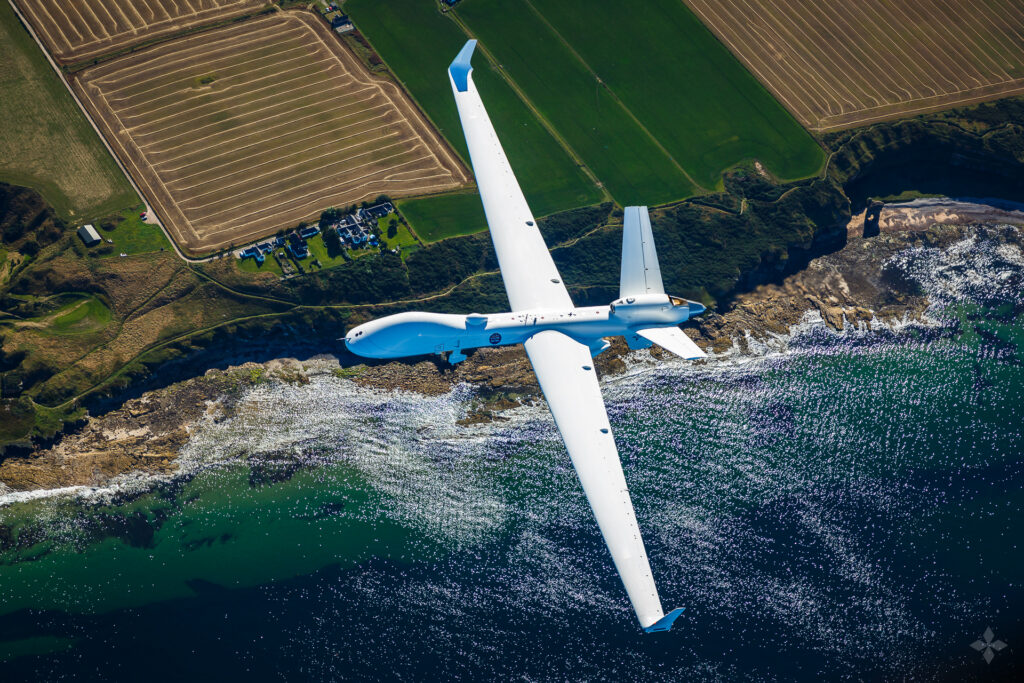
The MQ-9B SkyGuardian® and SeaGuardian® multi-mission Intelligence, Surveillance, and Reconnaissance (ISR) aircraft are rapidly being adopted across the NATO alliance — from the United Kingdom, Canada, Belgium, Germany, Denmark, Poland, and beyond.
At the same time, emerging threats have given rise to the need for an affordable tactical en masse capability ready to counter highly industrialized adversaries able to field more systems than can be thwarted by traditional manned platforms alone.
So just as it led in the development and fielding of uncrewed surveillance and strike aircraft, GA-ASI is again leading the development of uncrewed fighter aircraft with its Gambit Series of Collaborative Combat Aircraft (CCA).
Both MQ-9B and Gambit are designed to provide the versatility, endurance, and technological edge that modern European defense strategies demand.
Meeting Europe’s ISR and Multi-Mission Needs
The MQ-9B has emerged as the gold standard for ISR missions in Europe and across the globe.
With some configurations delivering more than 30 hours of endurance, the platform provides unmatched persistence for monitoring such critical areas as the High North, the Baltic, and NATO’s eastern front. Its ability to operate in adverse weather conditions and integrate into civil airspace makes it a versatile solution for both military and civil applications.
Beyond ISR, the MQ-9B offers a range of mission capabilities, spanning precision strike, anti-submarine warfare, and signals intelligence. What’s more, its modular design allows for the integration of a wide range of advanced payloads. This adaptability ensures the platform remains relevant as threats evolve.
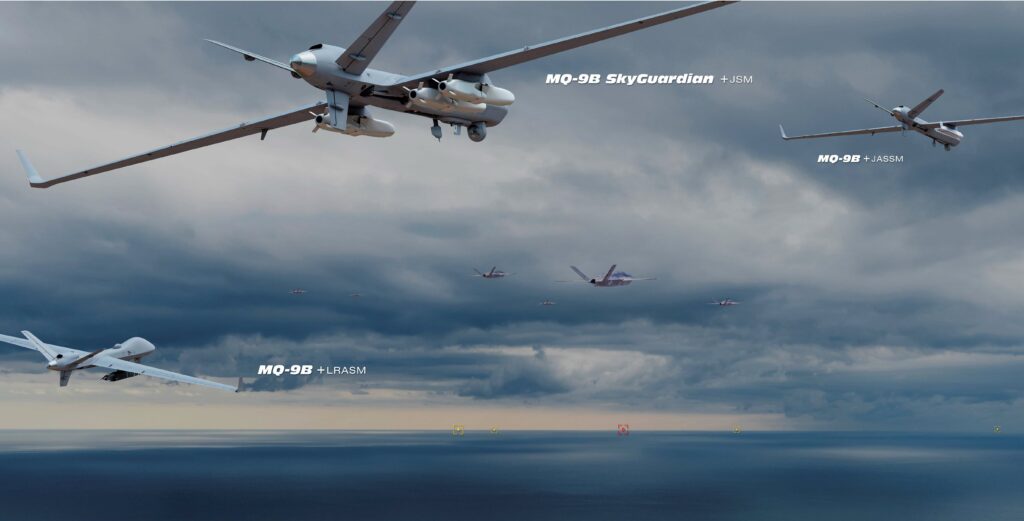
Always on the leading edge, GA-ASI is continuously innovating. Today, the company is upgrading MQ-9B to carry long-range weapons, such as the Joint Strike Missile and Long-Range Anti-Ship Missile, making it a formidable asset in contested environments like the High North and Eastern Europe.
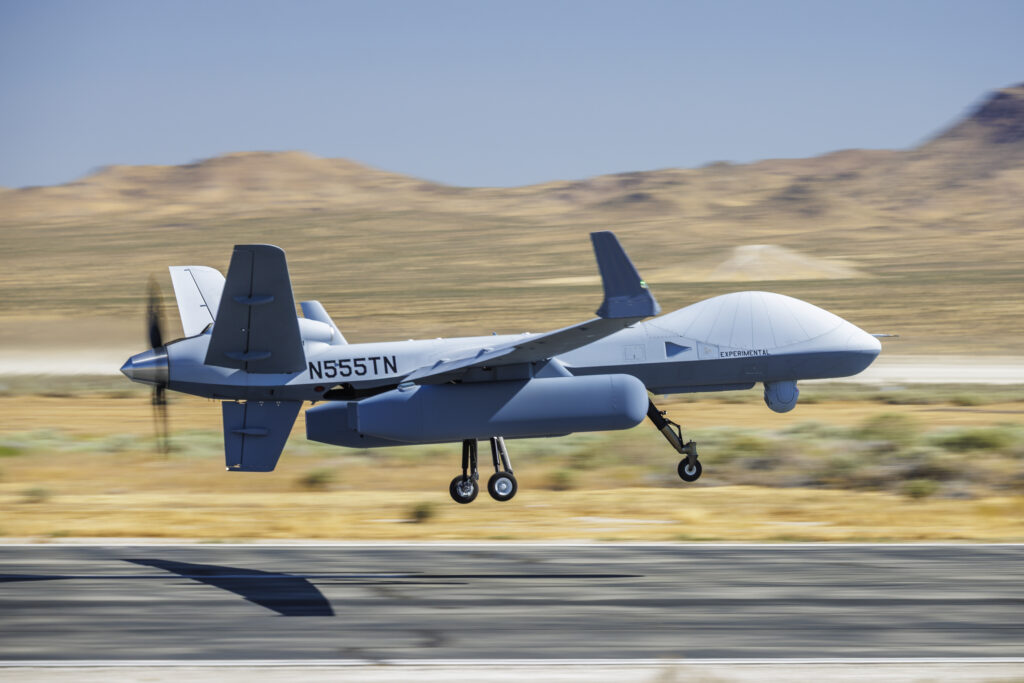
In response to rising interest in operating MQ-9B in austere environments or from the flight deck of naval ships, GA-ASI is leveraging its work on Mojave — based on the Gray Eagle platform in service with the U.S. Army — to create a Short Takeoff and Landing (STOL) version of the groundbreaking aircraft.
Additionally, the company is delivering a powerful pair of solutions to help MQ-9B operators counter the alarming proliferation of advanced missiles and low-tech drone swarms.
SkyGuardian recently flew for the first time with its new Airborne Early Warning and Control (AEW&C) mission package. Developed in collaboration with Saab, the podded system provides a cost-effective solution for wide-area surveillance, both to extend the reach of existing crewed NATO capabilities and to provide an organic AEW capability if crewed systems are unavailable.
The AEW&C capability complements the recent integration of the AGR-20 Advanced Precision Kill Weapon System (APKWS), a guided rocket system capable of taking on swarms of one-way attack drones.
In a combat scenario, an AEW&C-equipped MQ-9B would be able to provide early warning of an incoming drone wave attack, and a second aircraft rigged with APKWS could move to intercept and destroy the threat ahead of it harming critical infrastructure and the warfighters on the ground. Thanks to the research and development efforts of GA-ASI and its partners, this hostile drone detect-track-engage mission cycle is possible with uncrewed MQ-9 platforms that put no U.S. or allied crews in danger.
Enhancing Interoperability Across NATO
One of the MQ-9B’s key strengths is its ability to enhance interoperability among NATO allies.
With so many NATO nations having already procured the system, opportunities exist for closer military-to-military cooperation. The growing European customer base also enables cross-country maintenance agreements and shared stockpiling of spare parts, reducing operating costs and increasing readiness.
The platform’s certification to operate in civil airspace — a first for any remotely piloted aircraft system in its class — further underscores its utility in joint operations and disaster response scenarios.
Certified last year in the United Kingdom, the milestone reflects GA-ASI’s commitment to rigorous testing and innovation, ensuring the MQ-9B meets the industry’s highest standards of safety and reliability. It paves the way for other nations to follow suit since the U.K. applies the same standards as every other NATO nation.
Affordable Mass
With nations seeking cost-effective solutions for fielding large numbers of systems in this new era of high-tech warfare, GA-ASI’s Gambit Series represents another leap forward in uncrewed systems.
Designed as CCAs, Gambit platforms are single-mission uncrewed aircraft optimized for various applications, including air-to-air combat, long-range ISR, and training.
This family-of-systems approach avoids the expense and compromises of multi-mission fighters, making it easier to generate affordable mass across diverse mission profiles. But each Gambit aircraft variant shares roughly 70 percent of key components such as the landing gear, core avionics, and airframe structures. This manufacturing strategy greatly simplifies production and lowers costs.
Gambit 6: Air-to-Ground Dominance
Perhaps the most relevant iteration of the Gambit family of systems is Gambit 6.
With its advanced air-to-ground capabilities, Gambit 6 is optimized for critical roles such as electronic warfare, suppression of enemy air defenses, and deep precision strike, making it an ideal solution for contested environments like NATO’s eastern flank.
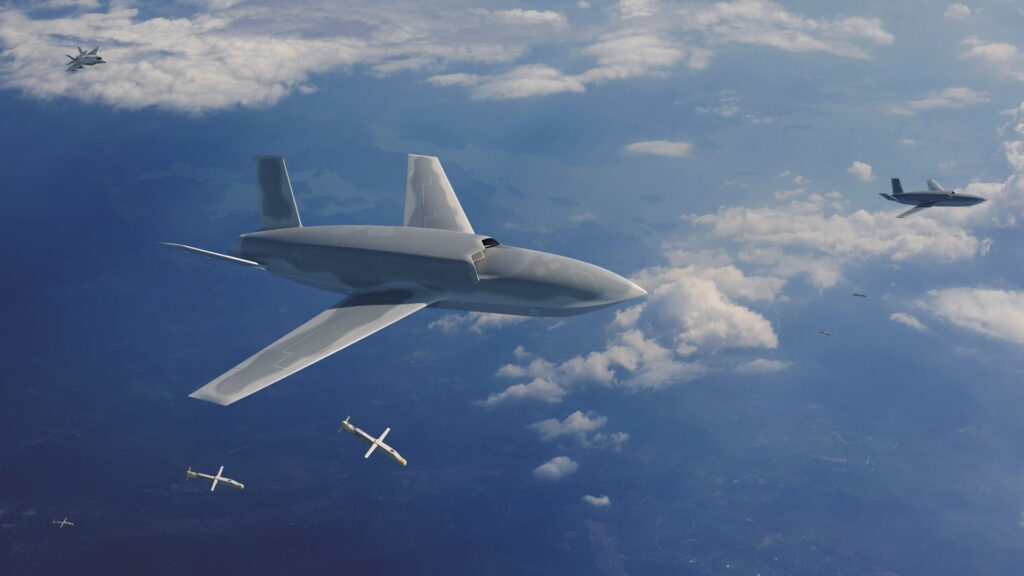
Like all Gambit aircraft, Gambit 6 features a signature-reducing internal weapons bay, which means adversaries cannot easily detect the aircraft, raising the threat it poses to their positions. This, in turn, means the adversary will be forced to expend and spread out its resources to counter the threat, which creates openings to be exploited by either advanced crewed fighters or other Gambit 6 aircraft in position to strike.
Strengthening European Industry and Defense Collaboration
GA-ASI will build Gambit aircraft in Europe, partnered with European-based companies, with airframes available for international procurement starting in 2027.
The company is leveraging its German affiliate, General Atomics AeroTec Systems (GA-ATS), to integrate European mission systems into its aircraft. This approach ensures compliance with regional defense standards while fostering transatlantic collaboration.
By involving European defense industries in the development process, GA-ASI aligns with NATO’s goals of increasing interoperability and maintaining control over critical technologies.
Proven
As defense budgets tighten and the threat landscape grows more complex, European nations must prioritize systems that deliver immediate and long-term value.
The MQ-9B and Gambit Series offer precisely that: proven platforms with the flexibility to adapt to evolving missions.
Whether it’s monitoring maritime infrastructure, countering drone swarms, or supporting NATO operations, these systems provide the capabilities needed to safeguard Europe in an era of uncertainty.
PHOTOS: Farnborough 2026

 Gallery