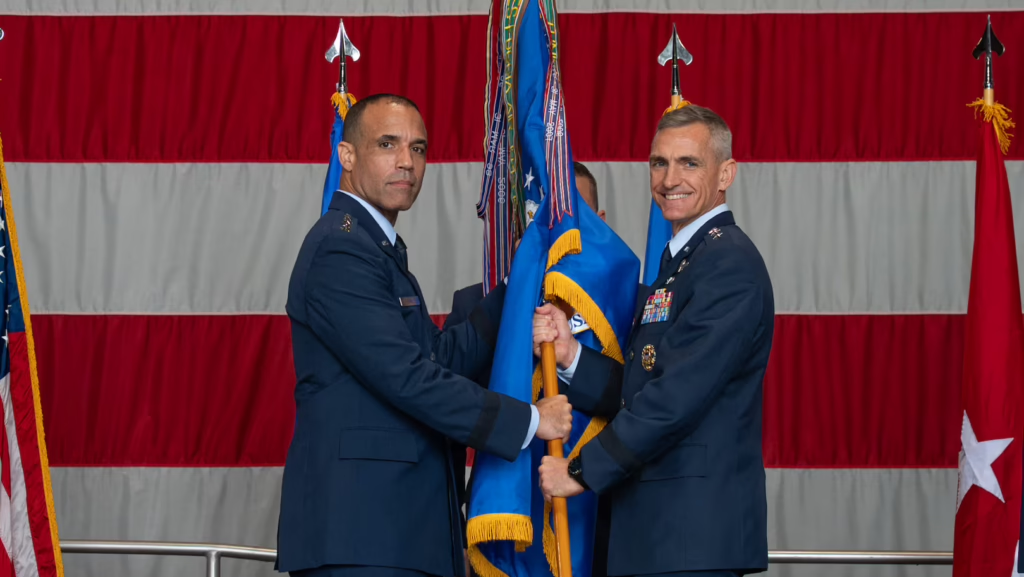
WASHINGTON — Lt. Gen. Daniel Lasica on Tuesday took over as the commander of US Air Forces Central (AFCENT), placing a new leader in a high-profile role charged with overseeing American air operations in the Middle East at a crucial moment in the US war with Iran.
Lasica succeeded Lt. Gen. Derek France in a ceremony at Shaw Air Force Base, South Carolina. France is now expected to retire after closing out his two-year stint as AFCENT’s commander, according to a press release from US Central Command.
A graduate of the US Air Force Academy and a fighter pilot by trade, Lasica most recently served as director of operations for US European Command. His nomination for the AFCENT post was confirmed by the Senate in July, a promotion that pinned a third star on him.
Lasica takes on the job at a perilous time for AFCENT. The command in recent years has surged forces to the region for intensive combat operations, most recently culminating in an overnight strike against Iran’s nuclear facilities last year and an ongoing, full-out air and missile war with Tehran launched under Operation Epic Fury.
The command itself has come under heavy fire. AFCENT operates dual command cells: one at Shaw, and another at Al Udeid Air Base in Qatar. The Qatari facility, known as a combined air operations center, was evacuated earlier this year in anticipation of an attack and subsequently took a direct hit from an Iranian missile barrage, Air & Space Forces Magazine previously reported.
As President Donald Trump weighs further military action in Iran, airpower would likely play a key role in American escalation. The war has so far taken a considerable toll, including the death of 18 troops and hundreds more wounded, the loss of key aircraft like an E-3 AWACS and the reported downing of dozens of MQ-9A Reaper drones.
Should major combat operations resume — which Trump recently threatened but ultimately postponed on Aug. 1 to buy time for peace talks — Lasica may also have to contend with a dwindling stockpile of missile interceptors. The US has so far burned through roughly 80 percent of its THAAD interceptors and about half of its Patriot missiles, which are key for protecting US installations and air bases, CNN reported.
A similarly diminished inventory of ground-launched, precision munitions previously reported by Reuters could also raise the stakes for any US escalation, which may have to rely on air-delivered weapons from manned aircraft like fighters and bombers.
An American F-15 fighter jet in April was shot down in Iran, but its two crew members were rescued by US forces, including by support from AFCENT. Weeks earlier, an F-35A pilot suffered shrapnel wounds after his aircraft was hit by ground fire, Air & Space Forces Magazine reported.
Breaking Defense Video