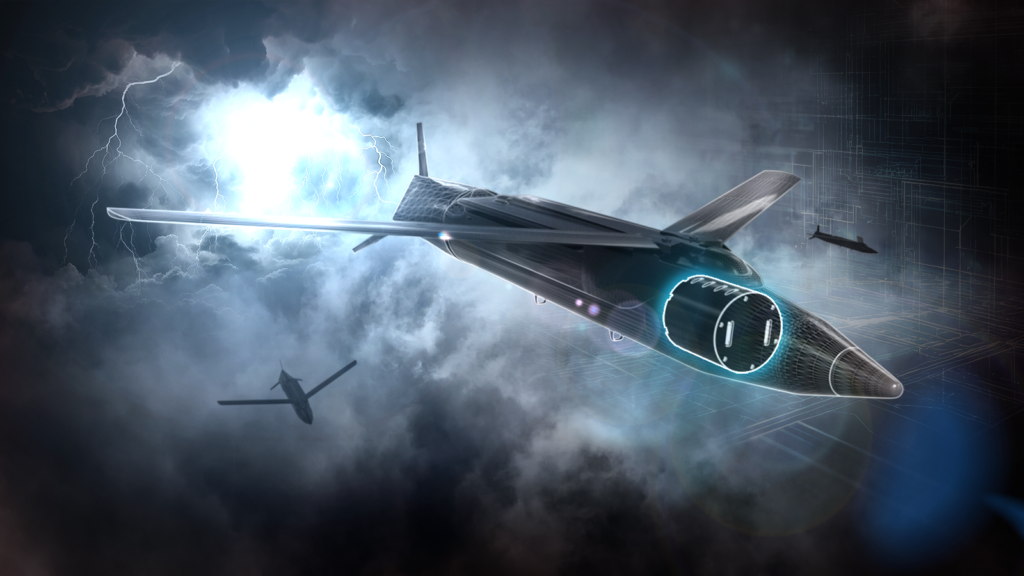
NATIONAL HARBOR, Md. — BAE Systems today unveiled Shadow EW, described by the company as a family of electronic warfare payloads, specifically designed for small airborne platforms.
BAE said the “solutions provide critical situational awareness and self-defense capabilities, improving mission effectiveness in contested environments” and “support a full range of EW mission applications, including situational awareness, targeting, deception, survivability, and collaborative effects delivery.”
“The modern battlefield is changing at an unprecedented pace and all platforms, regardless of size, require adaptable electronic warfare capabilities to survive,” Rebecca Cruz, director of Shadow EW products at BAE Systems, said in a company release. “Shadow EW solutions provide flexible, configurable hardware paired with iterative software updates to counter rapidly evolving threats.”
The war in Ukraine has demonstrated that smaller aerial platforms, such as rapidly produced drones, will be a critical compliment to traditional military platforms and ground soldiers. It’s also shown that much of the fight depends on electronic warfare, which rapidly evolves. In other words, mass is now a key part of the game in future warfare.
BAE says it can produce Shadow EW systems in large quantities at a low cost, relying on commercial microchips for high-powered computing and supply chain efficiency.
Josh Niedzwiecki, vice president and general manager of BAE’s Electronic Combat Solutions, told reporters during a briefing at AFA the company built this family of systems ahead of specific need, spending millions of dollars based upon what they’ve witnessed in the environment, while responding to Defense Secretary Pete Hegseth’s call for industry to move faster.
“Secretary Hegseth came out with the Arsenal of Freedom acquisition reform, and you look at kind of the need to go faster, the need for affordable mass, and to drive more volume into the battle space, it shifted our corporate focus, and we made a strategic decision to instead of, like we have in the past work, with a platform prime and the government to build a customized solution to a very unique set of requirements, we said it’s all about speed to fleet and getting mass to the warfighter faster,” he said.
Shadow is designed with commercial chips, instead of the highly customized EW systems BAE has built for F-22, F-15 and F-35. The company also went with open standards, to try and be as platform agnostic as possible.
“By being compatible with those architectures, we also make it easier for those platform primes to integrate this into their system,” he said.
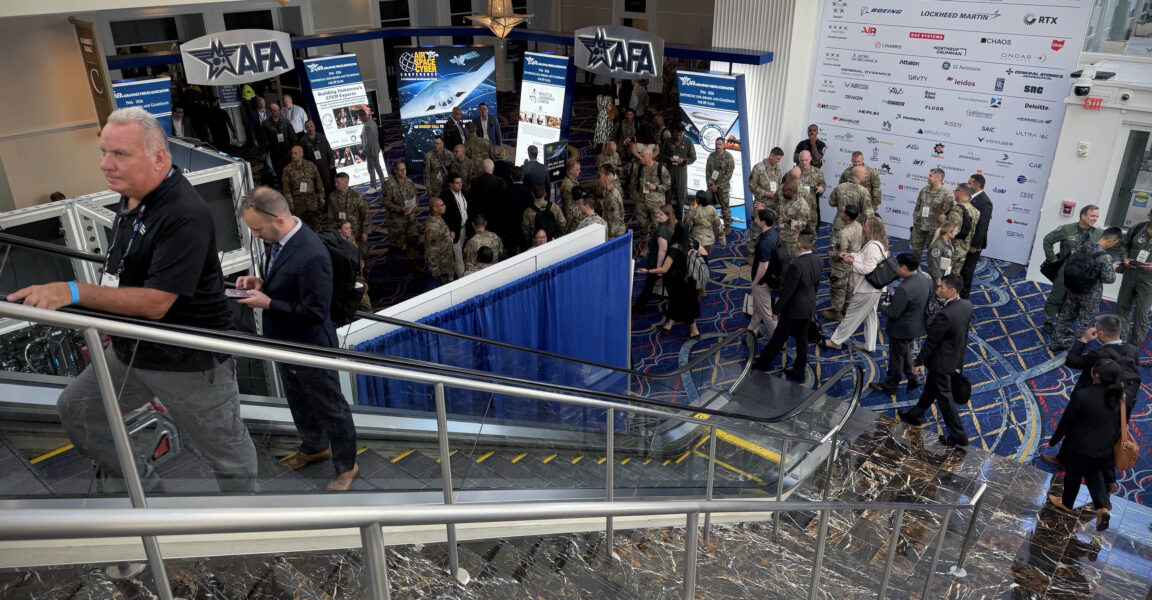
PHOTOS: AFA 2026
 Gallery

Breaking Defense Video