Air Warfare

General Atomics unveils ‘Wildfire’ drone to replace Reaper

Pitched for the Massed Modular Aircraft program run by the Air Force and Defense Innovation Unit, General Atomics says its new drone design can exceed requirements set by the Pentagon to succeed the MQ-9A Reaper.

An artist's rendering of General Atomics' Wildfire drone. (General Atomics photo)

WASHINGTON — Drone maker General Atomics Aeronautical Systems (GA-ASI) formally revealed today its offering to replace the firm’s hunter-killer MQ-9A Reaper with a clean-sheet design the company claims can be rapidly produced and exceed the Pentagon’s targets.

General Atomics says the new drone, dubbed Wildfire, can take on missions traditionally fulfilled by the Reaper like long-endurance reconnaissance and strike. Outside of conflict, the company is pitching the aircraft for civil roles and asserts the unmanned system’s relatively greater payload combined with “stronger hardpoints” permits “new options” for tasks like shuttling commercial cargo.

“This is exactly the right design for high-demand missions and cost-conscious customers,” GA-ASI President David Alexander said in a company press release. “Our tailor-designed, attrition-tolerant Wildfire balances the high capability our aircraft are known for with huge flexibility and great scalability. There’s never been anything like it before.” 

The firm is pitching Wildfire for the Massed Modular Aircraft (MMA) program, which was launched by the Air Force and Defense Innovation Unit in July to find a successor for the Reaper. Lt. Gen. Christopher Niemi, the Air Force’s chief modernization officer, told reporters recently that the program was accelerated following “concerning” losses of the Reaper in combat operations against Iran, and emphasized the goal is to replace the venerable drone with a new system that’s cheaper and attritable. 

The Reaper can cost up to $50 million a piece depending on its configuration, according to Air Force officials. (The drone’s manufacturing ceased last year, though an upgraded version dubbed the MQ-9B SkyGuardian is in production.) According to Niemi, the Pentagon is aiming to get the cost of the MMA air vehicle to roughly $10 million a piece, a number that excludes mission equipment.  

In an industry solicitation, the Pentagon laid out targets like an ability to self-deploy 8,000 nautical miles (9,206 miles) and carry a payload of “at least” 2,800 pounds. According to the GA-ASI press release, the Wildfire “meets or surpasses all requirements” of the Pentagon’s solicitation “in dramatic fashion, exceeding 8,000 nautical miles ferry range and capable of carrying two Long-Range Anti-Ship Missiles simultaneously for meaningful combat distance.”

Additionally, according to the release, the Wildfire can carry different combinations of “munitions, launched effects, sensors or other payloads” and will be “highly autonomous and designed for collaborative operations” from the outset. 

While the Pentagon’s solicitation laid out a goal of getting an MMA system operational by fiscal 2031, measured by 20 mission-ready drones, Air Force officials now want to move faster. GA-ASI says the Wildfire “can be delivered years earlier than the FY2031 timeline” and that it can produce more than double the amount of drones in that same timeframe. 

In many ways, Air Force officials expect for the MMA effort to mirror the Collaborative Combat Aircraft drone wingmen program — where GA-ASI and Anduril were both recently tapped for production deals — by featuring open architectures and successive “increments” of designs. Niemi predicted the MMA aircraft won’t have “cutting edge” technology and would “probably” be powered by a turboprop engine with “a long aspect wing.”

PHOTOS: AFA 2026
PHOTOS: AFA 2026

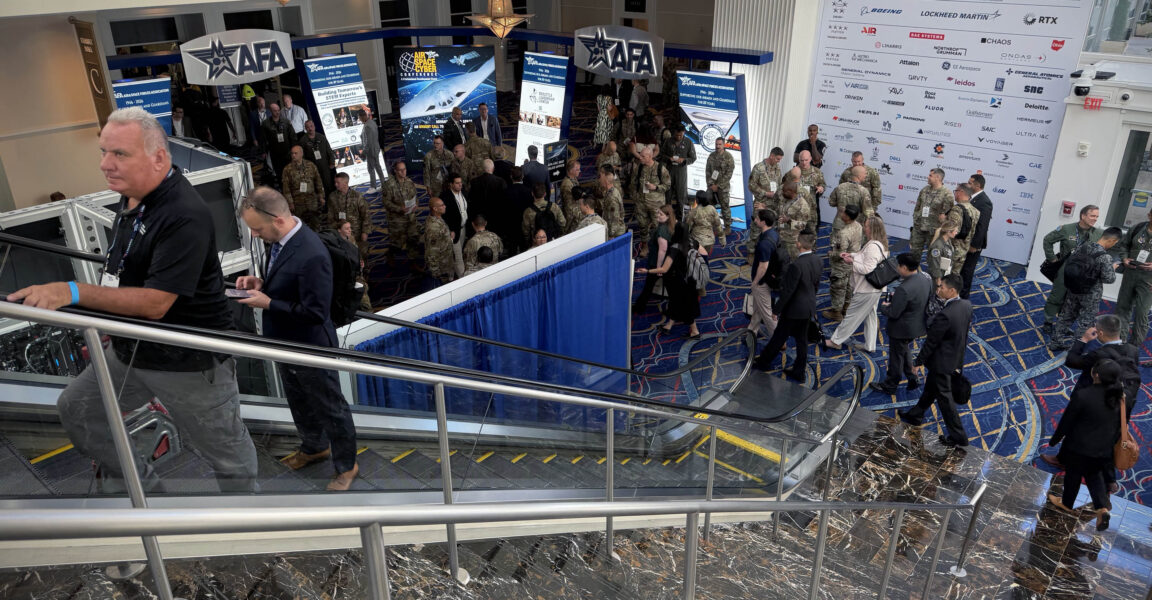
Dozens of attendees file in during day one of the Air, Space and Cyber conference on Sept. 14, 2026. (Breaking Defense)
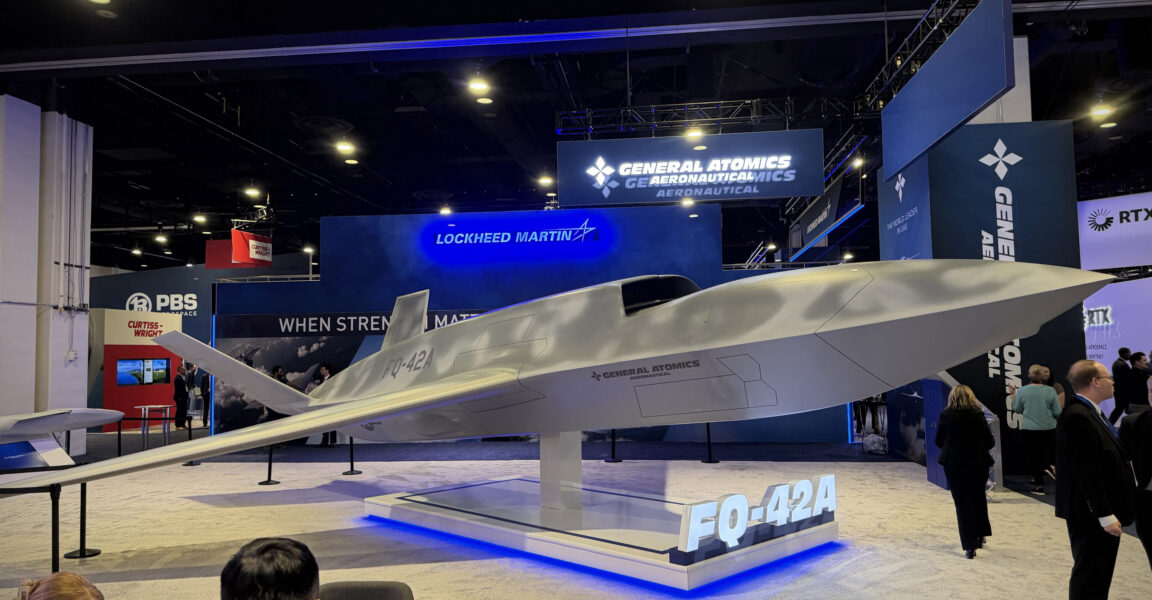
The unmanned fighter aircraft FQ-42 Vengeance from General Atomics is seen here on display at the Air, Space and Cyber conference on Sept. 14, 2026. (Breaking Defense)
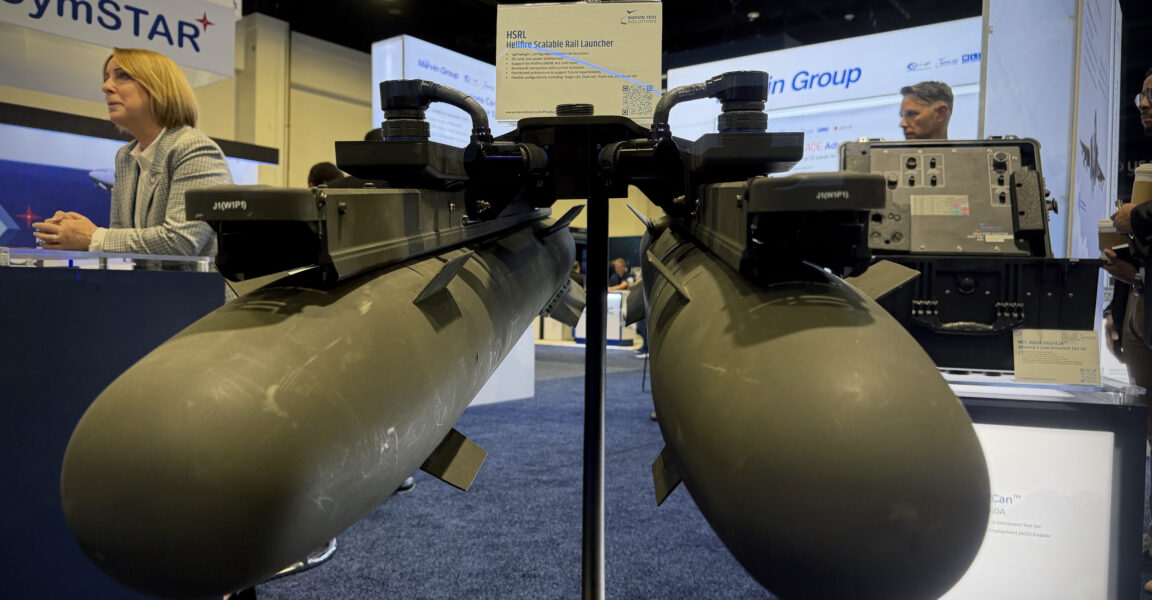
This is a Hellfire Scalable Rail Launcher from Marvin Test Solutions, as seen on the show floor at the Air, Space and Cyber conference on Sept. 14, 2026. (Breaking Defense)
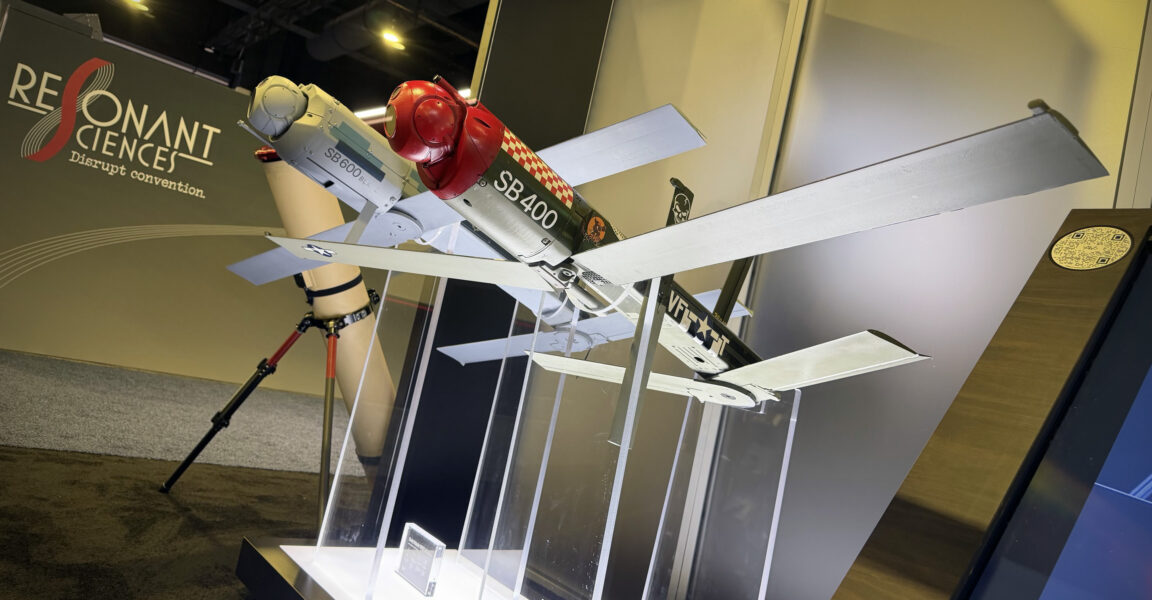
Here are AeroVironment's (from left) Switchblade launcher as well as the Switchblade 600 and Switchblade 400 loitering munitions at the Air, Space and Cyber conference on Sept. 14, 2026. (Breaking Defense)
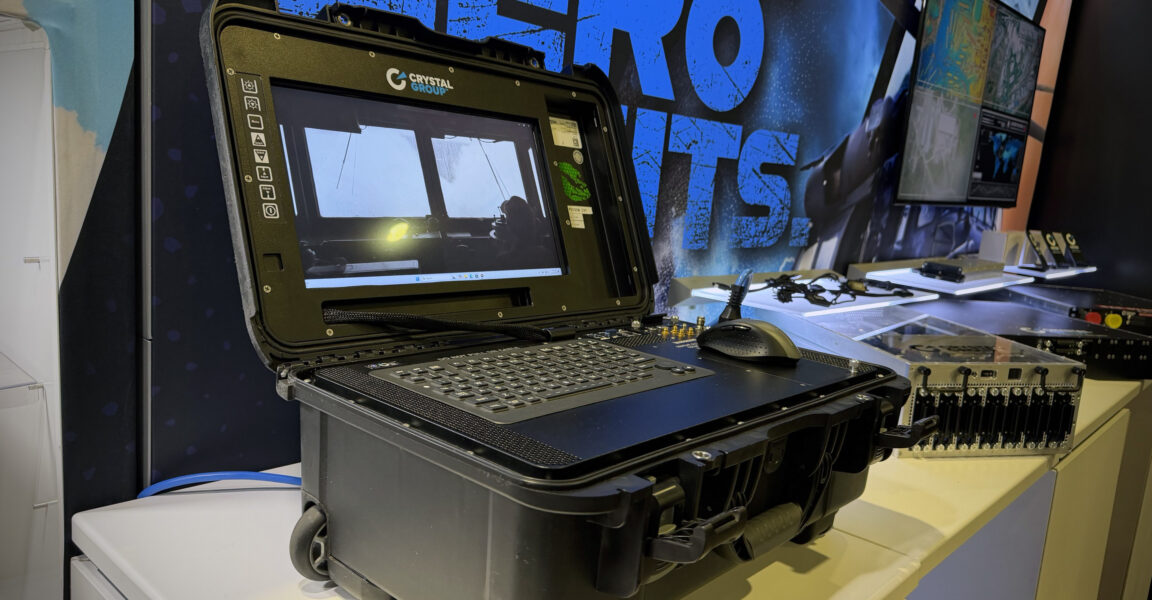
The firm Crystal Group specializes in "ruggedized" systems for military use, including these sturdy iterations for remote laptop use, on display at the Air, Space and Cyber conference on Sept. 14, 2026. (Breaking Defense)
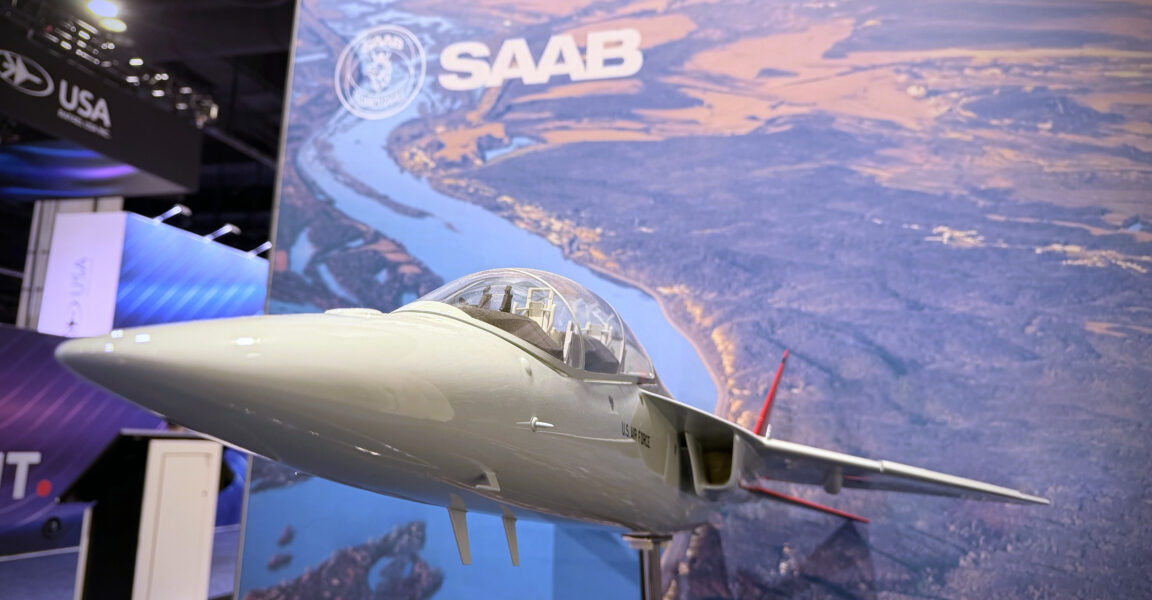
Swedish manufacturer Saab brought a scale model of its T7-A Advanced Pilot Training System as seen close up at the Air, Space and Cyber conference on Sept. 14, 2026. (Breaking Defense)
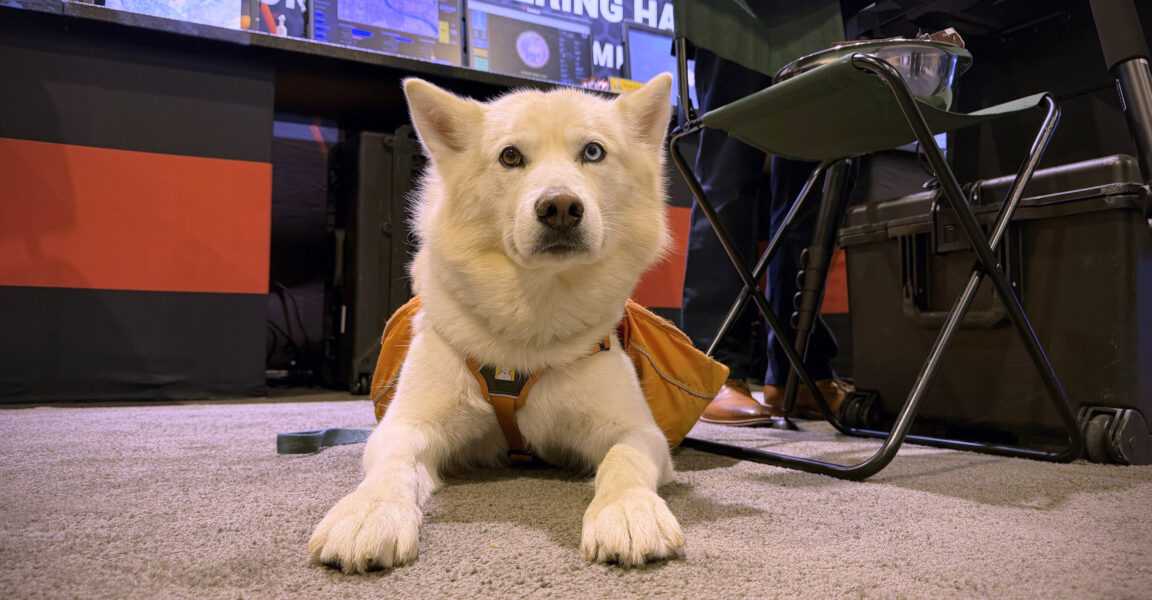
Here is Blu, an easy-going service dog attending the Air, Space and Cyber conference at the expo display from ruggedized, portable computer firm MaxVision on Sept. 14, 2026. (Breaking Defense)
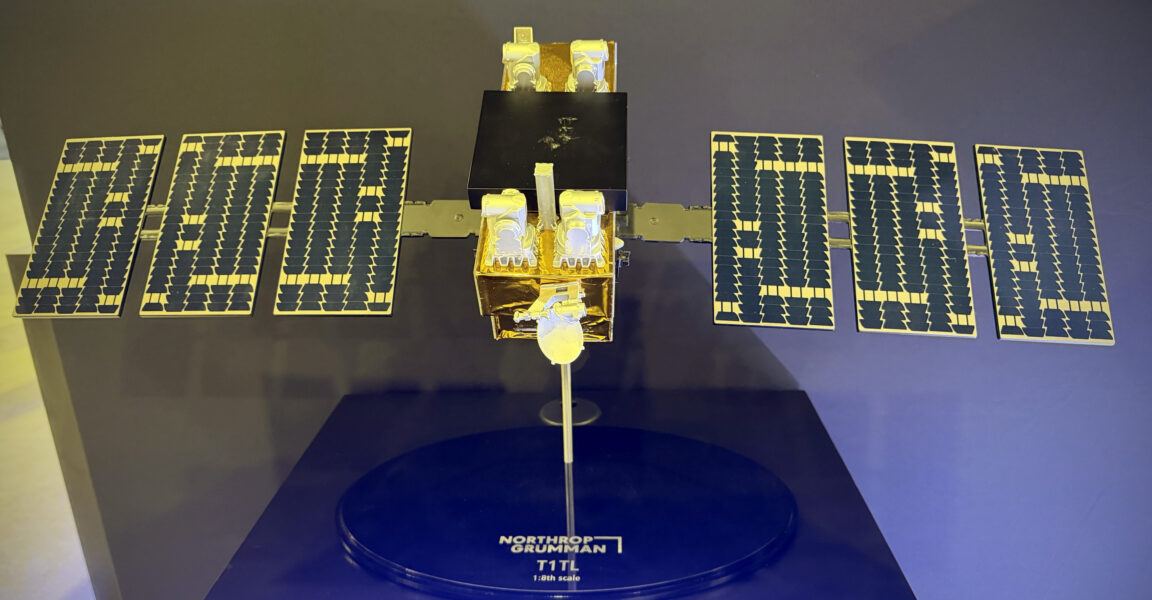
Here is 1:8 scale model of a Tranche 1 Transport Layer (T1TL) satellite from Northrop Grumman on display at the Air, Space and Cyber conference on Sept. 14, 2026. (Breaking Defense)
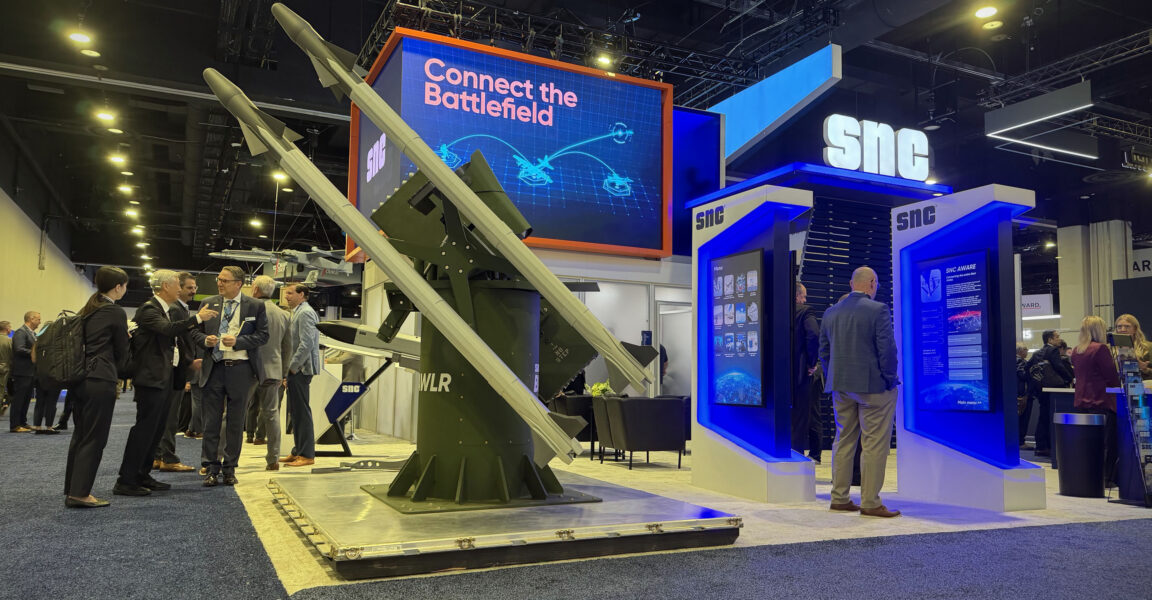
A side view of SNC's Brawlr (Battery Revolving Adaptive Weapons Launcher) air-defense system near the show floor entrance for the 2026 Air and Space Forces Air, Space and Cyber conference. (Breaking Defense)
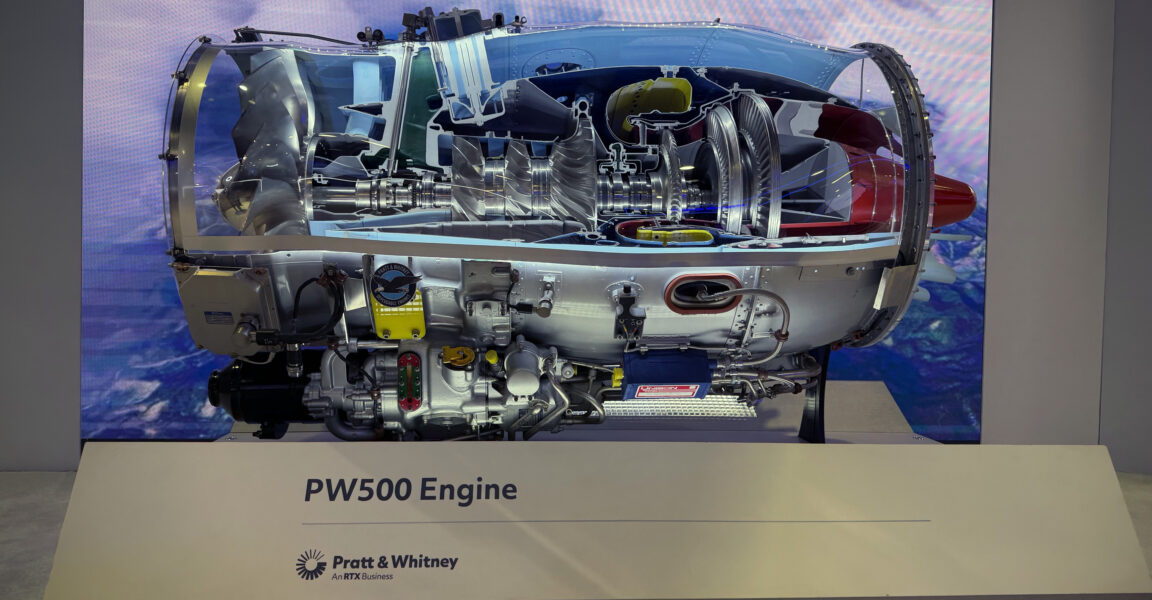
Pratt & Whitney’s PW500 engine is seen on the show floor at the Air, Space and Cyber conference on Sept. 14, 2026. (Breaking Defense)
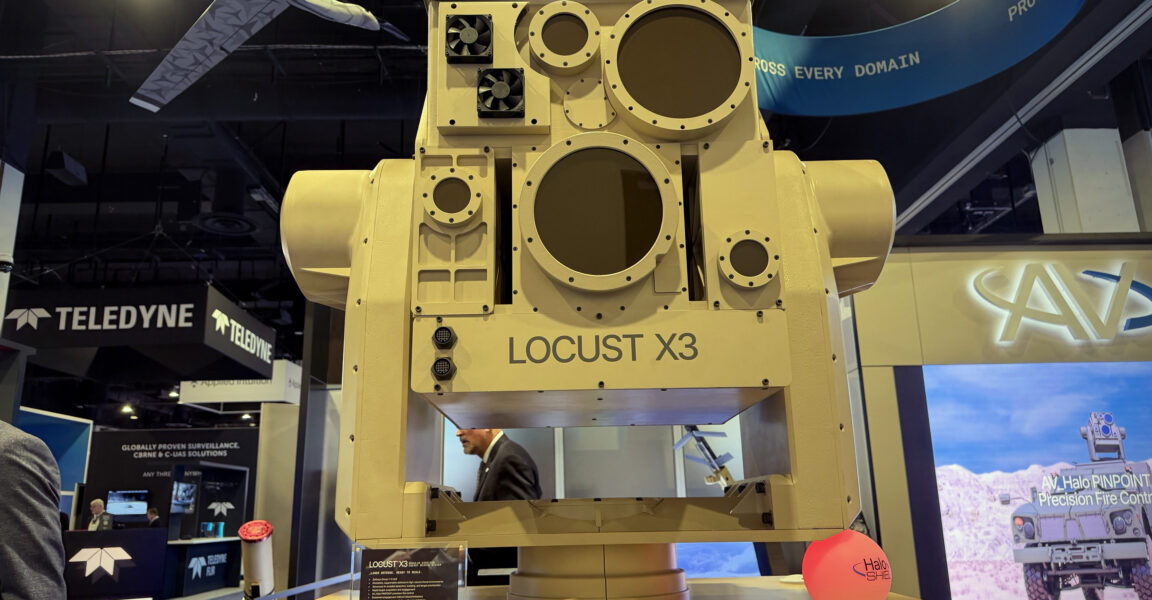
AeroVironment’s Locust X3 directed-energy counter-drone system on the show floor at the 2026 Air, Space and Cyber trade show. (Breaking Defense)
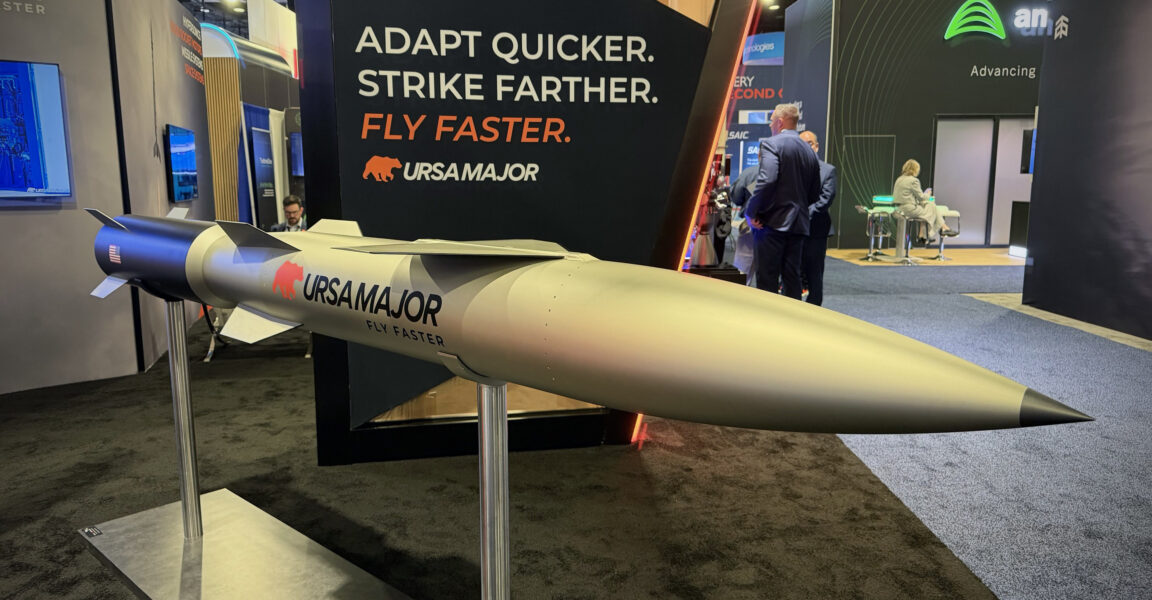
The Havoc missile system from defense firm Ursa Major at the 2026 Air, Space and Cyber conference. (Breaking Defense)
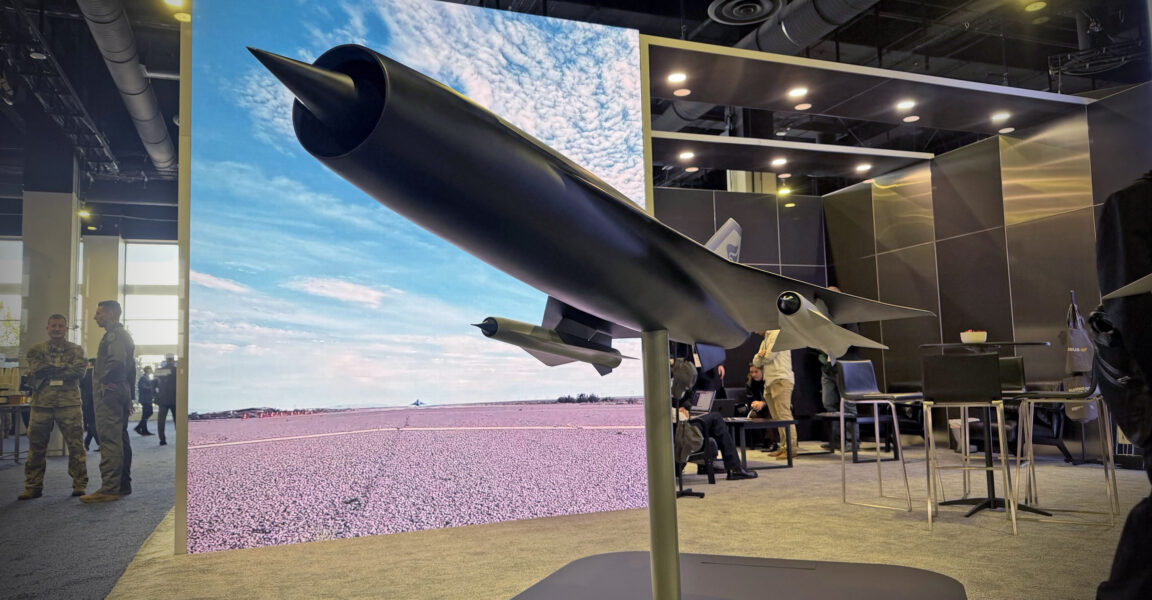
A 1:7 scale model of the Ramjet-X from Hermeus is seen on display at the 2026 Air, Space and Cyber expo. (Breaking Defense)
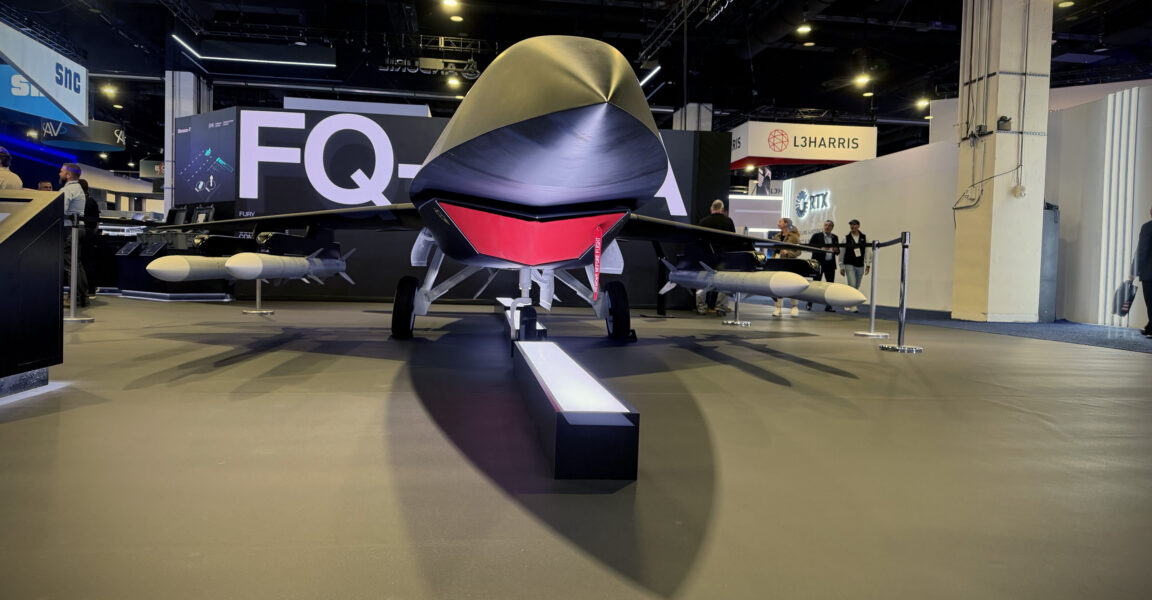
Anduril showed off its FQ-44 Fury unmanned fighter aircraft on the show floor of AFA 2026. (Breaking Defense)
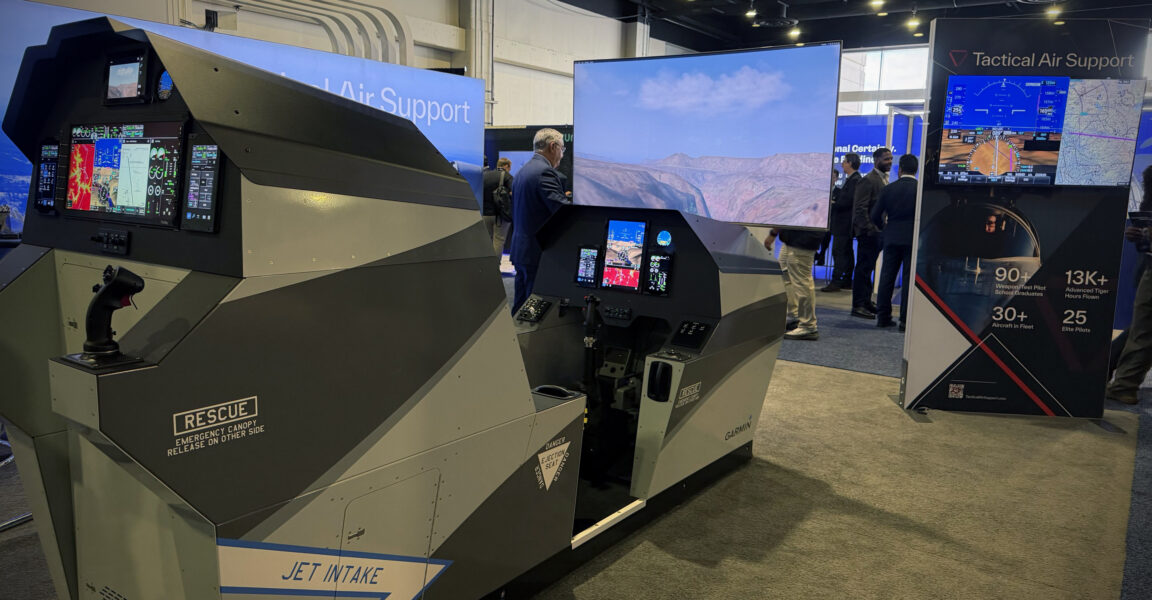
A pilot training system from Tactical Air Support is one several trainers brought to the show floor at the 2026 Air, Space and Cyber conference. (Breaking Defense)
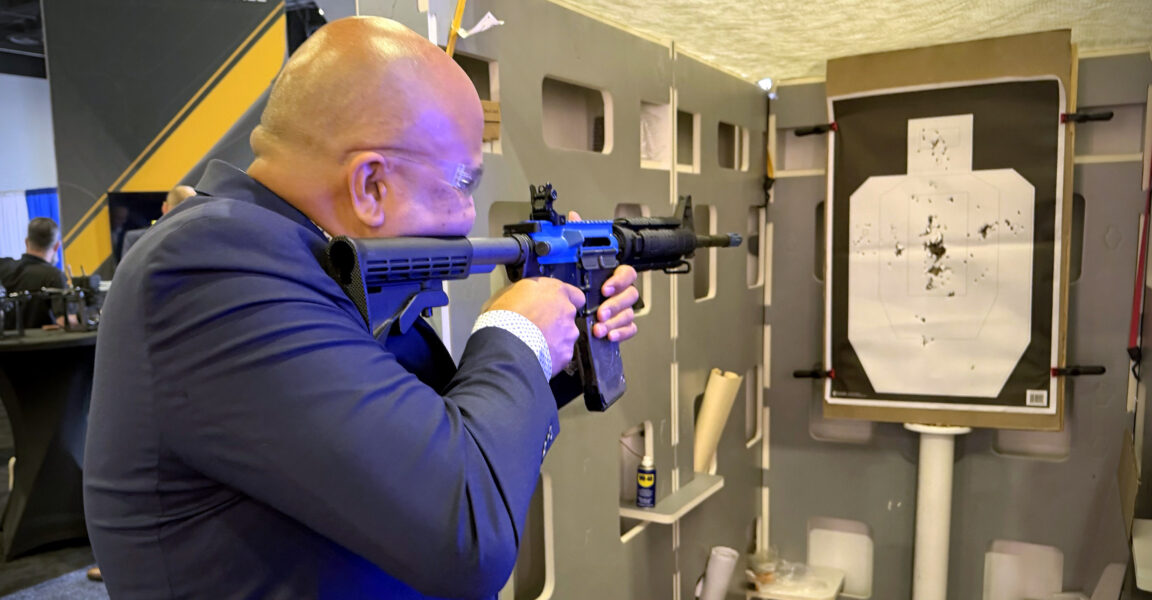
The firm Unit Solutions brought their Unit4 rifle (an M4 replica) for attendees at the 2026 Air, Space and Cyber conference. (Breaking Defense)
Attendees travel decorated stairways at the 2026 AFA conference. (Daniel Woolfolk / Breaking Defense)
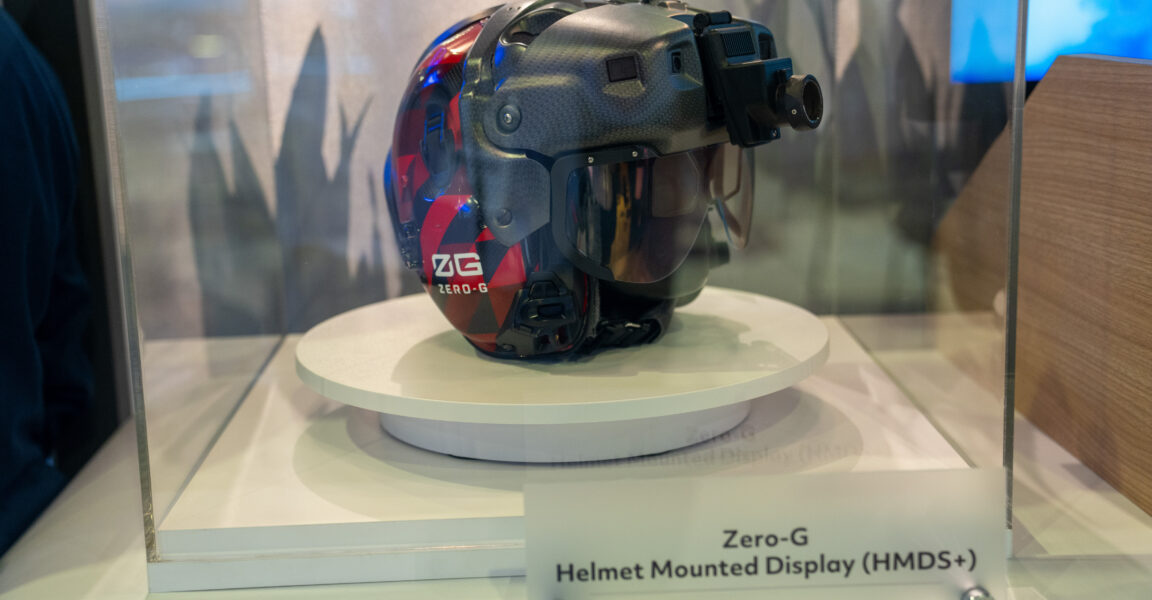
RTX brought its Zero-G Helmet Mounted Display system for assisting pilots in high-definition using binocular lenses and an advanced multicore processor. The HMDS+ kit was encased behind glass during the 2026 AFA conference. (Daniel Woolfolk / Breaking Defense)
Elbit Systems of America, which recently changed its name to Twenty-Six Defense, set up a booth at AFA 2026. (Daniel Woolfolk / Breaking Defense)
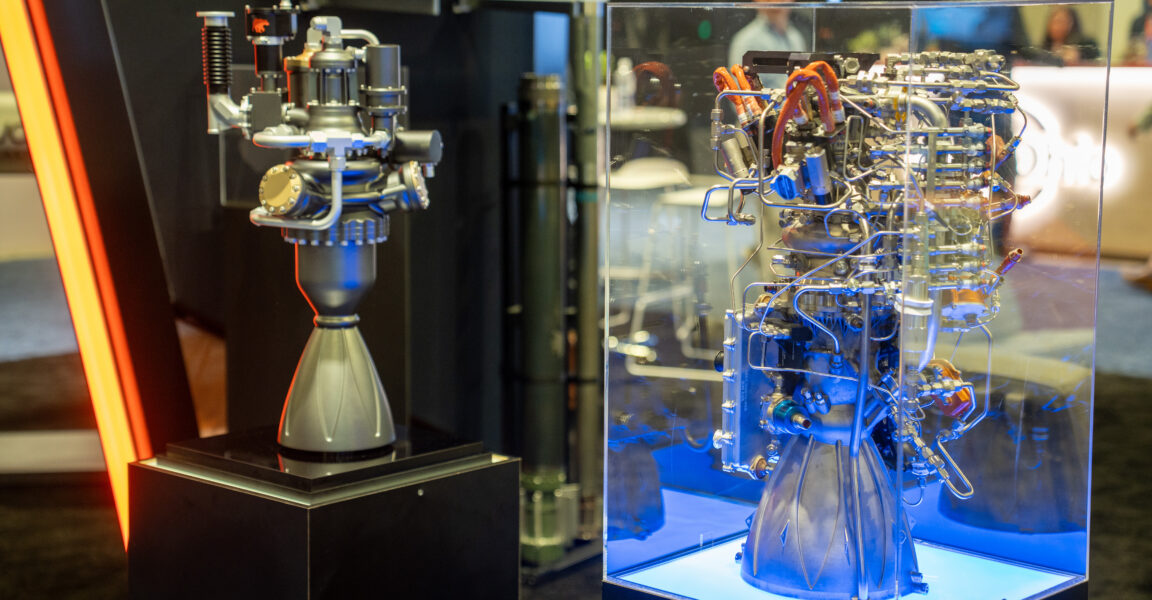
Ursa Major showcased its liquid-fuel rocket engines Draper (left) and Hadley (Right) at the 2026 Air, Space and Cyber expo. (Daniel Woolfolk / Breaking Defense)
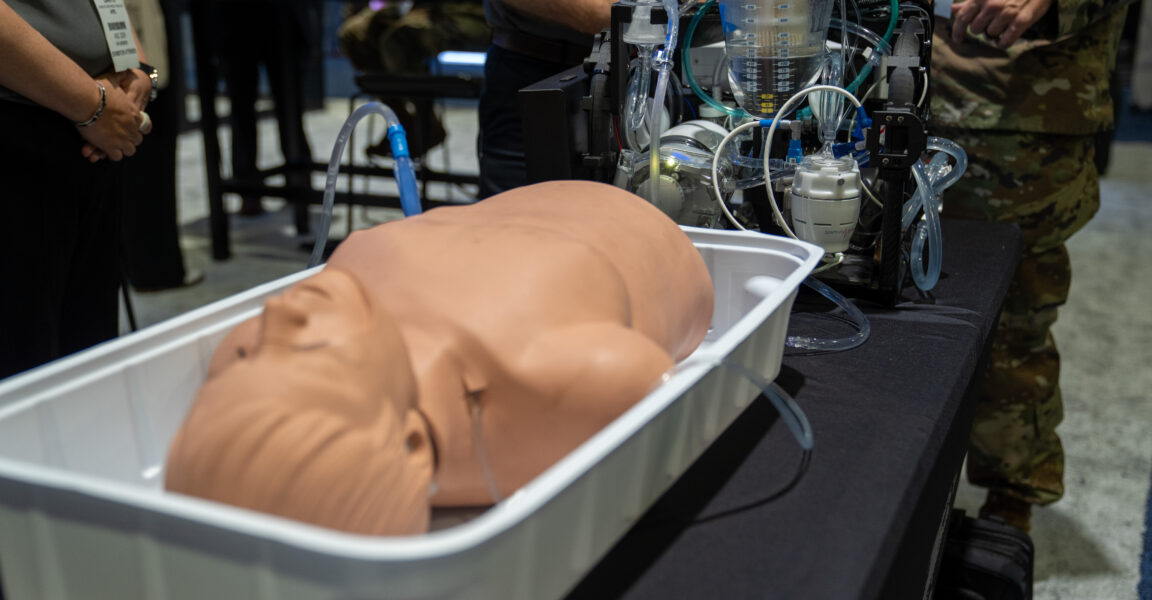
At 2026's Air, Space and Cyber expo, Air Force Research Laboratory personnel display a battlefield blood recycling system that filters lost blood back to be transfused into the same patient. (Daniel Woolfolk / Breaking Defense)
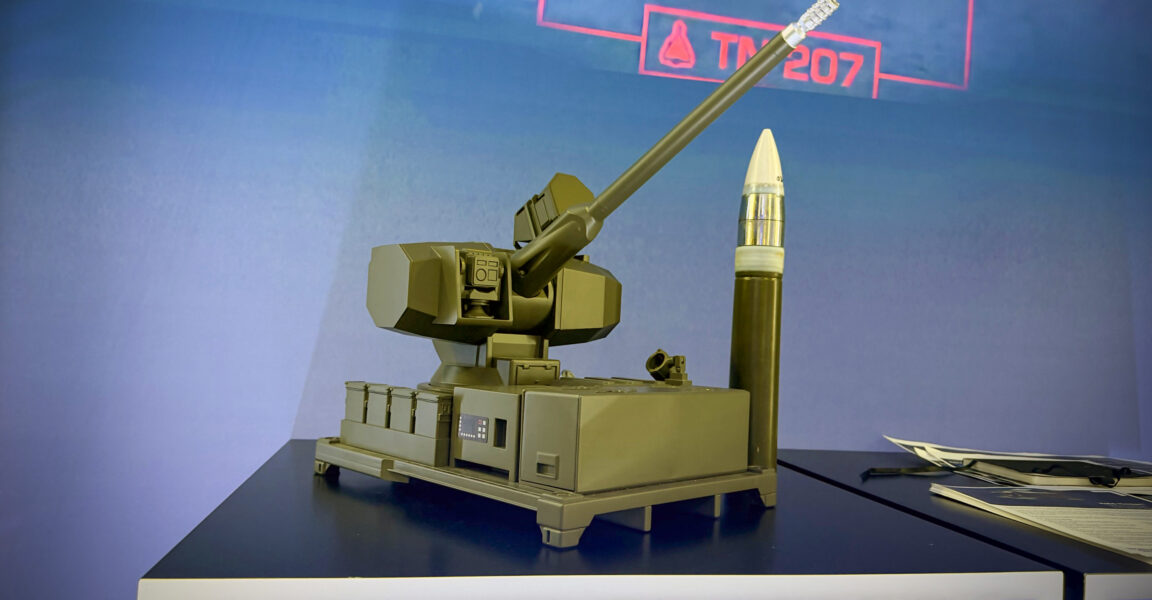
Northrop Grumman brought a scale model of its Raid Hunter 50 mm air defense system to the 2026 AFA expo. A full-size dummy shell stands just to the right of the scale model. (Breaking Defense)
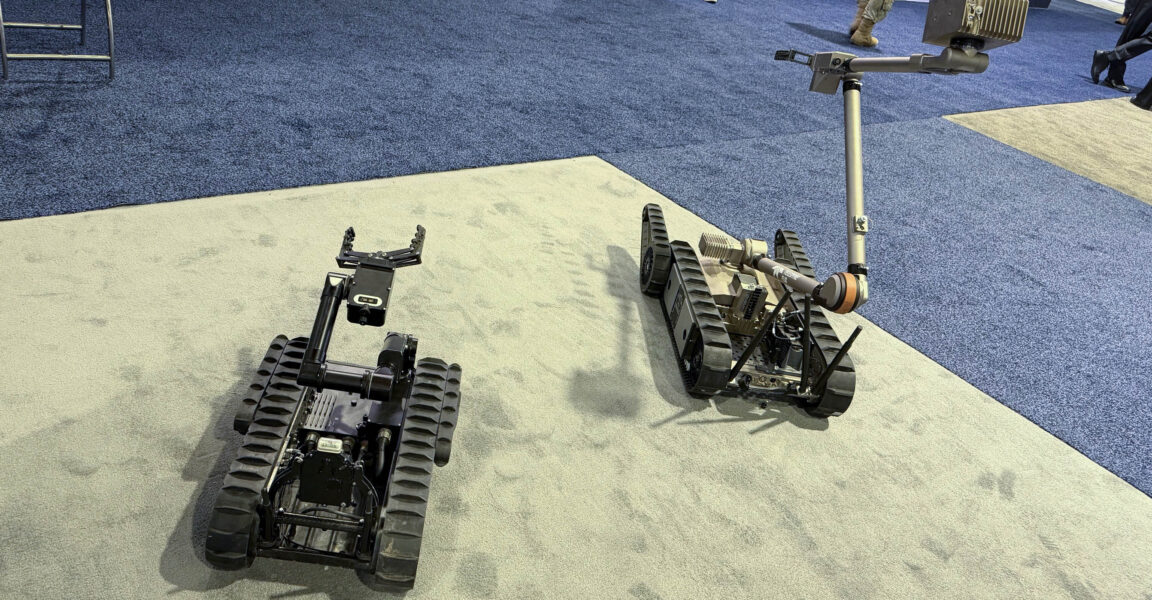
Teledyne Flir brought a few of its ground robots to the 2026 AFA show floor. (Breaking Defense)
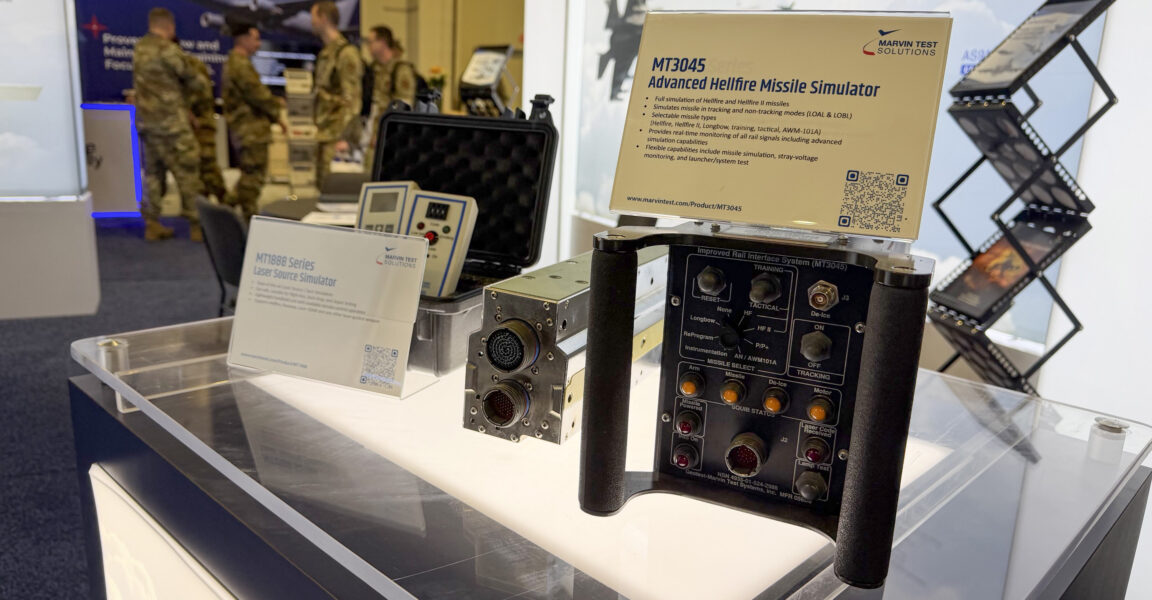
Marvin Test Solutions displayed a few training system components, including the MT3045 Advanced Hellfire Missile Simulator, at the 2026 Air, Space and Cyber conference. (Breaking Defense)
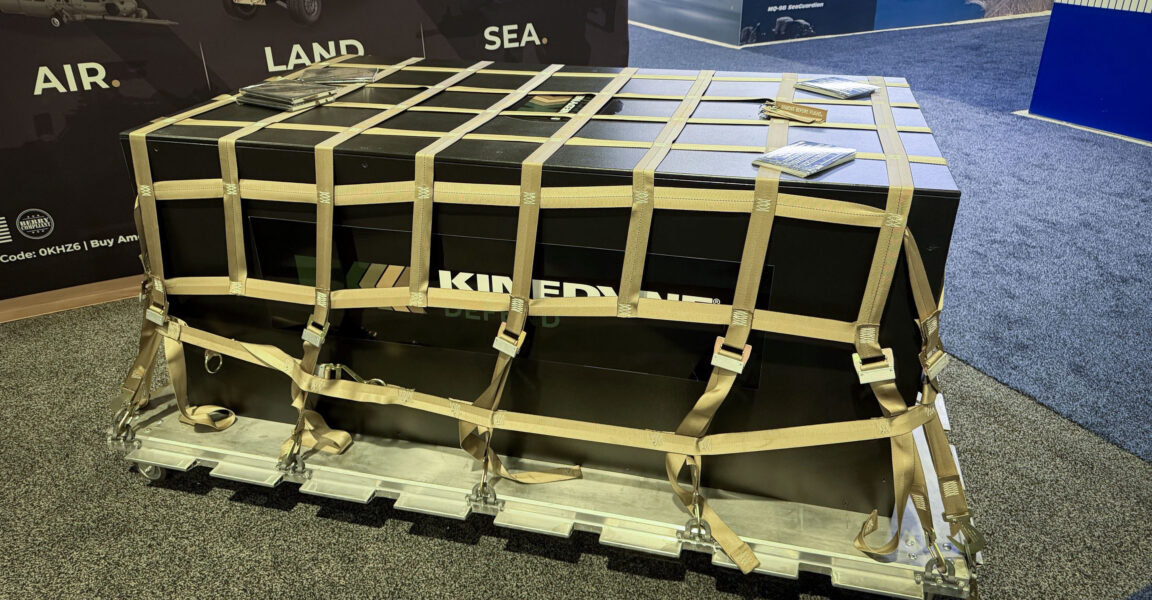
Cargo security developers at Kinedyne displayed a new tiedown strap system being tested with US Air Force personnel to the 2026 AFA expo. Specialized markings help expedite precision and loading for personnel securing equipment similar to what's seen in this photo. (Breaking Defense)
Breaking Defense Video