WASHINGTON — The three-star chief of the Pentagon’s ambitious drone development task force said today he didn’t know if his Defense Autonomous Working Group (DAWG) would get the nearly $54 billion the Trump administration has requested from lawmakers — and warned the program could stumble if it didn’t get “something.”
“We’re at a point where there is a potential for us to get, uh, some money out of the FY27 budget, the president’s budget, that will go directly to DAWG,” Lt. Gen. Steven Marks told the NDIA Emerging Technologies Conference. “[I] don’t know if we’re going to get the full ask of $53.6 billion, but my greatest concern is, if we don’t get something, then the momentum that we have created since DAWG has been stood up, over a year ago, will be waning.
“And it truly concerns me, because I have looked over and seen what they’re doing in Ukraine,” he said. “I see what’s going on with Operation … Epic Fury” in the Middle East.
The administration requested $54.6 billion for DAWG in FY27, but $53.6 of that amount was requested through the budget reconciliation process, alongside funding for other top Trump priorities like the Golden Dome missile defense system, rather than in the normal base budget request.
If reconciliation fails to pass in Congress, as seems increasingly likely, then DAWG could be left with $1 billion requested through the base budget. That figure is four times the $226 million DAWG received for FY 26 — dramatic growth by the standards of most Pentagon programs — but it’s less than 2 percent of the expansive original plan.
RELATED: Pentagon officials broadly detail $55 billion drone plan under DAWG
“I see what’s going on, and, truthfully, the world has woken up. They can’t keep up with our exquisite capability, and they know that,” Marks said of US adversaries. “[But] they can take a $100,000 drone and conduct an attack against a $2 billion vessel. … We are on the losing end of that cost imposition curve.”
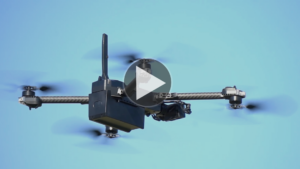
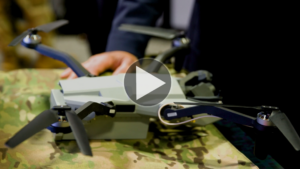
DAWG is Trump administration initiative that essentially absorbed the Biden-era Replicator initiative designed to acquire thousands of low-cost “attritable” drones, particularly for use in the Pacific. In its latest iteration, the department has been looking to supercharge development investments across an array of platforms and collaborative autonomy efforts.
Marks declined to describe the specific DAWG programs at stake. “Unfortunately, all of our systems are all classified, and so I will not be talking in detail about those,” he told the conference.
However, the general seemed particularly concerned about the impact of budget cuts on his efforts to impose common standards, control interfaces, and training on the current array of unmanned systems — the topic he was speaking on right before he transitioned to his budget concerns.
“Recently, I was in Alabama at Camp Clark, outside of Birmingham, at 20th Special Forces Group,” said Marks, who also serves as vice-commander of Special Operations Command. “What I heard … is we have six to eight systems that we’re operating and we’re conducting this [exercise] with. We need to identify and pick one or two and standardize it, standardize it across the entire formation, because each one of the systems, as I mentioned before, requires a different skill set….so standardizing the systems [is] critical to the future of autonomous warfare.”
Ashley Roque contributed to this report.
Breaking Defense Video