
Attendees file in during the first day of the 2026 Association of the US Army annual conference in Washington, DC, on October 12, 2026. (Breaking Defense)
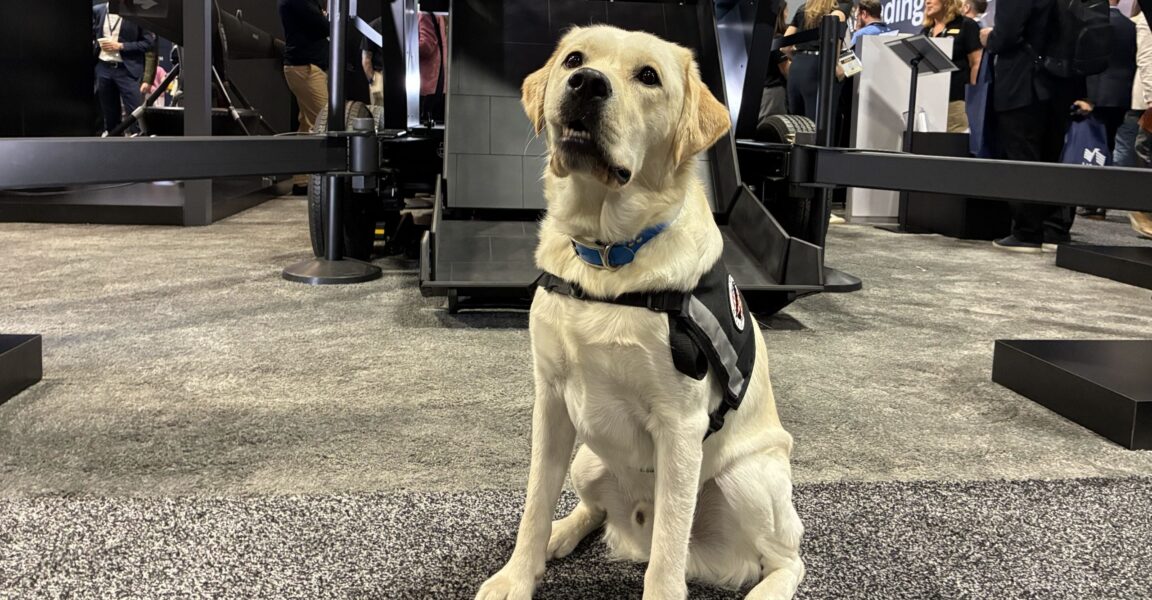
Patriot, who is expected to go to a wounded veteran when the dog’s training finishes, is happy to greet attendees outside the Shield AI booth on the show floor. (Breaking Defense)
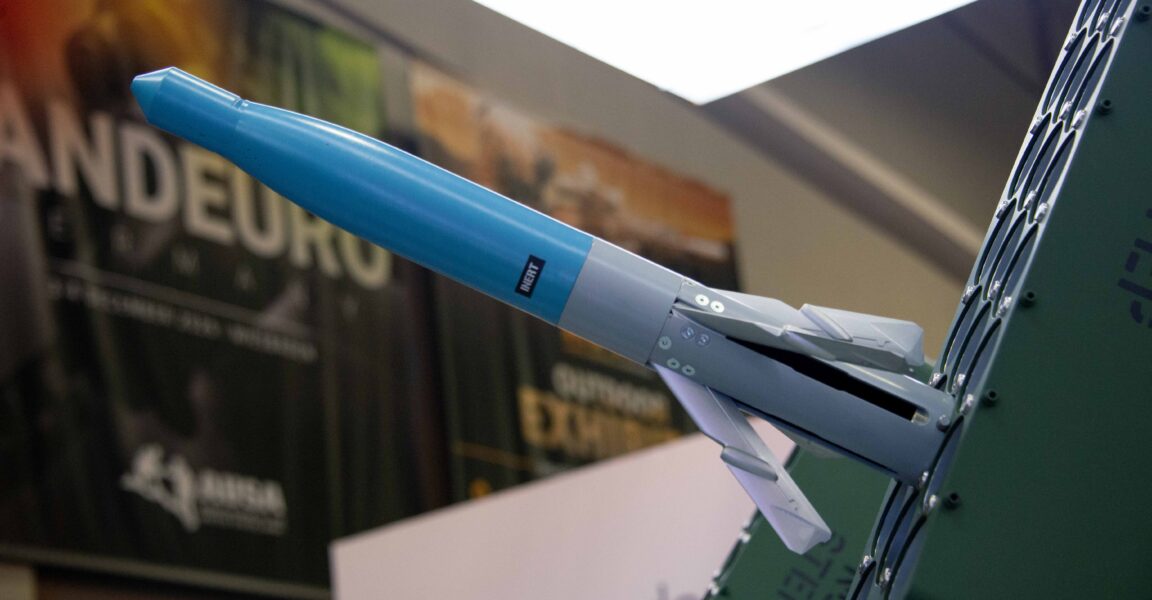
A close-up look at a munition from Sierra Nevada's Brawlr (Battery Revolving Advanced Weapons Launcher Reconfigurable) air-defense system, as seen at the 2026 AUSA conference. (Breaking Defense)
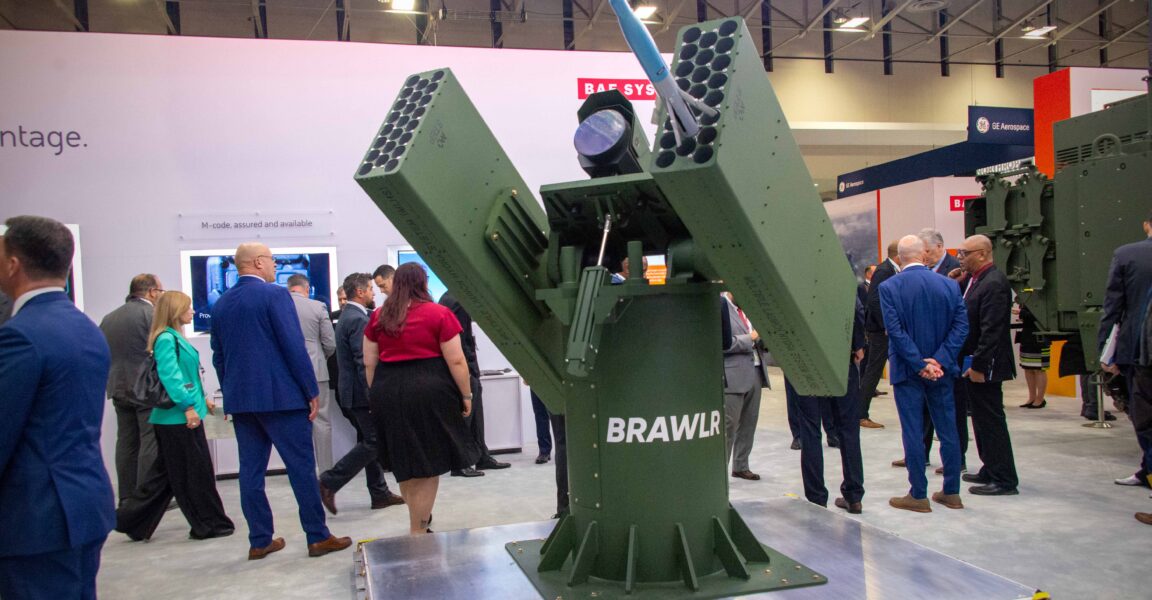
A wider shot of Sierra Nevada's Brawlr air-defense system at the 2026 AUSA conference. (Breaking Defense)
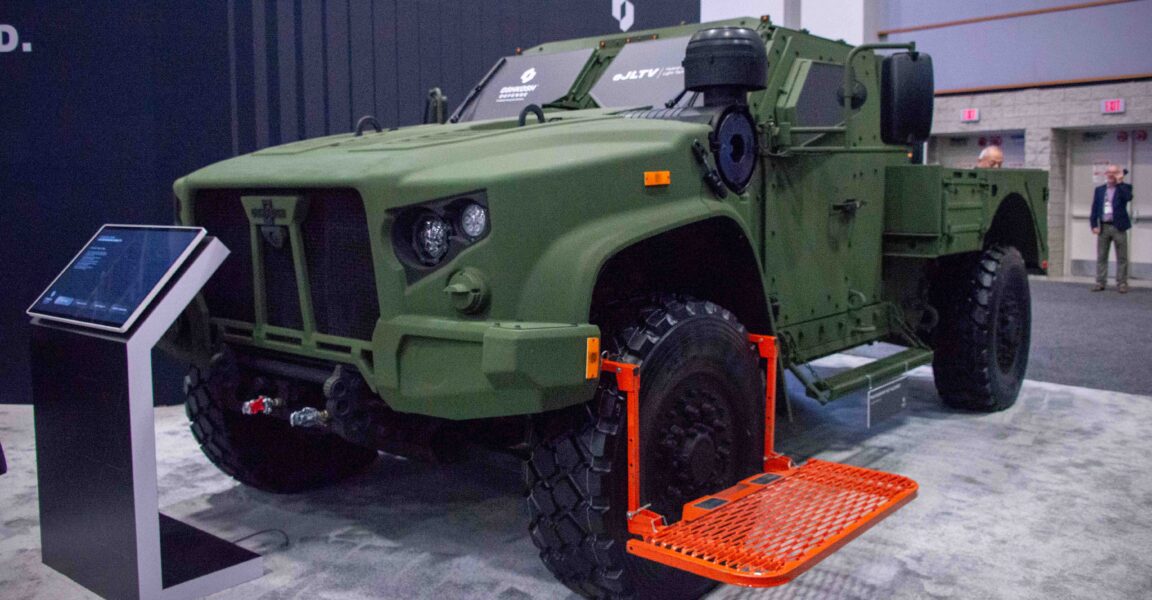
Oshkosh's electric Joint Light Tactical Vehicle on the AUSA show floor Oct. 12, 2026. (Breaking Defense)
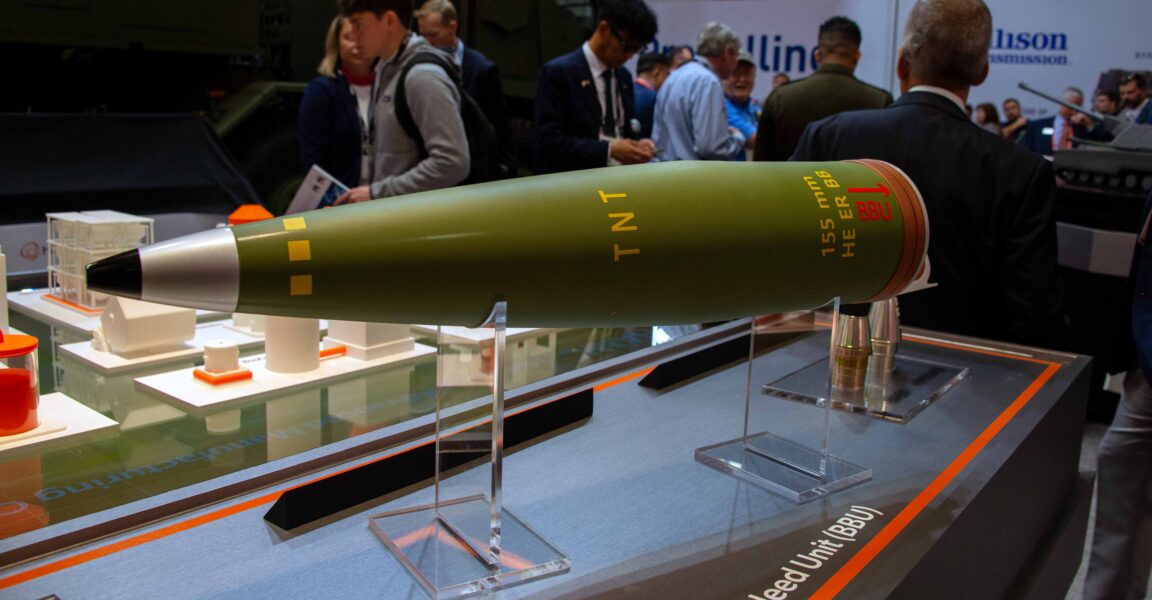
Hanwha Defense USA showed off its 155 mm artillery shells at the 2026 AUSA expo. (Breaking Defense)
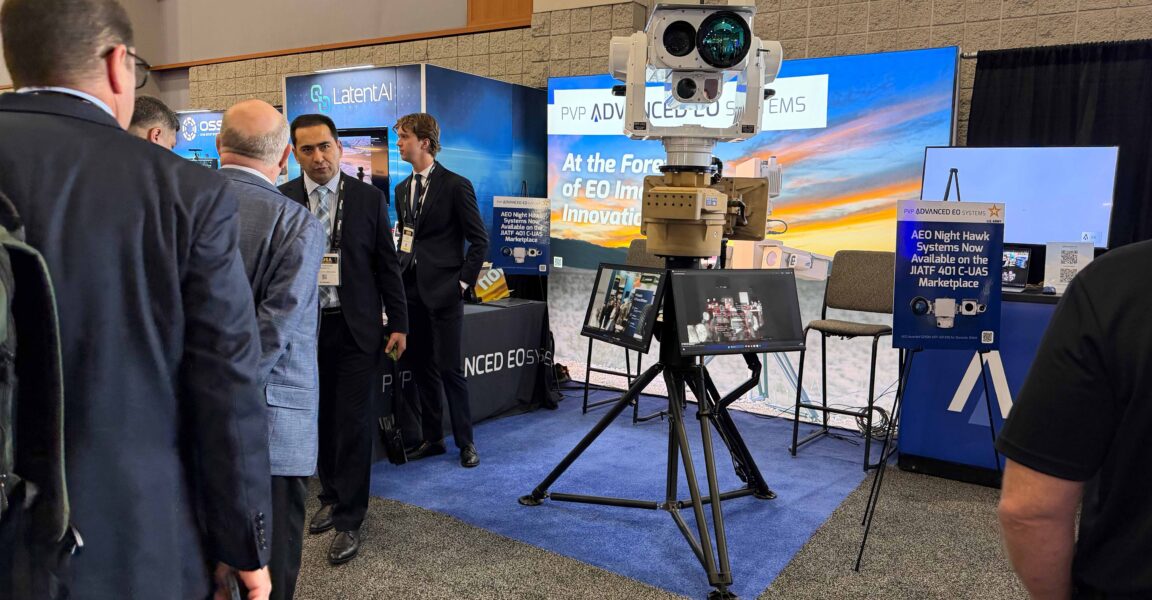
AEO Night Hawk Systems displayed their surveillance assembly, with sensors honing in on bystanders at the 2026 AUSA conference in Washington. (Breaking Defense)
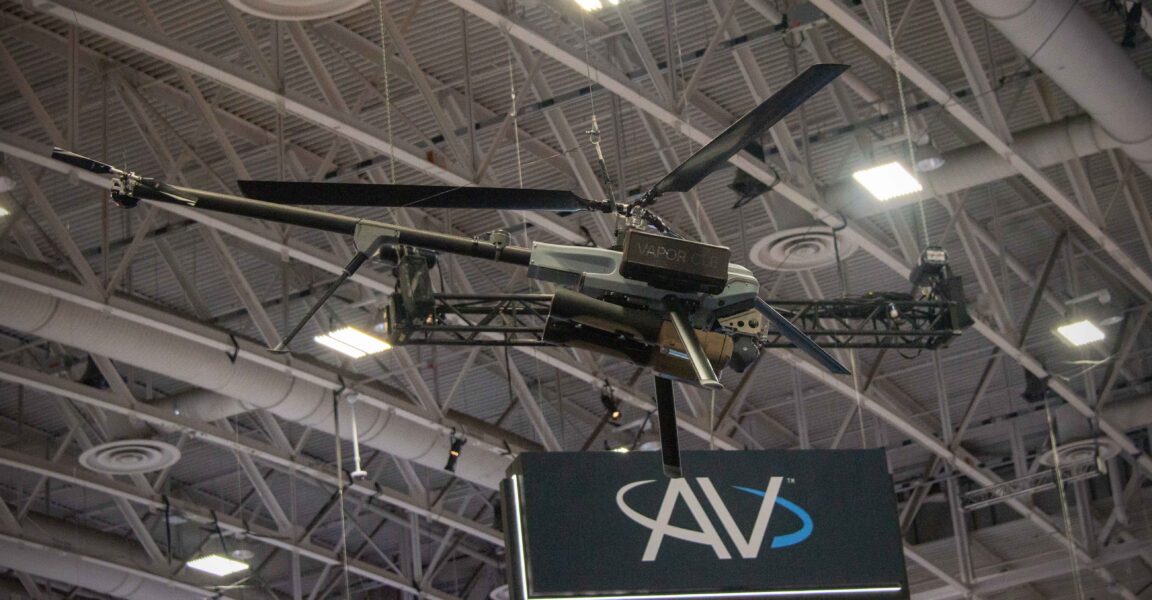
AeroVironment’s VAPOR is an all-electric, single-rotor vertical takeoff and landing (VTOL) helicopter unmanned aircraft system. Here it is suspended above attendees at the 2026 AUSA conference. (Breaking Defense)
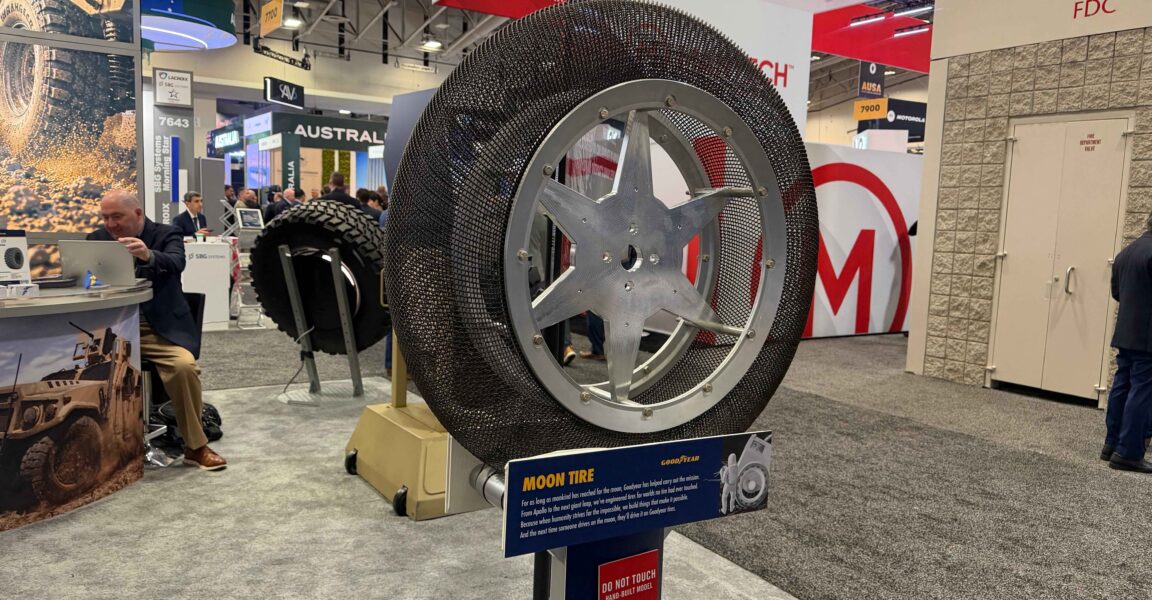
Goodyear representatives brought a sturdy but very unusual "moon tire" for lunar exploration to the 2026 AUSA expo. (Breaking Defense)

Colt optics had one of the busiest displays, with dozens of attendees observing a wall of assault rifles with specialized optics at the 2026 AUSA expo. (Breaking Defense)
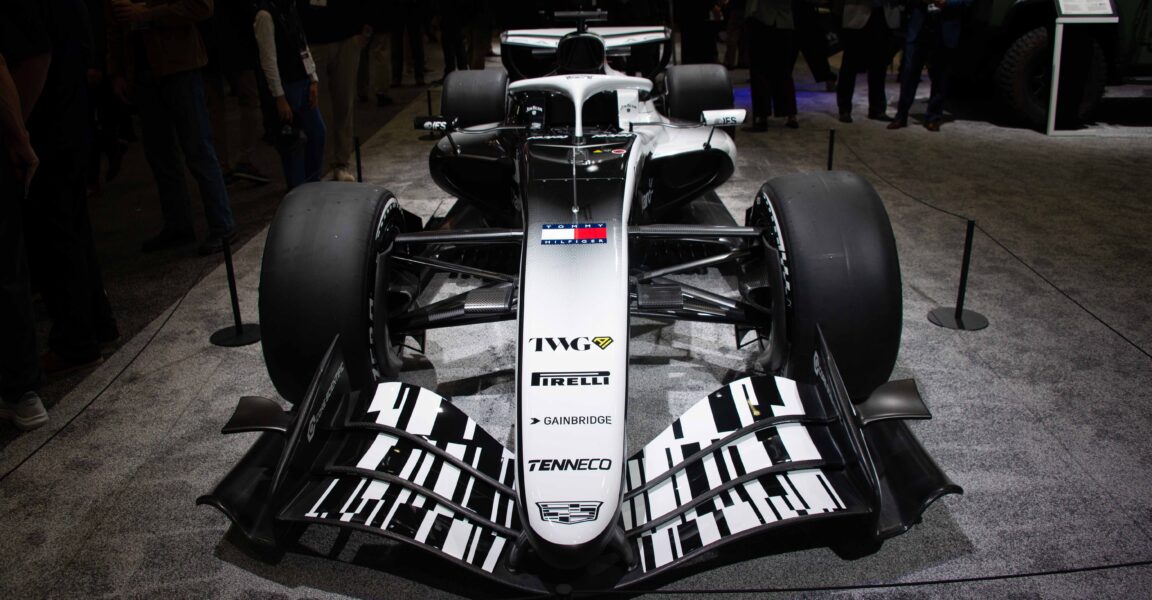
Cadillac brought its Formula 1 team racecar to the 2026 AUSA conference in Washington. (Breaking Defense)

AUSA mascots Sgt. Hero and George Washington descend the escalator at the 2026 annual conference. (Aaron Mehta / Breaking Defense)
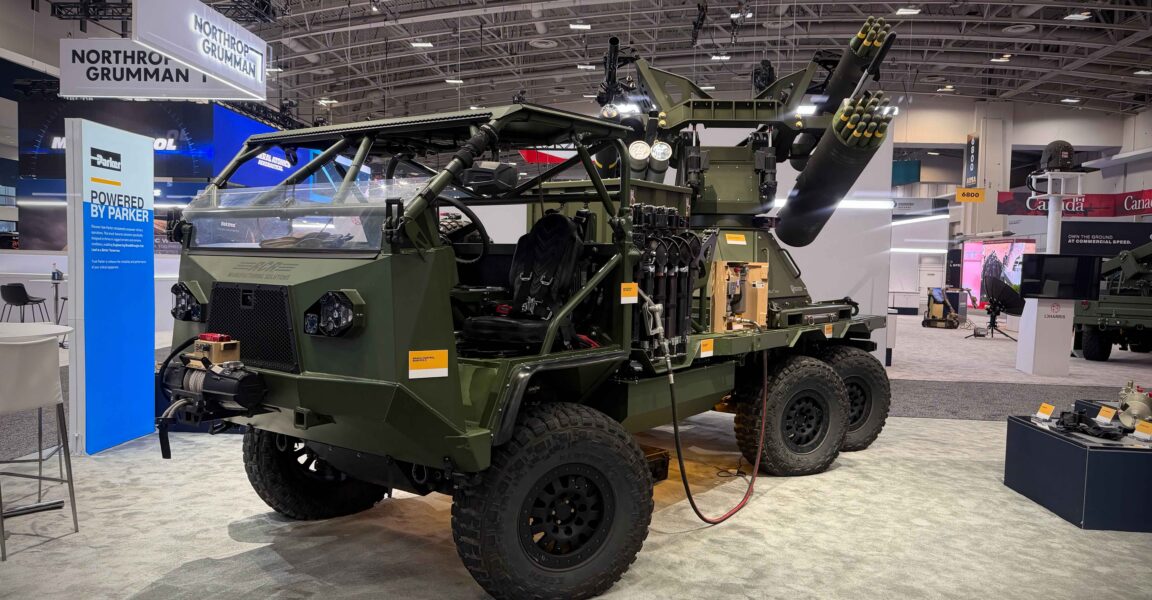
Parker Hannifin showcased many of its components onboard the MDH Strategic Services Airwolf c-UAS system, which is shown here fixed atop the RCR 6WAP vehicle. (Breaking Defense)
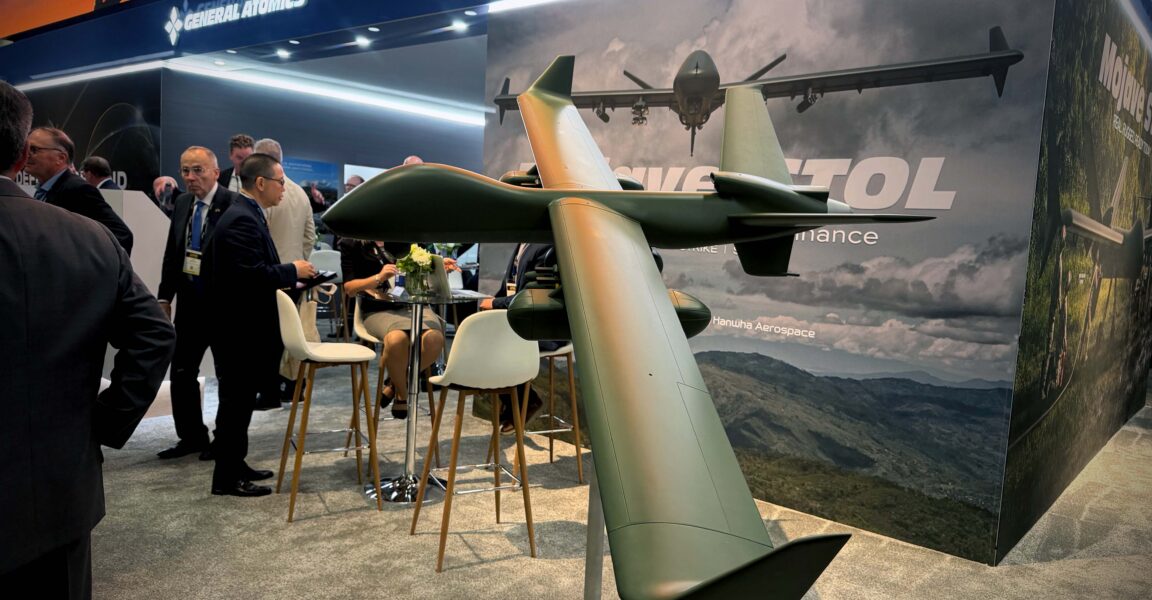
General Atomics Aeronautical Systems Inc. and Hanwha Aerospace co-developed the Mojave short takeoff and landing (STOL) uncrewed aircraft, pictured here at the 2026 AUSA trade show. (Breaking Defense)
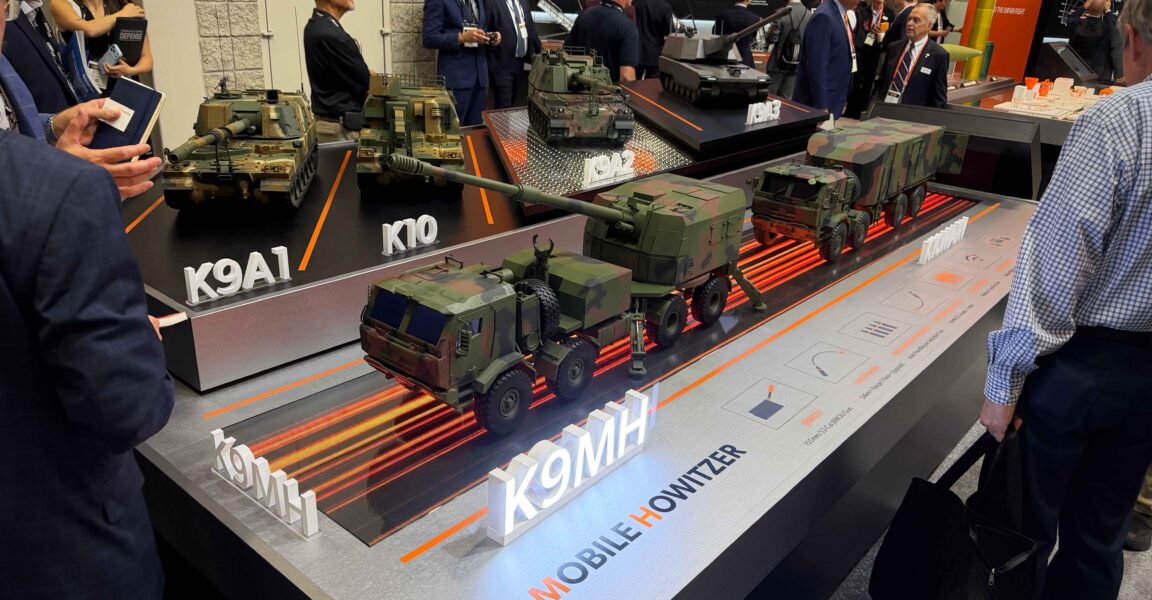
Hanwha Defense USA displayed a range of scale model armor and artillery systems on the AUSA show floor. (Breaking Defense)
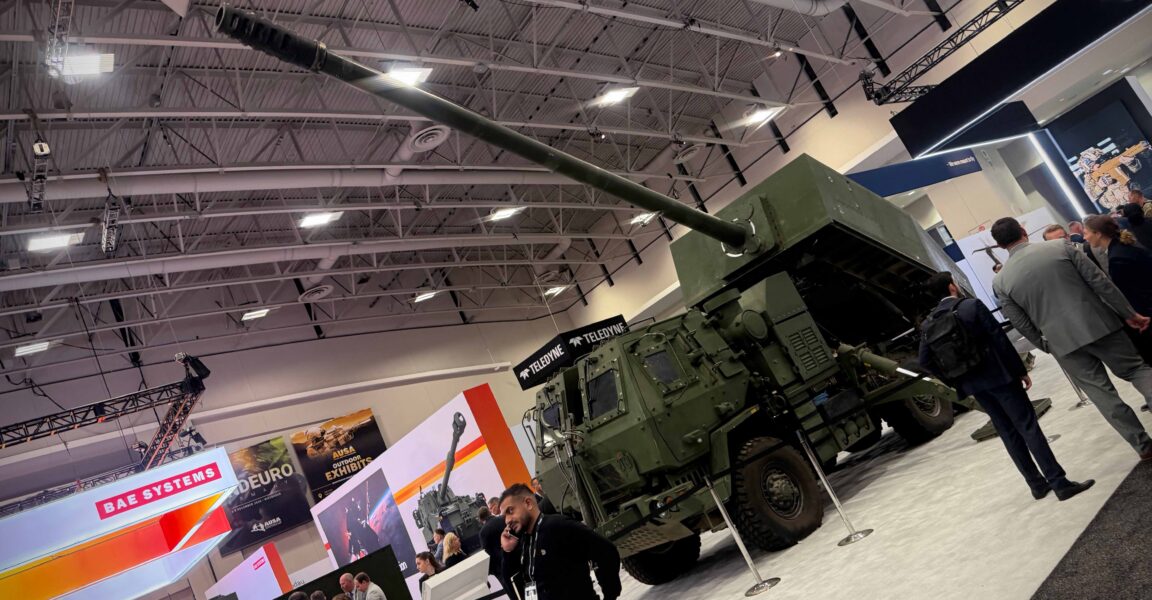
BAE’s Multi-Domain Artillery Cannon System stands tall at the 2026 AUSA trade show in Washington, DC. (Breaking Defense)
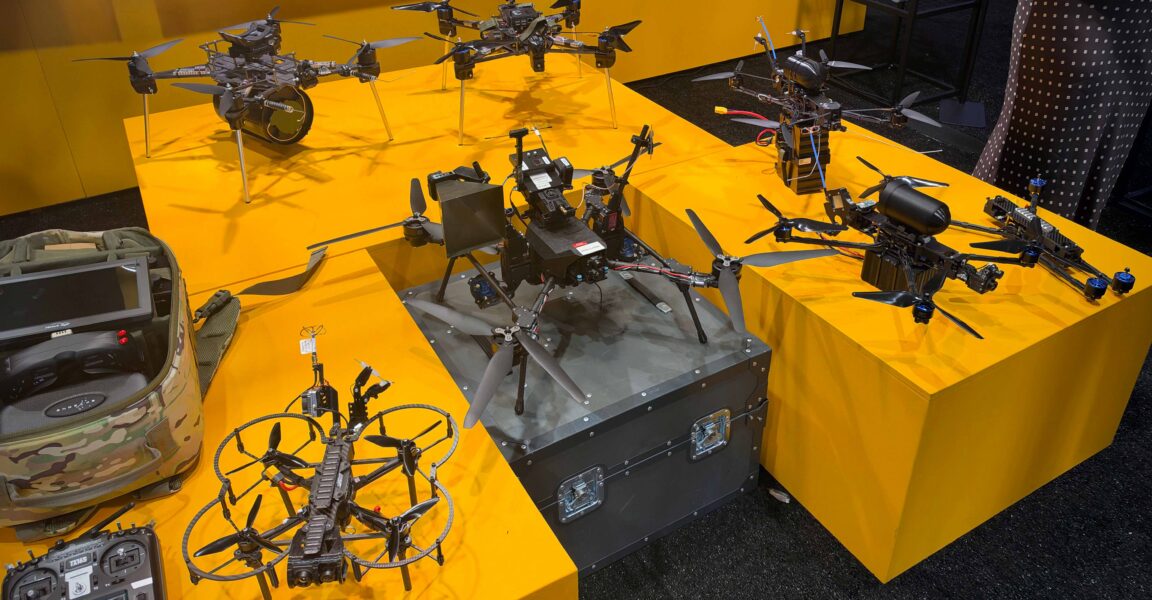
The Ukrainian military’s 3rd Army Corps brought a variety of small drones to the 2026 AUSA trade show. (Valerie Insinna / Breaking Defense)
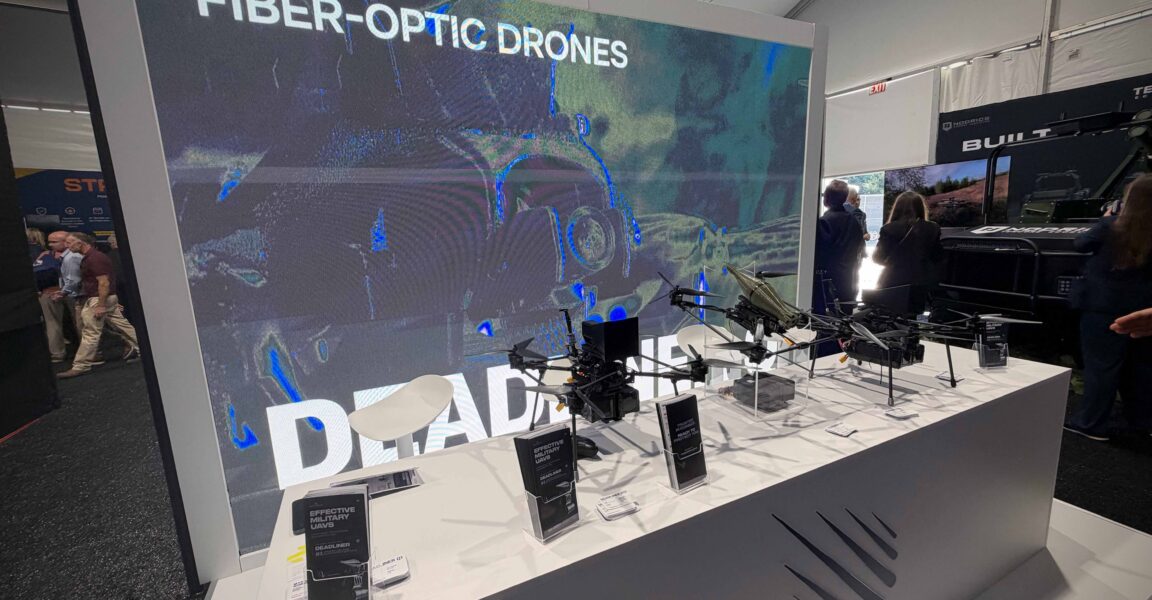
Kyiv-based defense tech firm Stellarion brought several fiber-optic drones to the 2026 AUSA expo. (Valerie Insinna / Breaking Defense)
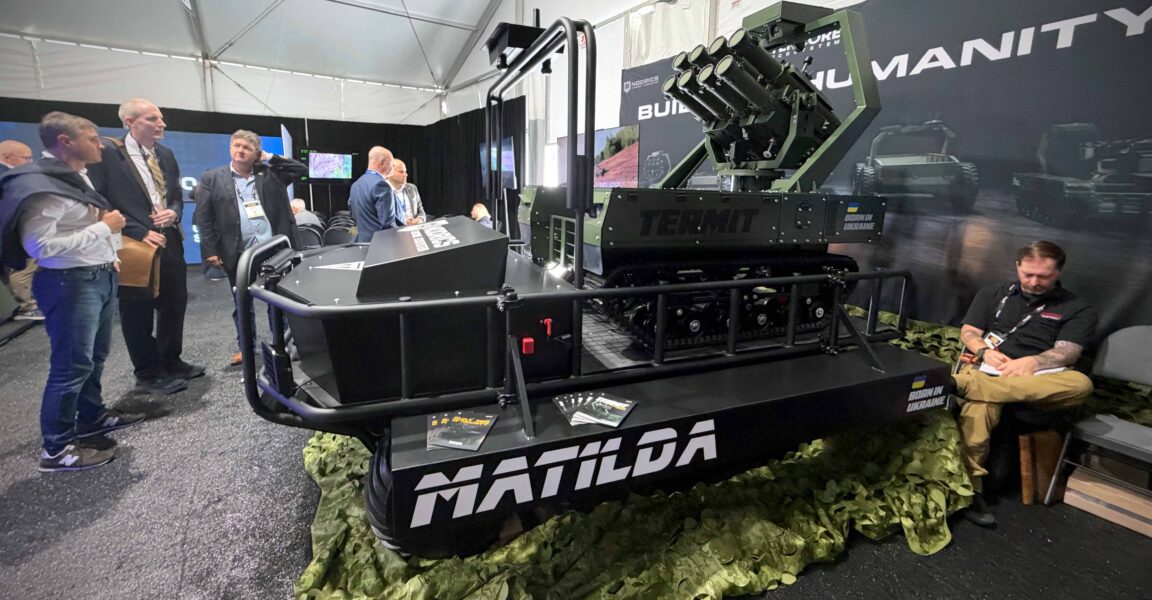
Ukrainian defense firm Tencore showcased an amphibious unmanned ground vehicle called MAT1LDA (Mesa Associates’ Tactical Integrated Light-Force Deployment Assembly), which is carrying Tencore’s TerMIT ground robot, at the 2026 AUSA trade show. (Valerie Insinna / Breaking Defense)
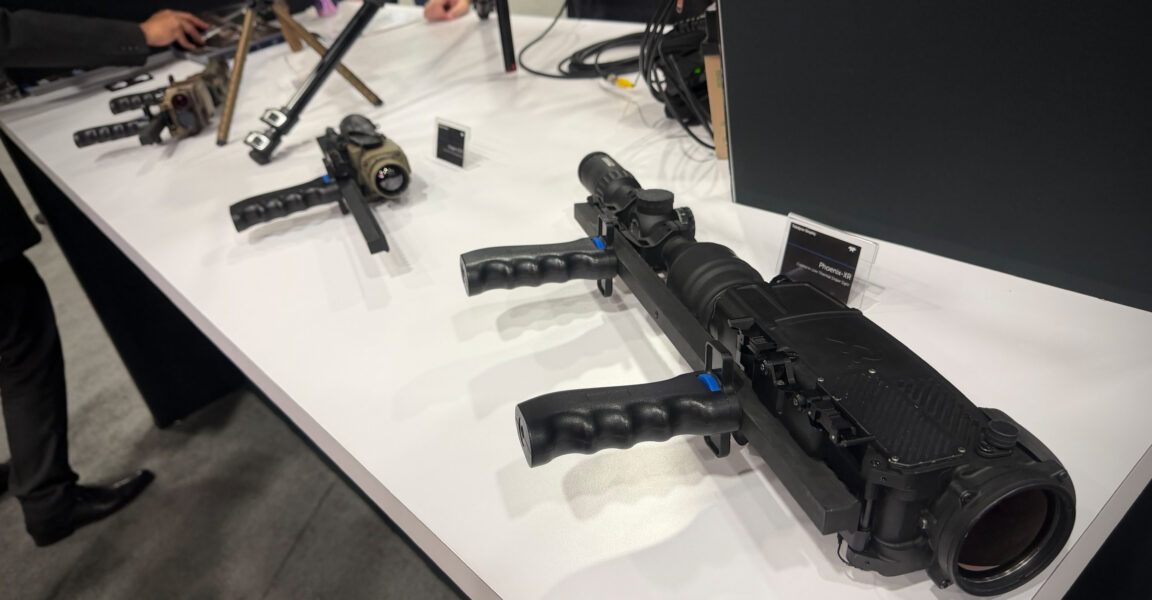
Teledyne Qioptiq brought several thermal weapons sights including the Phoenix-XR (right) and the Dragon-C12 S (middle) to the 2026 AUSA conference. (Breaking Defense)
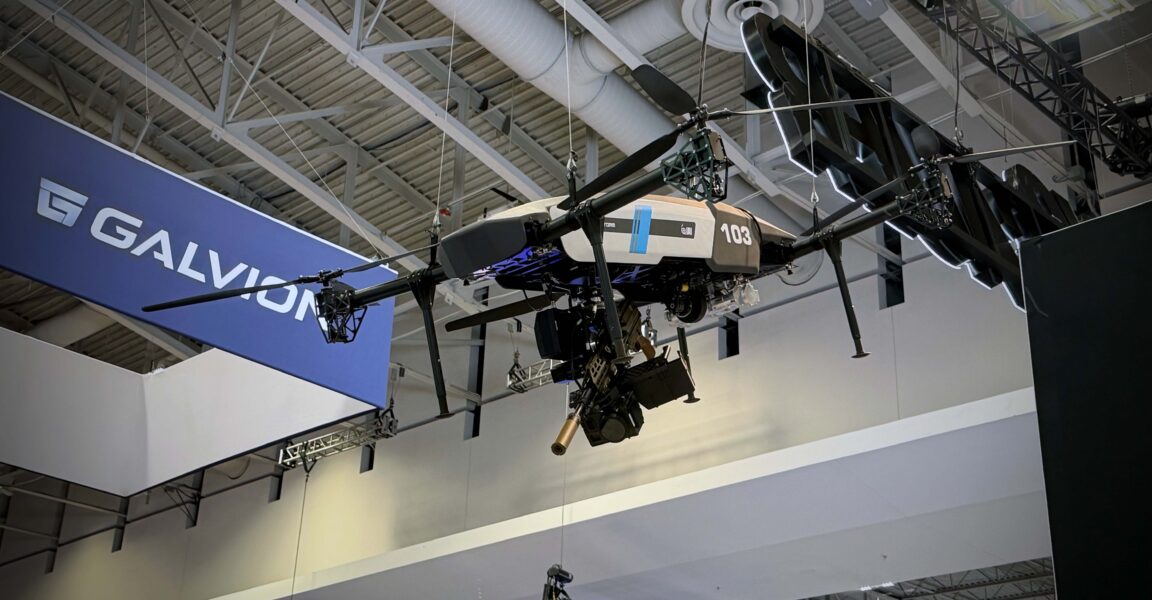
Israel Aerospace Industries’ and Sig Sauer’s Fire Storm 250 armed tactical quadcopter hangs above attendees of the conference. (Breaking Defense)
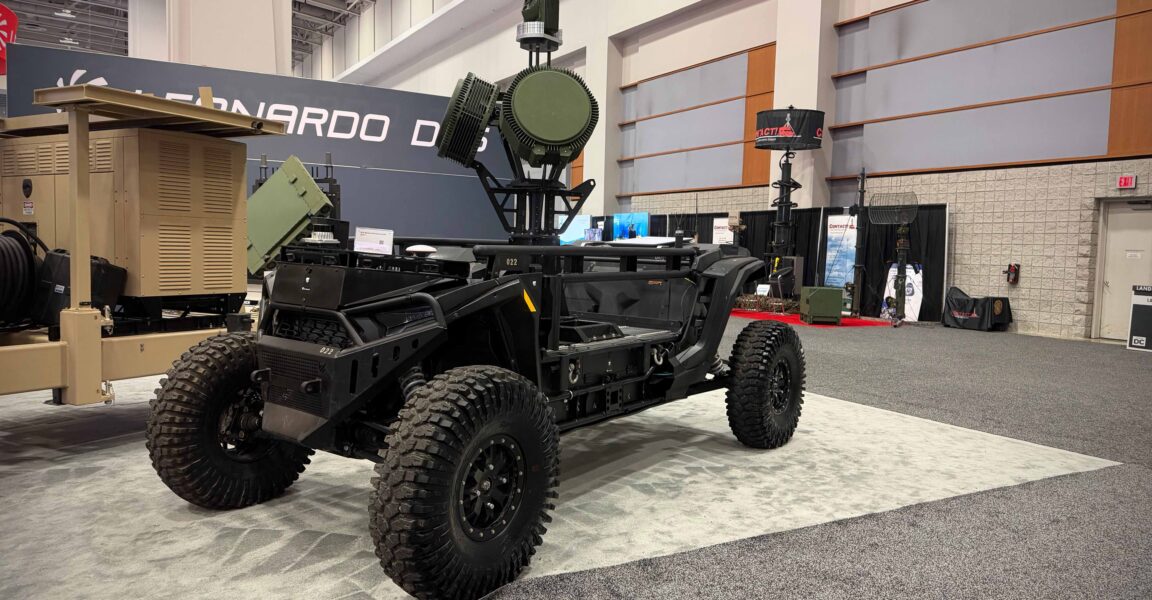
OverlandAI’s ULTRA autonomous ground system hosts a multi-mission hemispheric radar from Leonardo DRS, shown here at the 2026 AUSA expo. (Breaking Defense)
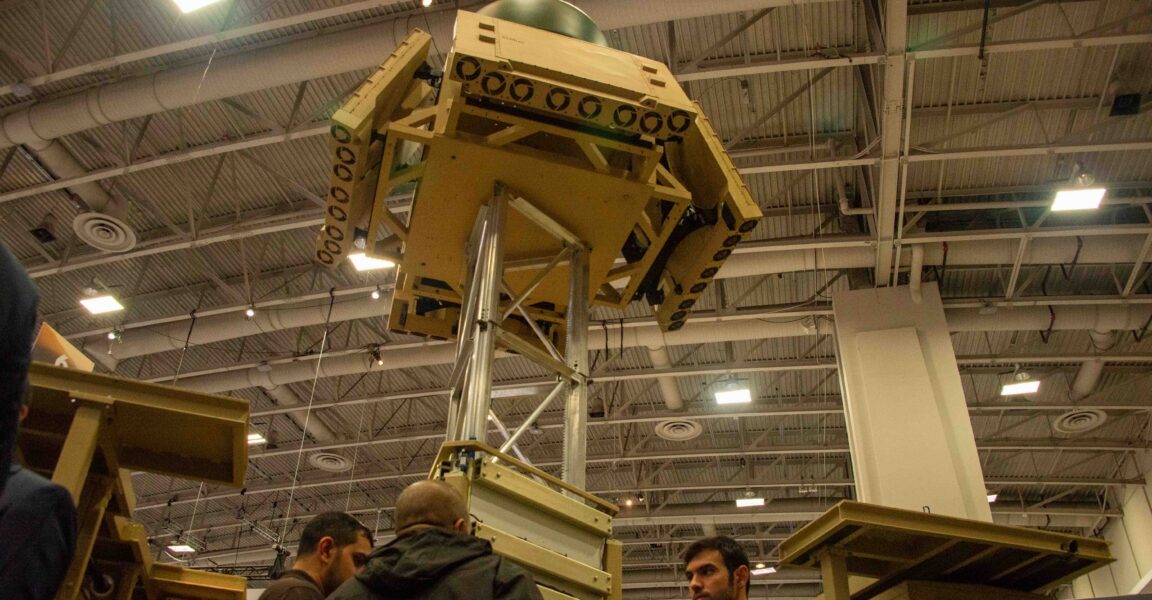
Leonardo DRS displays its Extended Mast Surveillance System, which features an exMHR radar system on a trailer platform with an extendable mast for a higher-altitude perspective. (Breaking Defense)
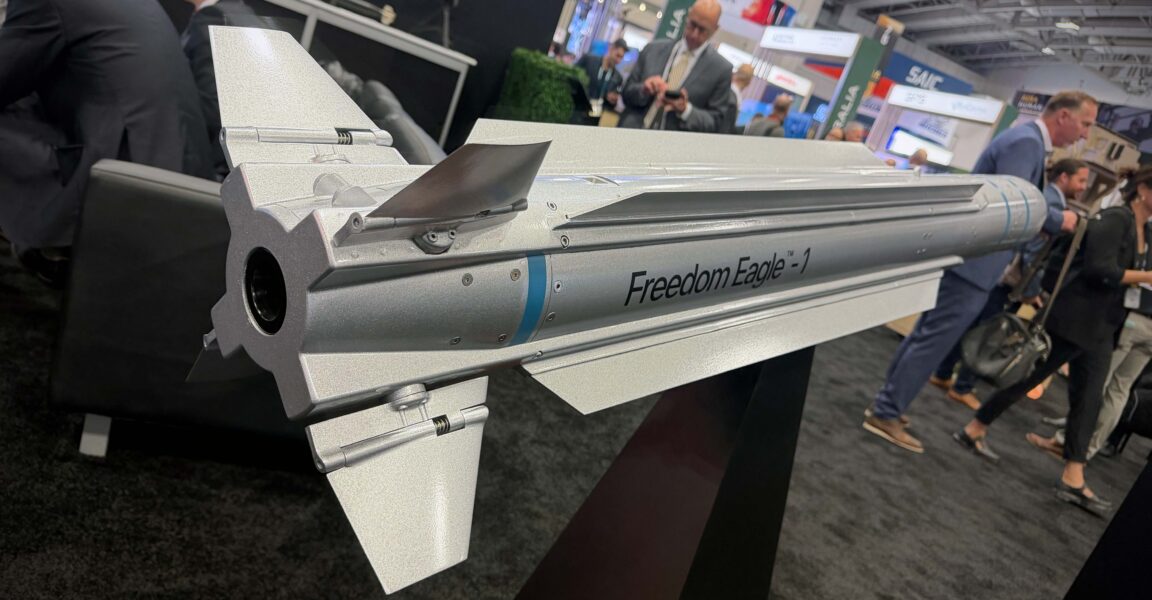
AeroVironment's Freedom Eagle-1 (FE-1) is marketed as a low-cost kinetic counter-UAV munition as well as a "long-range kinetic interceptor missile." (Breaking Defense)
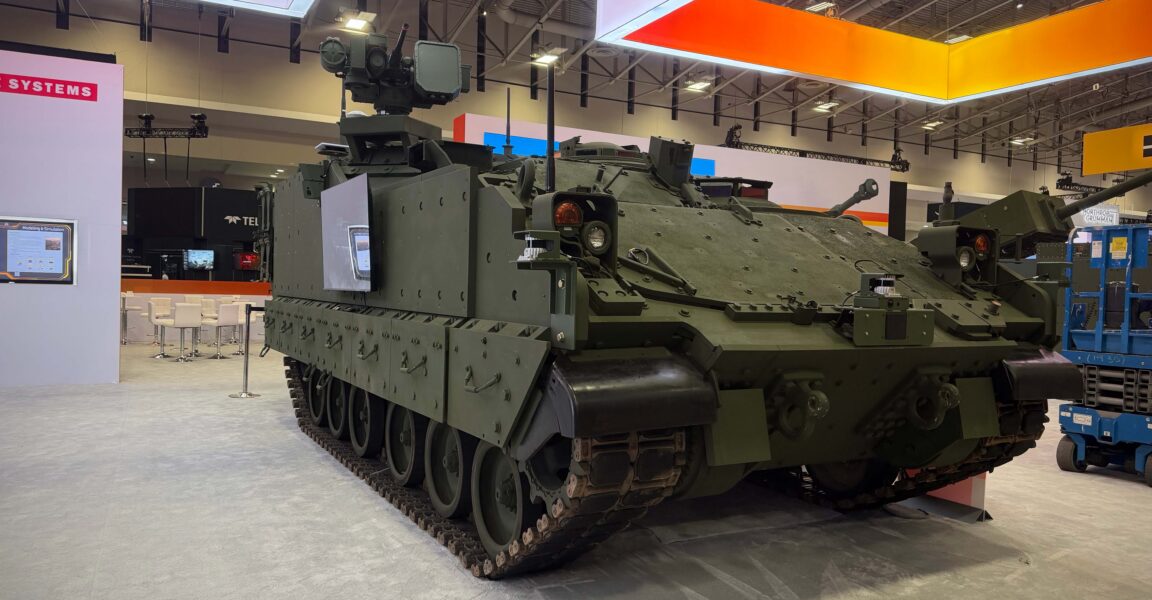
BAE's AMPV-30 (Armored Multi-Purpose Vehicle) is shown here on the trade show floor at the 2026 AUSA conference in Washington. (Breaking Defense)
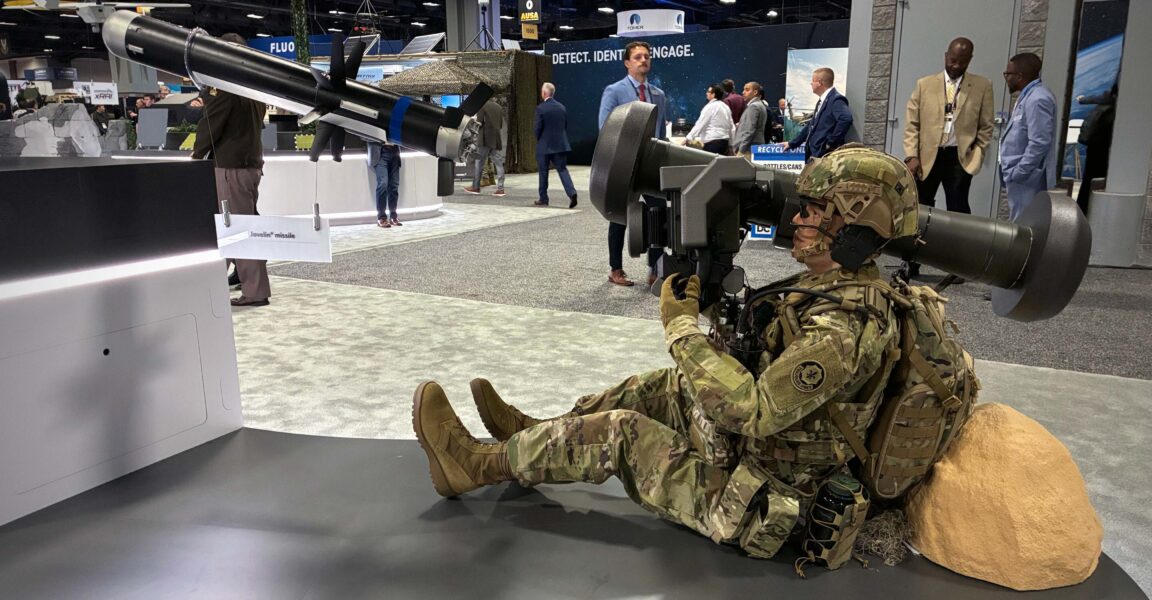
Here is the Javelin anti-tank guided munition system from RTX, as displayed with a fully-kitted soldier on the floor of the 2026 AUSA expo. (Aaron Mehta / Breaking Defense)
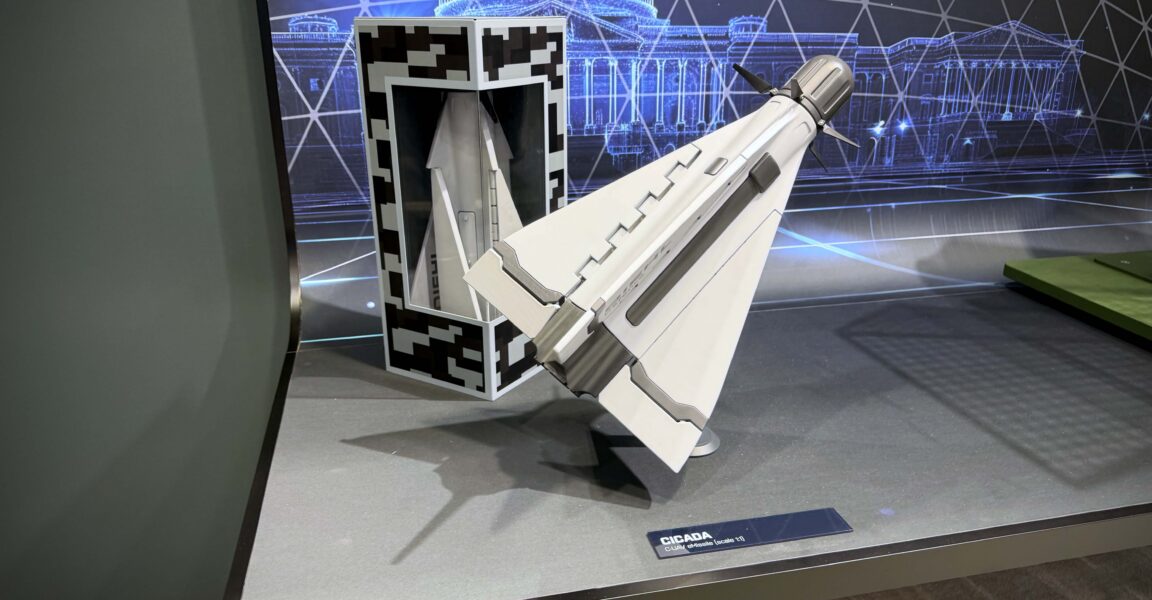
Diehl Defense's Cicada counter-drone munition is an electrically propelled missile that can feature a fragmentation warhead or a safety net. (Breaking Defense)
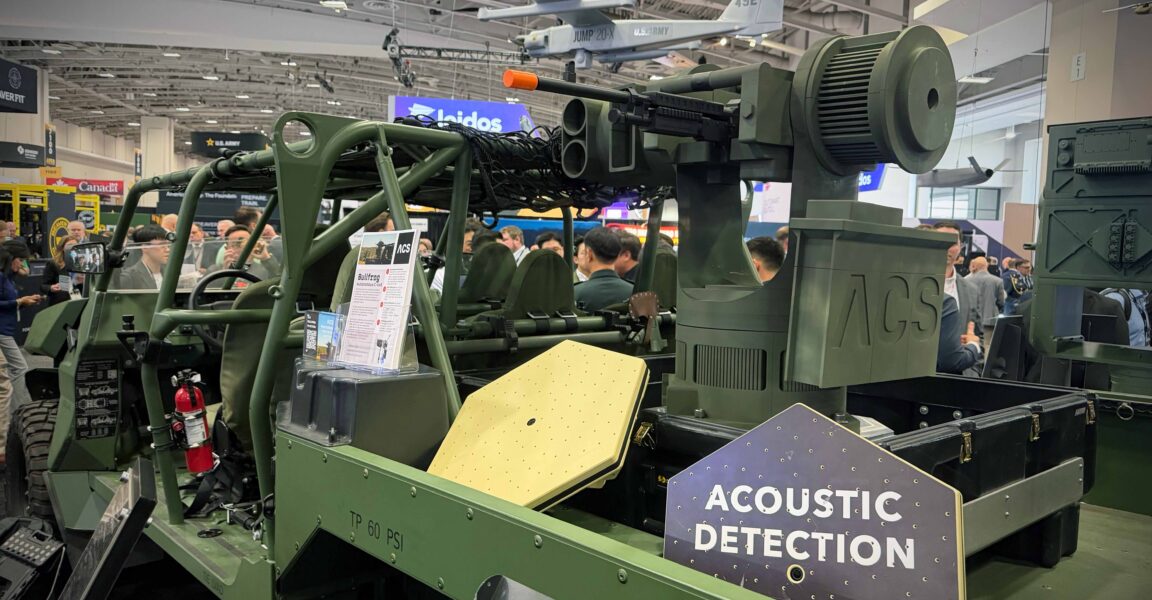
AeroVironment's Bullfrog M240 autonomous weapon system, seen here in the bed of a utility vehicle, has a range of 1,500 meters for defense against drone groups 1 through 3, according to AV. (Breaking Defense)
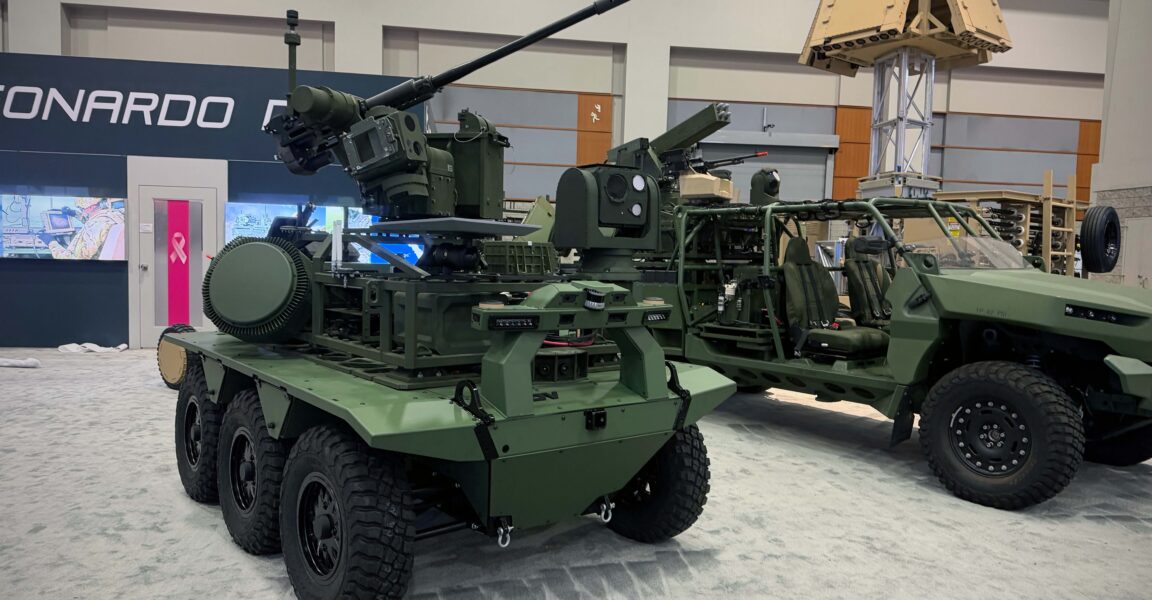
Leonardo DRS brought several vehicles and hardware to the 2026 AUSA conference, including the VIKING Uncrewed Ground Vehicle (left) equipped for air defense missions. (Breaking Defense)
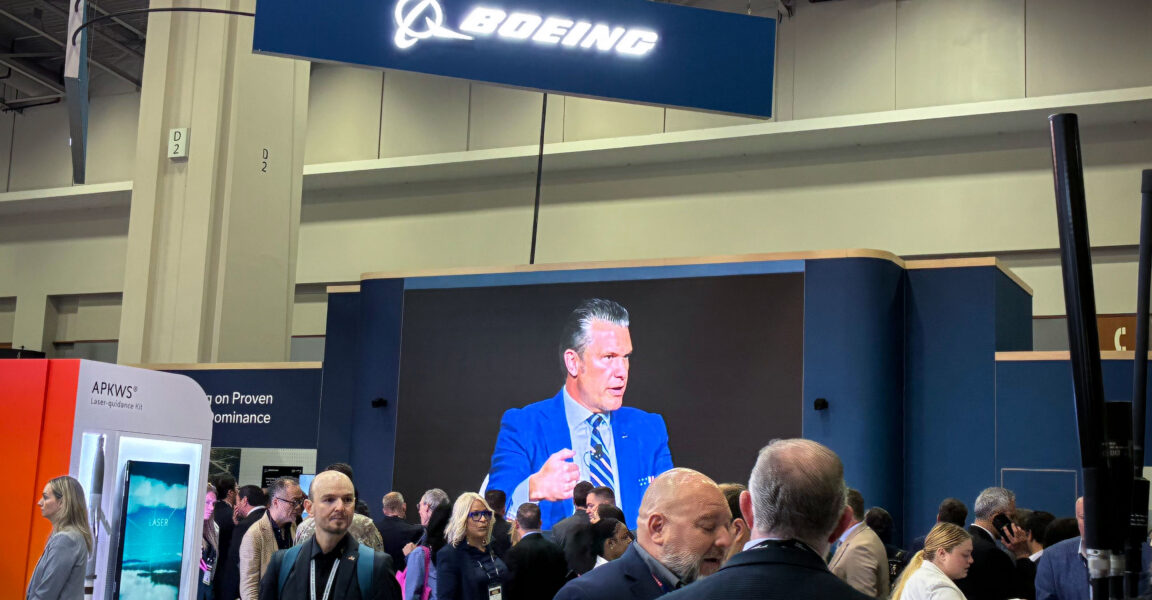
Defense Secretary Pete Hegseth's remarks at the 2026 AUSA expo were livestreamed at Boeing's booth on the show floor. (Breaking Defense / Aaron Mehta)
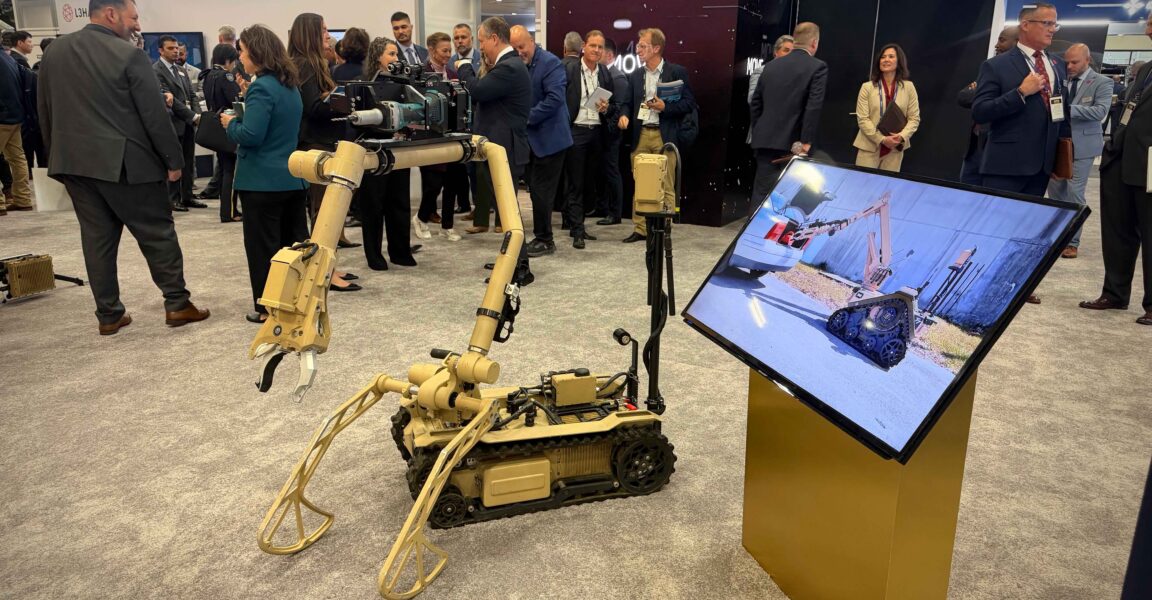
L3Harris brought its T4 Robotic System, an all-terrain unmanned ground vehicle intended for explosive ordnance disposal and hazardous materials clearance, to the 2026 AUSA conference. (Breaking Defense)
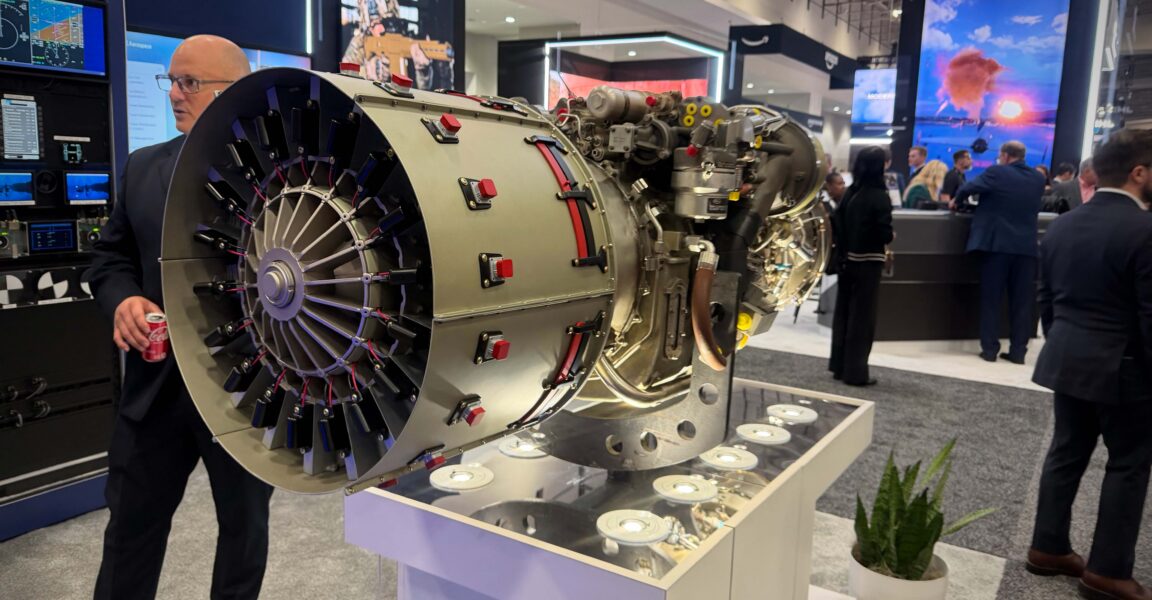
GE Aerospace showcased several large engine components -- including this hybrid-electric turbogenerator for the MV-250 autonomous, hybrid-electric vertical takeoff and landing cargo drone -- at the 2026 AUSA expo. (Breaking Defense)
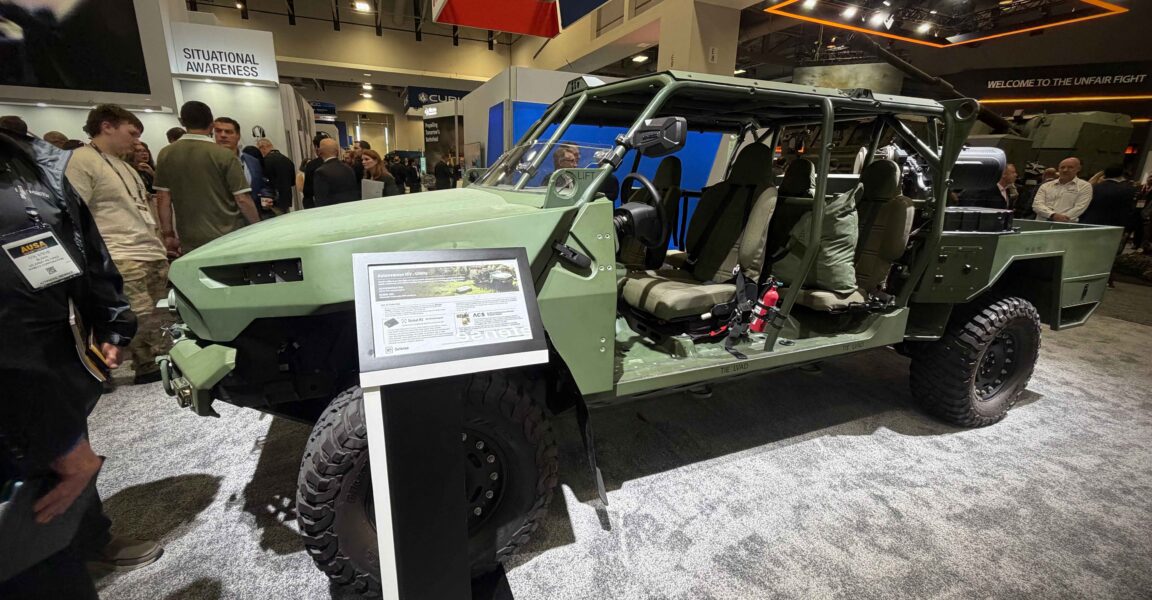
GM Defense's Autonomous ISV-Utility can accommodate up to five passengers as well as a wide range of equipment in the bed, including mortar systems, counter-drone as well as high-energy and electronic warfare systems. (Breaking Defense)
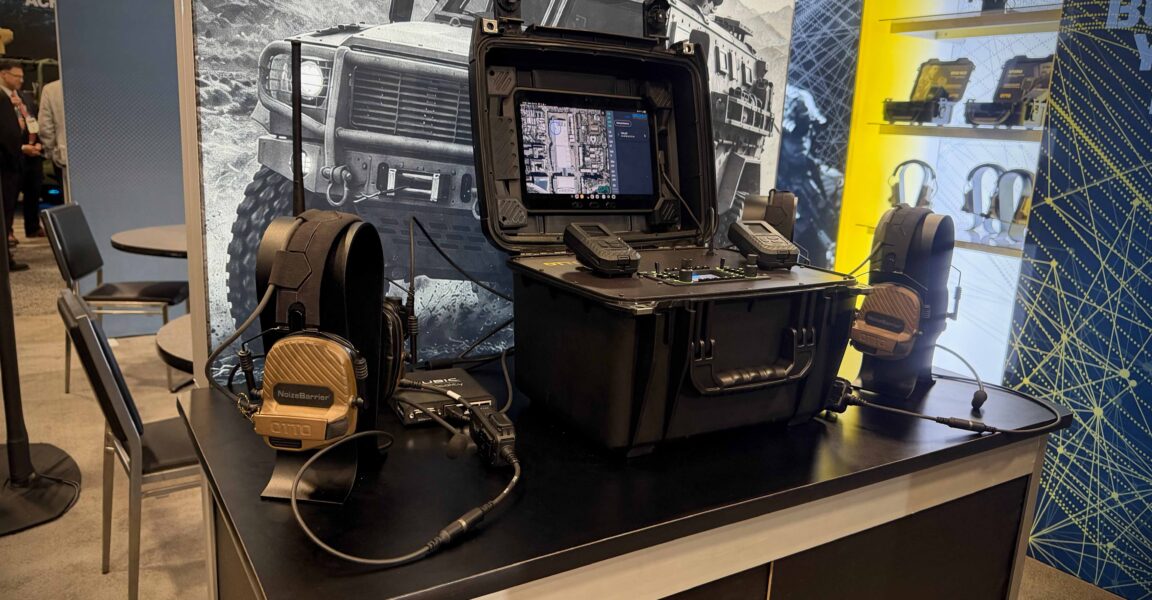
Illinois-based OTTO Engineering shared one of their hardened systems and associated equipment at the 2026 AUSA trade show. (Breaking Defense)
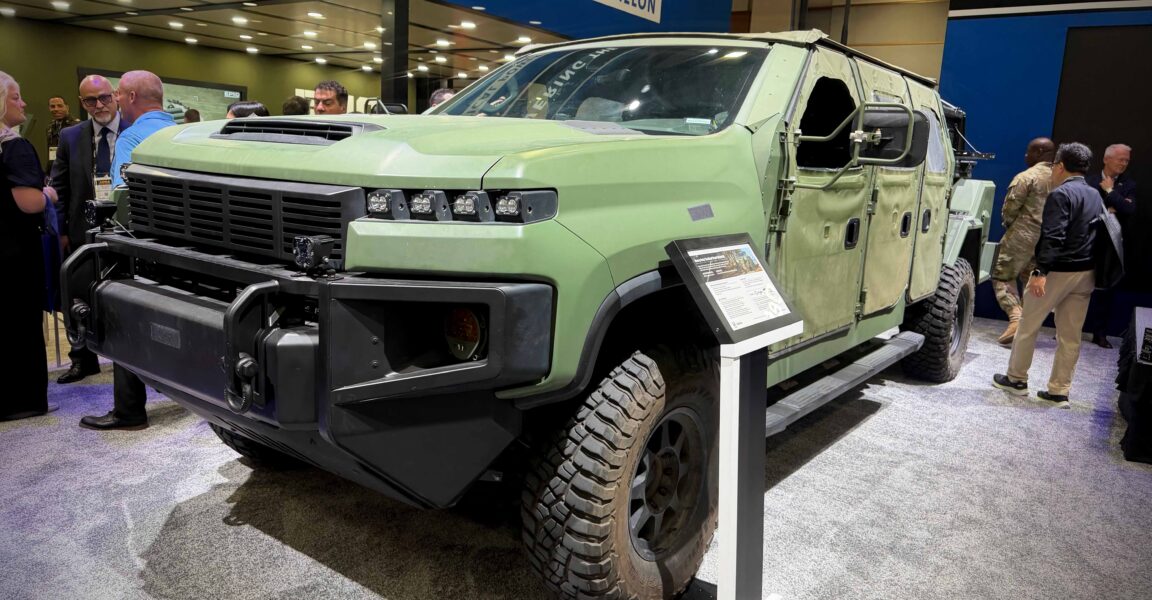
This is GM Defense's hybrid-powered Heavy Duty Tactical Truck, which is based on the Chevrolet Silverado. The truck includes a "silent" drive mode "to reduce acoustic and thermal signatures," the firm says at its 2026 AUSA display. (Breaking Defense)
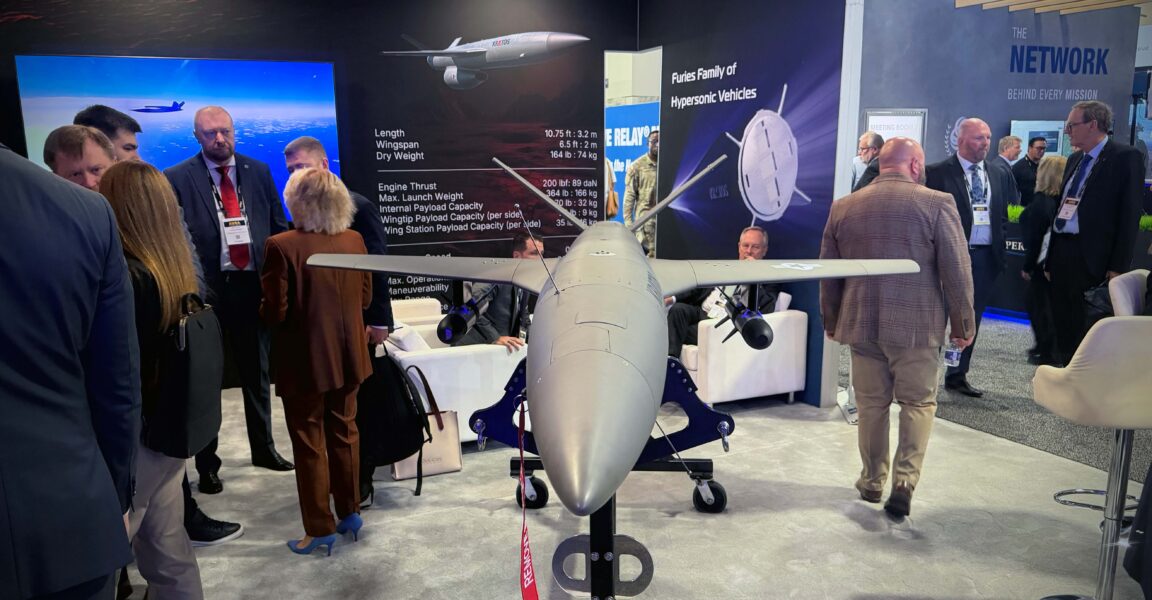
This is the Tactical Firejet from San Diego-based Kratos Defense & Security Solutions, Inc., pictured on the show floor at the 2026 AUSA expo. The Firejet is marketed as a low-cost drone that can fly at 0.8 mach speed and with a range of 500 nautical miles. (Breaking Defense)
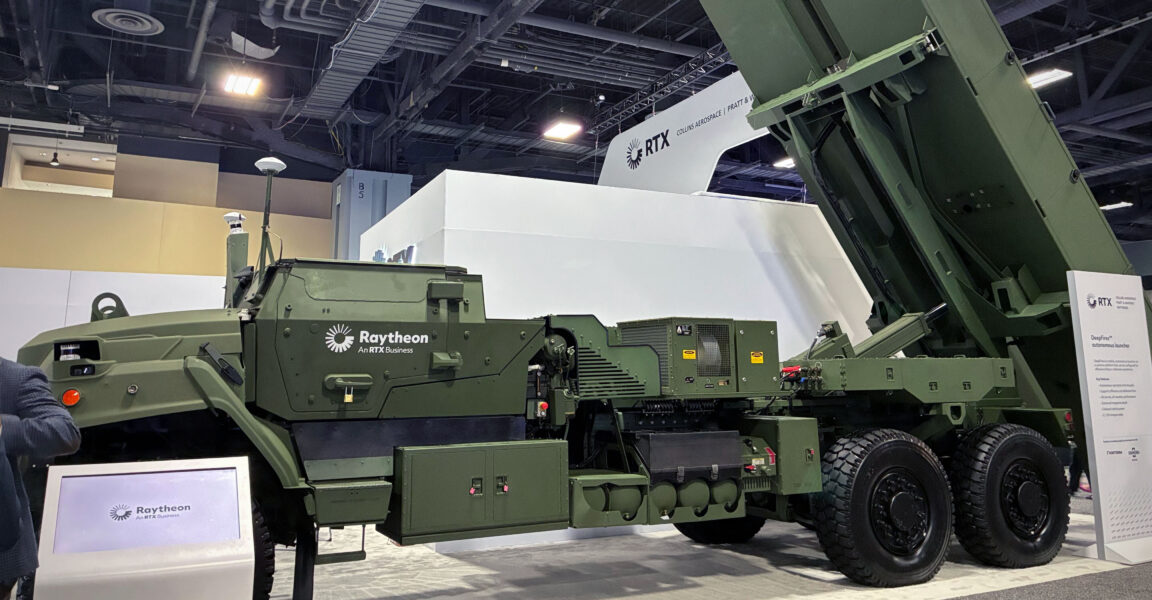
This is the DeepFires autonomous launcher from RTX, spotted on the show floor at AUSA 2026. It's an all-terrain, all-weather system that's transportable via C-130 cargo planes. (Aaron Mehta / Breaking Defense)
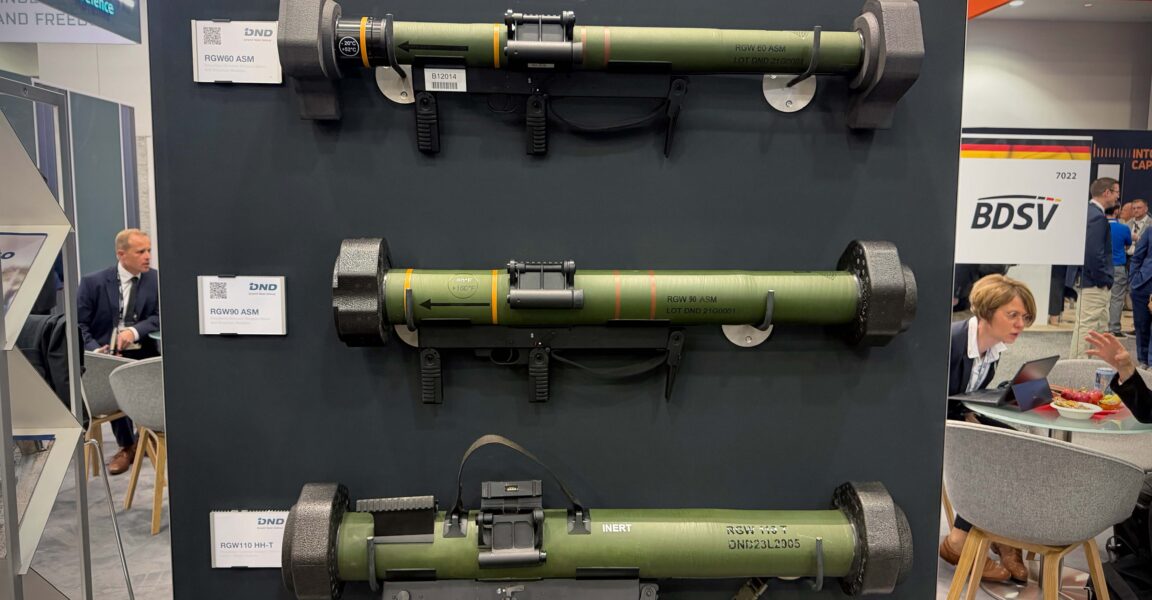
German defense firm Dynamit Nobel Defence GmbH (DND) showed shoulder-fired, anti-armor weapons at the 2026 AUSA expo. (Breaking Defense)

 Gallery