Land Warfare

As critical mineral deadline looms, Army expects to feel ‘some impact’

Liz Miranda, Army Materiel Command's executive deputy to the commanding general, said a White House order's requirements for companies to map their supply chain down to the raw material level “is no easy task.”

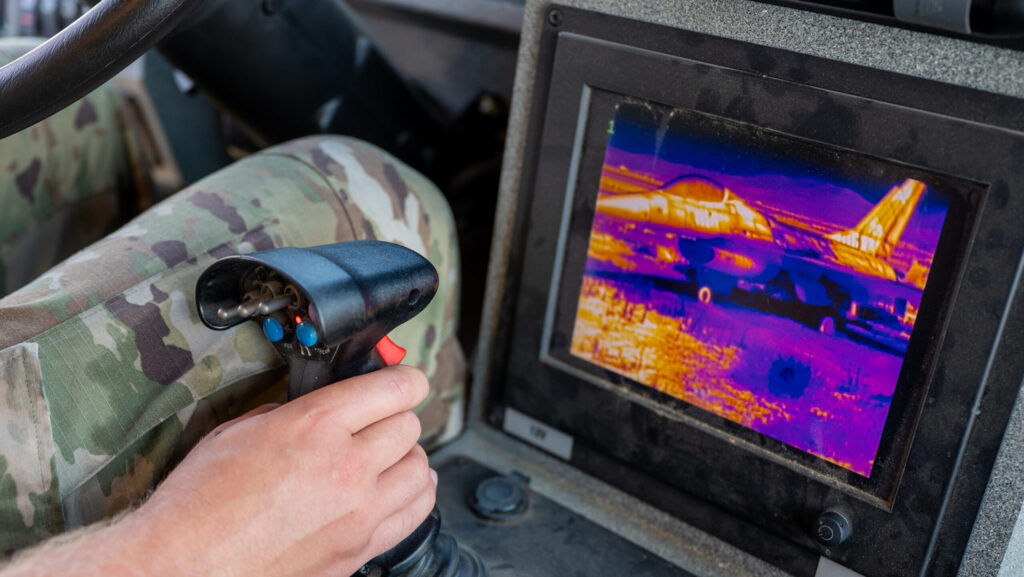
A U.S. Air Force fuels lab technician operates a fire hose while using thermal imaging on a mock metal burnpit aircraft during a job shadow exchange at a base in the U.S. Central Command area of responsibility Aug. 28, 2026. (U.S. Air Force photo by Senior Airman Sarah Hoover)

WASHINGTON — As the deadline approaches for defense industry to ween themselves off critical minerals from adversary nations, the Army is expecting to see “some impact” on companies that are still struggling to comply, an Army official said.

Executive order (EO) 14415, which was released in July, gives a January 2027 deadline for US companies to stop using critical materials and minerals from China, Russia, Iran, and North Korea. Companies will be able to get a waiver only if the government approves their mitigation plan, which spells out concrete steps that the firm is taking to find new suppliers in the United States or partner nations.

Liz Miranda, Army Materiel Command’s executive deputy to the commanding general, said Wednesday the EO’s requirements for companies to map their supply chain down to the raw material level “is no easy task.”

“We’re working towards that. Are we there yet? No. So we are going to see some impact come January,” she told an audience at the Association for the US Army conference.

Asked by Breaking Defense what impacts the Army foresees, Miranda said that she doesn’t anticipate any “off the cliff” outcomes that would be catastrophic for the service.  

Rather, she said, “I see a gradual holding all of us accountable to mitigating those areas where we know we we have risk because we’re dependent on foreign adversaries.”

Critical minerals covered by the EO include substances like tungsten alloys, which is used in engine components and hypersonics, and germanium, which is used in thermal imaging systems. China is the dominant producer of both materials, according to a September report by the Aerospace Industries Association (AIA).

Miranda pointed to the Army’s announcement earlier this week that it will conduct a “manufacturing rodeo,” which is meant to expose supply chain and manufacturing risks that the service may not be aware of.

“Unfortunately, we cannot insource all of the parts that are required — specifically for drone dominance,” she said. “So with this rodeo, what we intend to do is really look internal to the US domestic capabilities and see what gaps exist, and then working with industry to invest in building that domestic capability or partnering with other allies to identify resources there that we can leverage to scale what we need.”

In a July interview, Michael Cadenazzi, the assistant secretary of defense for industrial base policy, told Breaking Defense that the Pentagon would be willing to work with companies who need waivers, provided they are making a good faith effort to find new sources of supply.

“What we need to do is commit to companies to say, ‘Look, how are you going to go ahead and resolve this problem through friendshoring, through domestic shoring, through changes in suppliers?” he said. “And if there’s a gap, a legitimate gap, [and] you have a plan and you need a window to see you through [to] bridge that gap, that’s what we want to know.”

However, defense trade groups have raised concerns about the EO’s quick timeline. AIA has argued that waivers will still be necessary for years after the January 2027 deadline, as the current domestic supply of critical minerals is not sufficient to meet companies’ needs.

In the September report, AIA found, “Significant domestic processing, refining, and magnet production capacity for aerospace-grade materials is not expected to be available until 2028 or later,” with additional certification and qualification activities potentially pushing that date even further down the road.

The EO makes those challenges “more acute” because waivers will be restricted to companies who get a mitigation plan approved, with little feedback from the government on what constitutes an acceptable plan, said Dak Hardwick, AIA Vice President of International Affairs.

“Industry is still looking for clarity around the mitigation-plan standard and processing timelines,” he said Tuesday. “AIA is urging industry, government, Congress, and minerals producers to work together on a practical path forward that meets the unique needs of our industry, preserves waivers where qualified supply does not yet exist, and avoids disruptions to defense production.”

PHOTOS: AUSA 2026

PHOTOS: AUSA 2026

Attendees file in during the first day of the 2026 Association of the US Army annual conference in Washington, DC, on October 12, 2026. (Breaking Defense)
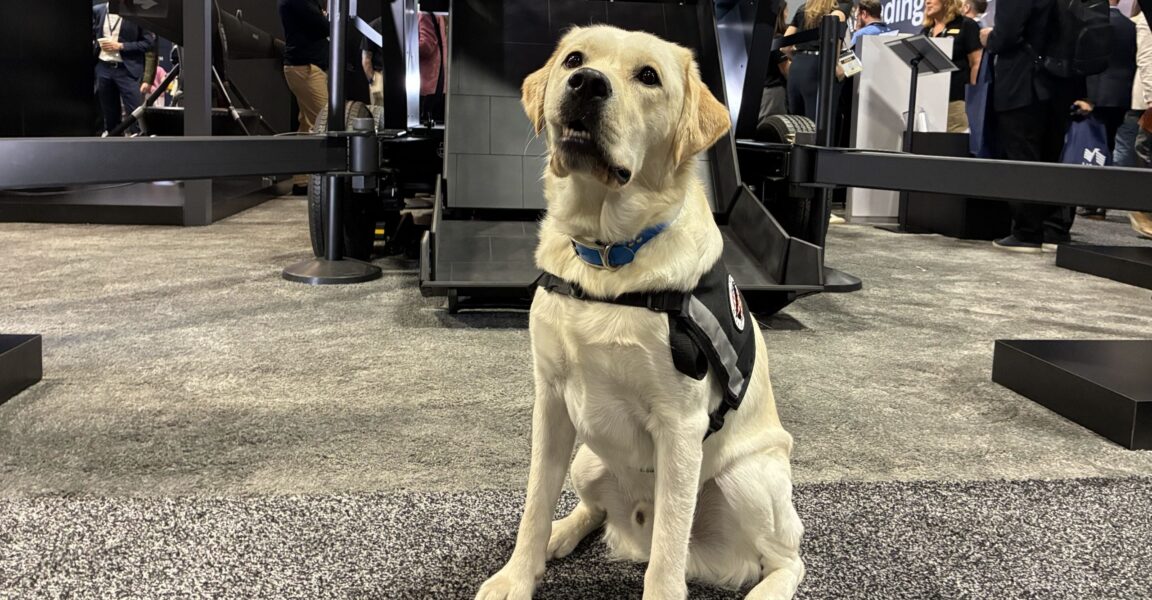
Patriot, who is expected to go to a wounded veteran when the dog’s training finishes, is happy to greet attendees outside the Shield AI booth on the show floor. (Breaking Defense)
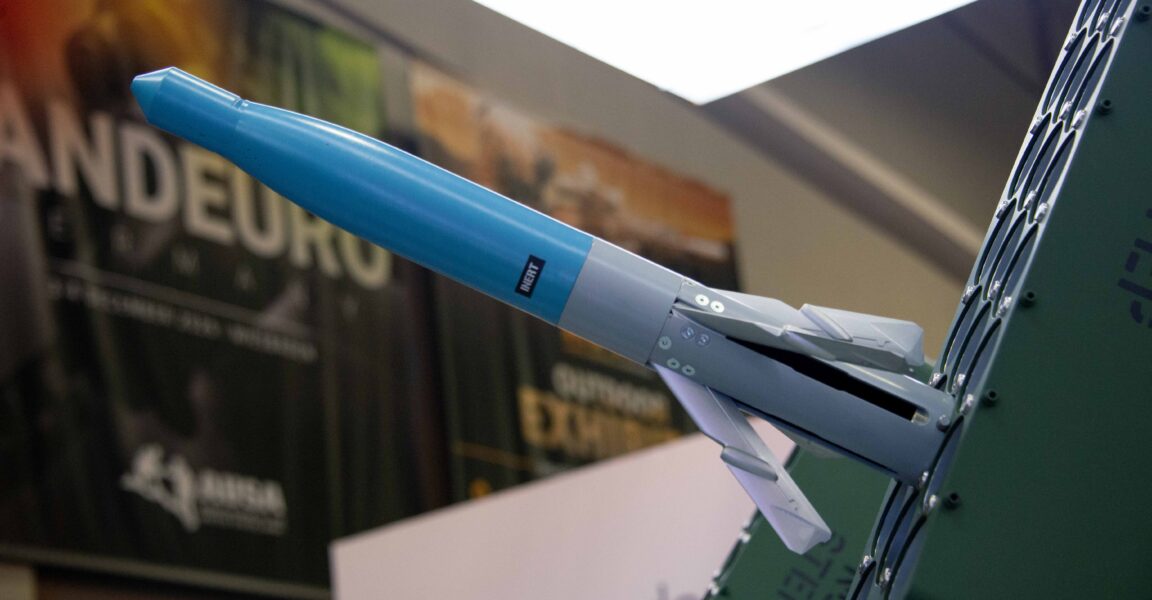
A close-up look at a munition from Sierra Nevada's Brawlr (Battery Revolving Advanced Weapons Launcher Reconfigurable) air-defense system, as seen at the 2026 AUSA conference. (Breaking Defense)
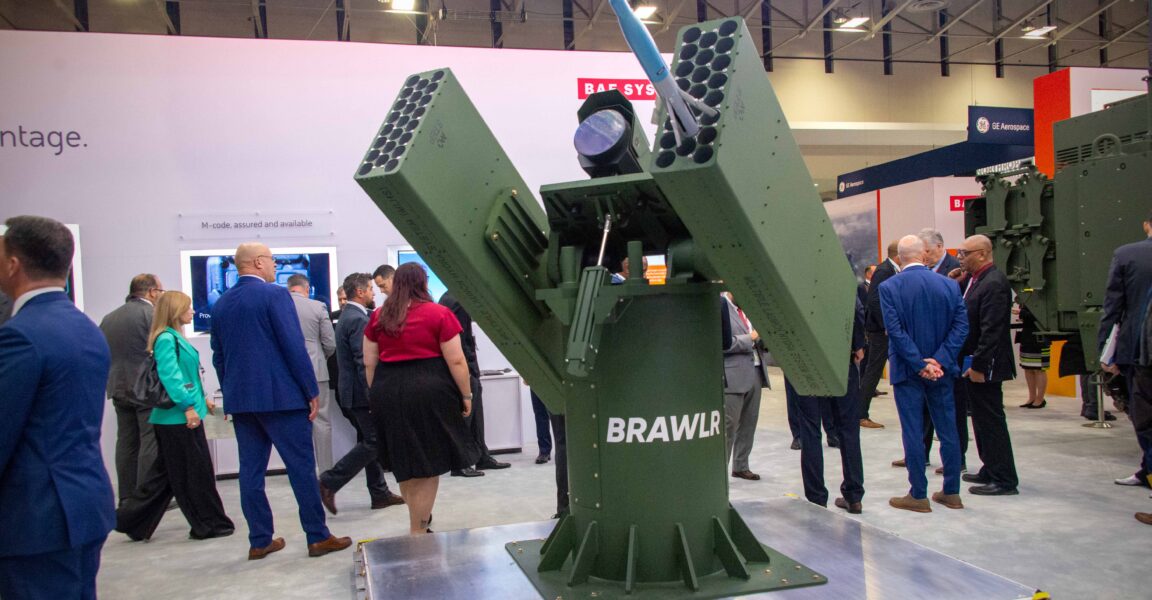
A wider shot of Sierra Nevada's Brawlr air-defense system at the 2026 AUSA conference. (Breaking Defense)
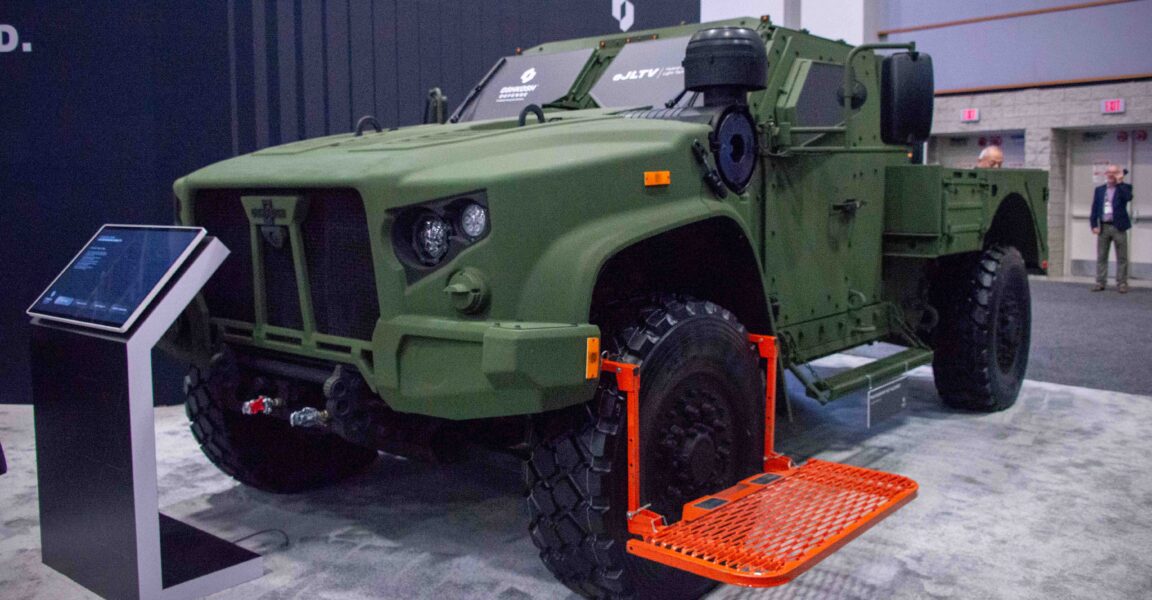
Oshkosh's electric Joint Light Tactical Vehicle on the AUSA show floor Oct. 12, 2026. (Breaking Defense)
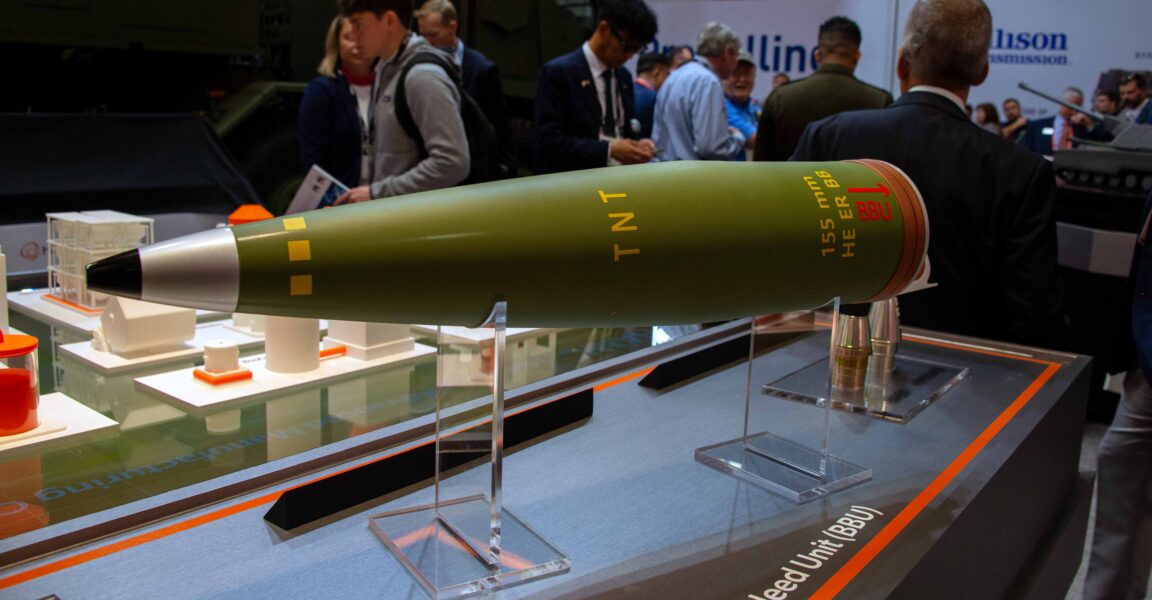
Hanwha Defense USA showed off its 155 mm artillery shells at the 2026 AUSA expo. (Breaking Defense)
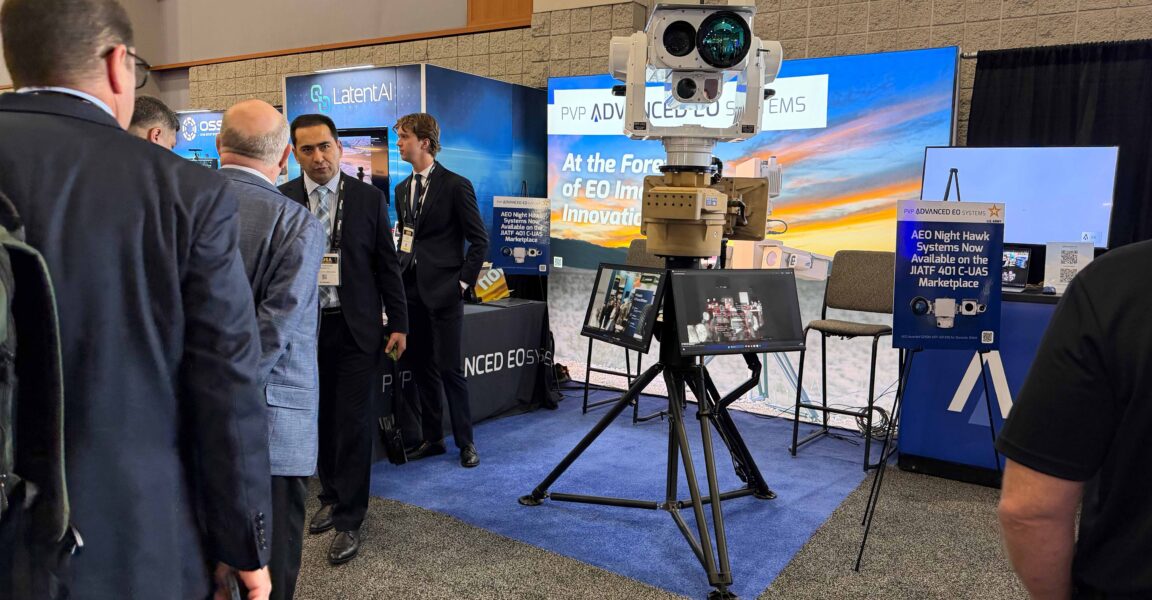
AEO Night Hawk Systems displayed their surveillance assembly, with sensors honing in on bystanders at the 2026 AUSA conference in Washington. (Breaking Defense)
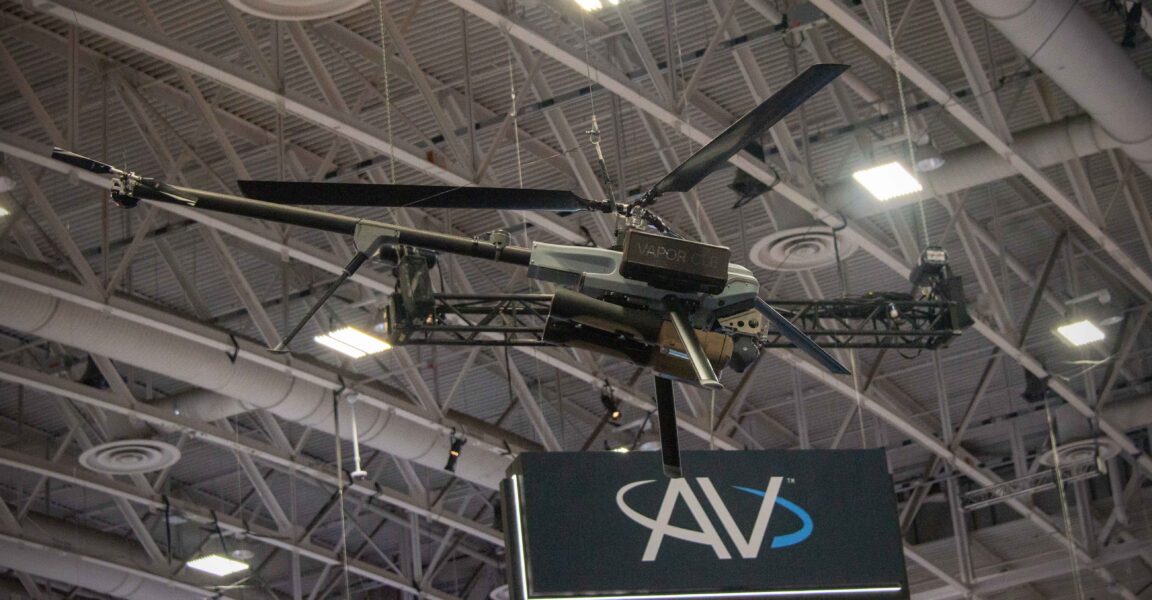
AeroVironment’s VAPOR is an all-electric, single-rotor vertical takeoff and landing (VTOL) helicopter unmanned aircraft system. Here it is suspended above attendees at the 2026 AUSA conference. (Breaking Defense)
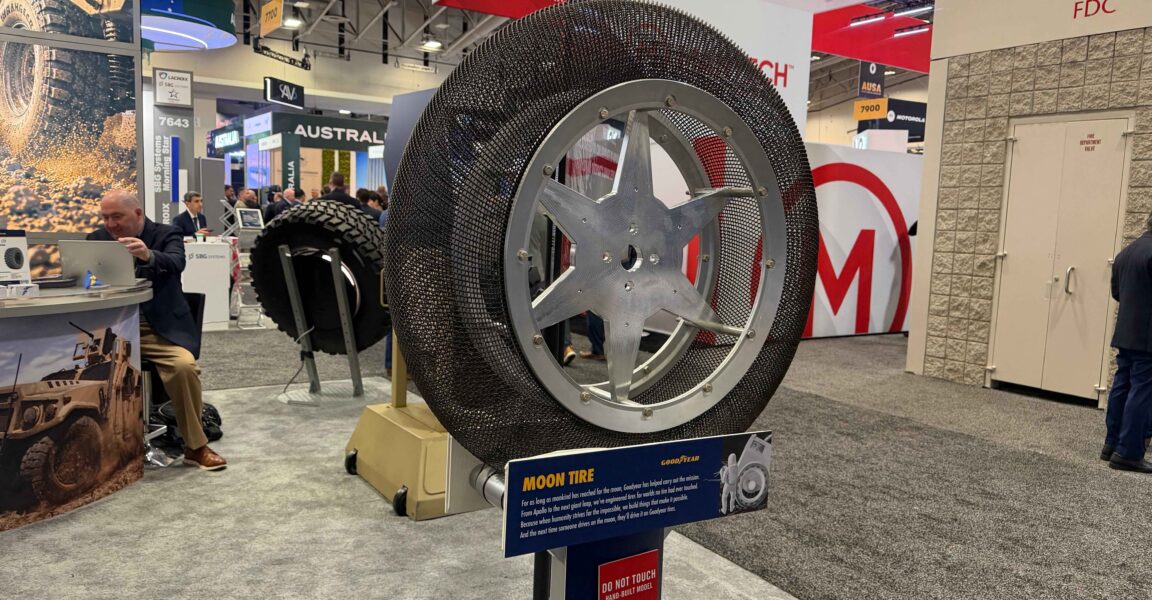
Goodyear representatives brought a sturdy but very unusual "moon tire" for lunar exploration to the 2026 AUSA expo. (Breaking Defense)
Colt optics had one of the busiest displays, with dozens of attendees observing a wall of assault rifles with specialized optics at the 2026 AUSA expo. (Breaking Defense)
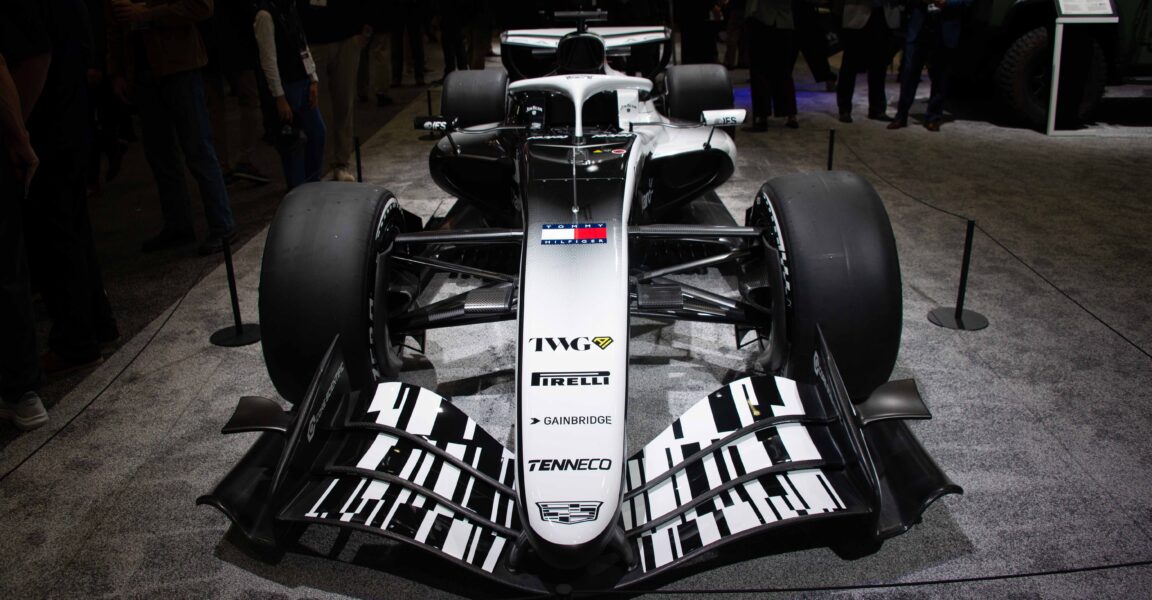
Cadillac brought its Formula 1 team racecar to the 2026 AUSA conference in Washington. (Breaking Defense)
AUSA mascots Sgt. Hero and George Washington descend the escalator at the 2026 annual conference. (Aaron Mehta / Breaking Defense)
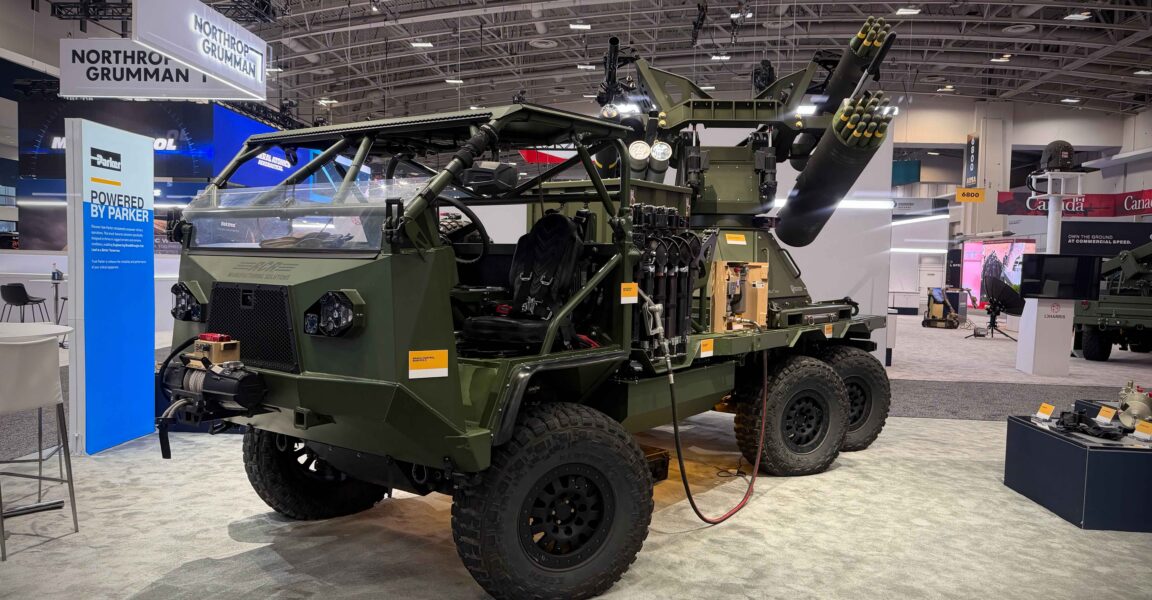
Parker Hannifin showcased many of its components onboard the MDH Strategic Services Airwolf c-UAS system, which is shown here fixed atop the RCR 6WAP vehicle. (Breaking Defense)
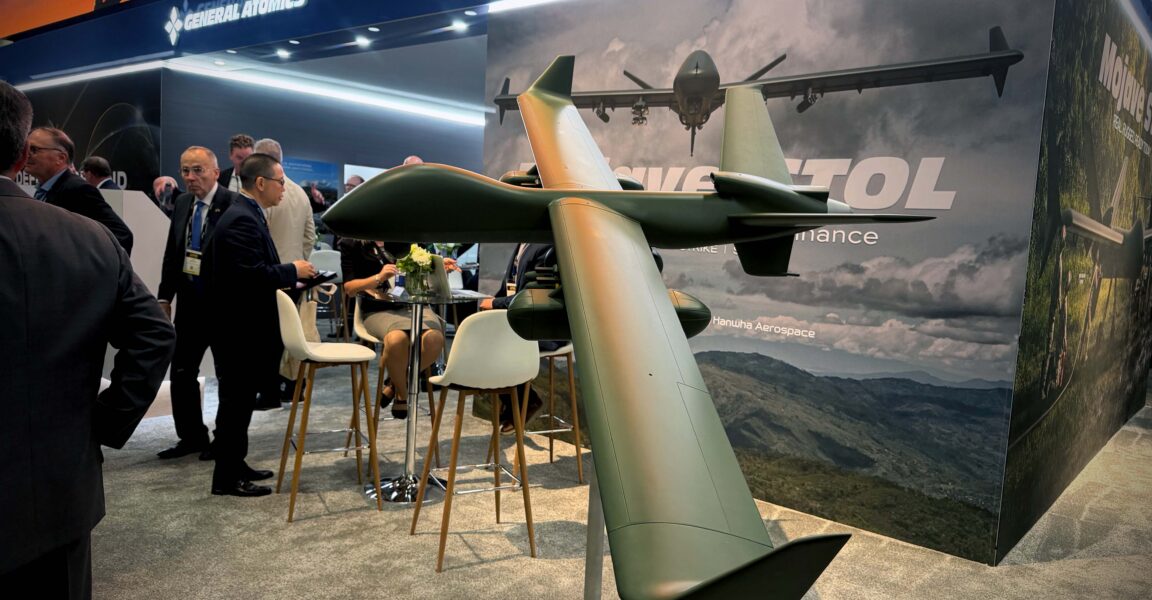
General Atomics Aeronautical Systems Inc. and Hanwha Aerospace co-developed the Mojave short takeoff and landing (STOL) uncrewed aircraft, pictured here at the 2026 AUSA trade show. (Breaking Defense)
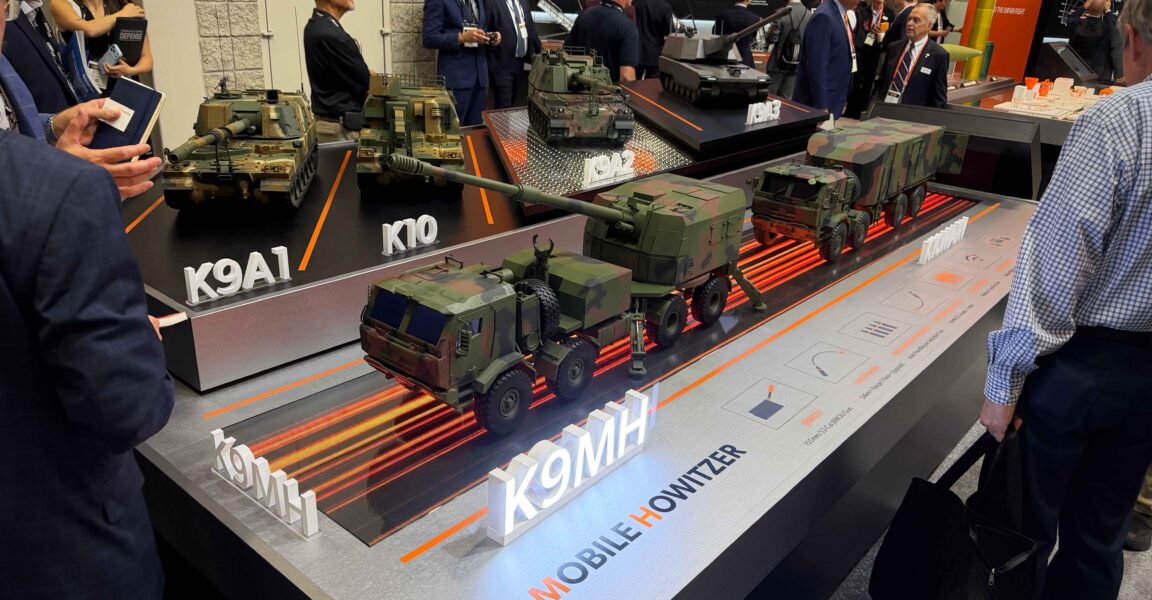
Hanwha Defense USA displayed a range of scale model armor and artillery systems on the AUSA show floor. (Breaking Defense)
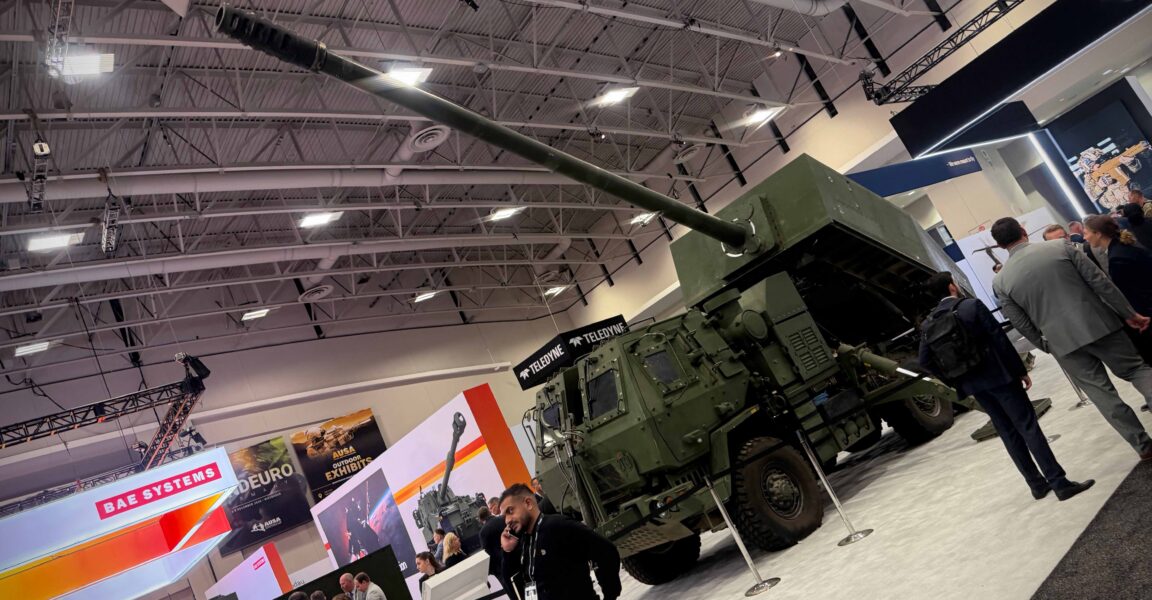
BAE’s Multi-Domain Artillery Cannon System stands tall at the 2026 AUSA trade show in Washington, DC. (Breaking Defense)
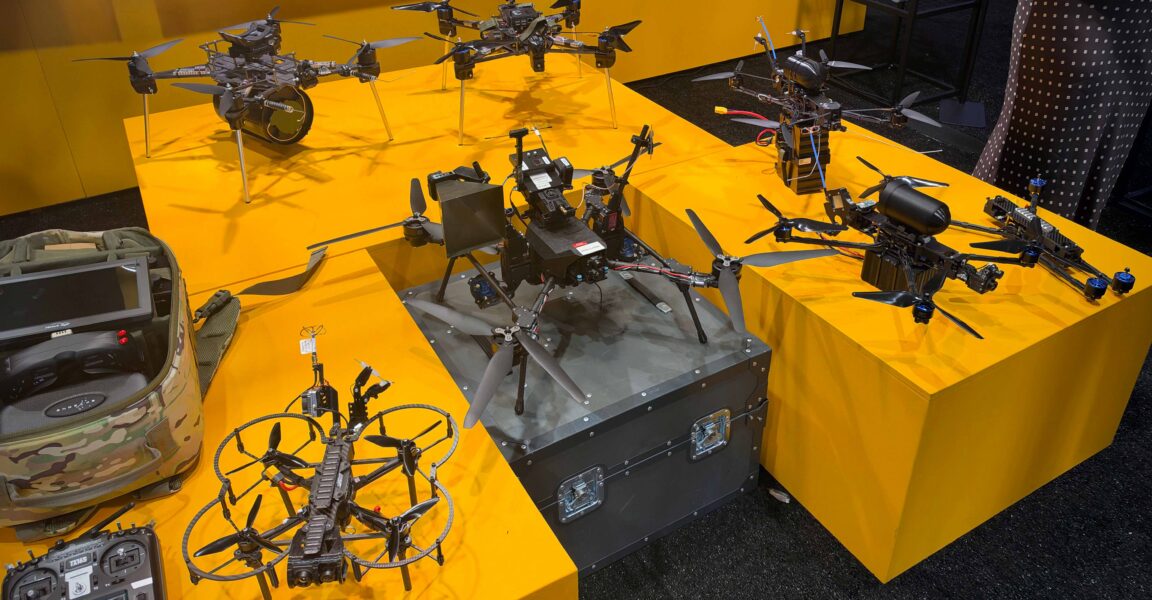
The Ukrainian military’s 3rd Army Corps brought a variety of small drones to the 2026 AUSA trade show. (Valerie Insinna / Breaking Defense)
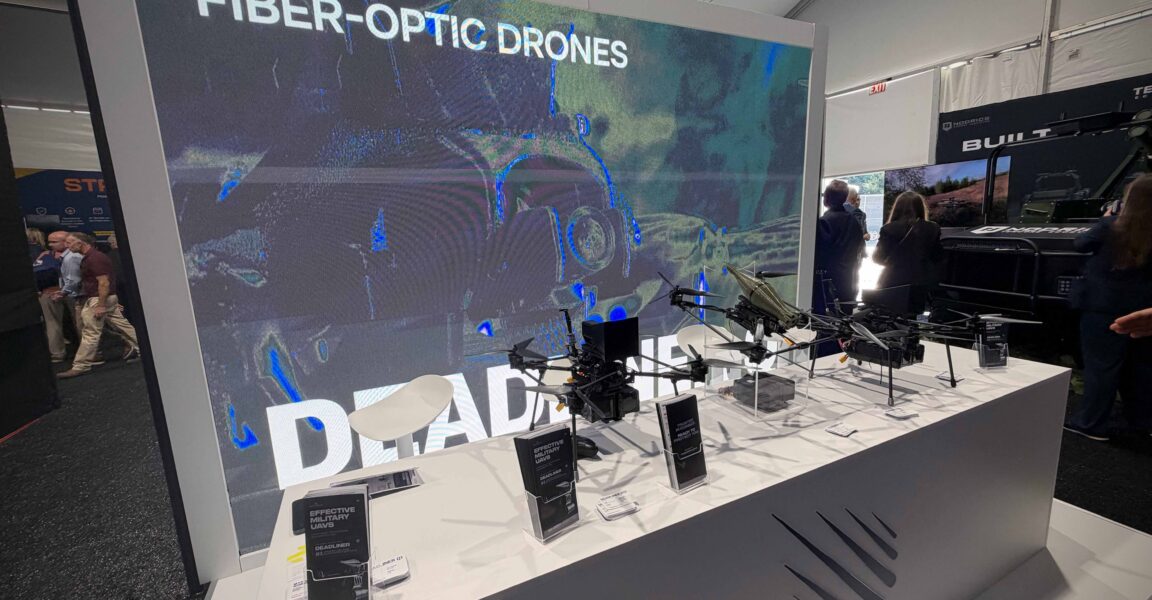
Kyiv-based defense tech firm Stellarion brought several fiber-optic drones to the 2026 AUSA expo. (Valerie Insinna / Breaking Defense)
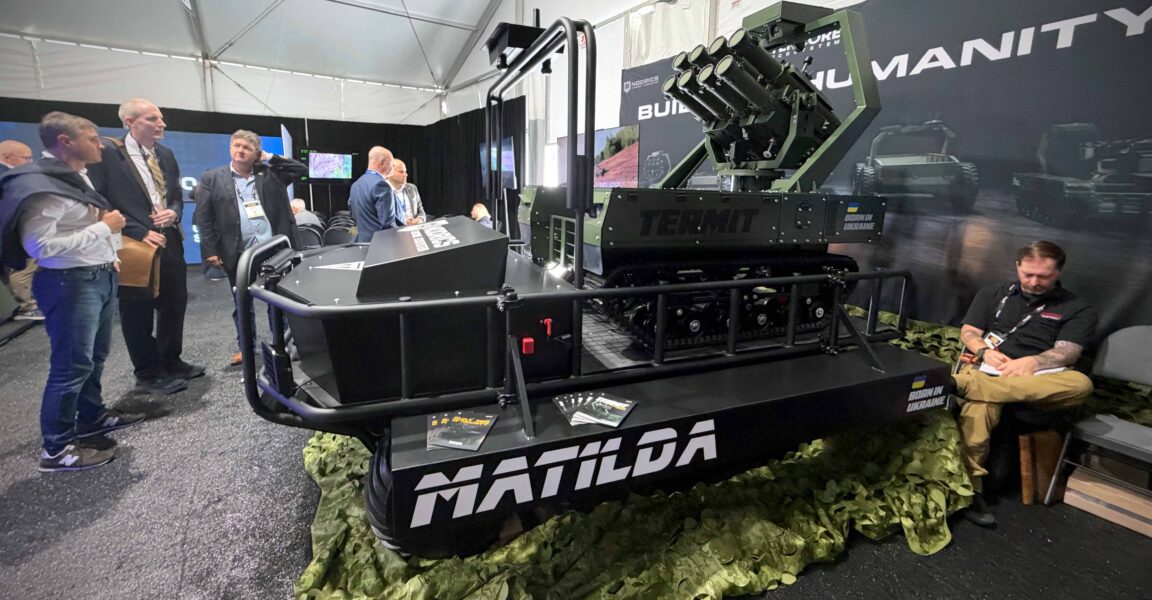
Ukrainian defense firm Tencore showcased an amphibious unmanned ground vehicle called MAT1LDA (Mesa Associates’ Tactical Integrated Light-Force Deployment Assembly), which is carrying Tencore’s TerMIT ground robot, at the 2026 AUSA trade show. (Valerie Insinna / Breaking Defense)
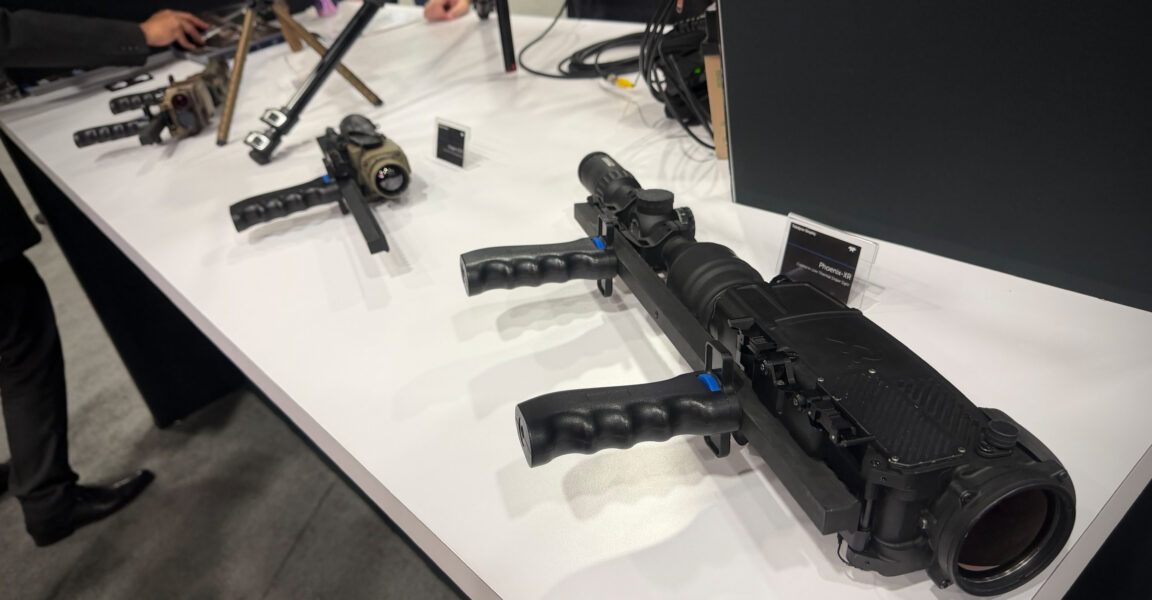
Teledyne Qioptiq brought several thermal weapons sights including the Phoenix-XR (right) and the Dragon-C12 S (middle) to the 2026 AUSA conference. (Breaking Defense)
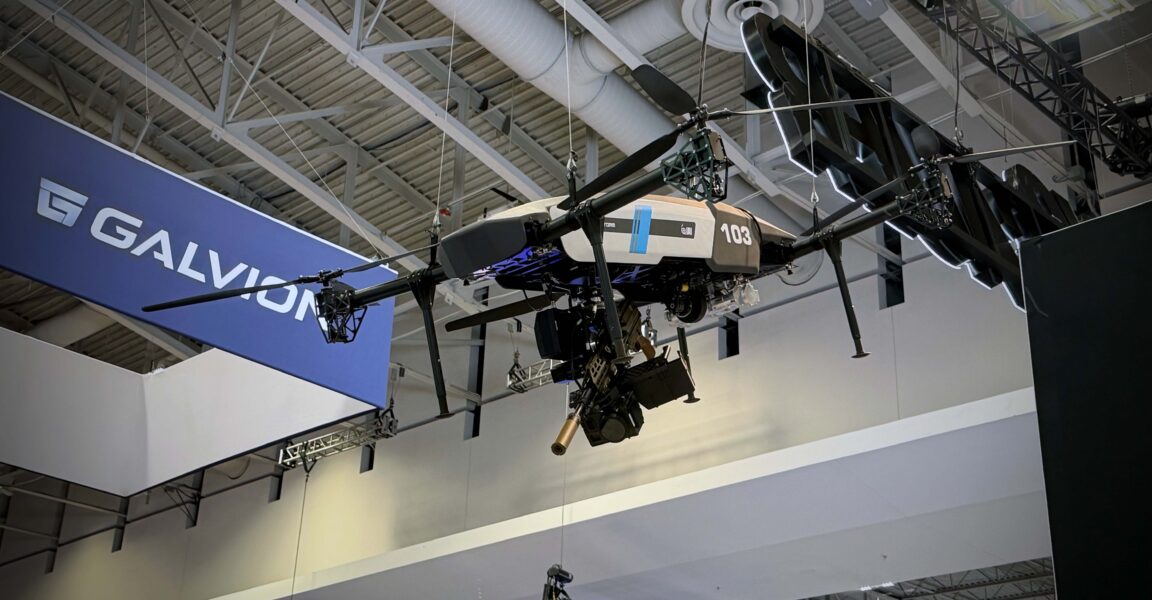
Israel Aerospace Industries’ and Sig Sauer’s Fire Storm 250 armed tactical quadcopter hangs above attendees of the conference. (Breaking Defense)
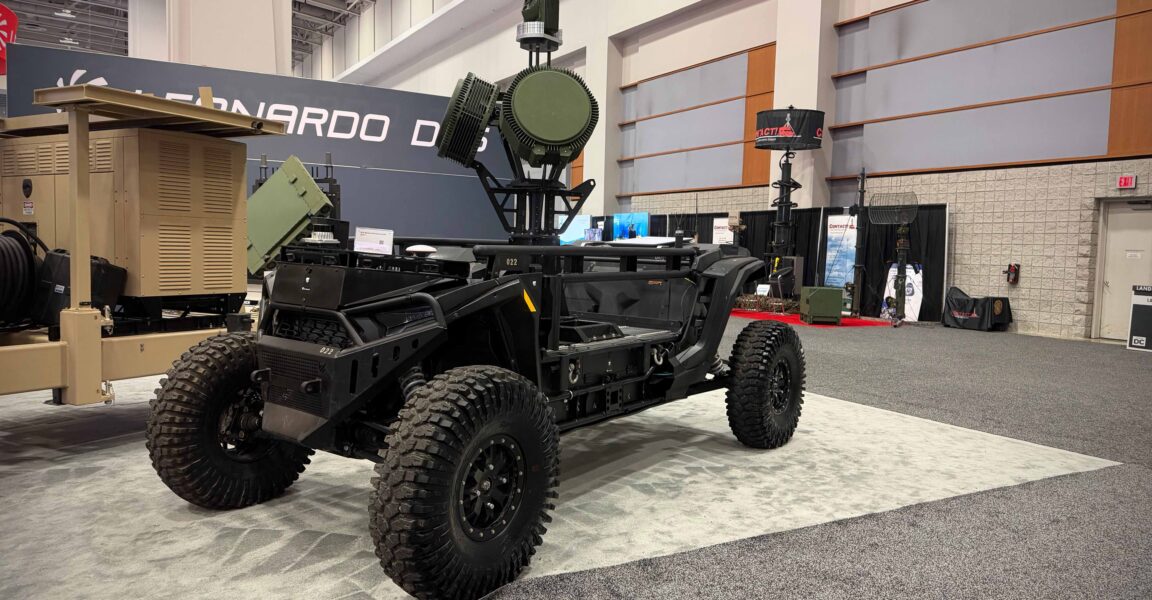
OverlandAI’s ULTRA autonomous ground system hosts a multi-mission hemispheric radar from Leonardo DRS, shown here at the 2026 AUSA expo. (Breaking Defense)
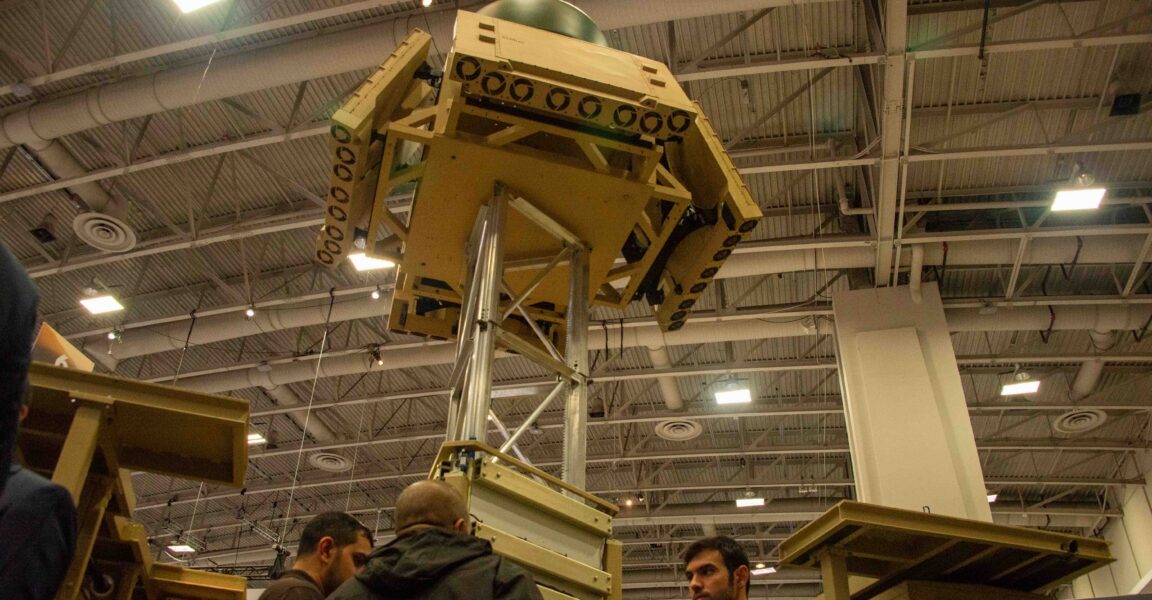
Leonardo DRS displays its Extended Mast Surveillance System, which features an exMHR radar system on a trailer platform with an extendable mast for a higher-altitude perspective. (Breaking Defense)
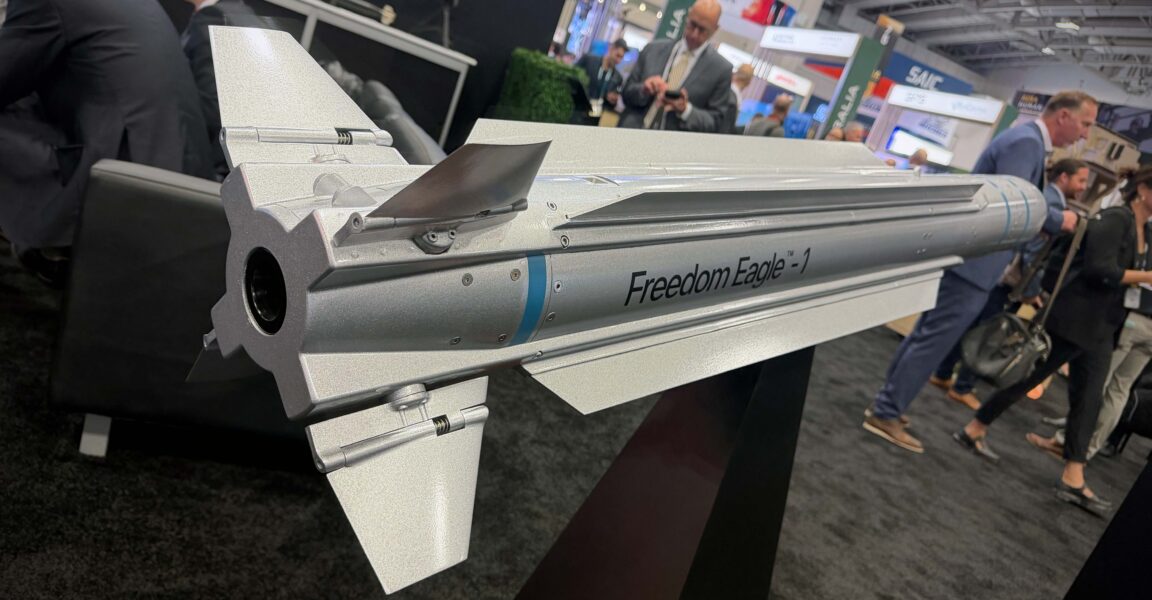
AeroVironment's Freedom Eagle-1 (FE-1) is marketed as a low-cost kinetic counter-UAV munition as well as a "long-range kinetic interceptor missile." (Breaking Defense)
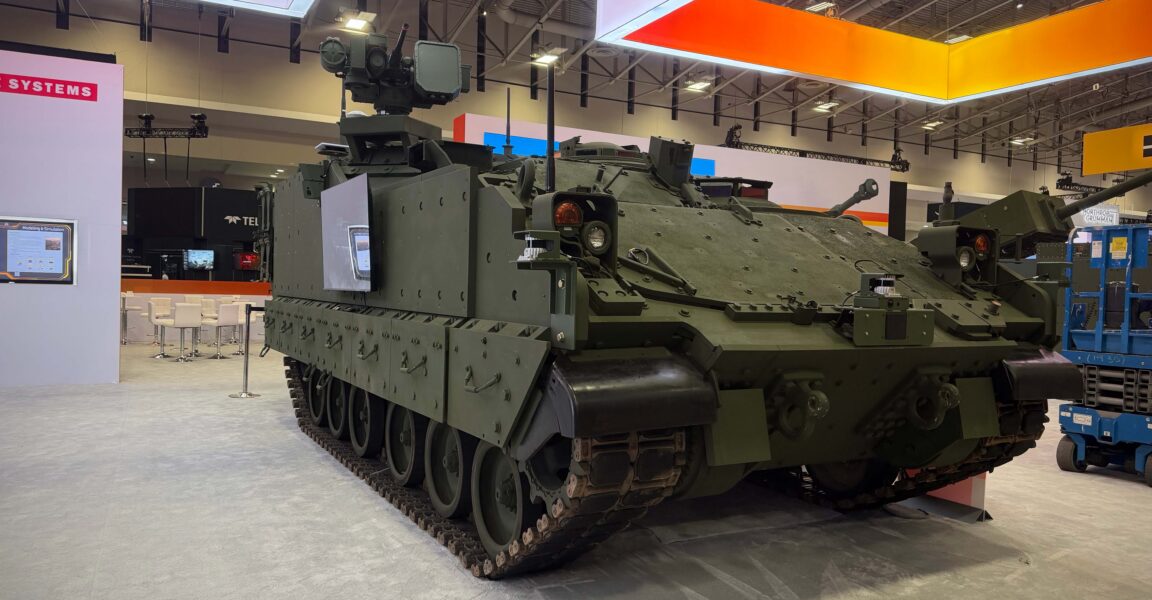
BAE's AMPV-30 (Armored Multi-Purpose Vehicle) is shown here on the trade show floor at the 2026 AUSA conference in Washington. (Breaking Defense)
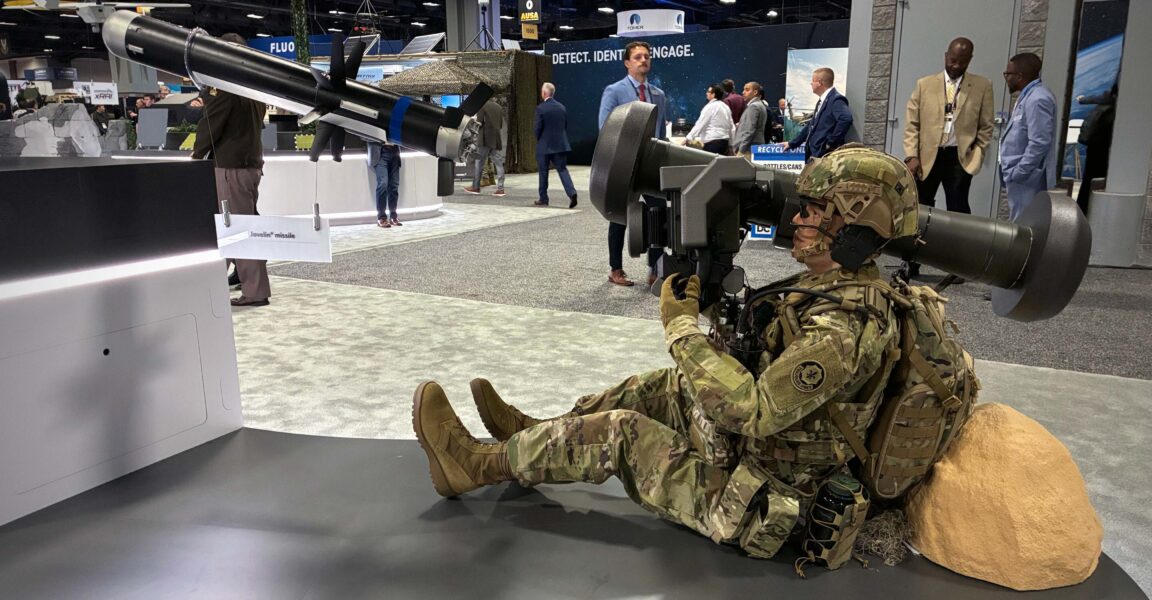
Here is the Javelin anti-tank guided munition system from RTX, as displayed with a fully-kitted soldier on the floor of the 2026 AUSA expo. (Aaron Mehta / Breaking Defense)
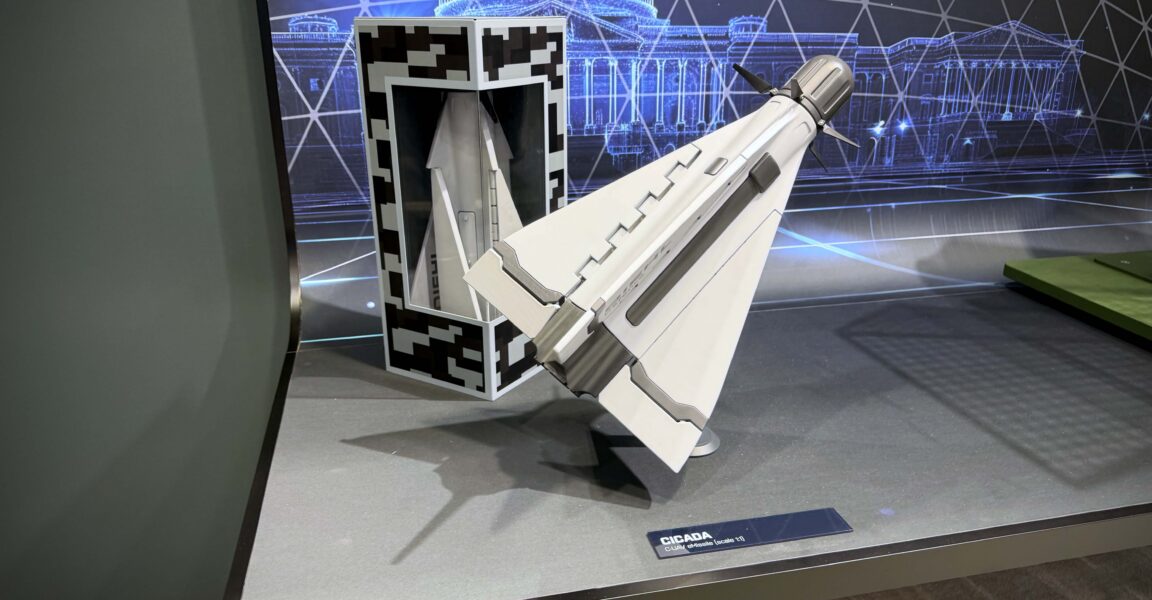
Diehl Defense's Cicada counter-drone munition is an electrically propelled missile that can feature a fragmentation warhead or a safety net. (Breaking Defense)
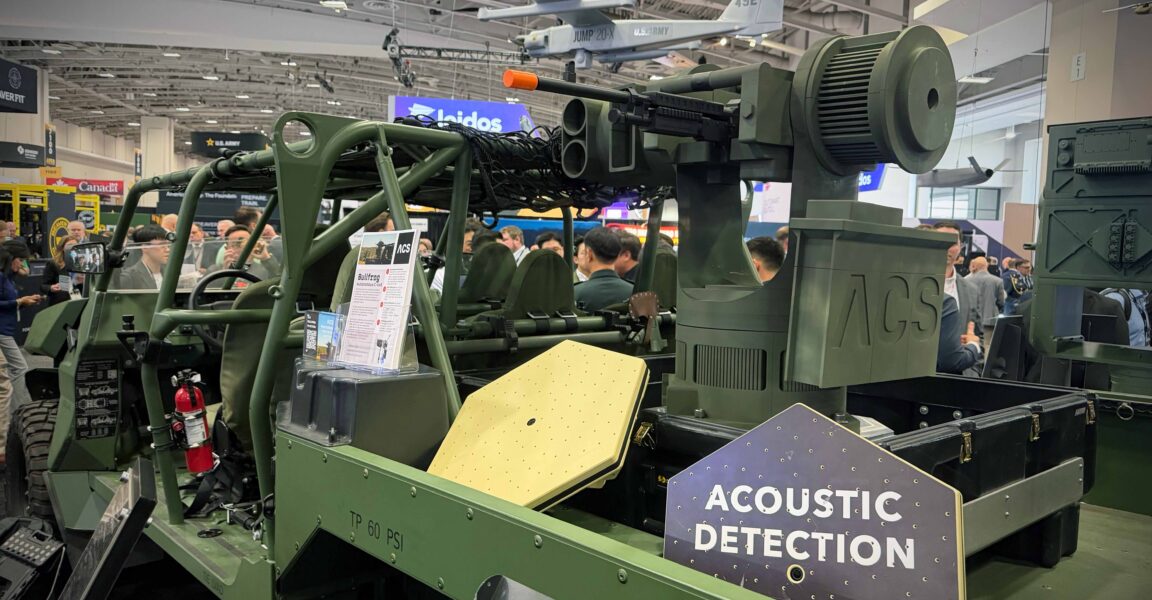
AeroVironment's Bullfrog M240 autonomous weapon system, seen here in the bed of a utility vehicle, has a range of 1,500 meters for defense against drone groups 1 through 3, according to AV. (Breaking Defense)
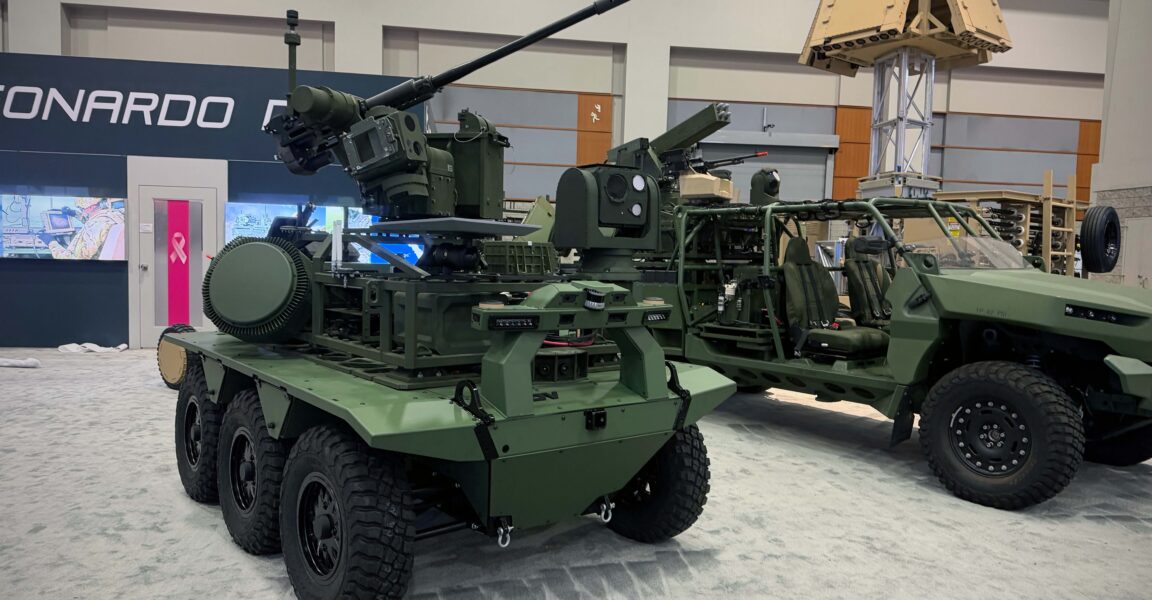
Leonardo DRS brought several vehicles and hardware to the 2026 AUSA conference, including the VIKING Uncrewed Ground Vehicle (left) equipped for air defense missions. (Breaking Defense)
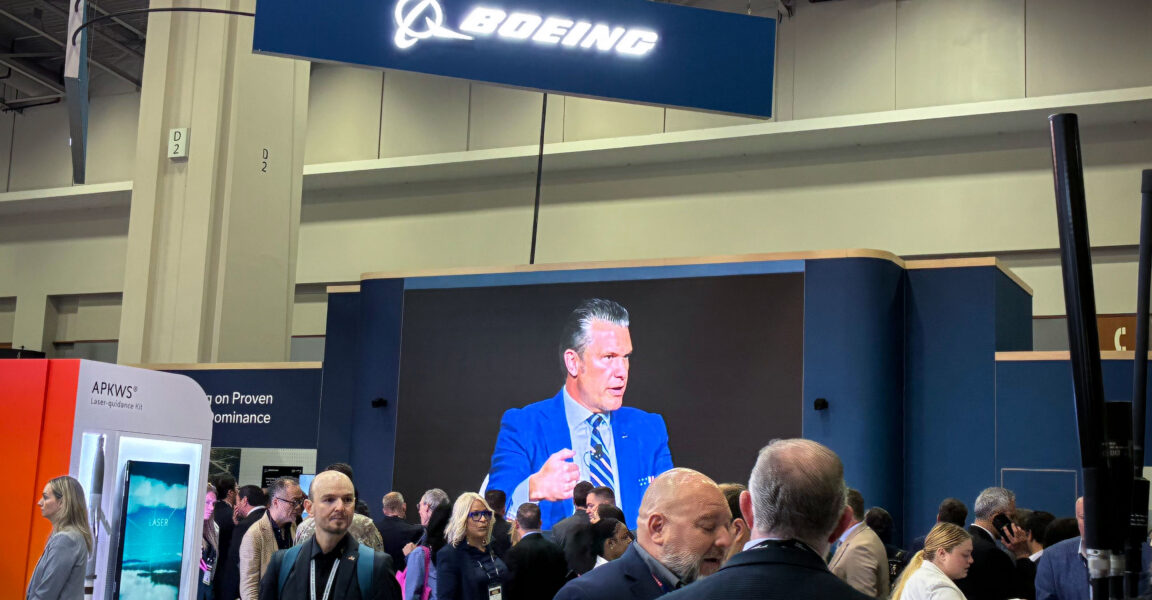
Defense Secretary Pete Hegseth's remarks at the 2026 AUSA expo were livestreamed at Boeing's booth on the show floor. (Breaking Defense / Aaron Mehta)
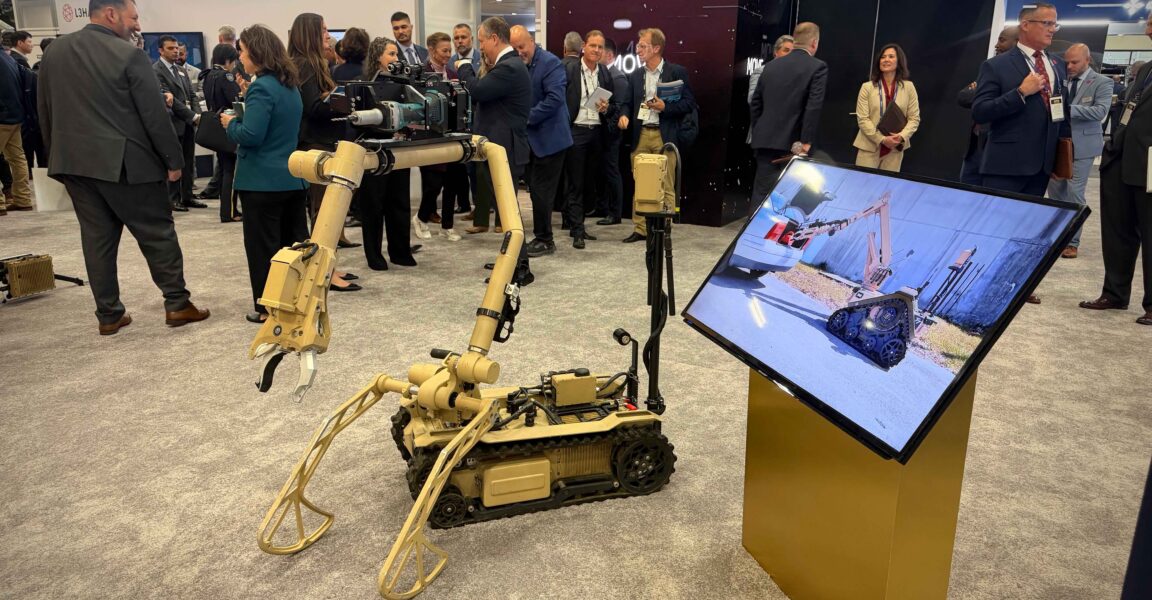
L3Harris brought its T4 Robotic System, an all-terrain unmanned ground vehicle intended for explosive ordnance disposal and hazardous materials clearance, to the 2026 AUSA conference. (Breaking Defense)
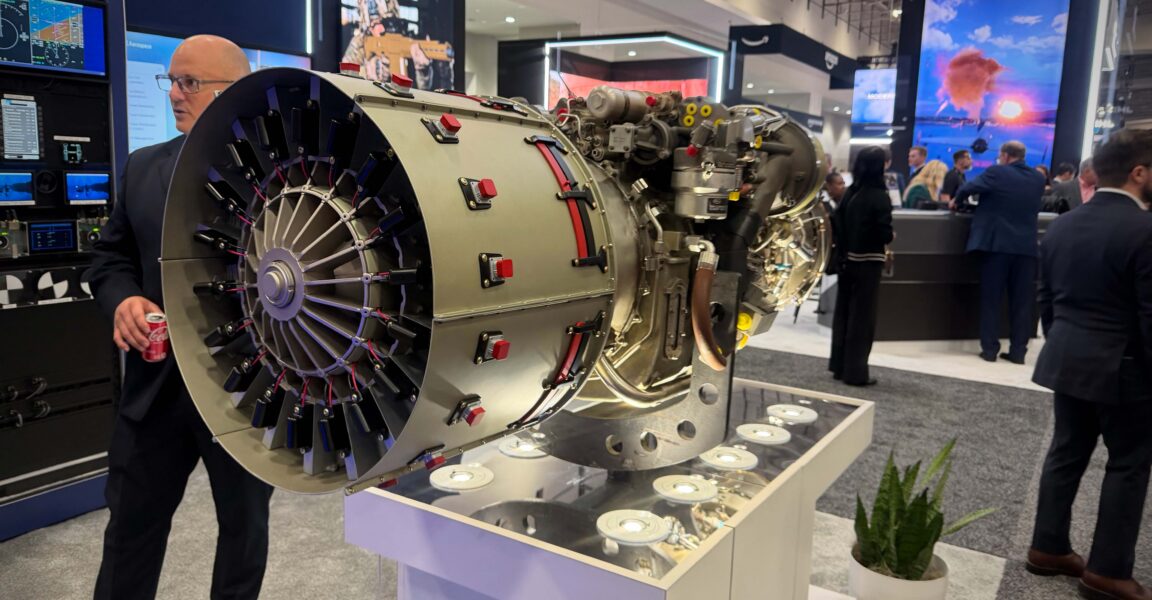
GE Aerospace showcased several large engine components -- including this hybrid-electric turbogenerator for the MV-250 autonomous, hybrid-electric vertical takeoff and landing cargo drone -- at the 2026 AUSA expo. (Breaking Defense)
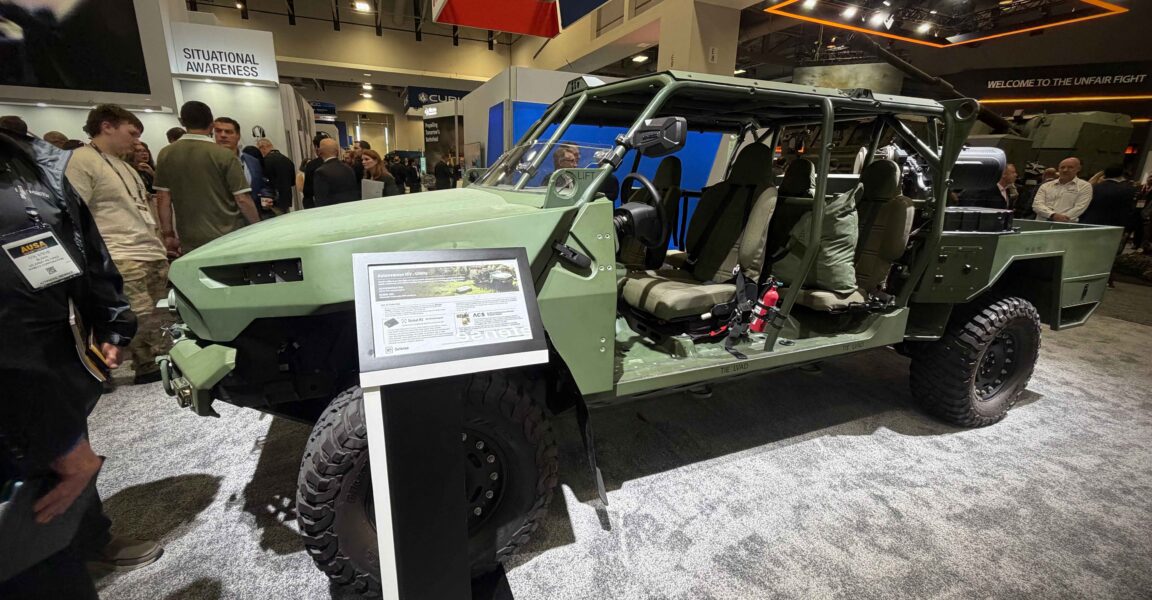
GM Defense's Autonomous ISV-Utility can accommodate up to five passengers as well as a wide range of equipment in the bed, including mortar systems, counter-drone as well as high-energy and electronic warfare systems. (Breaking Defense)
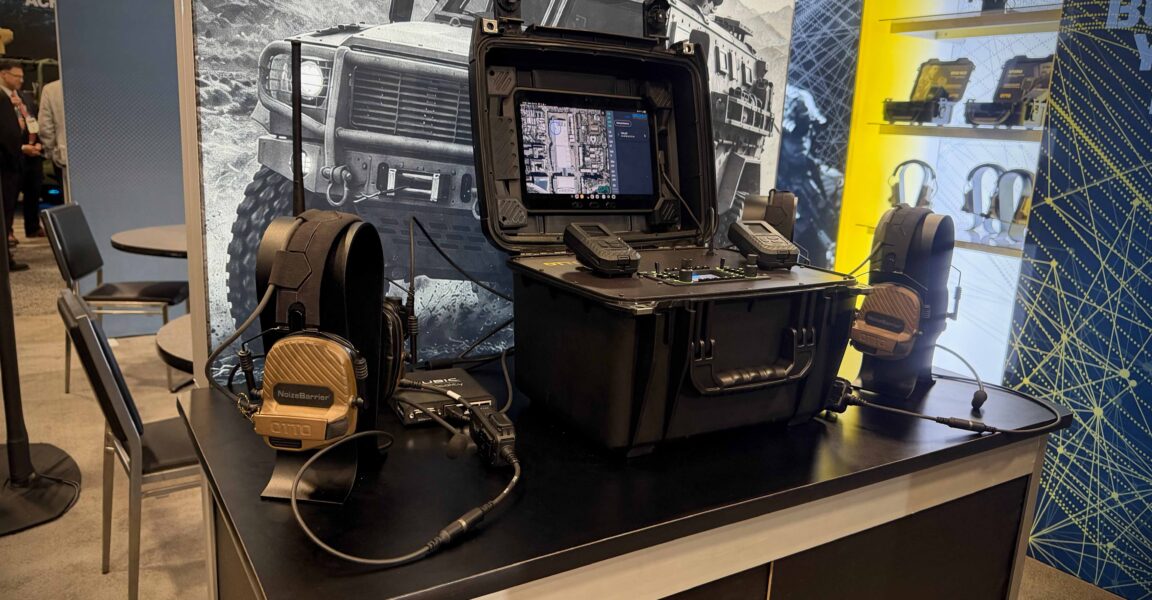
Illinois-based OTTO Engineering shared one of their hardened systems and associated equipment at the 2026 AUSA trade show. (Breaking Defense)
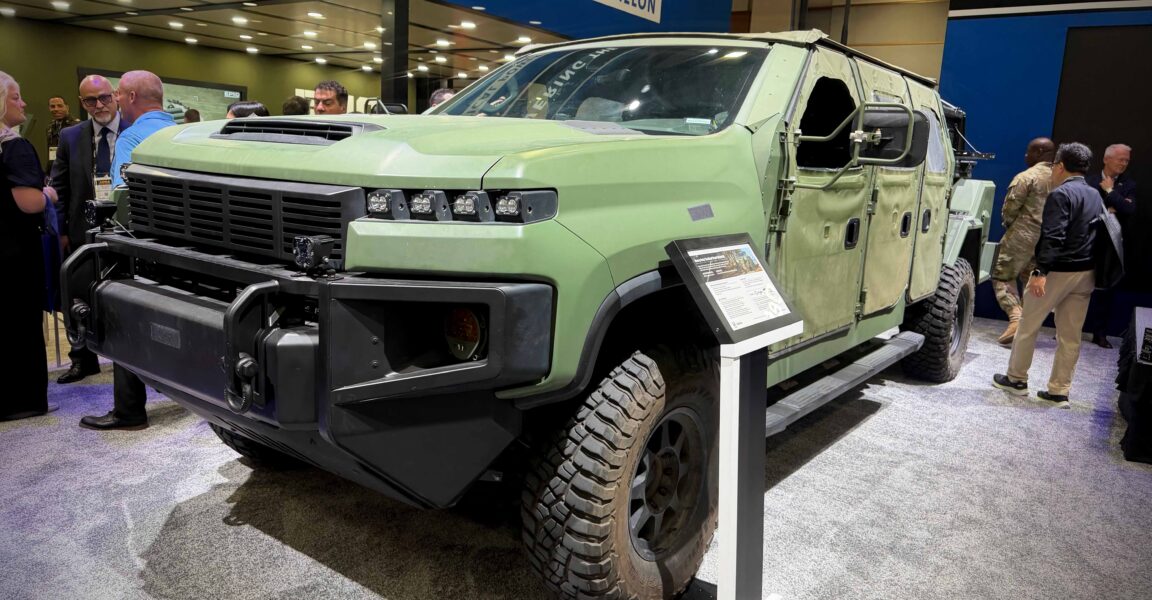
This is GM Defense's hybrid-powered Heavy Duty Tactical Truck, which is based on the Chevrolet Silverado. The truck includes a "silent" drive mode "to reduce acoustic and thermal signatures," the firm says at its 2026 AUSA display. (Breaking Defense)
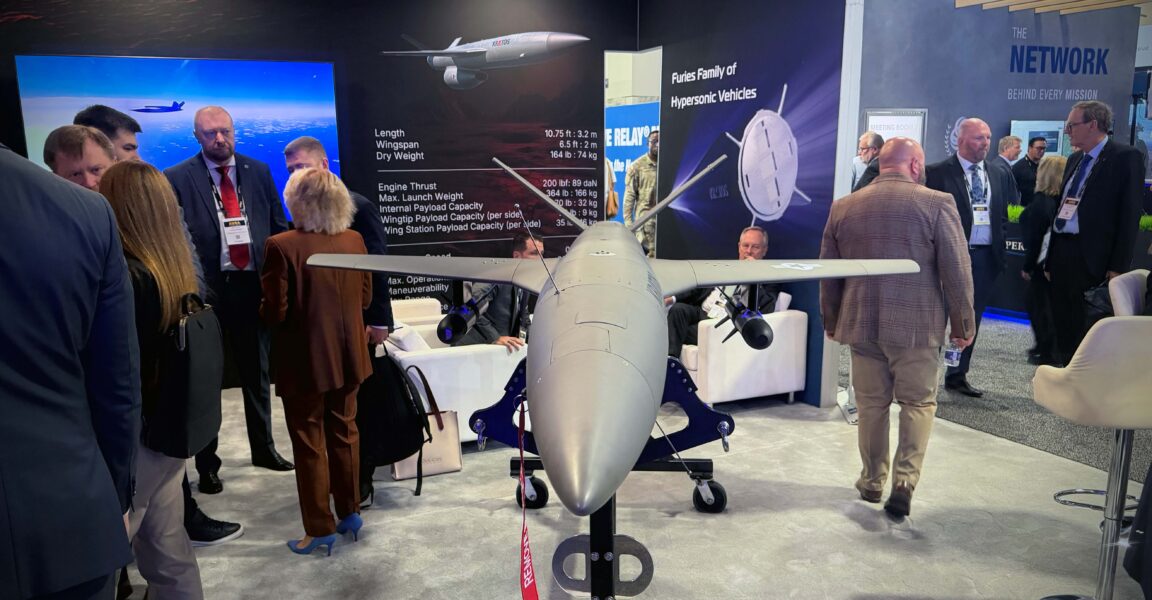
This is the Tactical Firejet from San Diego-based Kratos Defense & Security Solutions, Inc., pictured on the show floor at the 2026 AUSA expo. The Firejet is marketed as a low-cost drone that can fly at 0.8 mach speed and with a range of 500 nautical miles. (Breaking Defense)
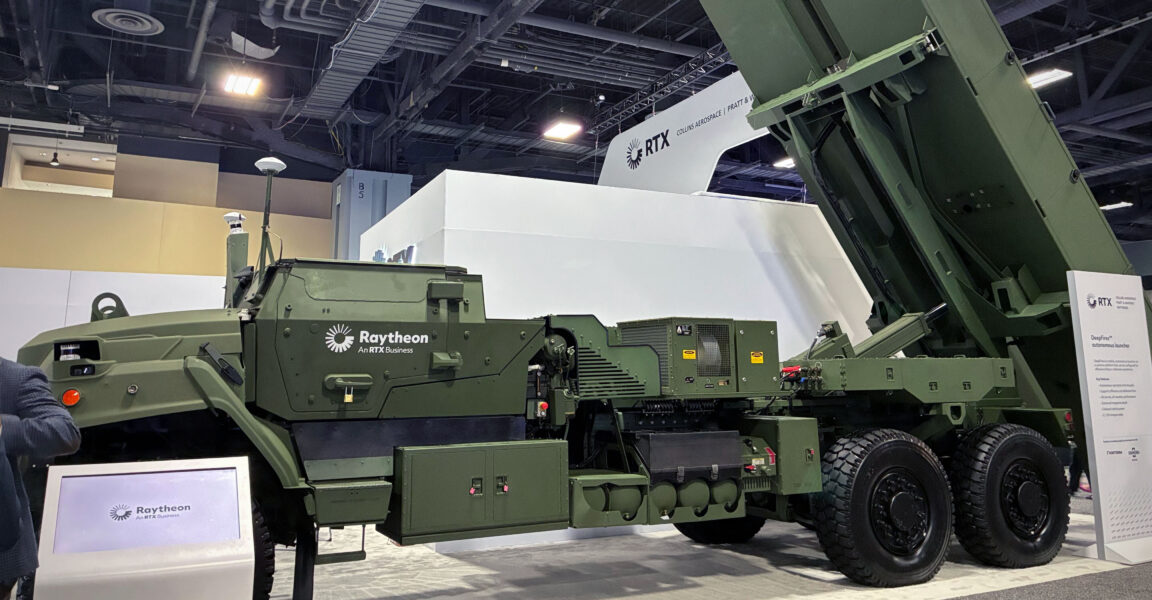
This is the DeepFires autonomous launcher from RTX, spotted on the show floor at AUSA 2026. It's an all-terrain, all-weather system that's transportable via C-130 cargo planes. (Aaron Mehta / Breaking Defense)
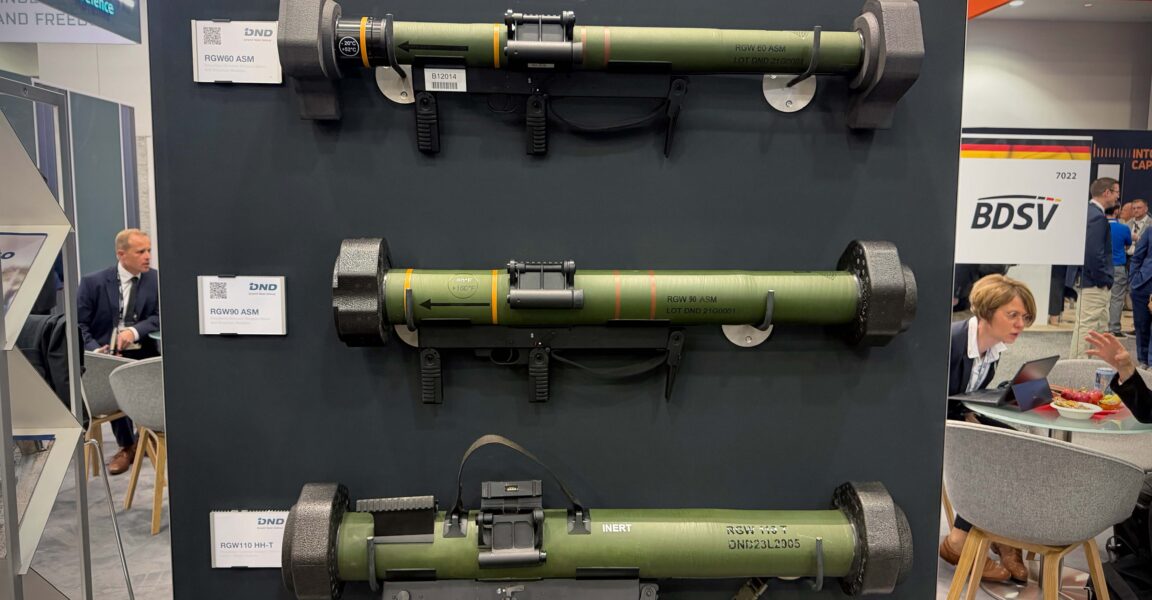
German defense firm Dynamit Nobel Defence GmbH (DND) showed shoulder-fired, anti-armor weapons at the 2026 AUSA expo. (Breaking Defense)