Land Warfare

Continuing Resolution is ‘biggest challenge’ for Army Pacific Command

“It’s a challenge, again, we have to overcome, but it's part of the fiscal environment,” Gen. Clark, commander of USARPAC, said. “We have more experience operating under CR than we do with an appropriation.”

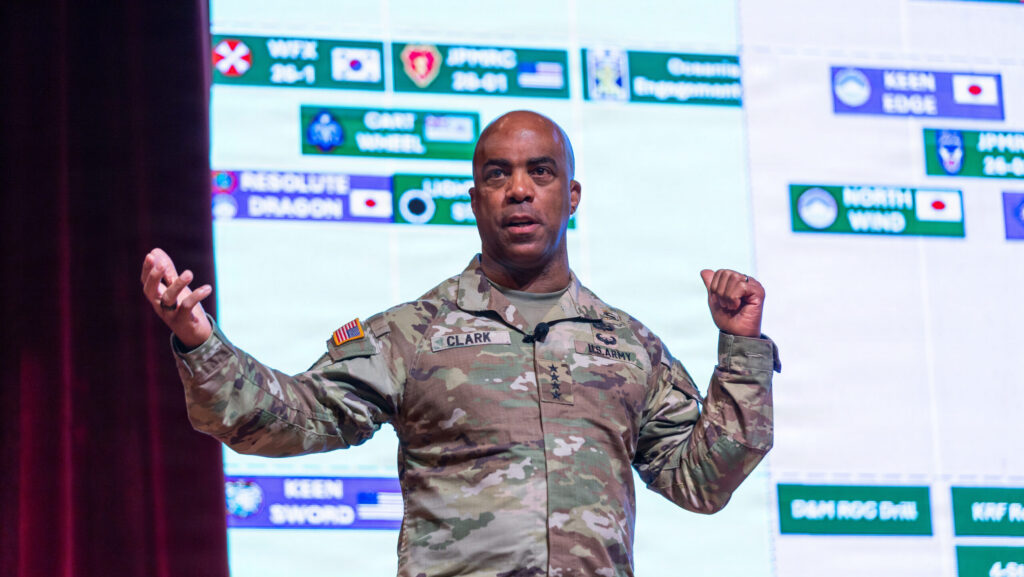
Gen. Ronald P. Clark Commanding General United States Army Pacific (USARPAC), delivers a presentation on "Land Forces: The Foundation of Pacific Stability" during the first day of the annual Maneuver Warfighter Conference Sept. 15, 2026, in Marshall Auditorium at Fort Benning, Georgia. The annual Maneuver Warfighter Conference gathers U.S. Army senior leaders and subject-matter experts from across the globe to discuss the way forward for maneuver forces. (U.S. Army photo by Daniel Marble)

WASHINGTON — The current continuing resolution (CR) is the “biggest challenge” the Army’s Pacific Command (USARPAC) is facing, as it prevents the force from getting new capabilities for its unified network and long-range precision fires, its four-star commander said.

“That’s the biggest challenge. It’s plans for new starts and being able to fund some of the programs that we know are going to yield benefit to the soldier on the ground,” Gen. Ronald Clark told reporters Tuesday when asked how the delayed passing of the fiscal 2027 budget is affecting operations in the region. 

Clark did not mention specific new start programs that would be affected, but said many of the programs relate to “some of the experimentation that we’re doing” with the Mission Partner Network (MPN). MPN is what the Army describes as a “unified system” where the joint force, partners and allies can share information. He added that one of the new start programs for the MPN is a “piece of equipment,” but declined to comment further. 

Clark also said that there are additional capabilities that are “currently” in development and need to continue to develop “specific to long-range precision fires” that are cheaper and can be built more quickly than current capabilities. Such fires capabilities are something the command needs “in order to remain the most lethal land force on [the] face of the Earth,” Clark said. 

The Defense Department as a whole has more than 150 new start programs in its 2027 budget, with at least 29 of those deriving from the Army, Breaking Defense reported. To reach this number, Breaking Defense searched both the procurement budget and research, development, test and evaluation budget documents for the phrase “new start.”

Breaking Defense reached out to the Pentagon and the services at the time to ask for details on new starts that will be impacted by the CR, but a list was not provided. 

Though Clark would not provide specifics about which new start pertaining to long range precision fires USARPAC was waiting on, the service included a new start of $921.9 million for Terminal High Altitude Aerial Defense along with $132.1 million for the AN/TPY-2 sensor, which serves as the “brain and eyes” for the THAAD system, in its budget request. Breaking Defense could not identify any MPN programs in the 2027 budget documents.

“It’s a challenge, again, we have to overcome, but it’s part of the fiscal environment,” Clark said. “We have more experience operating under CR than we do with an appropriation.” 

PHOTOS: AUSA 2026

PHOTOS: AUSA 2026

Attendees file in during the first day of the 2026 Association of the US Army annual conference in Washington, DC, on October 12, 2026. (Breaking Defense)
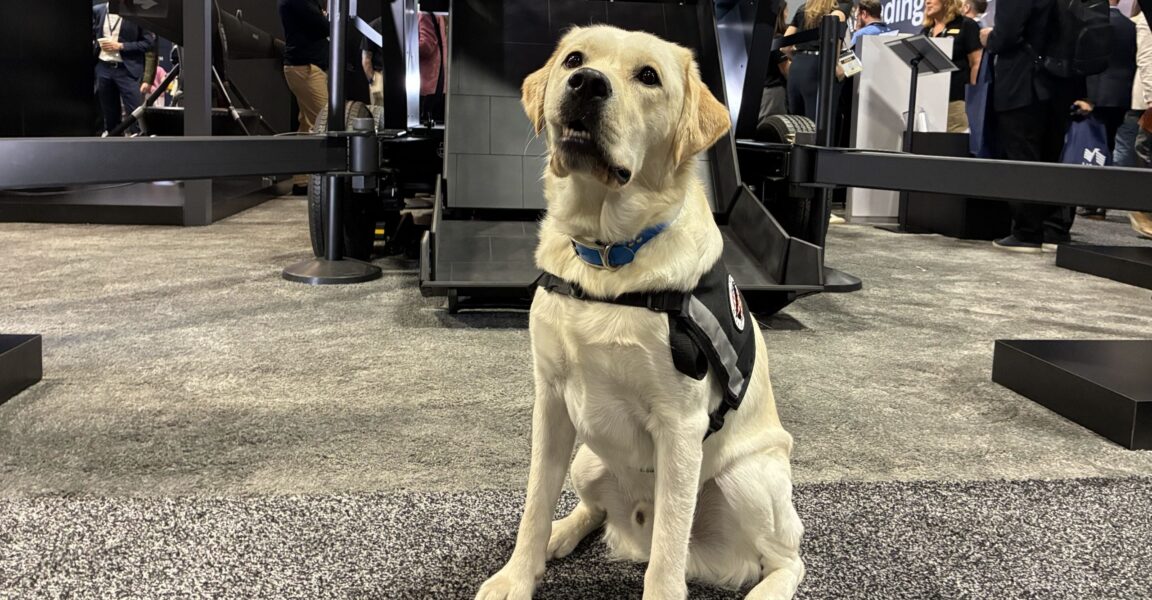
Patriot, who is expected to go to a wounded veteran when the dog’s training finishes, is happy to greet attendees outside the Shield AI booth on the show floor. (Breaking Defense)
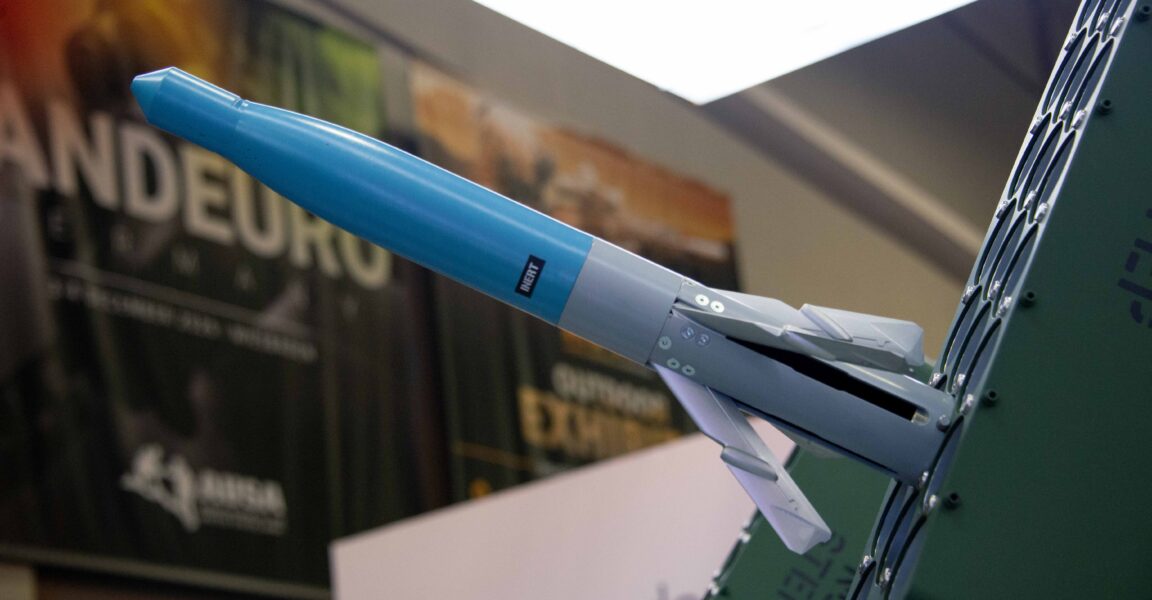
A close-up look at a munition from Sierra Nevada's Brawlr (Battery Revolving Advanced Weapons Launcher Reconfigurable) air-defense system, as seen at the 2026 AUSA conference. (Breaking Defense)
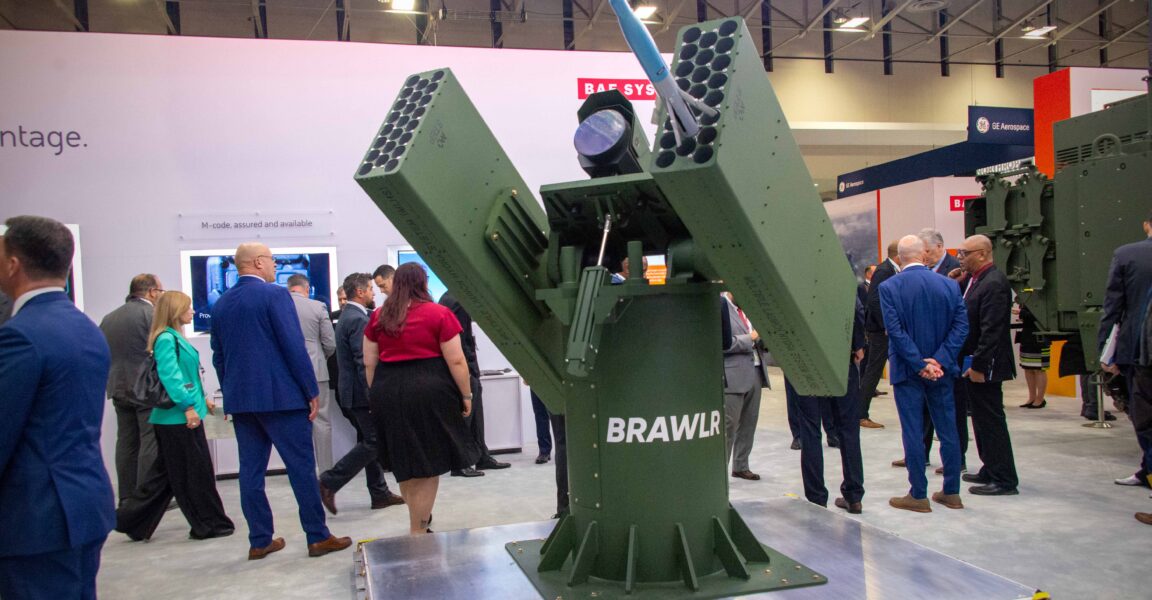
A wider shot of Sierra Nevada's Brawlr air-defense system at the 2026 AUSA conference. (Breaking Defense)
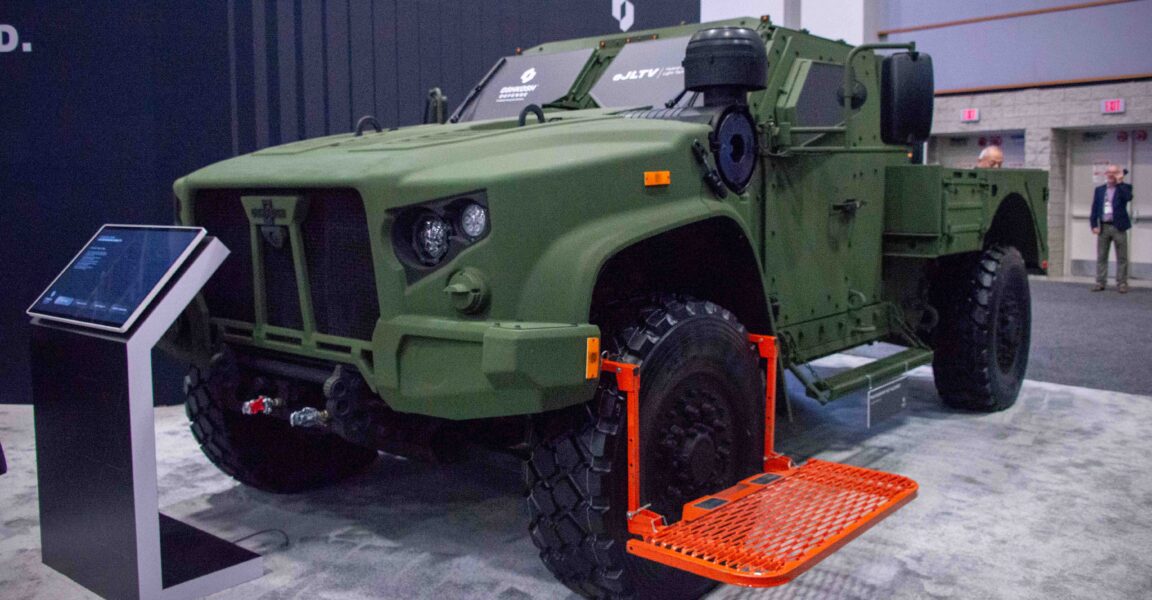
Oshkosh's electric Joint Light Tactical Vehicle on the AUSA show floor Oct. 12, 2026. (Breaking Defense)
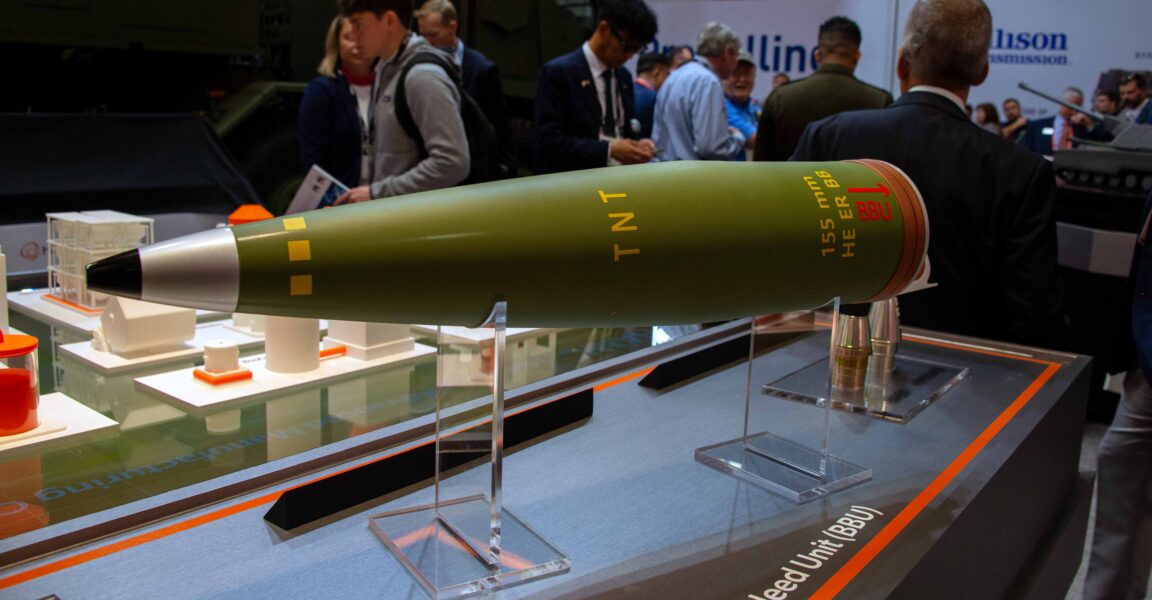
Hanwha Defense USA showed off its 155 mm artillery shells at the 2026 AUSA expo. (Breaking Defense)
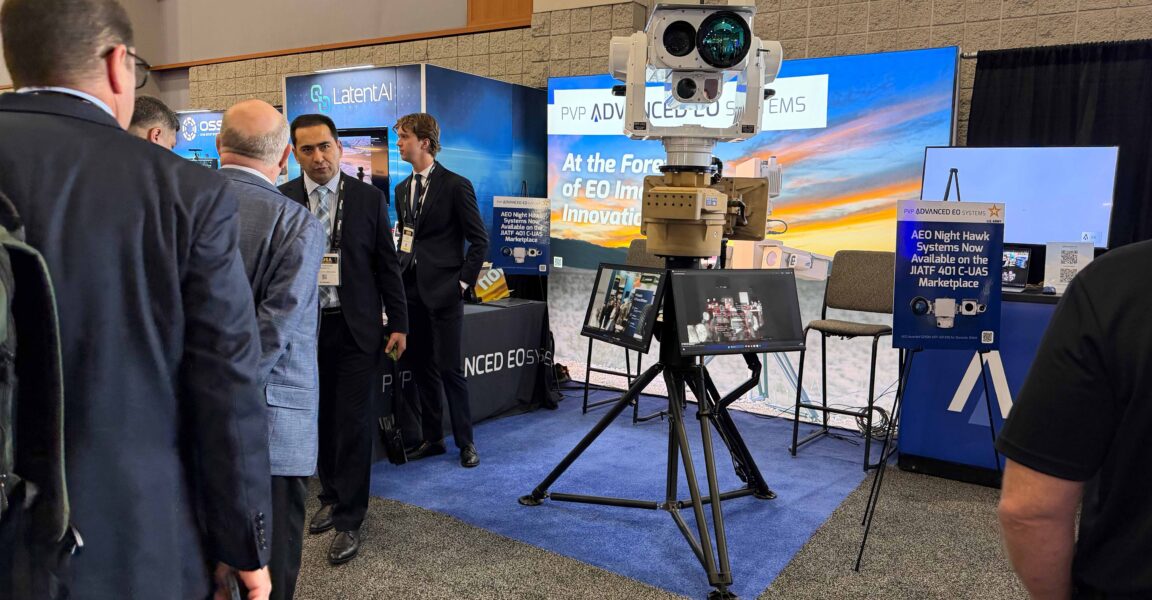
AEO Night Hawk Systems displayed their surveillance assembly, with sensors honing in on bystanders at the 2026 AUSA conference in Washington. (Breaking Defense)
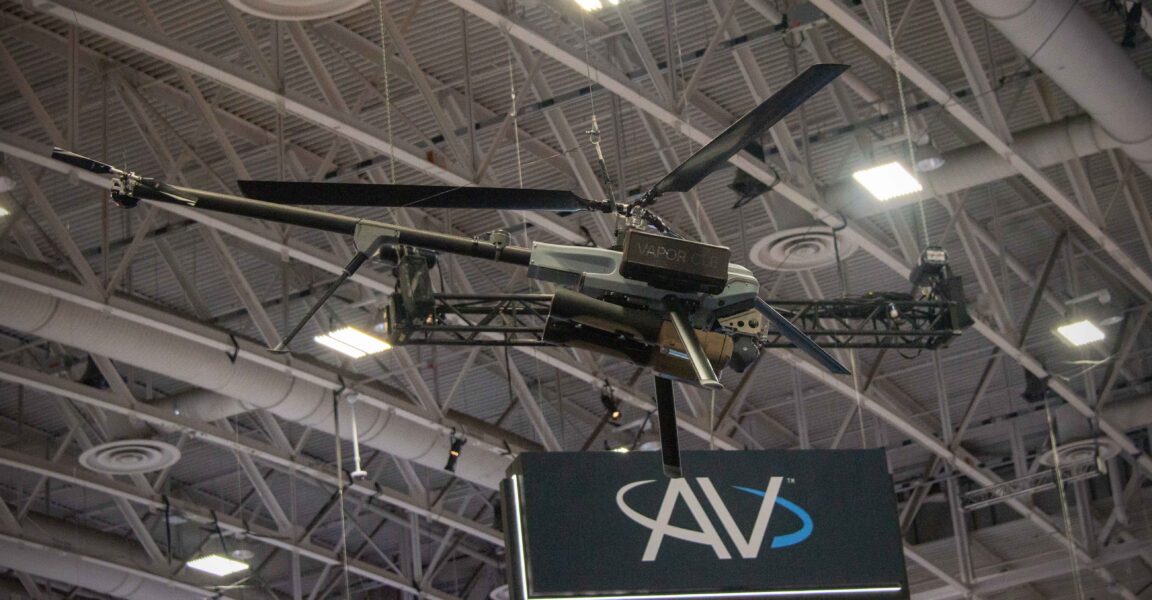
AeroVironment’s VAPOR is an all-electric, single-rotor vertical takeoff and landing (VTOL) helicopter unmanned aircraft system. Here it is suspended above attendees at the 2026 AUSA conference. (Breaking Defense)
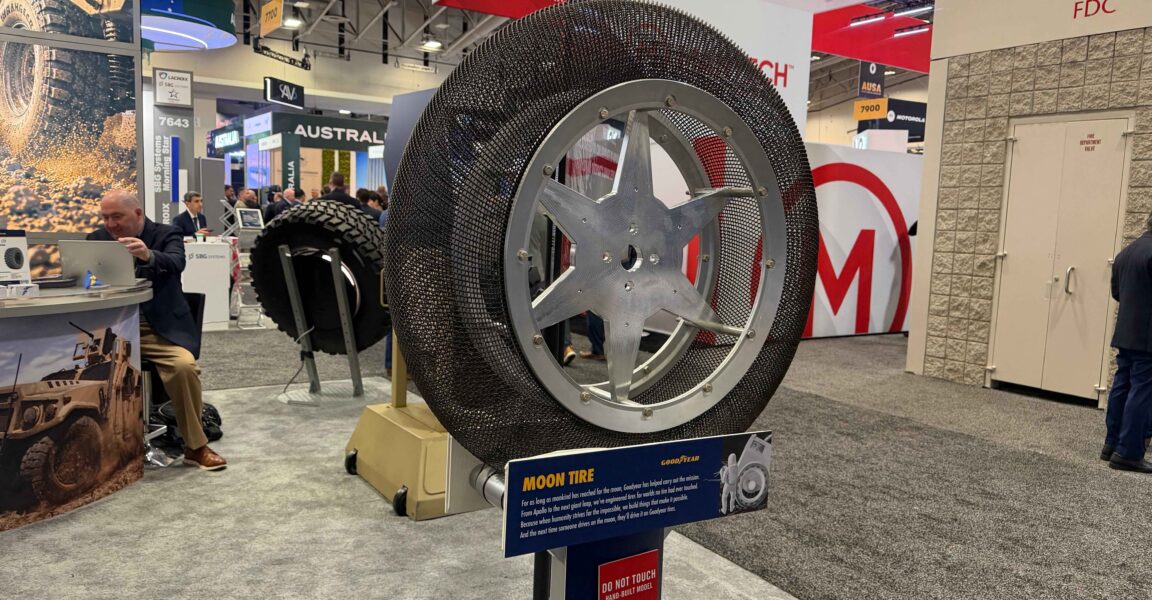
Goodyear representatives brought a sturdy but very unusual "moon tire" for lunar exploration to the 2026 AUSA expo. (Breaking Defense)
Colt optics had one of the busiest displays, with dozens of attendees observing a wall of assault rifles with specialized optics at the 2026 AUSA expo. (Breaking Defense)
Cadillac brought its Formula 1 team racecar to the 2026 AUSA conference in Washington. (Breaking Defense)
AUSA mascots Sgt. Hero and George Washington descend the escalator at the 2026 annual conference. (Aaron Mehta / Breaking Defense)
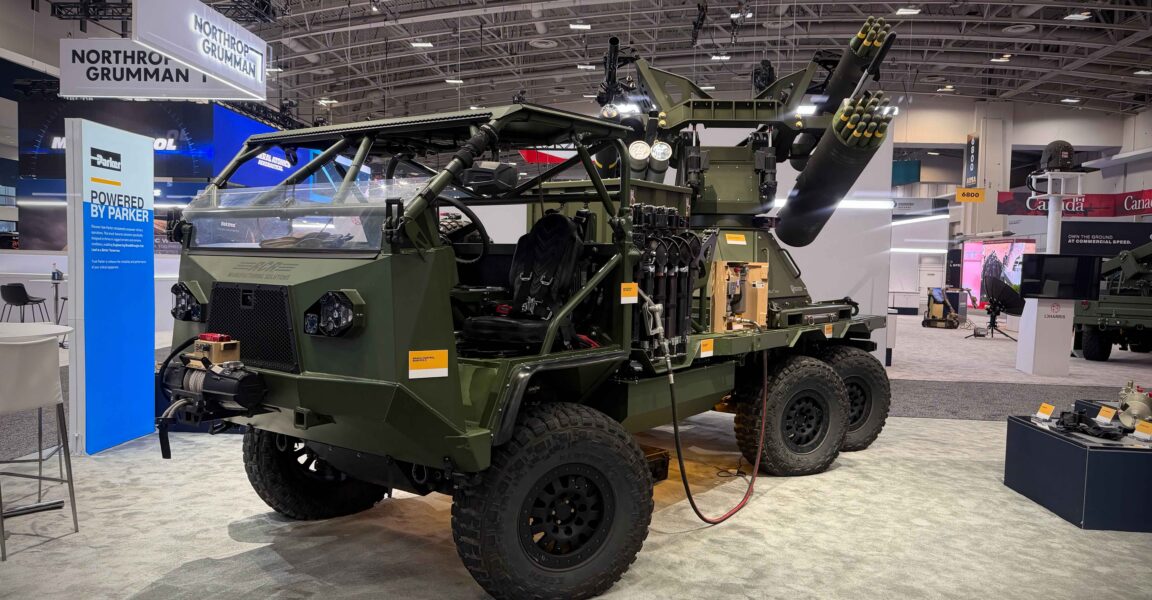
Parker Hannifin showcased many of its components onboard the MDH Strategic Services Airwolf c-UAS system, which is shown here fixed atop the RCR 6WAP vehicle. (Breaking Defense)
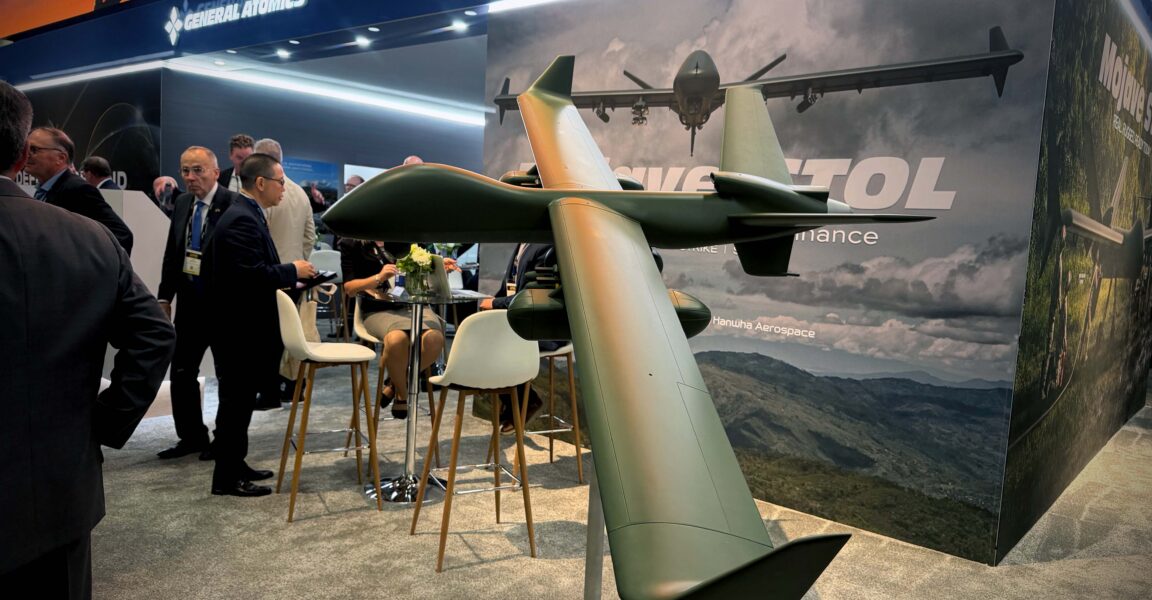
General Atomics Aeronautical Systems Inc. and Hanwha Aerospace co-developed the Mojave short takeoff and landing (STOL) uncrewed aircraft, pictured here at the 2026 AUSA trade show. (Breaking Defense)
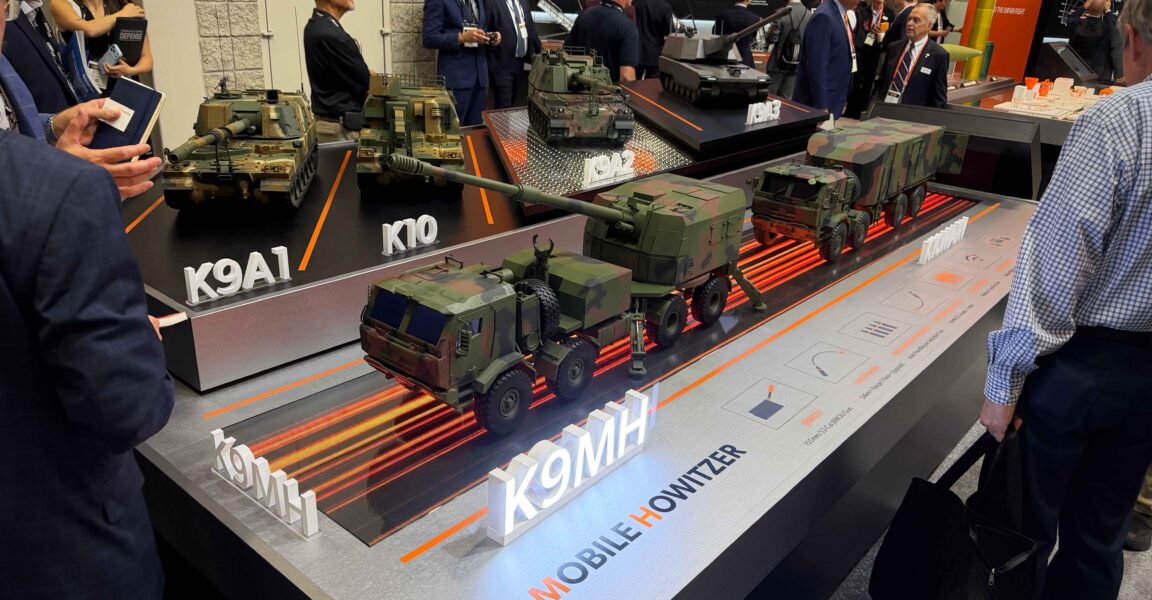
Hanwha Defense USA displayed a range of scale model armor and artillery systems on the AUSA show floor. (Breaking Defense)
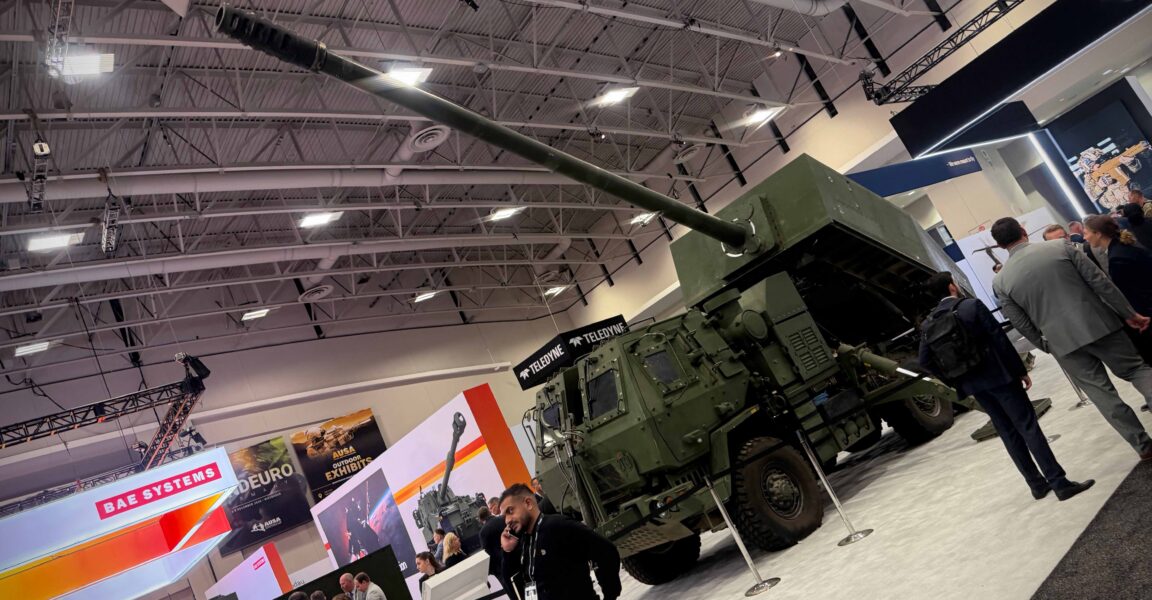
BAE’s Multi-Domain Artillery Cannon System stands tall at the 2026 AUSA trade show in Washington, DC. (Breaking Defense)
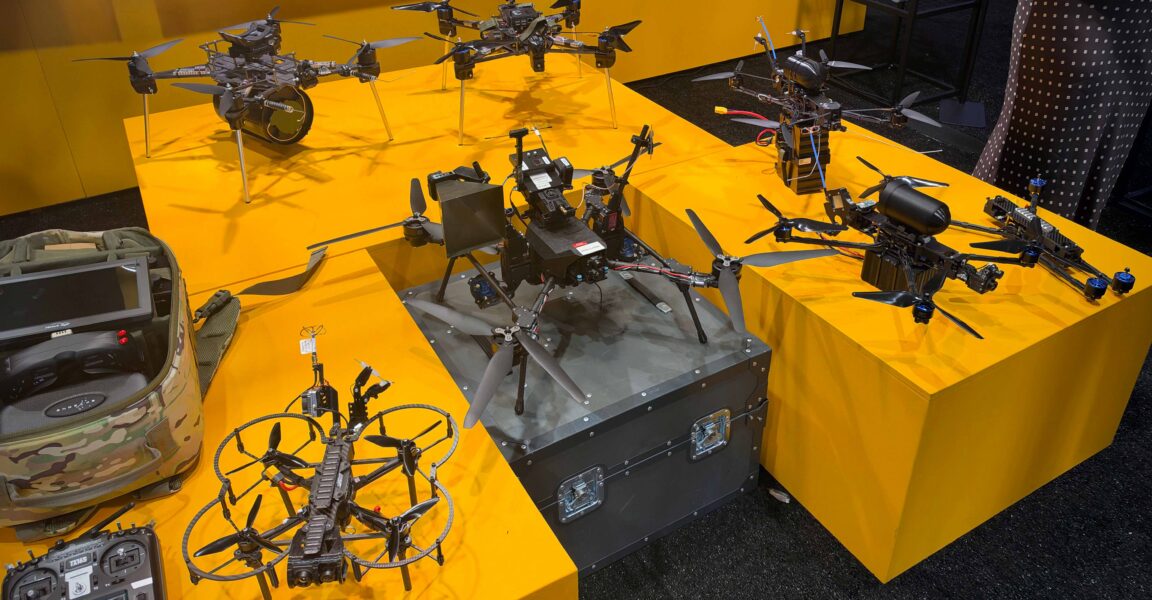
The Ukrainian military’s 3rd Army Corps brought a variety of small drones to the 2026 AUSA trade show. (Valerie Insinna / Breaking Defense)
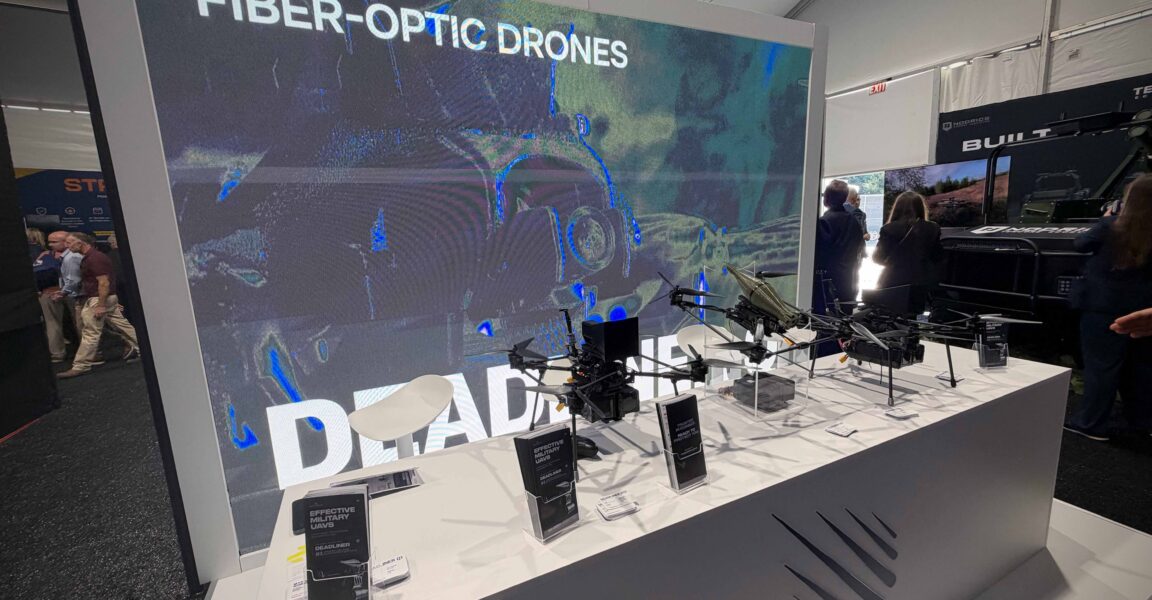
Kyiv-based defense tech firm Stellarion brought several fiber-optic drones to the 2026 AUSA expo. (Valerie Insinna / Breaking Defense)
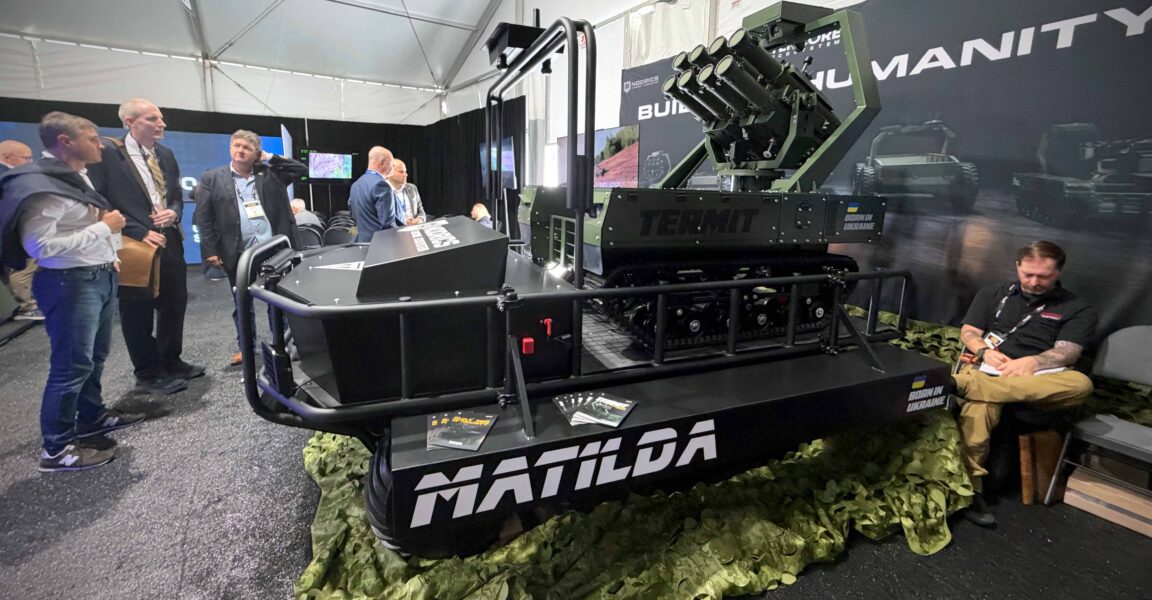
Ukrainian defense firm Tencore showcased an amphibious unmanned ground vehicle called MAT1LDA (Mesa Associates’ Tactical Integrated Light-Force Deployment Assembly), which is carrying Tencore’s TerMIT ground robot, at the 2026 AUSA trade show. (Valerie Insinna / Breaking Defense)
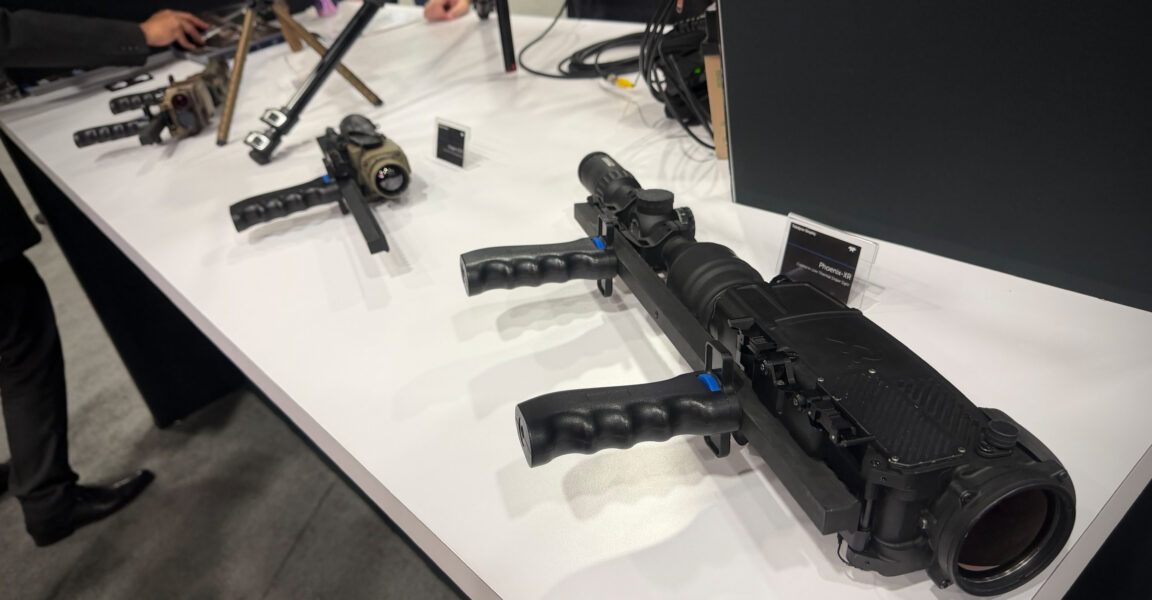
Teledyne Qioptiq brought several thermal weapons sights including the Phoenix-XR (right) and the Dragon-C12 S (middle) to the 2026 AUSA conference. (Breaking Defense)
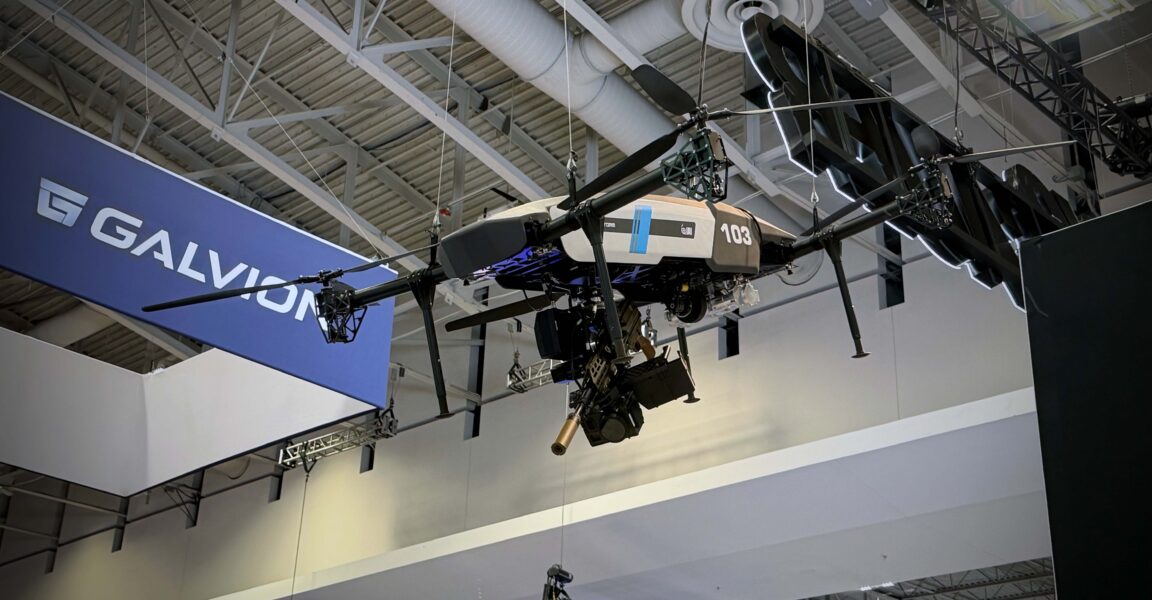
Israel Aerospace Industries’ and Sig Sauer’s Fire Storm 250 armed tactical quadcopter hangs above attendees of the conference. (Breaking Defense)
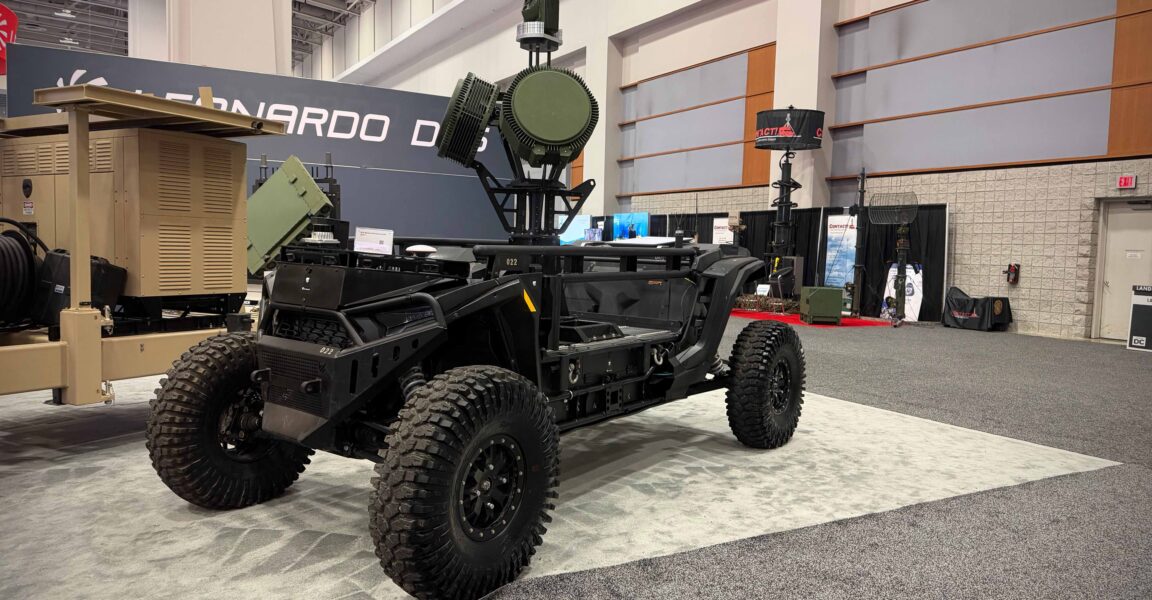
OverlandAI’s ULTRA autonomous ground system hosts a multi-mission hemispheric radar from Leonardo DRS, shown here at the 2026 AUSA expo. (Breaking Defense)
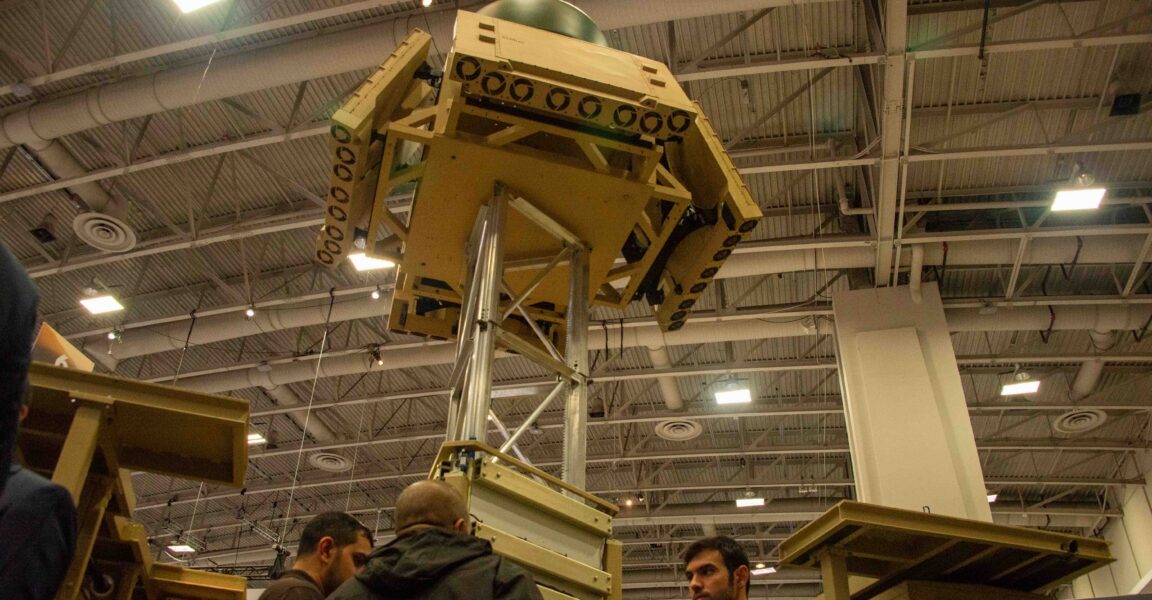
Leonardo DRS displays its Extended Mast Surveillance System, which features an exMHR radar system on a trailer platform with an extendable mast for a higher-altitude perspective. (Breaking Defense)