
For decades, the defense industry has been built around a familiar model: The government defines a mission need, establishes a detailed set of requirements and industry develops a solution specifically to meet them.
That model has produced some of the most sophisticated defense technology in the world. However, today’s fluid operating environment is challenging industry and government to think differently about when that approach is necessary, and when it is not.
Threats are evolving faster and technology cycles are contracting. Demand is increasing across critical capability areas. At the same time, the Department of War is placing greater emphasis on speed, production capacity and solutions that can move into the hands of warfighters faster. Recent acquisition reforms have emphasized industry-driven solutions and commercial products, along with more flexible approaches to getting capability into the field.
For industry, that creates an opportunity to rethink not only what we develop, but how we do so.
Moving Beyond a One-Program, One-Solution Mindset
A more commercial approach starts from a different place. Rather than designing a new solution every time a requirement emerges, industry can invest ahead of demand in core products and technologies that address capability gaps shared across multiple customers, platforms and missions, using common architectures and modular designs that can adapt as threats evolve.
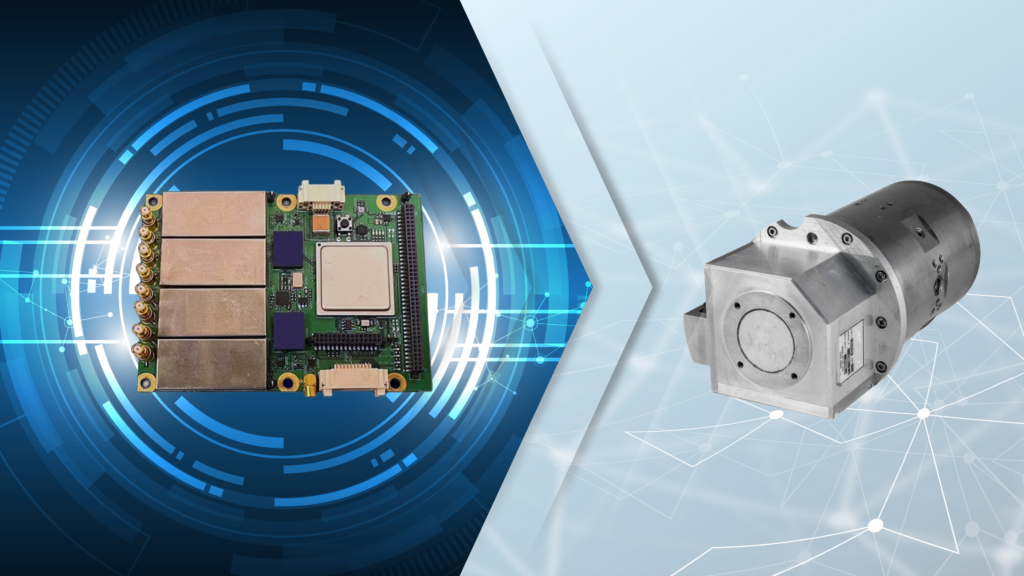
At L3Harris, we see opportunities for this approach across technologies ranging from advanced sensing and navigation to antennas and thermal management solutions. Our modernized GPS portfolio, for example, includes configurable solutions designed for applications spanning weapons systems, ground vehicles, unmanned aircraft and handheld navigation platforms. The same product-based approach extends to our sensing and cooling technologies, where common designs and proven technology can provide a foundation for use across different platforms and mission needs rather than requiring an entirely new development effort for every application.
The point isn’t simply to make defense products look more like commercial products. It is to bring some of the advantages of a commercial product mindset into a market with very different mission, security and reliability demands.
Commercialization Does Not Mean Lowering the Bar
There is an important distinction between commercializing how a capability is developed and delivered and simply adopting an off-the-shelf business model that treats defense technology like a consumer product.
Defense systems still have to operate in demanding environments. Security, reliability, qualification and mission performance remain critical. Unique needs will still require engineering changes or customization.
It’s not a binary choice between customization or commercialization, but rather a determination of where each makes sense. A mature core product can provide a starting point, allowing engineering teams to focus on mission-specific changes rather than recreating capabilities that already exist.
That approach can also create benefits beyond speed. Broader product applicability can support more predictable production, greater reuse of engineering investment and opportunities to strengthen supply chains through demand across multiple applications.
Industry Has to Invest Differently
A commercial approach also changes the role of industry.
Under a traditional model, investment frequently follows a defined government requirement and program opportunity. A commercial model requires companies to identify emerging needs and make earlier decisions to invest internal resources and develop technology before a specific acquisition program fully materializes. That introduces risk: Invest too narrowly and a product may have limited applicability; move too far ahead of customers and industry risks developing technology without sufficient demand.
Success requires understanding the customer well enough to identify capability gaps and develop solutions that can meet warfighter needs across applications.
When the need is clear, earlier investment can give government customers something increasingly valuable: options and edge.
Instead of asking how quickly industry can begin developing a defined solution, the conversation can become how we can work more closely with industry to acquire their solutions that solve capability gaps and provide warfighters the best in emerging technology.
That is a fundamentally different starting point.
A Model Built for Continuous Change
The government is already moving in this direction. Army modernization efforts are emphasizing faster prototyping, soldier feedback and scaling technologies that prove their value.
Industry needs to evolve toward this new acquisition model. That does not mean abandoning the traditional development process. Some of the nation’s hardest technical problems will continue to demand highly specialized solutions built around exacting requirements.
The opportunity is to build more technologies with reuse, adaptability and production in mind from the beginning, creating products that can serve as common building blocks while preserving the ability to tailor them for the mission.
For L3Harris, commercialization is ultimately less about borrowing a model from another industry and instead, changing the starting point for defense innovation: invest earlier, design for broader applicability and give customers mature options they can evaluate and field faster.
As threats continue to evolve, speed will increasingly depend on what is already available when the need emerges. Companies that can anticipate that need, and have capable, adaptable technology ready when it arrives, will be better positioned to help the warfighter stay ahead. For L3Harris, that capability is being built now.
About the Author
Ryan Scirocco is the Director of Business Development, Advanced Effects, Missile Solutions at L3Harris, where she supports a portfolio spanning sensing, precision weapons and seekers, advanced electronic warfare systems, resilient navigation and weapons release systems. Ryan brings deep expertise in identifying emerging capability gaps and building strategies that connect innovative technology to warfighter needs.