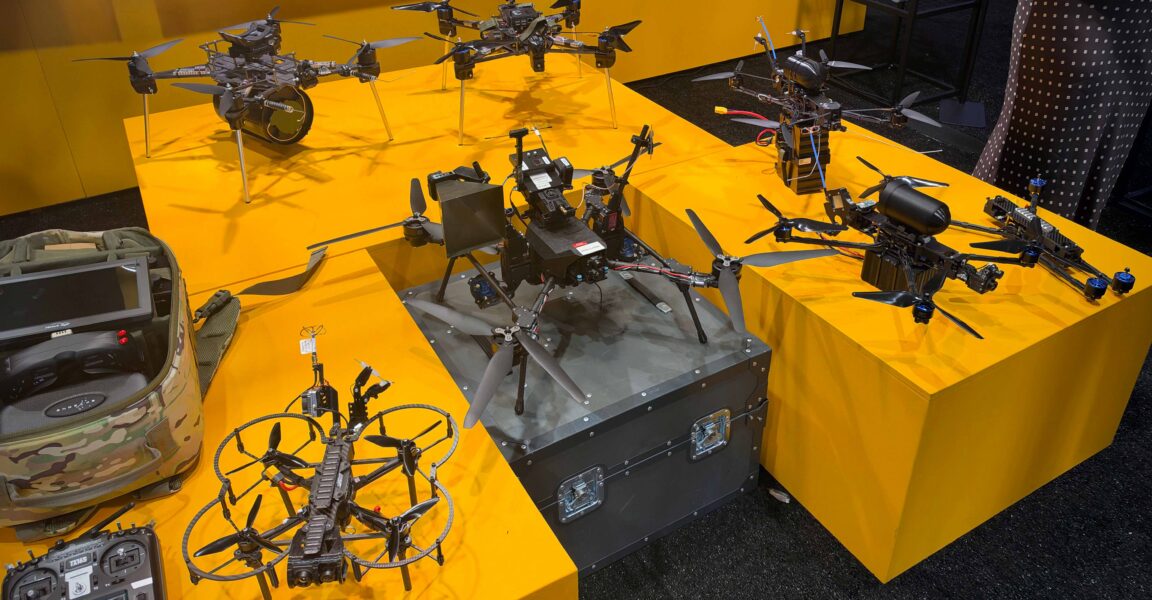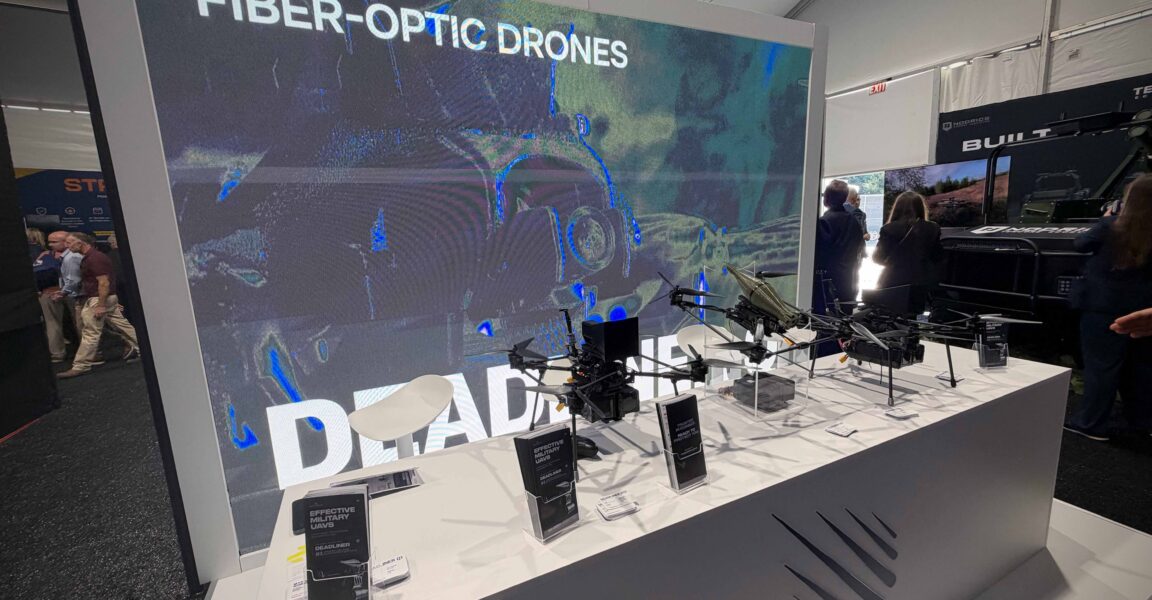
The Pentagon is working to grow an American drone industrial base capable of producing hundreds of thousands of systems next year. Great! But what happens if we succeed?
While drones are much like munitions in the numbers the US military will need to expend, we shouldn’t stockpile drones in warehouses. Technology, threats and tactics are changing too quickly. Large inventories of today’s best drones could become tomorrow’s stockpile of obsolescence.
Instead, we need to use them. And I don’t mean just for training. I mean, really use them, run them quite literally into the ground, and then see what we can learn.
The Defense Innovation Unit’s Deputy Director, Travis Metz, told the Senate Armed Services Committee this year that military training should consume drones in “the hundreds of thousands per year.” That’s an enormous number, and it creates an enormous opportunity. We need to use the elevated demand for those drones to train the industrial base to be able to support a war that quickly expends and iterates those platforms.
The industrial base can’t just be seen as a supplier to the military. As the rate of technological change accelerates, manufacturing capacity and its ability to quickly adapt will become an increasingly integral part of the force generation system. That means industry needs to be part of the exercise.
And scale matters. We won’t know if the industrial base can adapt at scale by ordering five prototypes — we need to know whether a system can be redesigned, built, trusted, delivered and employed in operationally useful quantities. You can’t do that without producing at mass.
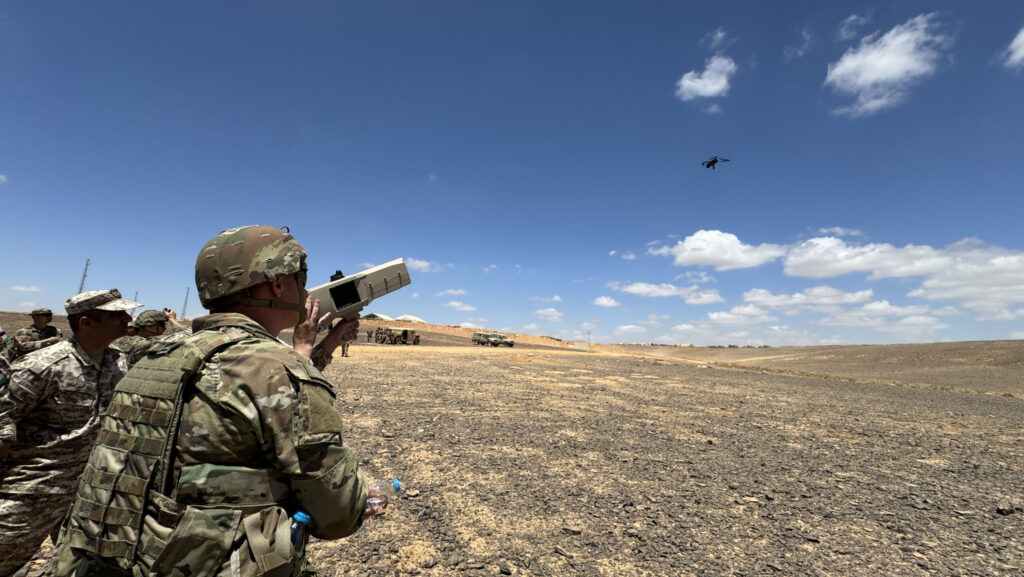
The good news is, we’re already on the path. I attended both of the first two Drone Dominance Gauntlets, and the improvement between them was impressive. First, the drones were better and more reliable. The operators were better too. The Marines I watched had developed checklists and common language that helped them move quickly through setup and into flight. The test team was also better. Requirements were more clearly defined, scenarios were better differentiated and data collection and scoring were substantially more sophisticated.
But most impressively, the relationship between the vendors and operators had also changed. At times they looked less like customer and supplier and more like a single tactical-technical team. The operators knew what they wanted to do while vendors were able to show them how to make the technology accomplish that. From Gauntlet 1 to Gauntlet 2, the whole drone ecosystem adapted and improved. The important lesson: By consuming drones at significant scale, we simultaneously train the force, determine the next iteration of design and create the demand to build that next iteration.
So, what comes after the four Gauntlets conclude? Hopefully, we get more Gauntlets for different classes of systems. But we better not stop there. We should also take the most important lesson and institutionalize it.
If we think the only important training is the training done by warriors on the battlefield, we are losing sight of a very important facet of modern warfare. We need to exercise the industrial base as well.
Of course, consuming drones at this scale will not be cheap. But before you accuse me of wanting to set suitcases filled with $1,000 bills on fire, we need to recognize that drones stored in a warehouse can depreciate in combat value as technology, threats and tactics change. I’m not suggesting we purchase an extra 100,000 drones just to blow them up in tests; we need to plan to crash and replace some portion of the large quantities we’re already buying.
A drone deliberately consumed in a well-designed exercise can produce a different kind of combat value from the one stored in the warehouse. We have always recognized that spent munitions and jet fuel produce higher operator proficiency, test data, better tactics and exercised logistics. But by intelligently consuming drones, we will also benefit from industrial learning and improvements to the next generation of systems. Our objective isn’t to crash as many drones as possible, nor should it be to save every one of them for war. We need to find the balance between inventory and deliberate consumption that produces the most combat value for the money.
We already have many of the pieces. The Drone Dominance Program is testing both drone performance and manufacturing readiness. Project Flytrap puts emerging technology into soldiers’ hands in operationally representative environments, and it’s already connected through a series of exercises. Major exercises provide increasingly realistic operational problems, and the Department of War is experimenting with ways to assess manufacturing readiness. Now we need to connect them and integrate manufacturing between them. Together, they could become a continuous industrial exercise that teaches how to adapt when we find ourselves in the next major conflict.
Imagine a major exercise in which thousands of drones are treated as fully consumable. Both sides have drones and counter-drone systems. Operators employ their systems while testers collect data. Engineers, supply-chain experts, acquisition professionals and manufacturers are connected to what is happening in the field.
Once one side finds a significant advantage, that may be the end of that operational event, but that would then trigger the next phase of the industrial exercise. We start the clock. Operators and testers determine what went right and what went wrong. Maybe they had an advantage in tactics but a disadvantage with the software interface. Maybe an adversary found a vulnerability in a communications link. Maybe a sensor, payload, antenna, component, or airframe needs to change.
Industry takes these lessons and immediately starts working.
Can it redesign the system? Can suppliers support the change? Can the government establish enough trust in the modified system to use it? Can the factory reconfigure? Can it produce the new version in quantities that matter? Can logistics get it back to the unit? Can operators learn the changes?
Some parts of the system will likely adapt faster than others. Finding this disparity is exactly what we need. The exercise will expose the bottlenecks that need to be fixed.
Then train again. And again. And again. Faster and faster. This could be done through a string of already existing exercises, modified to collect the right data and insert vendors at the tactical level. One exercise could discover a vulnerability, industry could adapt between events, and the next exercise could test the answer.
In effect, the industrial exercise never really ends. Individual exercises and events become iterations in a continuously adapting campaign to see what failed, what changed, at what scale, how long each step took and where we need to intervene.
Expending drones on this scale will create problems of their own. We’ll have to figure out how to recover systems, harvest useful components, handle damaged batteries, recycle materials and dispose of what cannot reasonably be recovered. Good. Those are wartime logistics problems and it’s time to start learning those lessons too.
We can’t simply replicate what Ukraine did in their drone war. The United States would likely face different constraints and would integrate drones into Joint All-Domain Operations. What we should borrow is Ukraine’s rate of learning and adapting drones to fit their operational needs.
We train pilots by flying, infantry by shooting and staffs through exercises because we don’t want to discover during wartime whether they can perform their missions. If manufacturing and adaptation are increasingly becoming part of aggregate combat power, that same logic should apply to our industrial base.
The objective shouldn’t be to enter the next war with the world’s largest warehouse of drones. It should be to enter it with the world’s most practiced system for designing, building and delivering drones. And it might take a whole lot more than crashing 100,000 drones to get there.
Col. Dustin Thomas is the Commander of DCMA’s Unmanned Systems – Experimental Command (US-X). US-X provides contract oversight for unmanned systems of all sizes across all domains and manages the Blue List. Col. Thomas previously led Black Phoenix, an innovation team focused on designing, building and flying small unmanned systems in less than 24 hours, and founded Game of Drones, an experimentation event focused on the rapid integration of new technology into unmanned systems.
The views expressed are those of the author alone and do not necessarily reflect the views of the Department of War.
PHOTOS: AUSA 2026

 Gallery