WASHINGTON — The Army directorate tasked with getting tech into the hands of soldiers within 180 days or less is increasing its use of Other Transaction Authority (OTA) contracts in order to help additional vendors reach the prototyping stage, according to senior service leaders.
Previously, the Global Tactical Edge Acquisition Directorate (G-TEAD), under the Army’s Pathway for Innovation and Technology (PIT), awarded one OTA to a vendor after its Accelerated Capability Events, or ACEs, where vendors would show off tech with a technology readiness level of six or above. Now, the Army will be awarding five to six OTAs, as part of a conscious effort to expand the industrial base.
“The awarding of the six contracts is our way of allowing these small and medium-sized businesses to understand that when you participate in an ACE, if you make it through the competition, what’s waiting for you on the back end of that potentially is an OTA,” Col. Christopher Hill, director of the G-TEAD told reporters Friday. “This is a change to bring more people under the umbrella contractually.”
The Army’s Service Component Commands provide the demand signal for what type of technology the G-TEAD seeks out. Once that demand signal is clear, the directorate posts white papers for that technology and selects about 15 vendors to participate in the ACEs, which then potentially leads to OTAs.
Though this change will bring more OTAs, this doesn’t necessarily mean more vendors will receive production contracts. When the G-TEAD previously awarded just one OTA, it was a prototyping OTA. Now, the up to six OTAs provide funds for vendors to participate in a 45-day long operational assessments where they get more soldier and senior leader feedback, resulting in up to one to three OTAs for vendors to develop a prototype, Hill explained.
The operational assessments add an “operational flavor” and test new capabilities in an “actual mission” environment, Hill said. He added that it is “100 percent our expectation that the next time we see these systems, they are better than what we just saw during [the ACE] demonstration.”
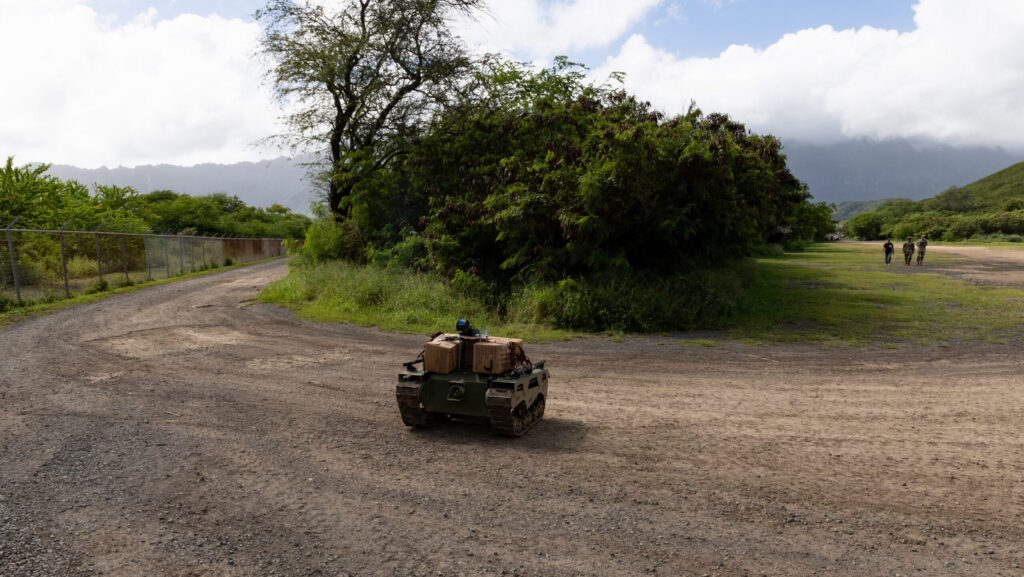
The change to award more OTAs began with the ACE that recently concluded in Hawaii. The exercise was conducted in coordination with the Army’s Pacific Command to find autonomous ground vehicles and coinciding command and control systems capable of sustainment and casualty evacuation missions in logistically challenging environments, Hill said. The G-TEAD selected its winners, but has not yet disclosed the vendors.
Further, Hill said awarding more OTAs incentivizes vendors to come out to such events, since companies often incur hefty costs for packing up and moving all their equipment. It also allows them the bragging rights of having won an OTA, even if it’s not for a prototype award, which could make them more desirable in future competitions, Hill said.
For the ACE that just wrapped up in Hawaii, some companies that were awarded the initial OTAs, but not prototype OTAs, could have better success in other regions, Col. Shermoan Daiyaan, director of the PIT, said.
“Some capabilities may not be as useful in the Pacific — in the jungle — as it may be more applicable in the ACE that’s happening in Europe right now,” he said. “So it doesn’t throw them out. It just says that for this particular ACE, they didn’t perform as well […] so we may invite them out to a future ACE.”
Breaking Defense Video