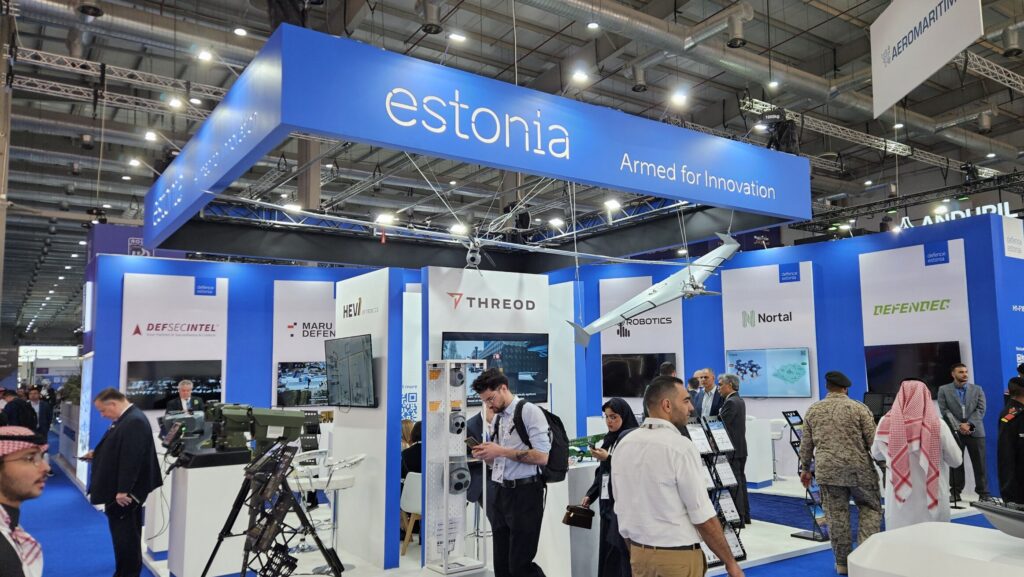
MILAN — Estonian authorities have accused Russian intelligence of orchestrating a sabotage attempt targeting the Estonian drone manufacturer Threod Systems, over the weekend, as part of its “broader hybrid war against Europe.”
The Nov. 14 incident, which involved a plot to cause an explosion at the company premises, is the latest in a series of alleged Russian attacks on European defense companies.
Estonian Prime Minister Kristen Michal said in a statement on X that the attack was “GRU-ordered,” an abbreviation for the Russian military intelligence agency, and that heightened security measures helped prevent significant damage.
“The attackers have been detained. This is part of Russia’s broader hybrid war against Europe, with the aim of decreasing support to Ukraine and pressure on Russia. We will not be intimidated,” Michal said.
In a separate statement, the Estonian Internal Security Service warned “against even considering such job offers from Russia” and that the consequences for these actions “are serious.” As a result, the Baltic nation’s Foreign Ministry announced on Sunday that all Estonian-Russian border crossing points would be closed as of Dec. 1, as Moscow’s “attempts to intimidate or undermine our security will come with a price.”
While the Kremlin has not directly replied to these allegations, reports from Russian News Agency TASS, reproduced by another Russian publication, Kommersant, quote Maria Zakharova, spokesperson for the Russian Foreign Ministry, as stating that the country is verifying them for accuracy but that “if these are their actual plans, they fit into another bout of aggressive and unrestrained Russophobia.”
The Tallinn-based company Threod Systems told Breaking Defense in March that its most consequential customer is Ukraine, where several dozens of its drones are used for reconnaissance and guiding artillery fire, with the company also training operators in the war-torn country.

Europe’s military advantage depends on sovereign command of the ground truth
As NATO and European governments accelerate investment in space-based intelligence, decision advantage will depend on how quickly sovereign and commercial capabilities can be fused into a trusted operational picture.
This follows calls made by government officials and European defense industry groups over the last few months urging companies, governments and security agencies to increase vigilance across the sector and collaborate to deter sabotage threats.
In a similar incident, during the night of Aug. 14, the Estonian defense company Milrem Robotics, another key equipment supplier to Ukraine that has provided many unmanned ground vehicles to it, was the victim of a fire sabotage attempt. A month later, the Estonian government alleged that, based on data collected, “we can conclude with certainty that the arson attack… was an act of sabotage ordered by the special services of the Russian Federation.”
Breaking Defense Video