WASHINGTON — The Commerce Department is readying the final step towards launch of its space object tracking system for non-military satellite operators, a key new responsibility the department is taking over from the Pentagon.
“We are weeks away from launching the Traffic Coordination System for Space (TraCSS),” Deputy Secretary Don Graves told the US Chamber of Commerce’s Global Aerospace Summit 24 on Wednesday. “It’s time for us to migrate this to the Department of Commerce.”
Graves and other senior officials said the department will meet its Sept. 30 roll-out deadline, although the debut product will represent only a minimal capability.
The National Oceanographic and Atmospheric Administration’s Office of Space Commerce (OSC) has been working since 2018 on the effort to establish a new process for taking on what is now a Defense Department’s mission to keep tabs on satellites and dangerous space junk and warn non-military operators of possible on-orbit crashups. Commerce leadership, working with Congress and the Office of Management and Budget, in 2023 set this fall as the deadline for achieving that goal.
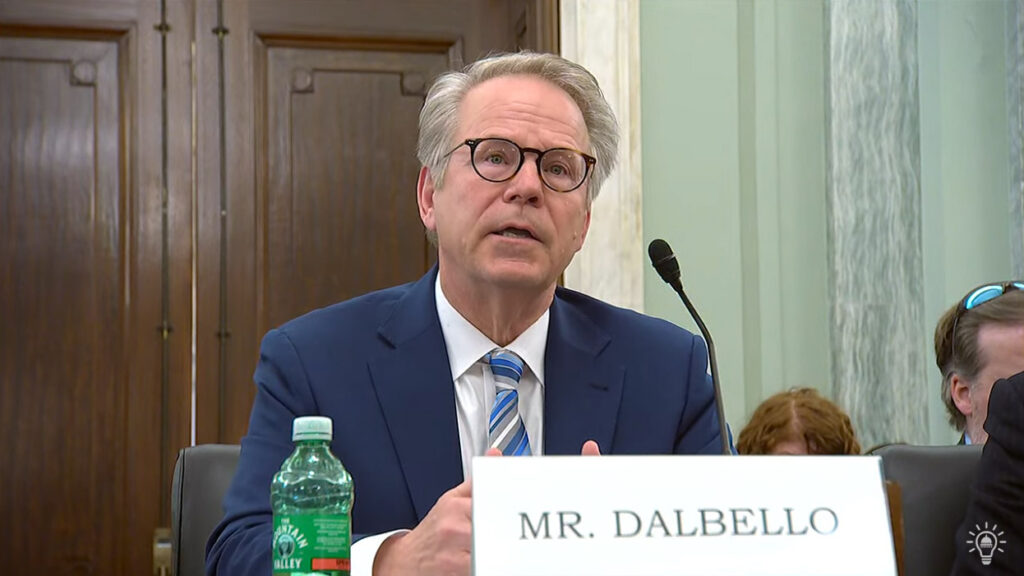
“TraCCS is on track,” OSC Director Richard DalBello told the summit during a later panel. He explained that the final step, coming shortly, is to contract for “what we call the presentation layer, or more commonly the webpage ‘TraCCS.gov’.”
OSC already has contracted with Amazon Web Services to provide its cloud services, and Parsons to provide systems integration.
“Over 2025 … we will build out the system. We’ll open the TraCCS.gov website … to satellite owner operators and other users, and we’ll begin the transition of all the people who are on [DoD’s] Space-Track.org who are not national security customers. We’ll begin that transition, with the goal of completing it at the end of 2025,” DalBello said.
That said, DalBello stressed that the roll out will comprise a “minimum viable product” — rather than a more fulsome operating system as OSC had previously planned.
“We will be using the DoD system, the DoD website, to store the data for operators. But we will be able to take DoD Information, we’ll be able to take operator information, and we’ll be able to use our system to create conjunction data messages and orbital determination for the satellites that we’re covering,” he said.
“Operators that are working with this know that this is not operational data yet. This is not data that they should be relying on for safety services yet,” he added.
DalBello explained to Breaking Defense that this first version of TraCCS will in essence duplicate the data that DoD currently provides, although the system will process incoming and outgoing data every four hours rather than DoD’s every eight hours. But TraCCS will evolve and improve over time under an agile development process, he said.
Commerce’s goal is to eventually create a free, government-owned collision warning service accurate enough to provide a baseline of space tracking data for satellite operators to be able to ensure a modicum of safety if they decide to move out of the way of a potential crash — unlike DoD’s current warning system that has a fairly big margin of error. The move will also free up Pentagon resources to focus more directly on military space matters, officials have said.
The problem is that Commerce leaders at the same time want to promote the handful of domestic commercial providers of space situational awareness (SSA) data and collision warning analysis that have sprung up over the past decade or so. Thus, they do not want TraCCS to become a competitor or squeeze those companies out of the marketplace.
“The plan is to integrate our SSA providers to get basic data out there that is free of charge to operators,” Graves said. “We want to give that basic service, but make sure our commercial SSA providers are able to continue to innovate and beat the pants off of other companies in the world. … We are going to help drive the commercial marketplace by being an acquirer of data … to grow the industry significantly over the next couple of years.”
Meanwhile, OSC also is hoping to help industry help itself, by promoting the creation of voluntary standards for safe on-orbit operations as part of the TraCCS project. The office has initiated a new “pathfinder” project, “that will examine the efficacy of generating improved satellite ephemeris based on data provided by satellite owners/operators (O/O’s),” according to a Sept. 10 announcement.
“OSC is investigating this capability to help inform quality standards for satellite ephemerides, and means of achieving those standards, for the system. Ephemeris (plural: ephemerides) is a table indicating a space object’s position and velocity at specific times,” the announcement added.
The solicitation via DoD’s Global Data Marketplace is asking interested vendors to submit proposals for three different potential buys:
- An order to generate ephemerides for a given set of satellites in low Earth orbit (LEO);
- An order to generate ephemerides for a given set of satellites in geostationary Earth orbit (GEO); and
- An order for two companies to provide data quality monitoring services related to the above two orders
Further, DalBello told Breaking Defense that OSC has been working closely with the European Union to try to align it’s nascent Space Surveillance and Tracking System with TraCCS, in order to avoid the development of two different sets of measurement data that could result in operators working at odds in trying to avoid collisions.
The eventual evolution of an international space traffic management system, however, will be a job for another day and another head of OSC — as DalBello intends to step down at the end of year. And this isn’t a pro-forma, end-of-administration resignation, he told Breaking Defense, but actual retirement.
“I’ve done this three times. People are going to stop taking me seriously,” DalBello said, with a laugh.
PHOTOS: AFA 2024

 Gallery