Air Warfare

Army about to formalize ‘micro-high altitude balloons’ as a new requirement for surveillance ops

The new effort for microHABs is being led by the Army's Program Executive Office for Aviation, Andrew Evans, director of the Army's ISR Task Force, told Breaking Defense, which for the moment is the primary acquisition shop overseeing the service's pursuit of systems that can operate at the upper edges of the stratosphere — roughly between 60,000 and 100,000 feet, and just below orbital space. 

241016_army_microhab_PEOIWS_LinkedIn_CROP
The Army said micro–High-Altitude Balloons (microHABs) completed a Continuous Uninterrupted Relay Transmission Aerial Intelligence Network over a large distance as part of the Vanguard 24 exercise in September 2024. (PEO IEW&S via LinkedIn)

AUSA 2024 — The US Army is about to approve a new requirement for small high-altitude balloons for sensing deep inside enemy territory, according to a senior official.

“You’ll see it as mHABs, a micro-high altitude balloon. Those are smaller and they carry less payload, but they’re more transportable, so they’re a little bit more tactical in nature,” Andrew Evans, director of the Army’s Intelligence, Surveillance and Reconnaissance (ISR) Task Force, told Breaking Defense today on the margins of the annual Association of the US Army Conference.

“So, imagine them being man-portable, potentially easier to launch from field conditions, potentially requiring less logistic support,” he said.

A formal requirement paves the way for official acquisition of a new capability. According to an Army Space and Missile Defense Command fact sheet on high-altitude platforms [PDF], the land service is looking for a wide range of capabilities to suit both its own needs and help support multi-domain operations across the joint force. In particular, the service has been exploring stratospheric craft to undertake ISR missions for the past couple of years.

The new effort for microHABs is being led by the Army’s Program Executive Office for Aviation, Evans said, which for the moment is the primary acquisition shop overseeing the service’s pursuit of systems that can operate at the upper edges of the stratosphere — roughly between 60,000 and 100,000 feet, and just below orbital space.

“The only way to get there is with balloons or ultra-light, solar-powered vehicles,” Evans said. “Airplanes and things that have big motors can’t get that high.”

RELATED: After setting ultra-endurance record, Army Zephyr drone keeps flying, whether it wants to or not

The Army in July issued a request for information designed to provide the service with market research on small, light electronic intelligence, communication intelligence, and radar payloads for “microHABs,” described as weighing under 15 pounds. Those are relatively “micro” compared to, say, the Joint Land Attack Cruise Missile Defense Elevated Netted Sensor System (JLENS) system that involved lumbering blimps.

The Army’s Program Executive Office for Intelligence, Electronic Warfare and Sensors has been playing with microHABs and said two weeks ago that some systems “completed a Continuous Uninterrupted Relay Transmission Aerial Intelligence Network over a large distance as part of the Vanguard 24 exercise” in September.

“Although similar to the larger HABs, the microHABs will provide different capabilities due to its variance in size,” the office posted on LinkedIn. “Project Director Sensors-Aerial Intelligence is currently working hard to mature the microHAB to serve as an Army capability that will be readily available to Soldiers.”

Evans explained that the Army’s plans for high-altitude balloons of different sizes aren’t yet set in stone, with the service also still experimenting with other types of platforms, such as solar-powered aircraft. For example, the Army in 2022 undertook a series of experiments with the spindly Airbus-made Zephyr long endurance drone.

He noted that the first funding for the service’s High Altitude Platform for Deep Sensing program will appear in the fiscal 2025 budget — although Army budget documents do not break out an amount.

“It’s all very nascent. So, we just haven’t fully figured out what this is going to be. What we all universally agree on is that we need to do it. We just don’t know to what scale and exactly what the solution will be,” Evans said. “And whether it’ll be a balloon, a solar glider, what we’re fully sold on is we got to exploit the stratosphere.”

PHOTOS: AUSA 2024

PHOTOS: AUSA 2024

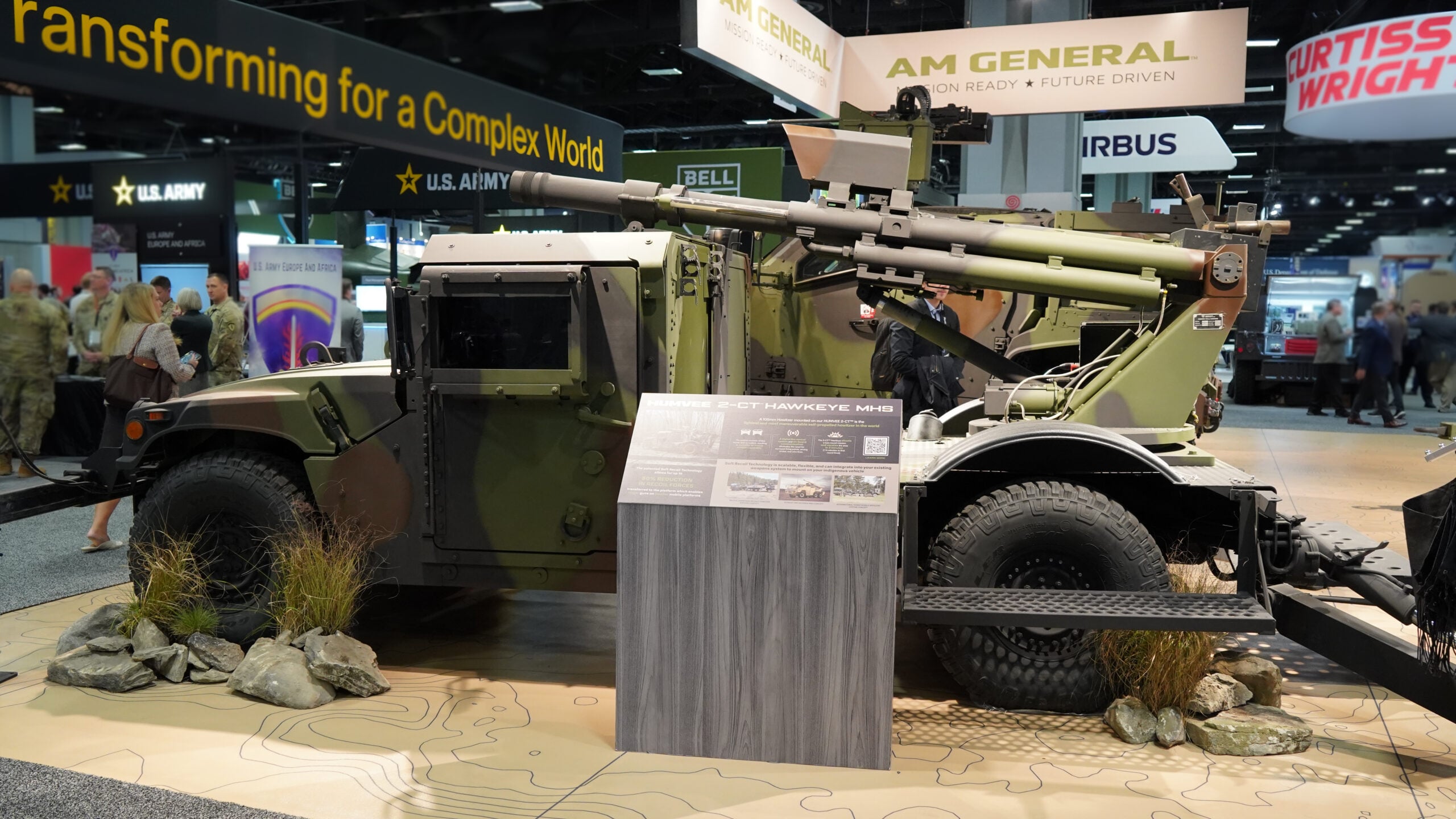
At AUSA 2024, land vehicle giant AM General rolled its HUMVEE 2-CT Hawkeye MHS, featuring a howitzer launcher on a hummer. (Brendon Smith / Breaking Defense)
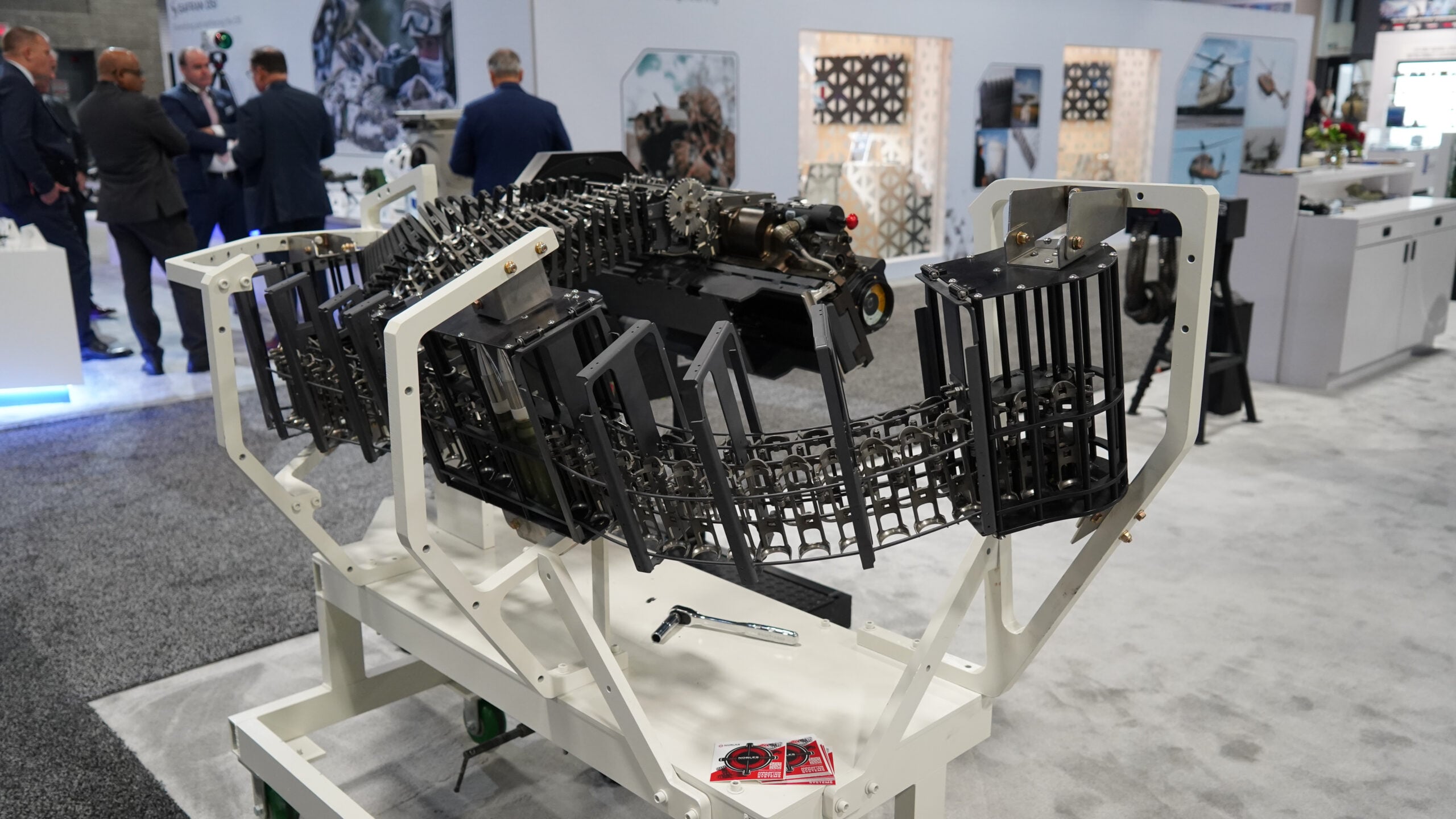
Ammo handling specialists Nobles Worldwide brought its closed loop, linkless ammunition handling system to AUSA 2024. (Brendon Smith / Breaking Defense)
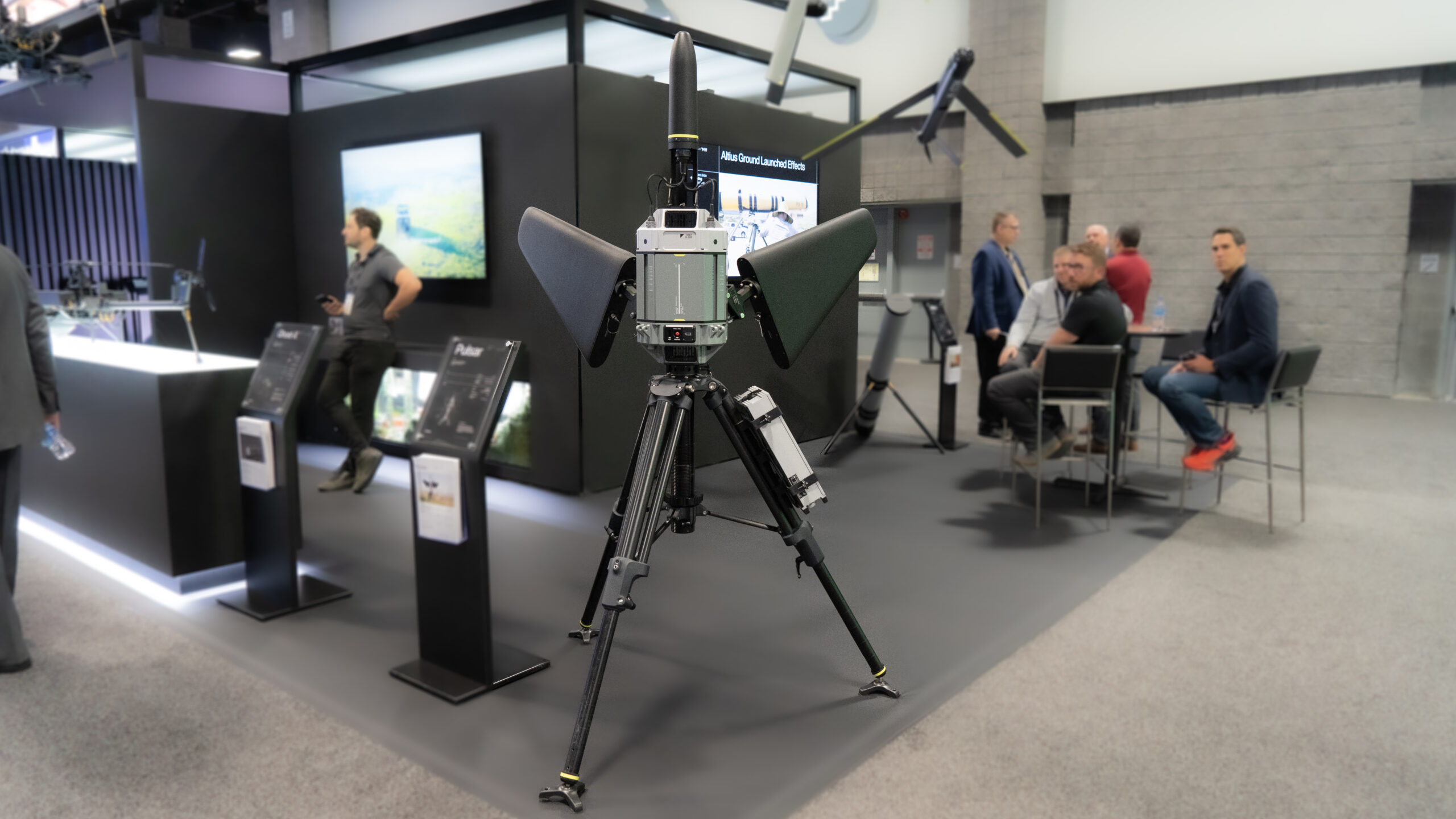
IEC Infrared Systems's Lycan counter-UAS system gazes out at attendees at AUSA 2024. (Brendon Smith / Breaking Defense)
Australian firm EOS was at AUSA 2024, here displaying its Slinger kinetic counter-drone system. (Brendon Smith / Breaking Defense)
Defense start-up Anduril makes a wide range of products and at AUSA 2024, including his platform from its "family of autonomous systems and Electromagnetic Warfare (EW) systems powered by Lattice and AI at the edge." (Brendon Smith / Breaking Defense)
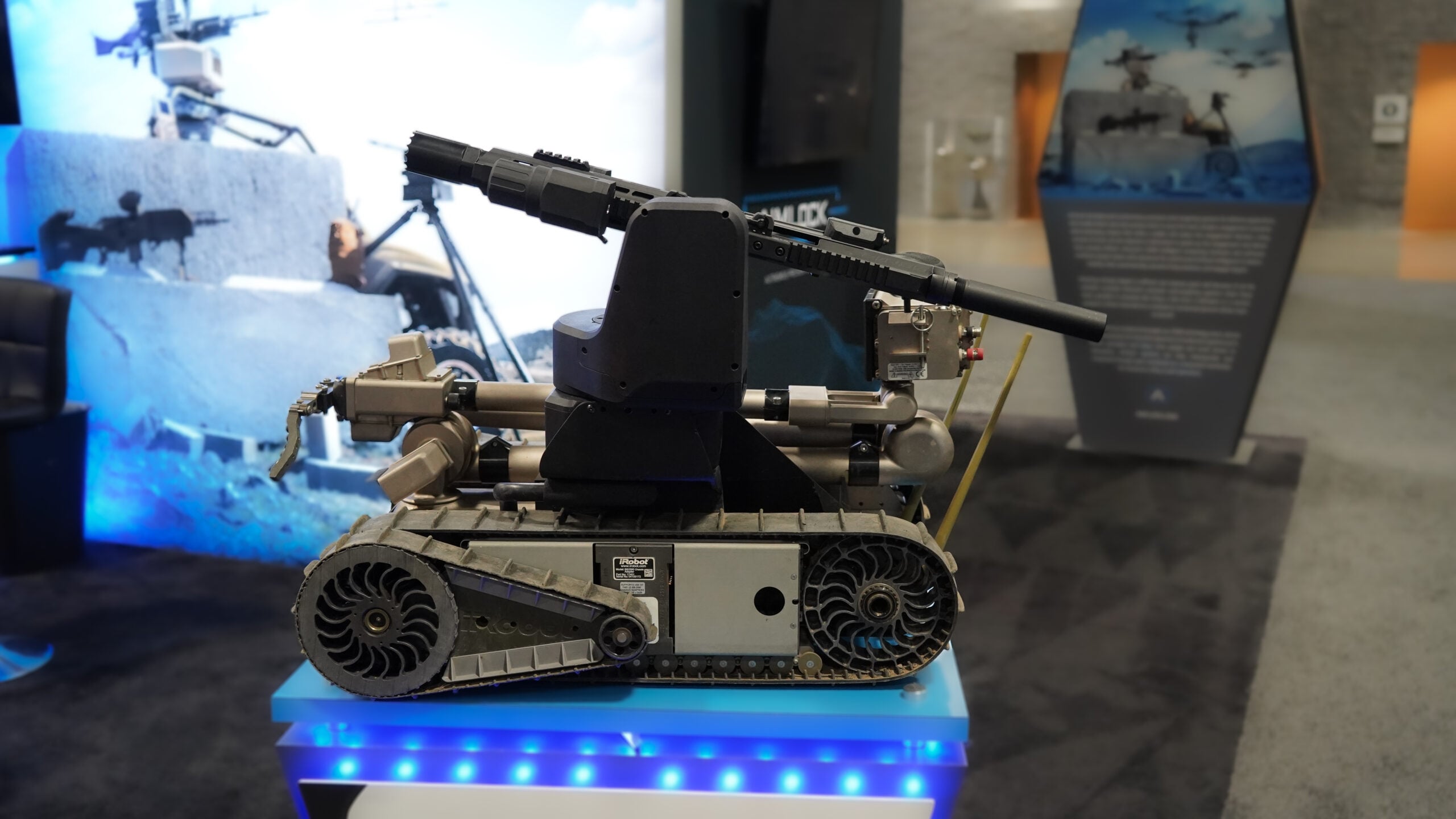
Aimlock, which develops "semi-autonomous precision auto-targeting systems" attached a 12-guage shotgun on a ground robotic vehicle at AUSA 2024. (Brendon Smith / Breaking Defense)
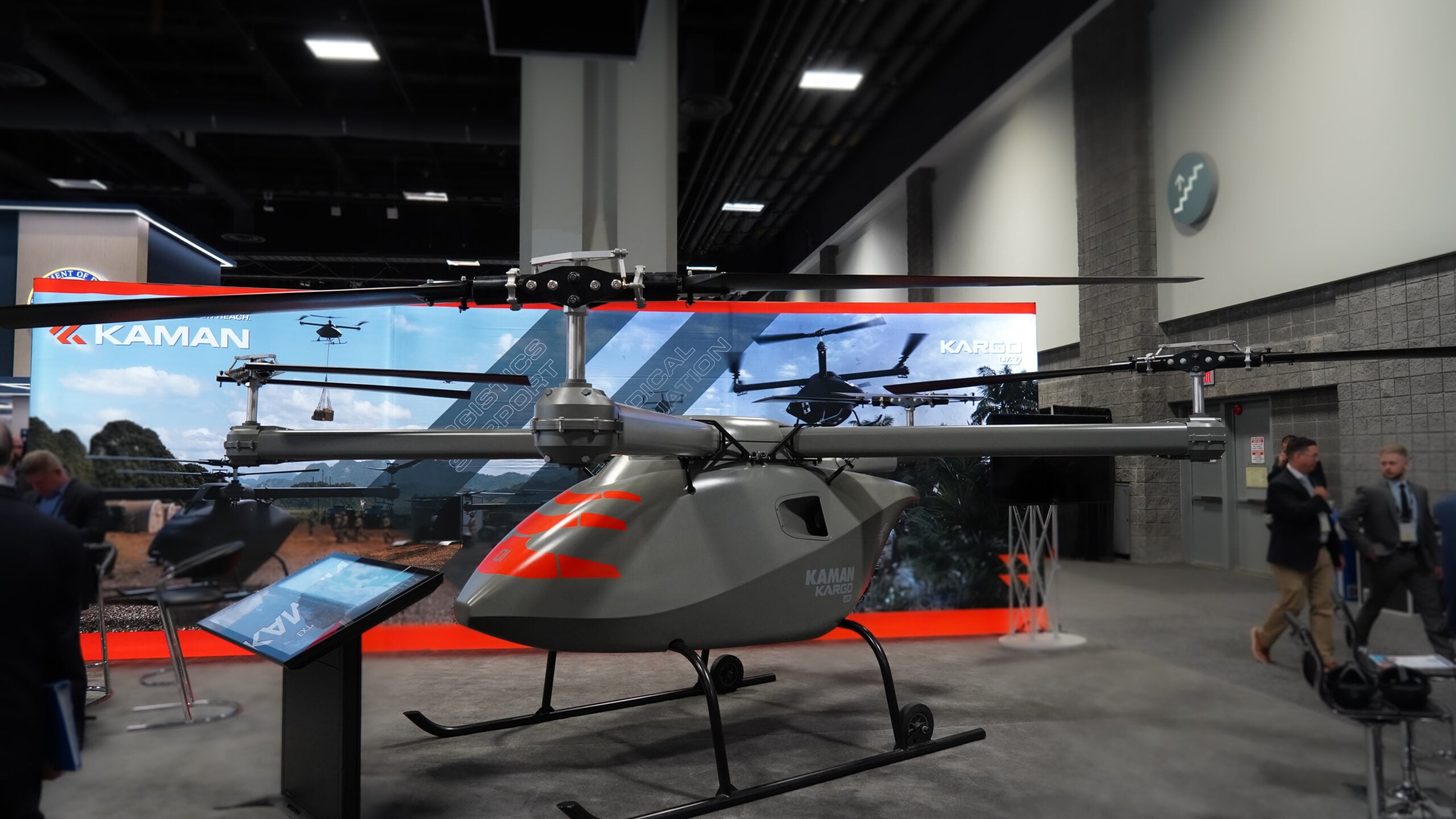
Connecticut-based Kaman Corporation offers unmanned cargo copters, as seen on the show floor at AUSA 2024. (Brendon Smith / Breaking Defense)
Defense giant Northrop Grumman shows off its Next Generation Handheld Targeting System (NGHTS), which the company says is designed to work in GPS-denied environments. (Brendon Smith / Breaking Defense)
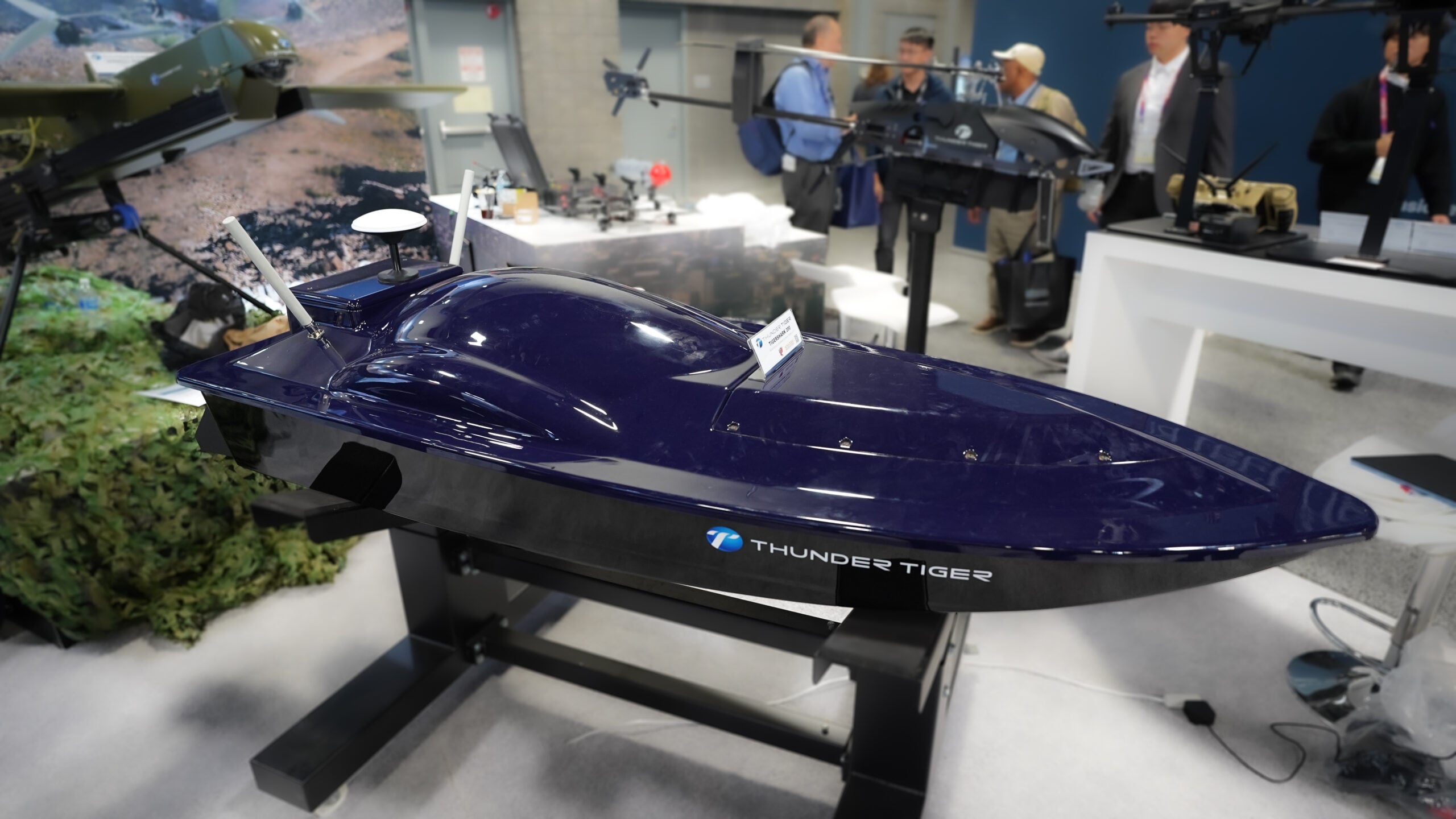
Taiwanese Thunder Tiger displayed an unmanned surface vessel, Seashark, at AUSA 2024. (Brendon Smith / Breaking Defense)
Northrop Grumman shows off its Bushmaster chain gun at AUSA 2024. The company launched a new Bushmaster M230LF (Link Fed) dual-feed chain gun, designed to neutralize UAS and ground threats, with the manufacturer targeting export customers for future orders. (Brendon Smith/Breaking Defense)
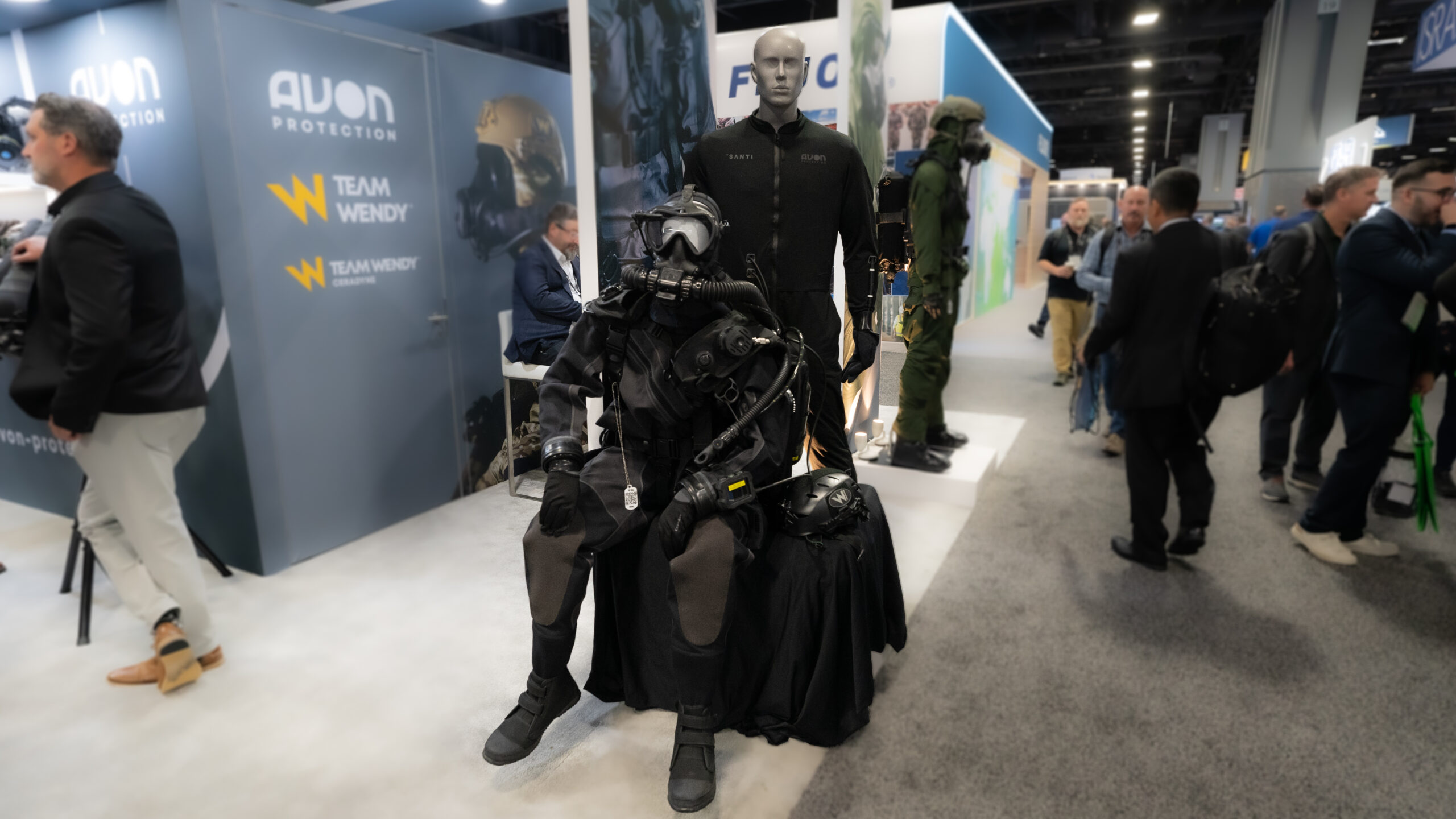
It's less ominous than it looks: Avon Protection's Core Intelligent undersuit and MCM100 Multi-Role Military Diving Rebreather are marketed on the show floor to help military divers keep warm under the water. (Brendon Smith/Breaking Defense)
Edge Autonomy shows off its E140Z camera, part of its Octopus surveillance suite. (Brendon Smith/Breaking Defense)
Flyer Defense shows off its Flyer 72 vehicle at AUSA 2024. Selected by SOCOM, the company says it is capable of internal transport in the CH-47 and C-130 aircraft. (Brendon Smith/Breaking Defense)
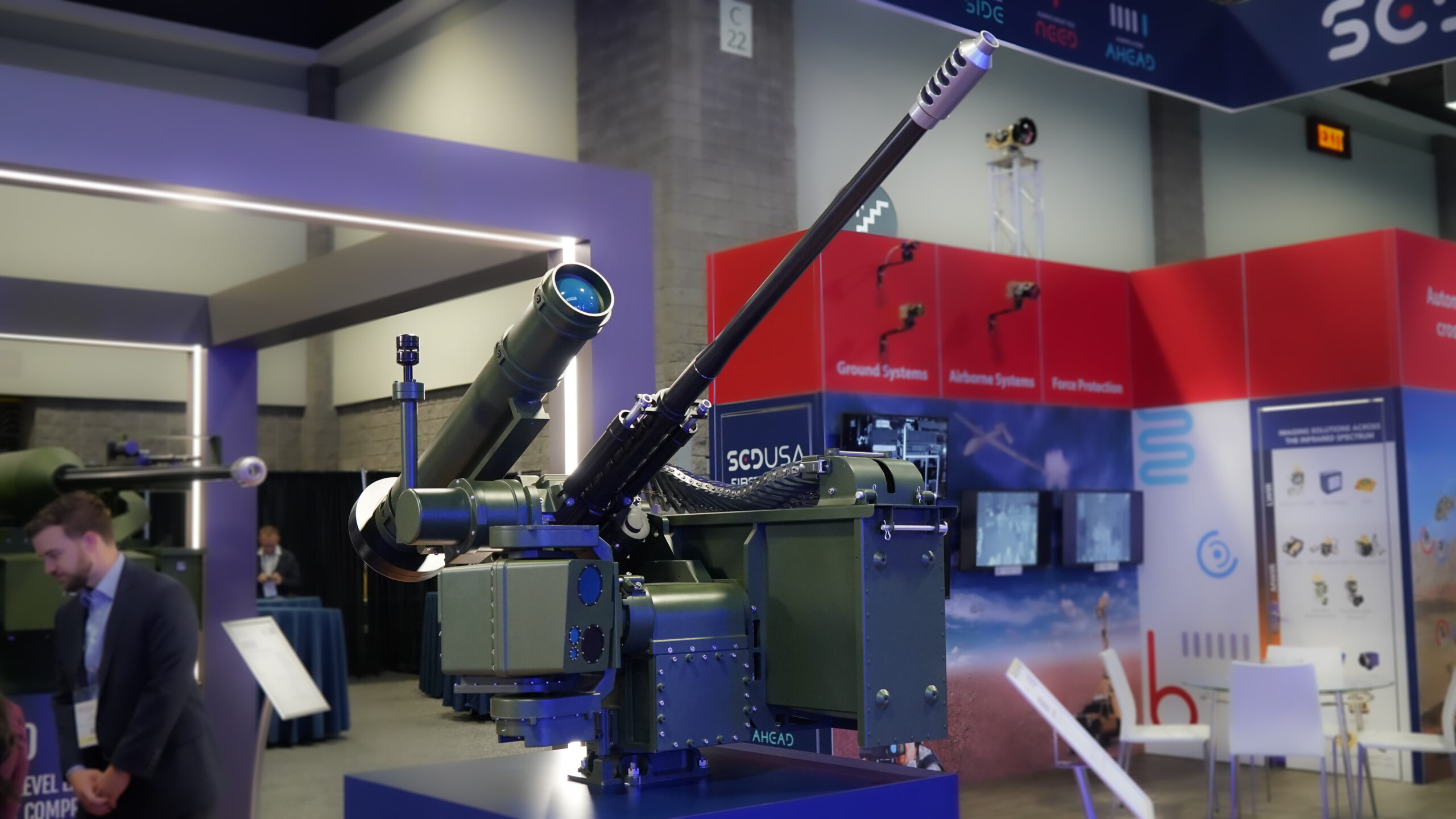
The Kongsberg Protector RS6 is a Remote Weapon System for low-recoil 30mm cannons. The company says it will be able to equip other weapons in the future. (Brendon Smith/Breaking Defense)
Bell helicopters showed off a number of items on the show floor. (Brendon Smith/Breaking Defense)
One of BAE's two AMPV varients on the show floor at AUSA 2024, this one sports the company's Modular Turreted Mortar System. (Brendon Smith / Breaking Defense)
Oshkosh Defense displays its Remotely Operated Ground Unit for Expeditionary Fires (ROUGE-Fires) on the floor at AUSA 2024. (Brendon Smith / Breaking Defense)
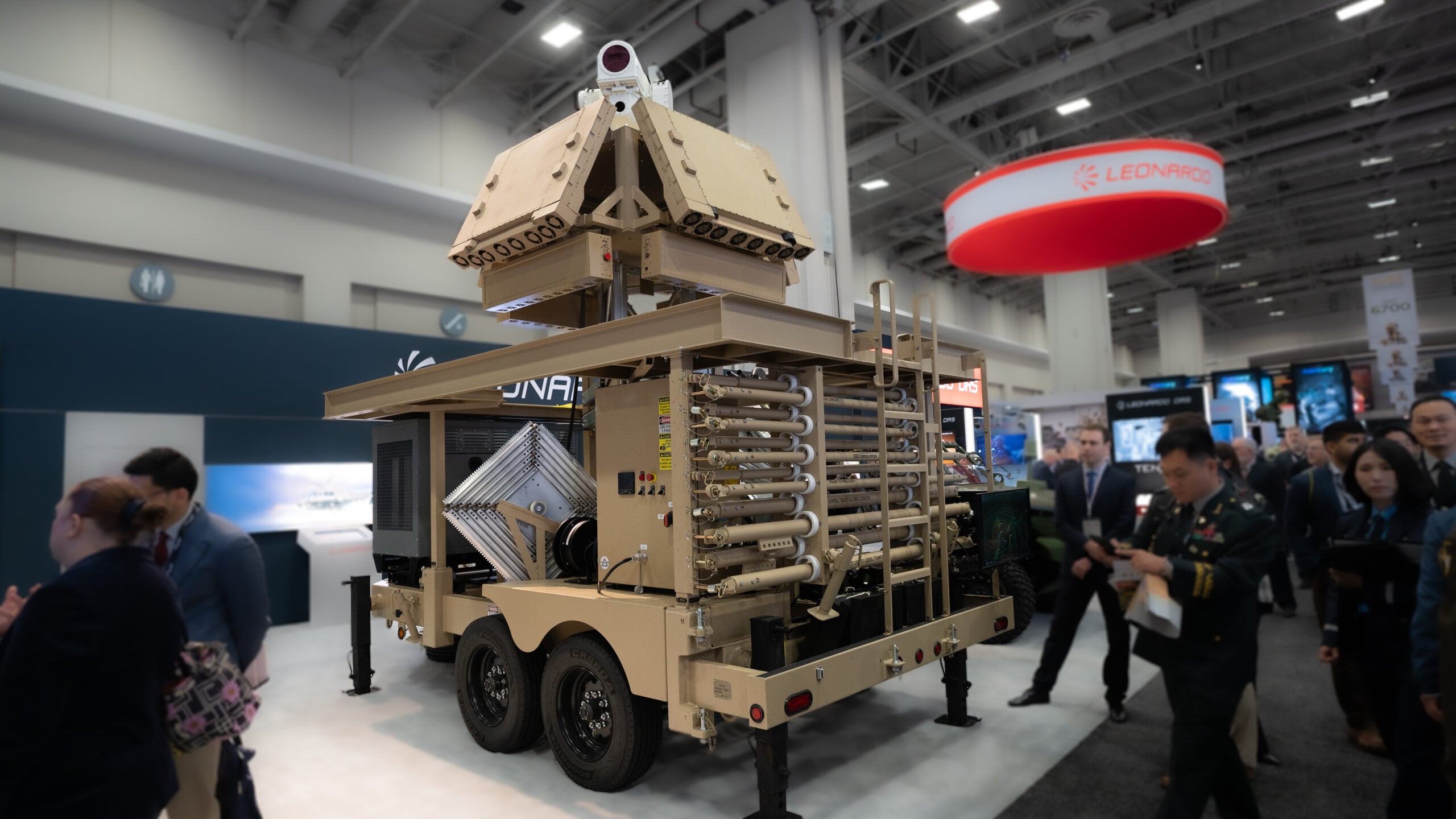
A Leondardo extended mast surveillance system ready to roll into position at AUSA 2024. (Breaking Defense)
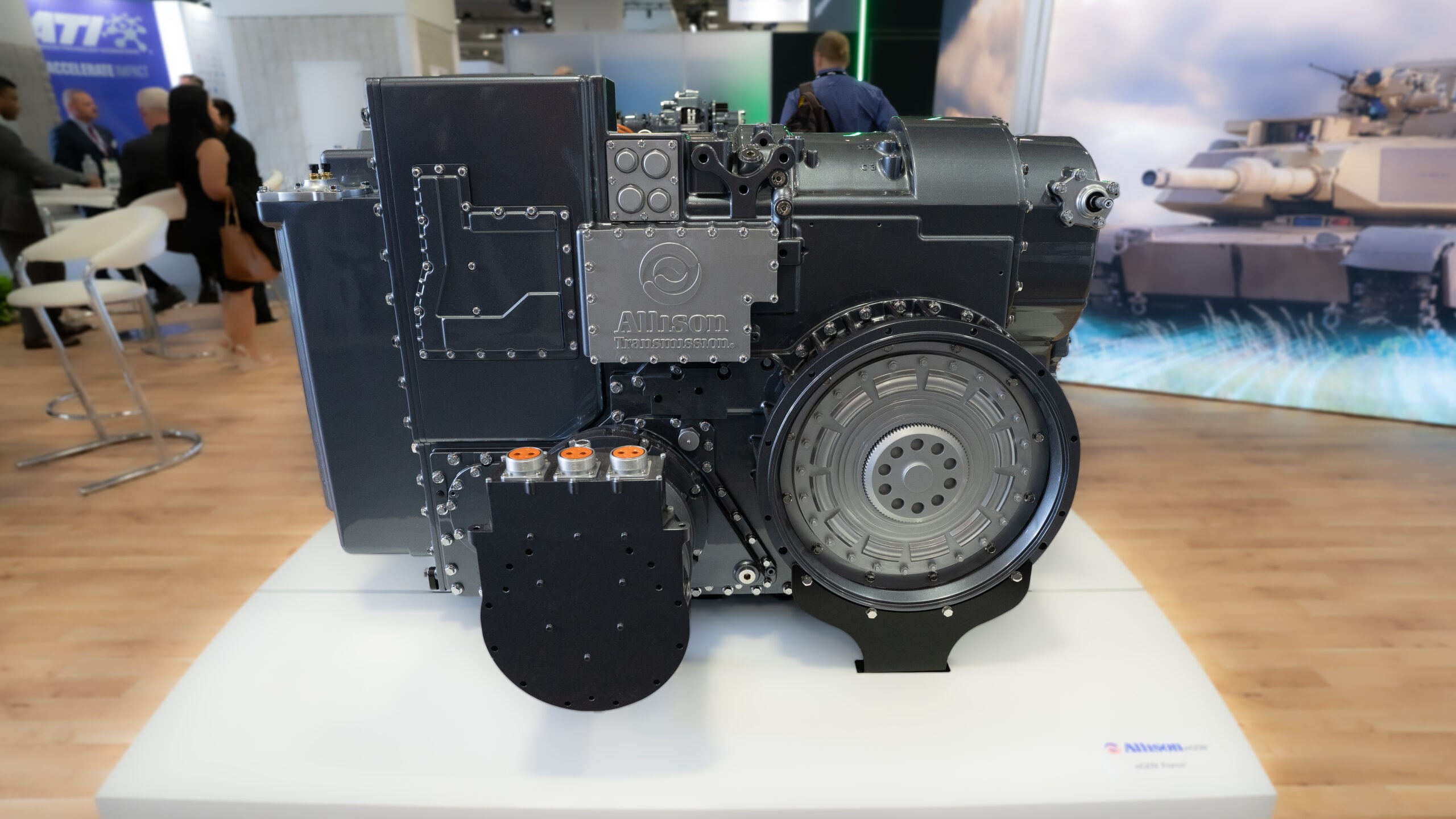
Allison Transmission eGen Power motor on display at AUSA 2024. (Brendon Smith / Breaking Defense)
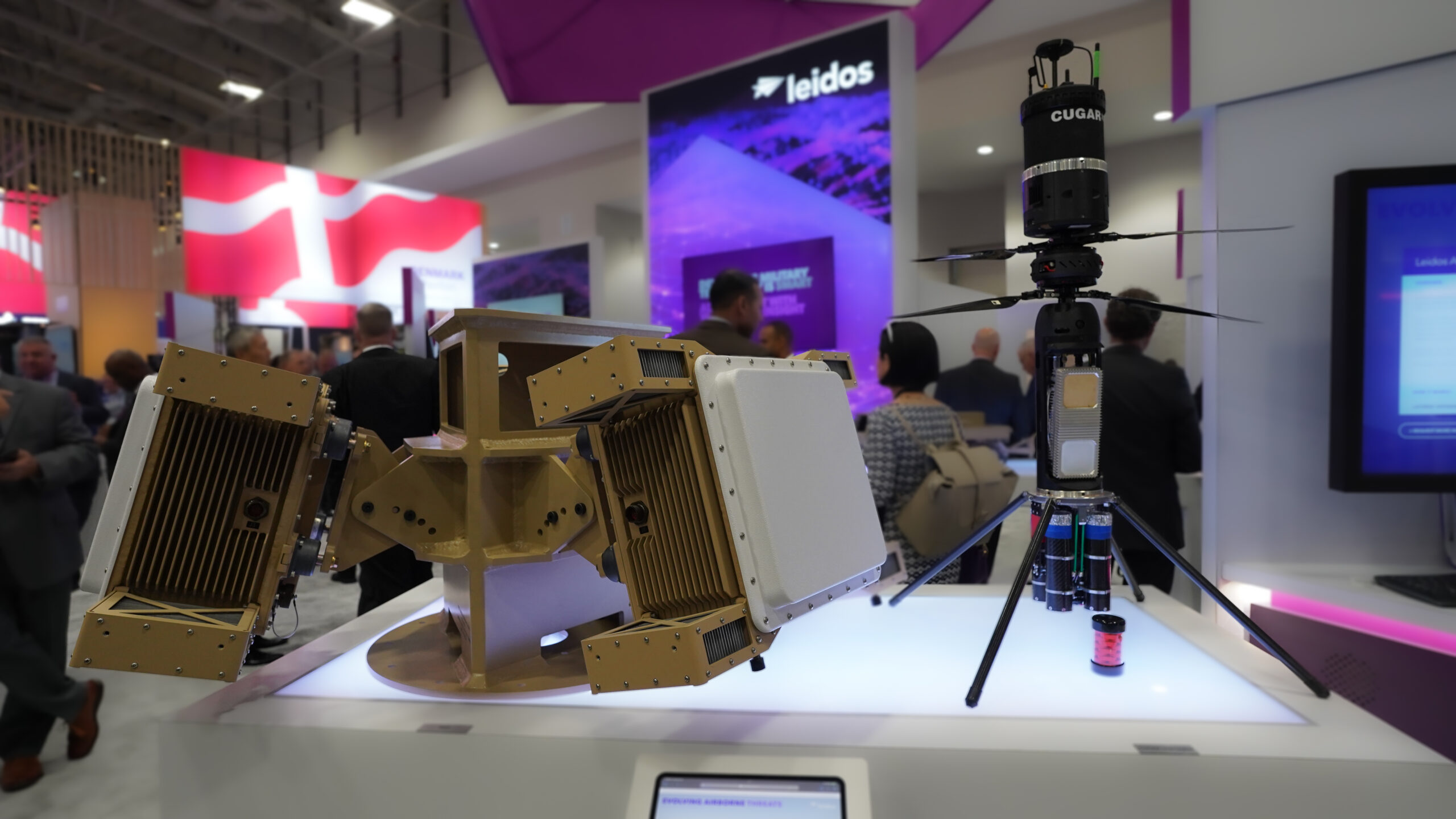
Leidos's Airshield counter-UAS system sits at the company's booth at AUSA 2024. (Brendon Smith / Breaking Defense)
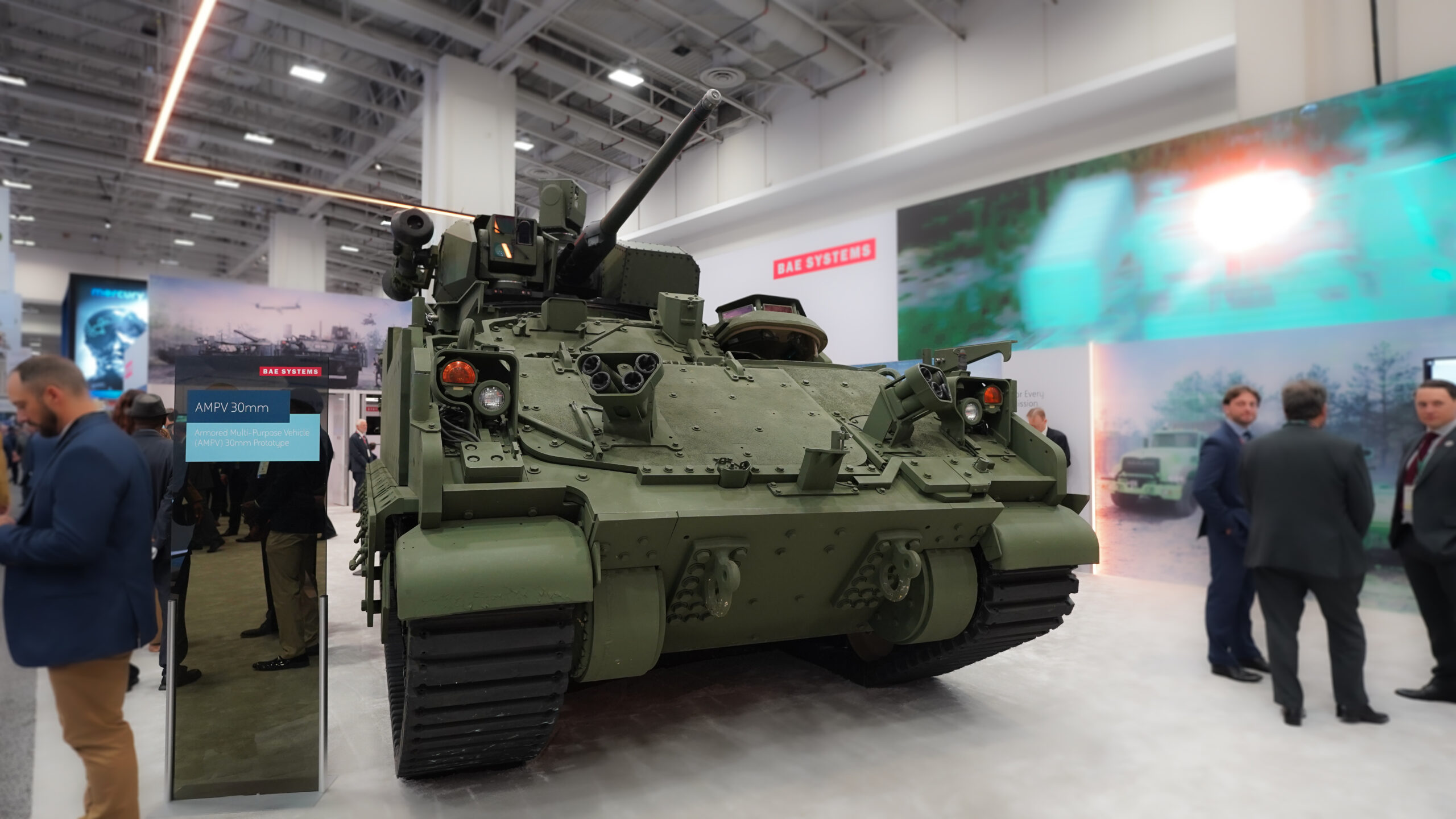
BAE's Armored Multi-Purpose Vehicle (AMPV) with a 30mm gun on display at AUSA 2024. (Brendon Smith / Breaking Defense)
A heavily armed next-gen tactical vehicle on display from GM Defense at AUSA 2024. (Brendon Smith / Breaking Defense)
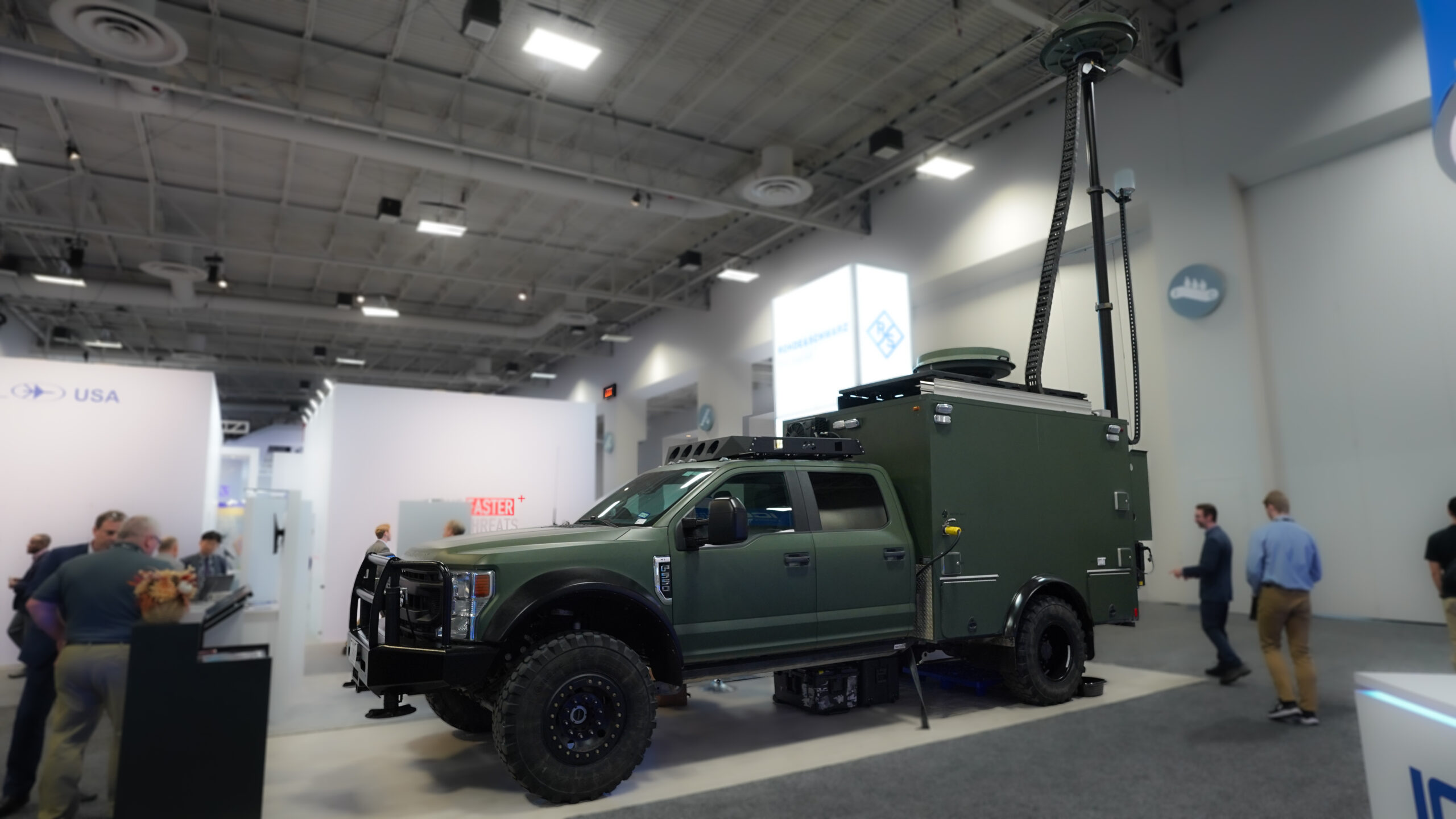
At AUSA 2024, Rohde & Schwarz displays a mobile signals system known as SigBadger. (Brendon Smith / Breaking Defense)