
Small-form-factor EW scales from exquisite strike weapons to affordable mass drones
Open architectures promise to break vendor lock and speed electronic warfare for UAS, missiles, and loitering munitions.

Open architectures promise to break vendor lock and speed electronic warfare for UAS, missiles, and loitering munitions.

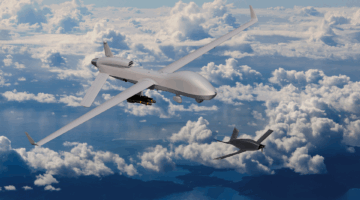
In an age defined by rapid technological evolution and operational complexity, GA-ASI’s Modernized Gray Eagle® ER and Gray Eagle® STOL remain the gold standard.

Knowing when to build on commercial systems and when to develop something new can be the difference between parity and information dominance.

The small company’s Legion software is also being integrated with Northrop Grumman’s AiON counter-drone system.

Northrop’s new Prism software will not only fly the aircraft but also allow partner companies to plug-and-play all sorts of software modules for different missions and special equipment, Northrop Grumman's Dan Salluce told reporters.


Effective collaboration with partners requires open architectures for rapid configuration of missions and platforms.
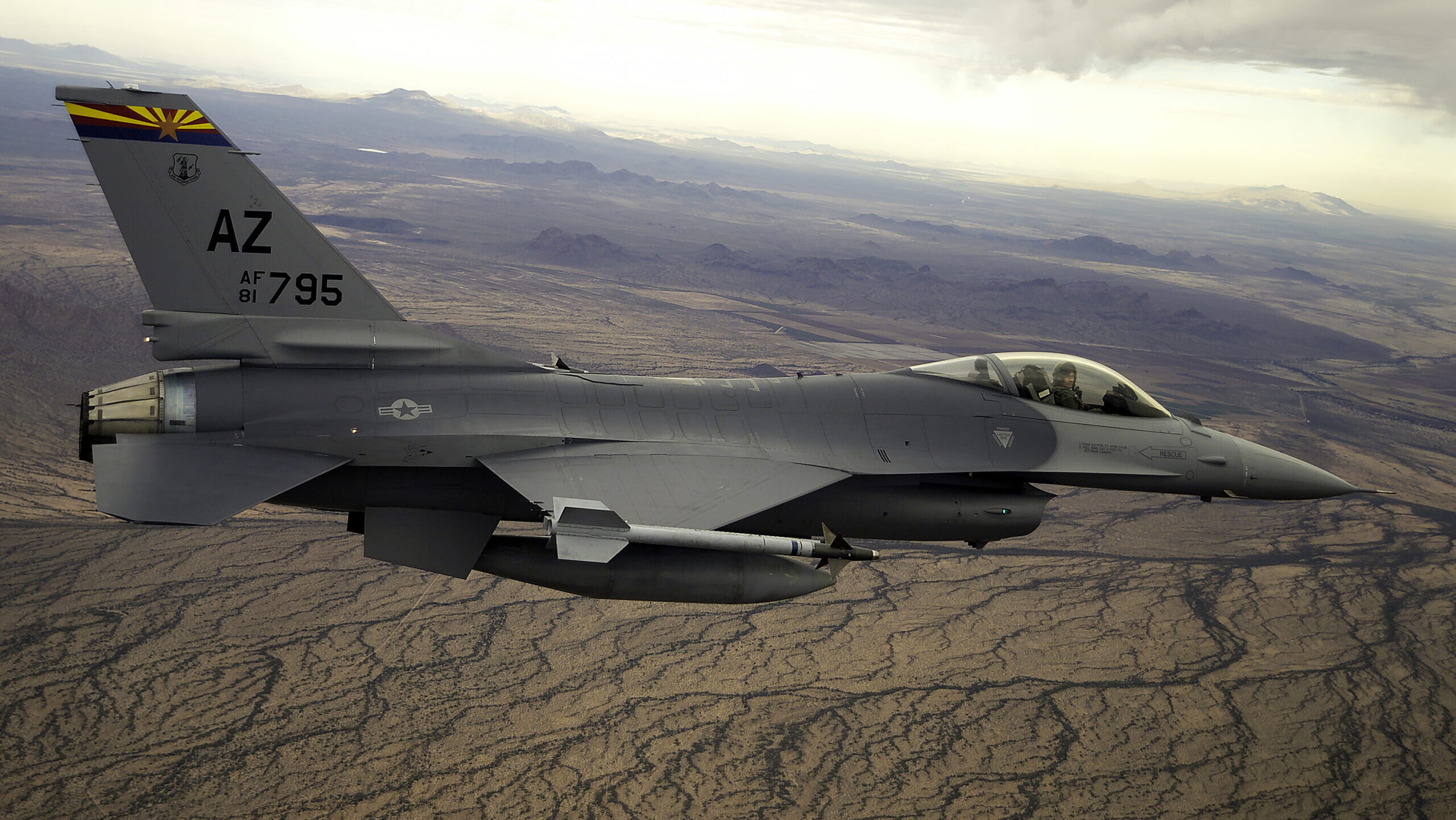
The upgrade allows existing radar warning receivers to analyze unfamiliar signals in real time — fast enough to warn the pilot if it’s an enemy radar locking on. “It could go on any kind of F-16” or a wide range of other aircraft, Raytheon Vice President Michael Baladjanian told Breaking Defense.


Reducing cognitive overload on warfighters while improving “time to trust” for autonomous systems is a matter of design.

“It’s like the Wild, Wild West when it comes to AI right now,” Linchpin product lead Bharat Patel told Breaking Defense. “We don’t want to be the government and be like, ‘Here’re our standards, you must comply.’”

As her signature “Open DAGIR” initiative seeks to bring in smaller, innovative software firms, “we’ve got to be a lot more explicit” in contracting language to protect their intellectual property and data rights, said Chief Digital & AI Officer Radha Plumb.

“I describe PWSA, the Proliferated Warfighter Space Architecture, as the Android model,” said Space Development Agency director Derek Tournear. “If we get vendor lock, if only one works, or if they can't talk to each other, that falls apart pretty quickly.”

Just announced on Thursday but already quietly combat-tested in Ukraine, the palm-sized Skynode S card makes small drones much less dependent on an uninterrupted wireless link to a human remote controller.

The military space sector is evolving fast. Get the latest from Space Force and industry officials on what’s next for acquisition, policy and training in a new Breaking Defense eBook.
The recent announcements on Palantir’s Maven Smart System and other strategic tools are just the start, CDAO Radha Plumb told Breaking Defense, with announcements on tactical and business systems coming by fall.

The Chief Digital & AI Office wants to bring in a wide range of software developers to rapidly create new applications for Combatant Commands worldwide, with the new apps plugging into Palantir’s open-architecture Maven Smart System.

Evolved from JAIC’s controversial Project Maven, Palantir’s Maven Smart System pulls together data from satellites, social media and other disparate sources for military commanders and planners.

The test will see how well "Freedom Radio" works with third-party communications, as integration is seen as critical for JADC2.