Networks & Digital Warfare

Army PEO C3T changes name to PEO C3N, as unified network plans advance

The name change comes nearly a year after the office underwent a revamp in which it absorbed several organizations from the Program Executive Office of Enterprise Information Systems.

7733634
Mr. Michael C. Monteleone III, Director, Assured Positioning, Navigation and Timing/Space Cross-Functional Team, Army Futures Command, MG Jeth B. Rey, Director, Network Cross-Functional Team, Army Futures Command and Mr. Mark C. Kitz, Program Executive Officer, Intelligence, Electronic Warfare and Sensors, US Army, discuss how the Army of 2030 will fight in a GPS denied and degraded environment at AUSA Global Force Symposium & Exposition 2023 on May 28, 2023 in Huntsville, Alabama. (US Army Photo by Patrick Hunter)

WASHINGTON — The Army’s Program Executive Office for Command, Control and Communications- Tactical (PEO C3T), the office responsible for developing and supporting the Army’s network, is officially rebranding to better reflect its mission set.

Goodbye, PEO C3T, and hello PEO C3N: Command, Control and Communications – Network. 

“This is deeper than just a simple rebranding. This event signifies and recognizes the changing environment and how we must evolve, and the importance of our network and command and control capabilities.” Lt. Gen. Rob Collins, principal military deputy to the Assistant Secretary of the Army, Army Acquisition Corps and former PEO for C3N, said in a press release. 

The change comes nearly a year after the office underwent a revamp in which it absorbed several organizations from the PEO Enterprise Information Systems (PEO EIS), combining a number of the Army’s enterprise and tactical network capabilities under one roof. 

“Last year, the Army decided to merge the enterprise and tactical network efforts under a single portfolio, resulting in a streamlined effort to develop the unified network as part of the Army’s network modernization strategy,” a PEO C3N spokesperson told Breaking Defense in an email ahead of today’s announcement. 

Hence, today’s decision to drop the “tactical” portion of the name serves as a signifier of its mission to create a single network.

“Recent real-world operations in the Middle East continue to validate the need for a unified network,” the press release said.

“Events are changing at the velocity of which we have never seen before,” Collins said in the press release. “We have to be agile, mobile and lethal. We still have to be able to shoot, move, communicate, but now you have the land, sea, air and cyberspace domains that have to be interconnected and transparent to the  warfighters.”

The Army’s unified network, which was announced nearly three years ago, is the service’s goal of breaking down the dozens of siloed legacy networks, mostly separated by tactical and enterprise portions, to create a more cohesive singular network. 

“We can’t afford separate and disparate tools for a tactical and enterprise network if there’s opportunities for us to streamline and deliver the same purpose, right?” Mark Kitz, program executive officer of C3N, told Breaking Defense in a recent interview. 

“I feel like it’s something we have to do. We have to build a more secure, integrated network,” he later added. 

When the Army first announced this initiative three years ago, the service had 69 networks, with the goal of getting down to one by 2027. Last month Lt. Gen. John Morrison told an audience at a Defense News conference that the Army is down to nine networks.

However, PEO C3N noted in the release that creating the unified network will never be “finished” due to the ongoing advancements in technology and the “shifting nature” of military conflicts.

PHOTOS: AUSA 2024

PHOTOS: AUSA 2024

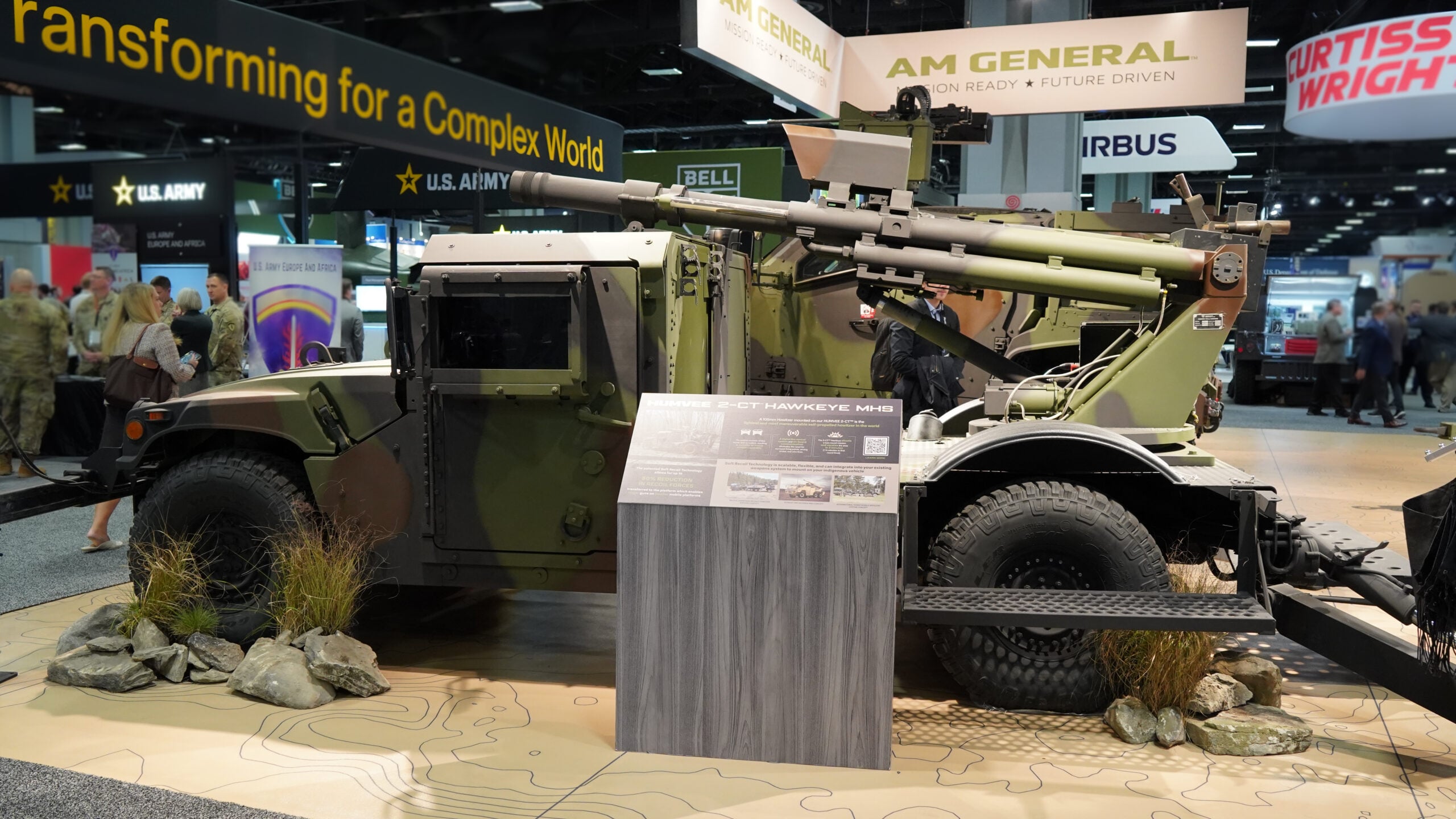
At AUSA 2024, land vehicle giant AM General rolled its HUMVEE 2-CT Hawkeye MHS, featuring a howitzer launcher on a hummer. (Brendon Smith / Breaking Defense)
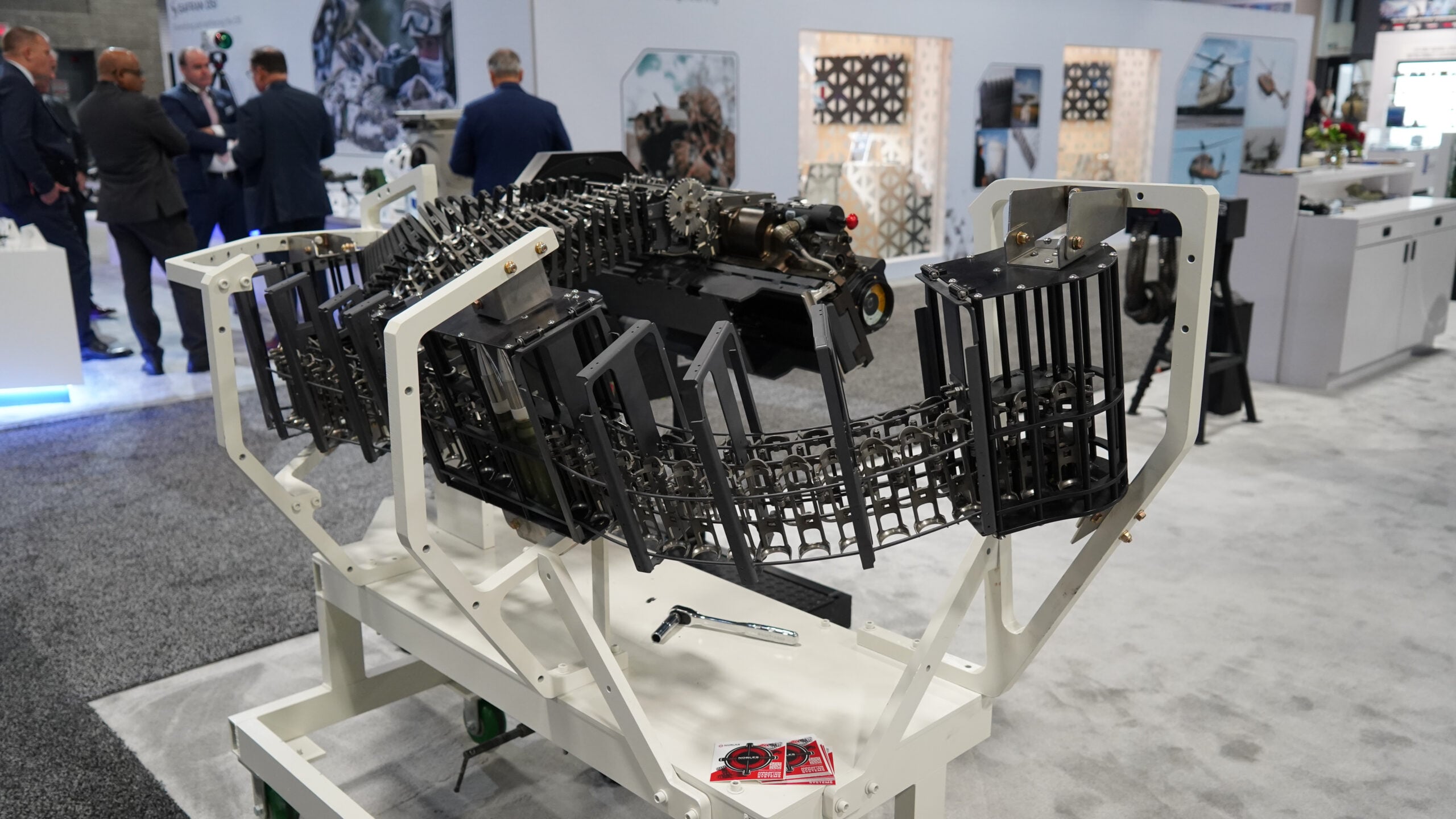
Ammo handling specialists Nobles Worldwide brought its closed loop, linkless ammunition handling system to AUSA 2024. (Brendon Smith / Breaking Defense)
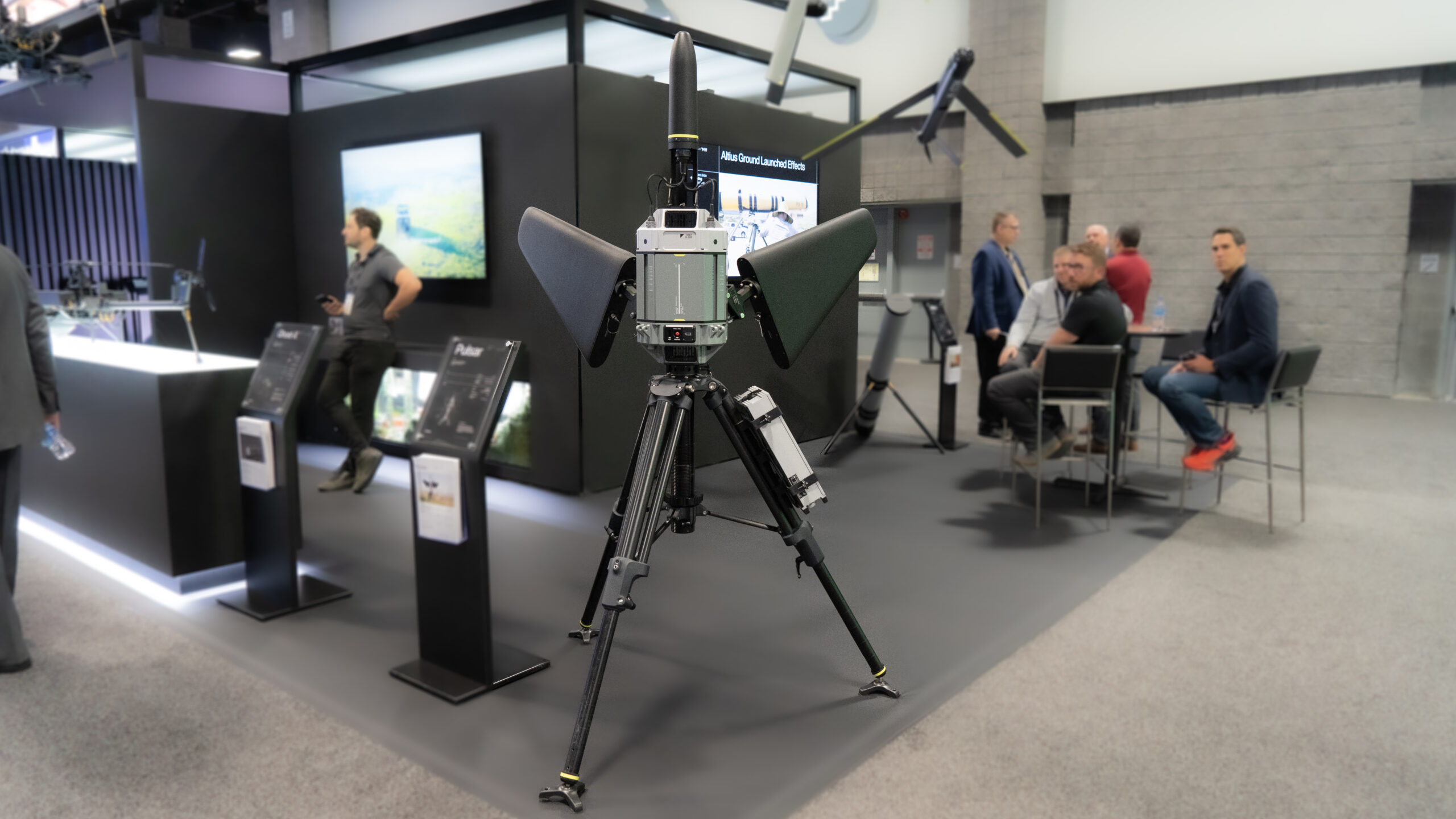
IEC Infrared Systems's Lycan counter-UAS system gazes out at attendees at AUSA 2024. (Brendon Smith / Breaking Defense)
Australian firm EOS was at AUSA 2024, here displaying its Slinger kinetic counter-drone system. (Brendon Smith / Breaking Defense)
Defense start-up Anduril makes a wide range of products and at AUSA 2024, including his platform from its "family of autonomous systems and Electromagnetic Warfare (EW) systems powered by Lattice and AI at the edge." (Brendon Smith / Breaking Defense)
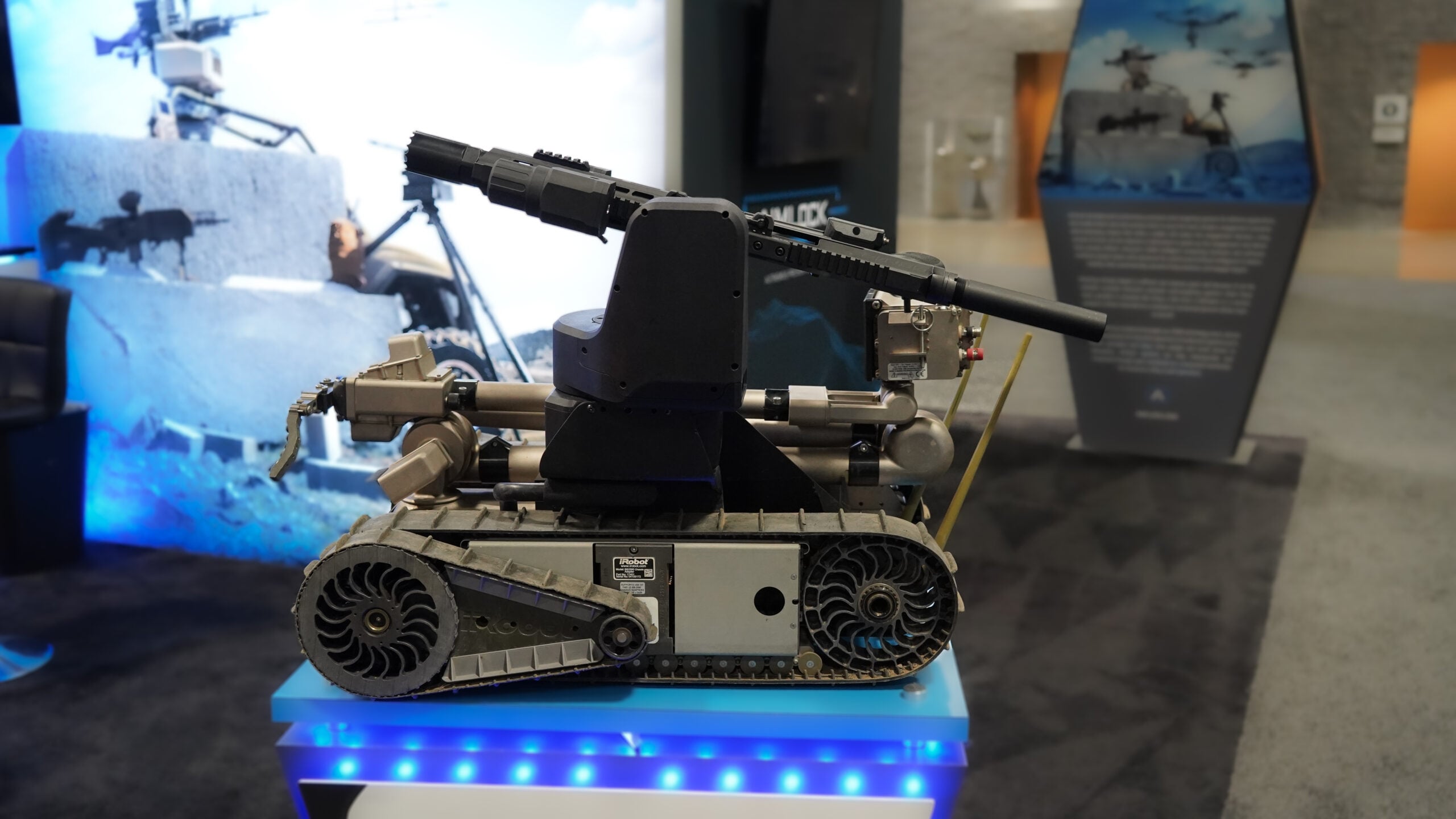
Aimlock, which develops "semi-autonomous precision auto-targeting systems" attached a 12-guage shotgun on a ground robotic vehicle at AUSA 2024. (Brendon Smith / Breaking Defense)
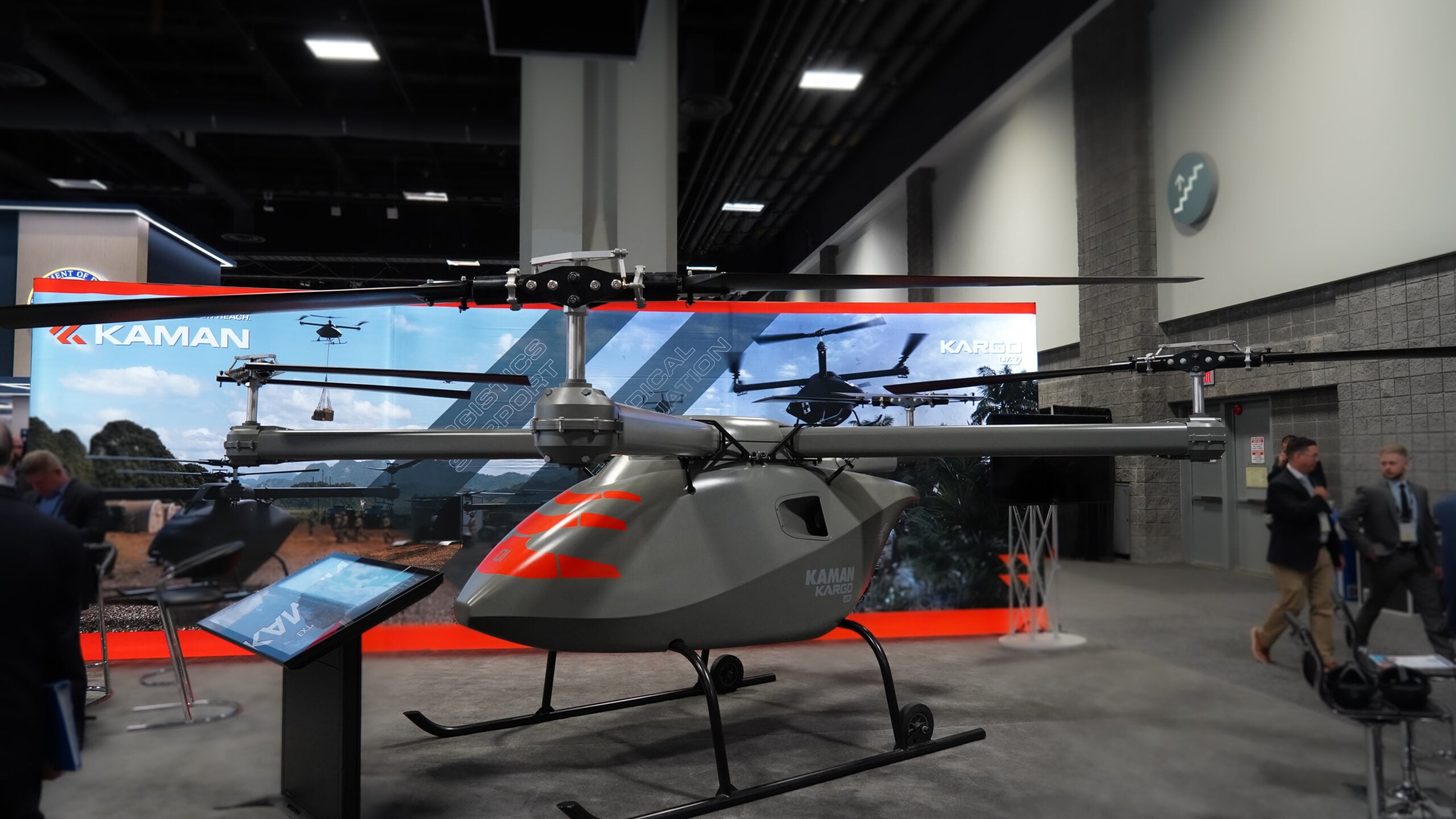
Connecticut-based Kaman Corporation offers unmanned cargo copters, as seen on the show floor at AUSA 2024. (Brendon Smith / Breaking Defense)
Defense giant Northrop Grumman shows off its Next Generation Handheld Targeting System (NGHTS), which the company says is designed to work in GPS-denied environments. (Brendon Smith / Breaking Defense)
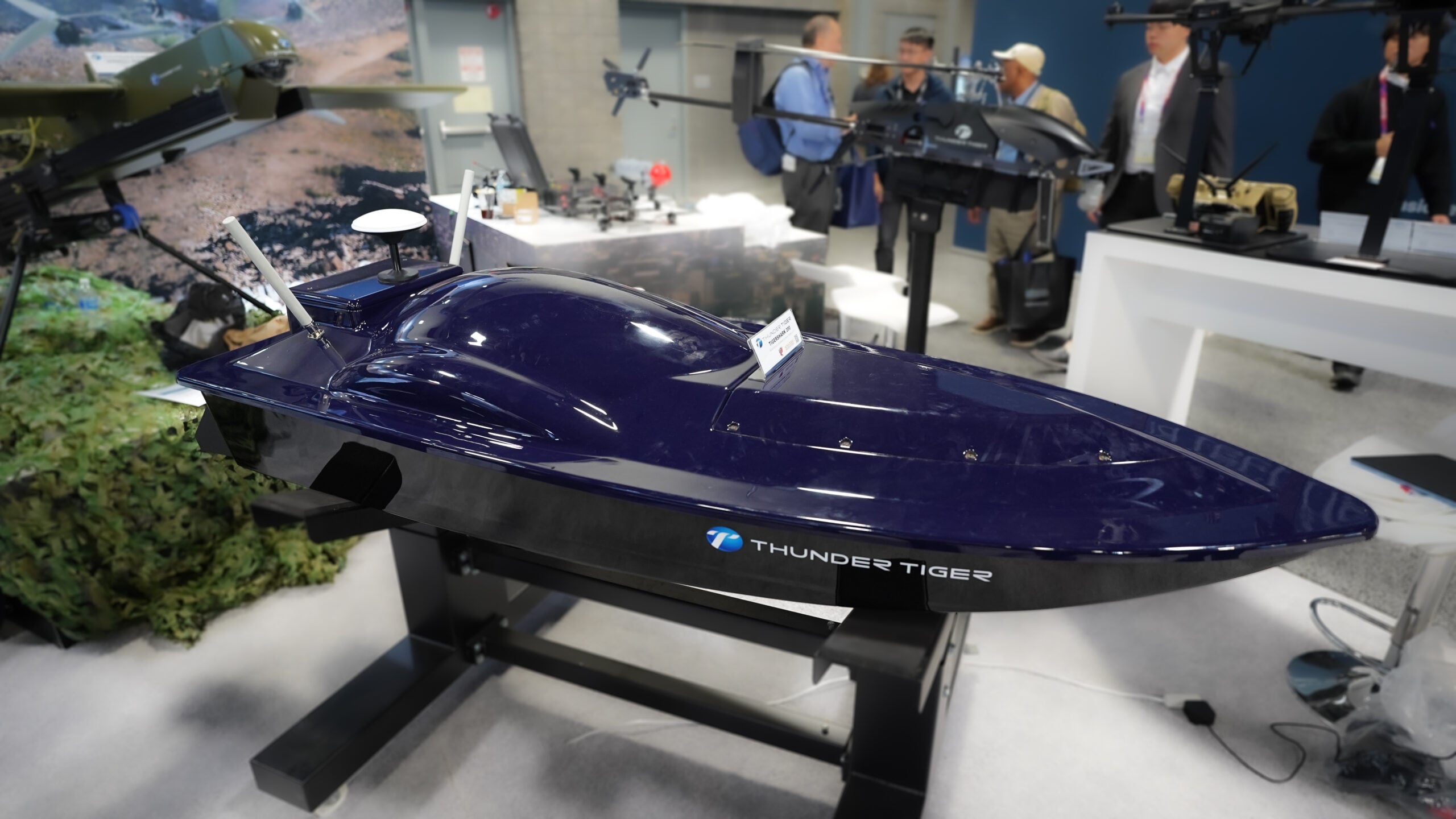
Taiwanese Thunder Tiger displayed an unmanned surface vessel, Seashark, at AUSA 2024. (Brendon Smith / Breaking Defense)
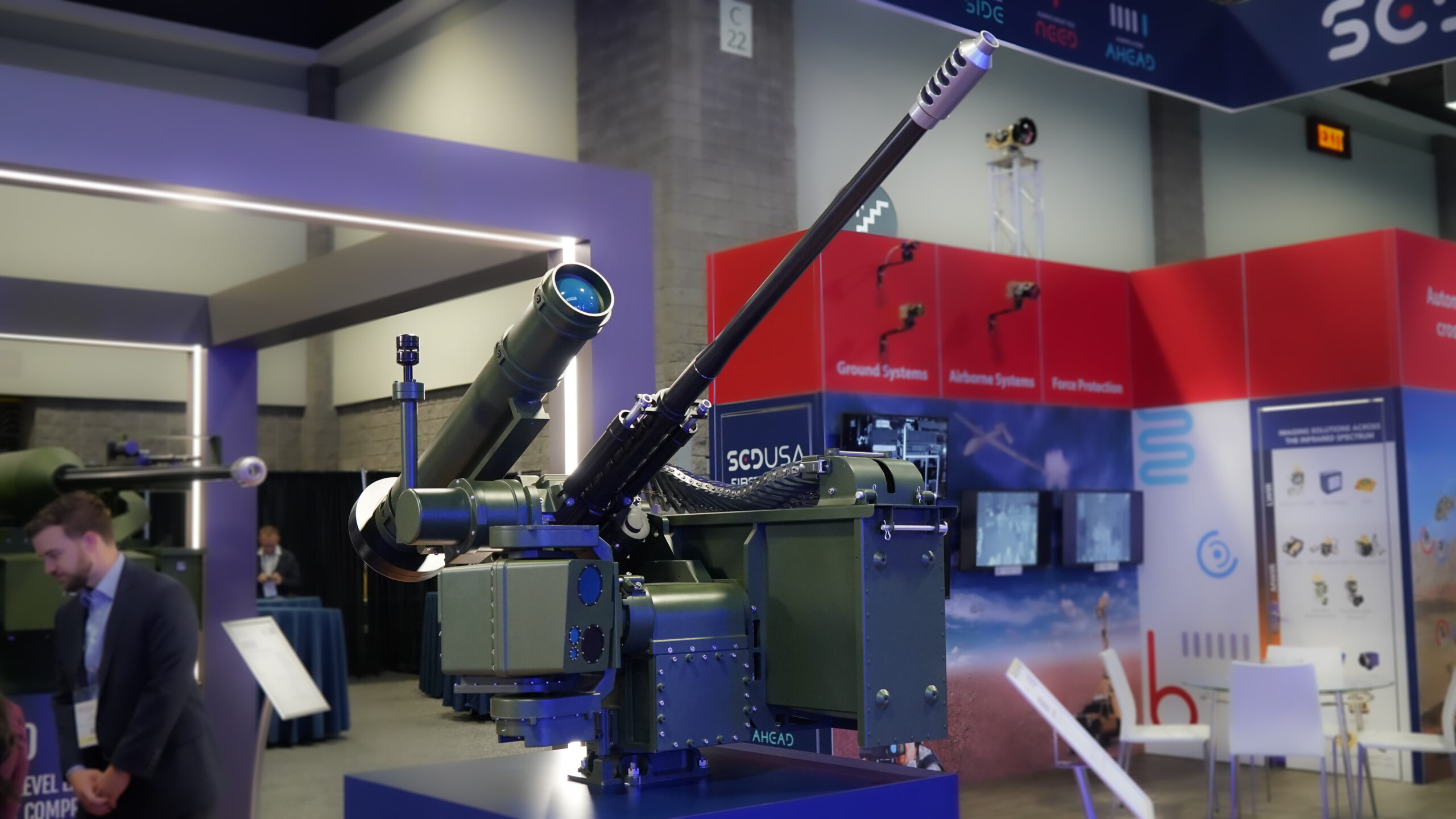
Northrop Grumman shows off its Bushmaster chain gun at AUSA 2024. The company launched a new Bushmaster M230LF (Link Fed) dual-feed chain gun, designed to neutralize UAS and ground threats, with the manufacturer targeting export customers for future orders. (Brendon Smith/Breaking Defense)
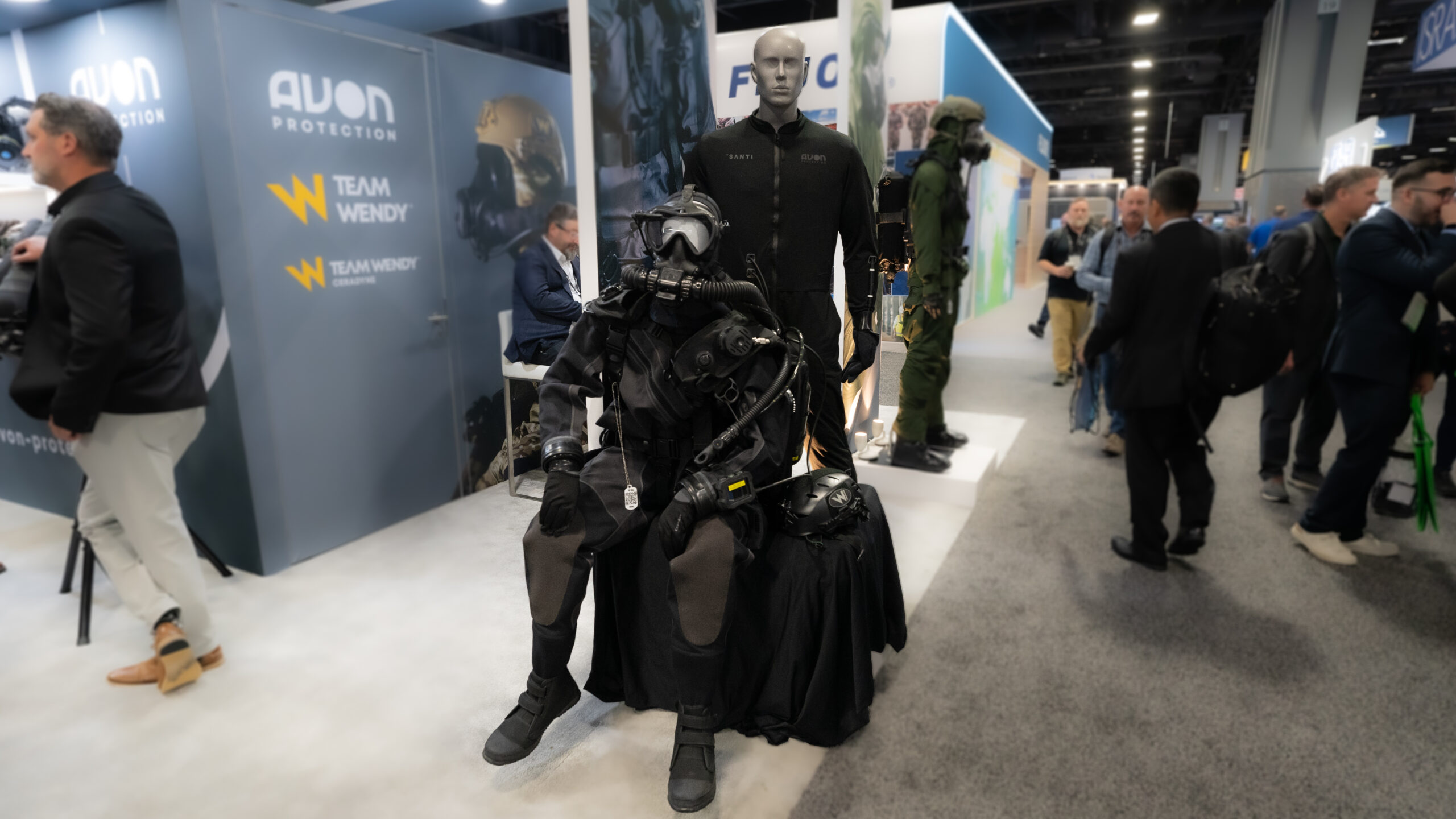
It's less ominous than it looks: Avon Protection's Core Intelligent undersuit and MCM100 Multi-Role Military Diving Rebreather are marketed on the show floor to help military divers keep warm under the water. (Brendon Smith/Breaking Defense)
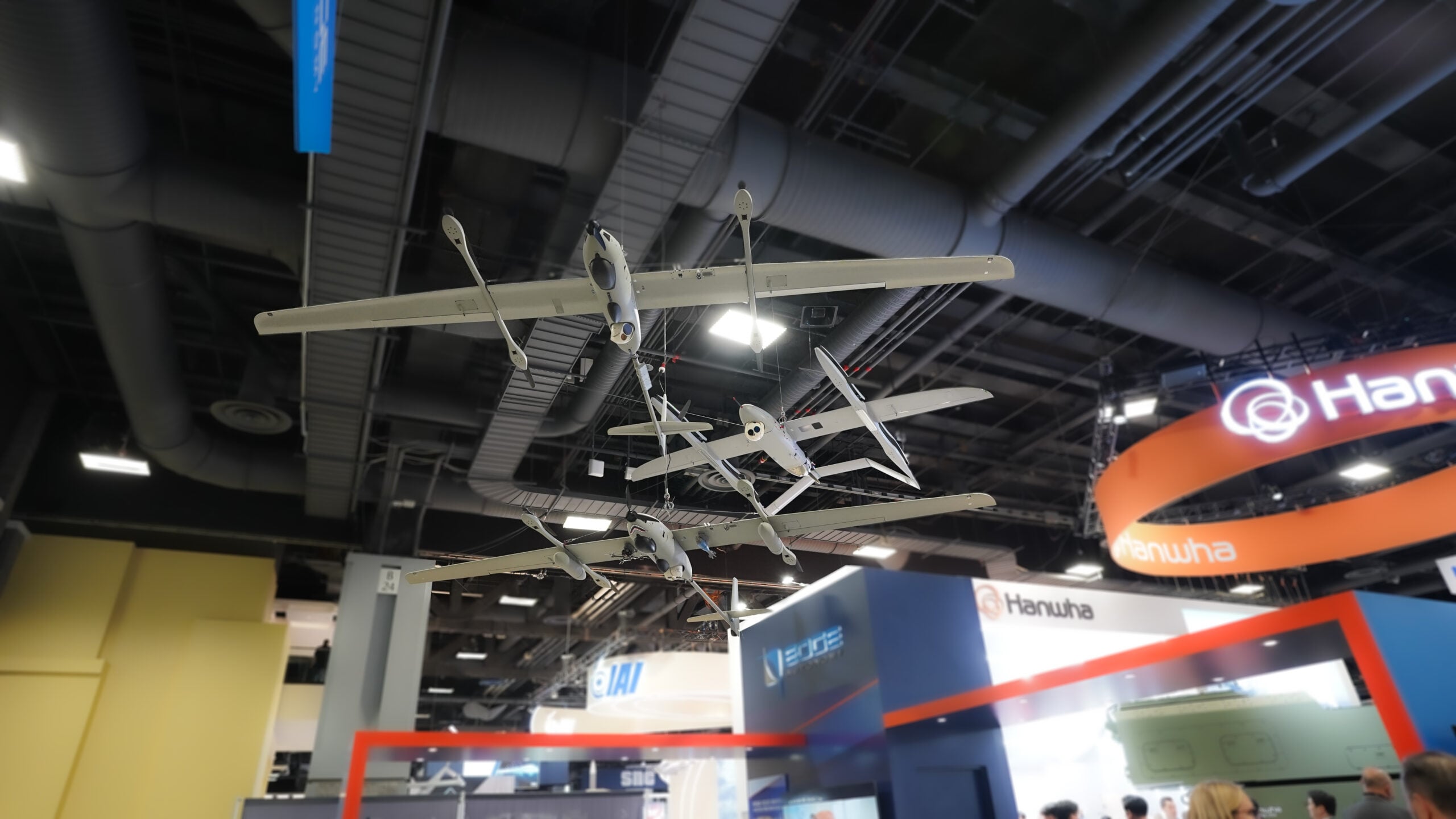
Edge Autonomy shows off its E140Z camera, part of its Octopus surveillance suite. (Brendon Smith/Breaking Defense)
Flyer Defense shows off its Flyer 72 vehicle at AUSA 2024. Selected by SOCOM, the company says it is capable of internal transport in the CH-47 and C-130 aircraft. (Brendon Smith/Breaking Defense)
The Kongsberg Protector RS6 is a Remote Weapon System for low-recoil 30mm cannons. The company says it will be able to equip other weapons in the future. (Brendon Smith/Breaking Defense)
Bell helicopters showed off a number of items on the show floor. (Brendon Smith/Breaking Defense)
One of BAE's two AMPV varients on the show floor at AUSA 2024, this one sports the company's Modular Turreted Mortar System. (Brendon Smith / Breaking Defense)
Oshkosh Defense displays its Remotely Operated Ground Unit for Expeditionary Fires (ROUGE-Fires) on the floor at AUSA 2024. (Brendon Smith / Breaking Defense)
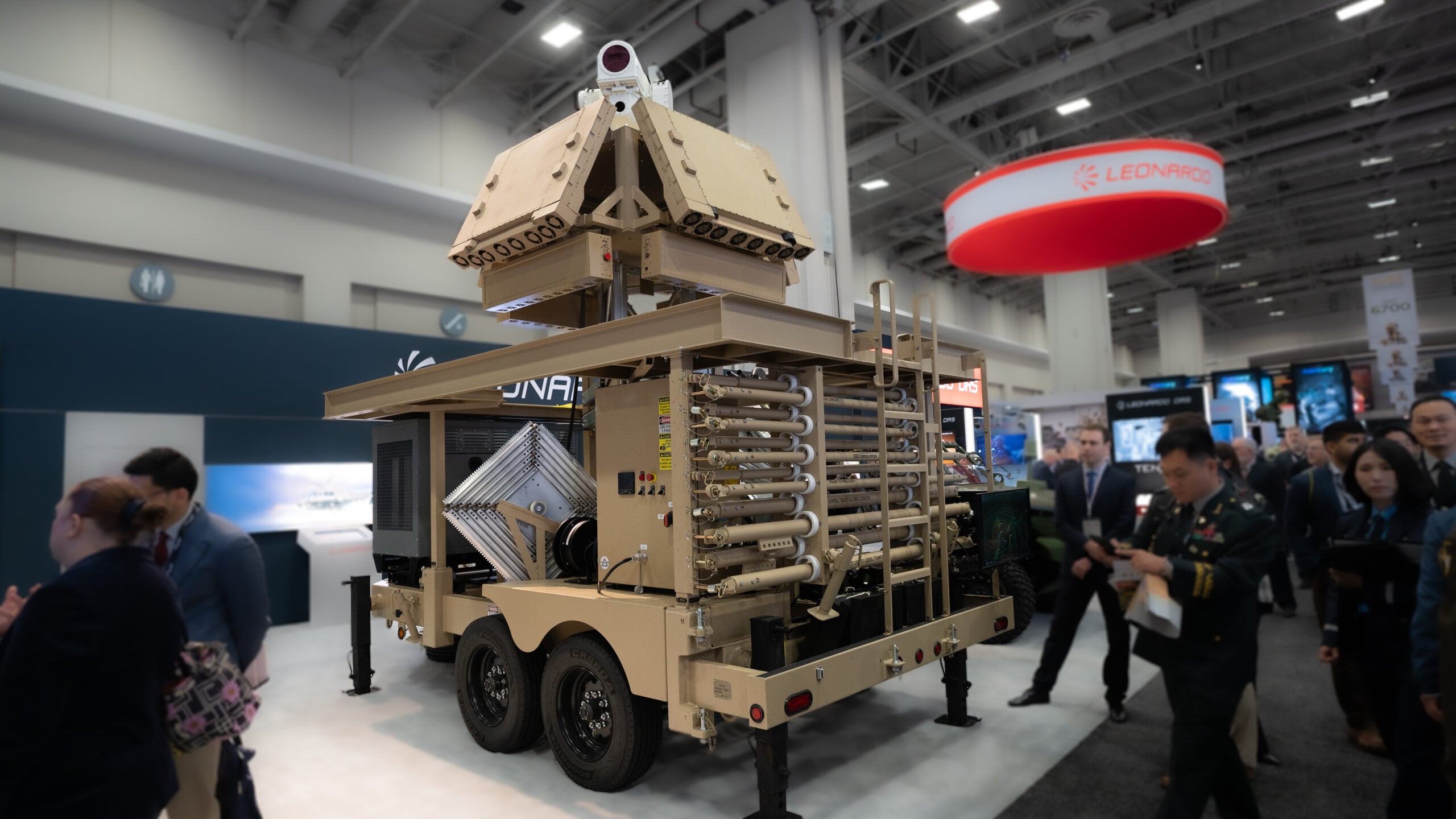
A Leondardo extended mast surveillance system ready to roll into position at AUSA 2024. (Breaking Defense)
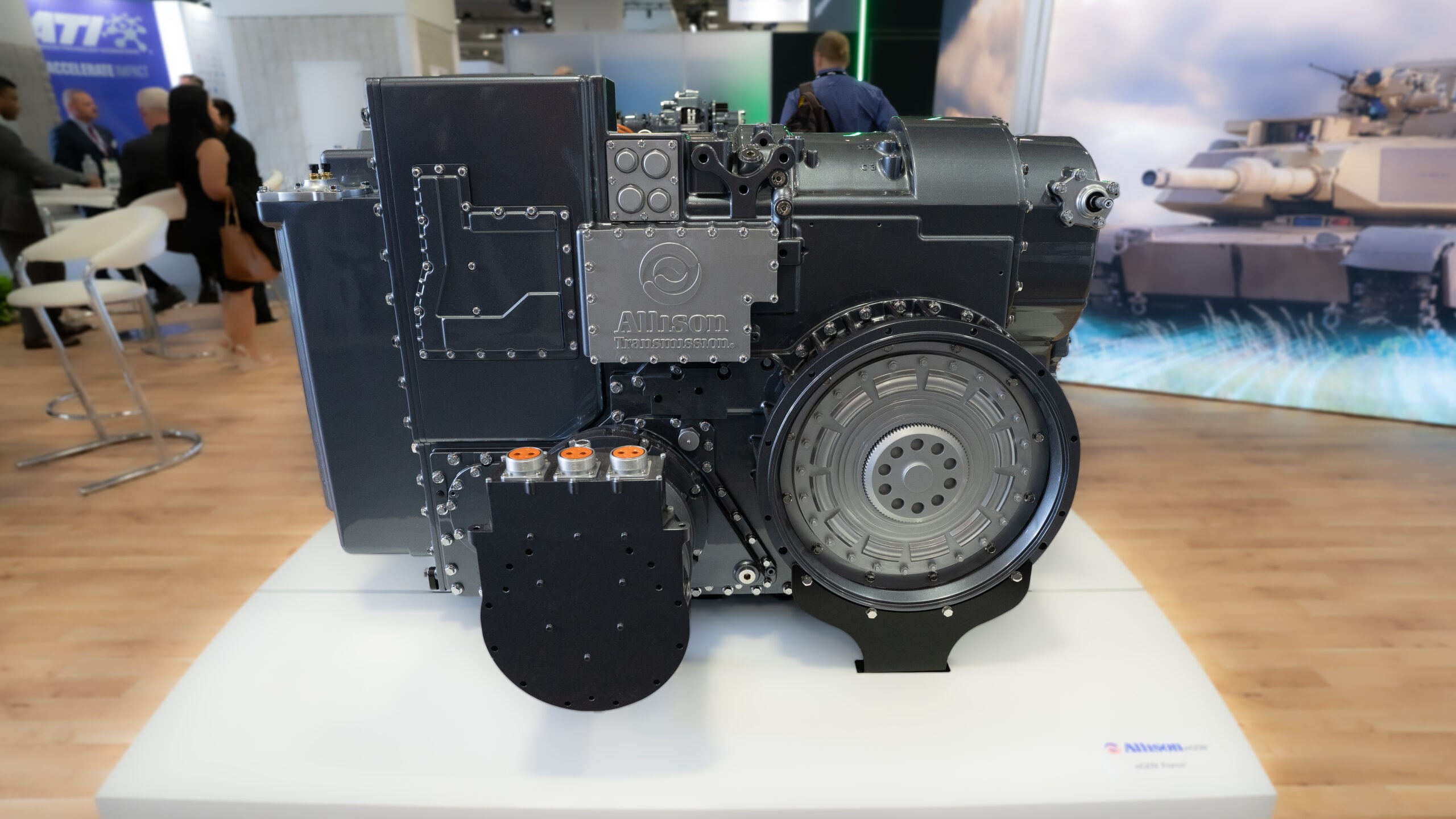
Allison Transmission eGen Power motor on display at AUSA 2024. (Brendon Smith / Breaking Defense)
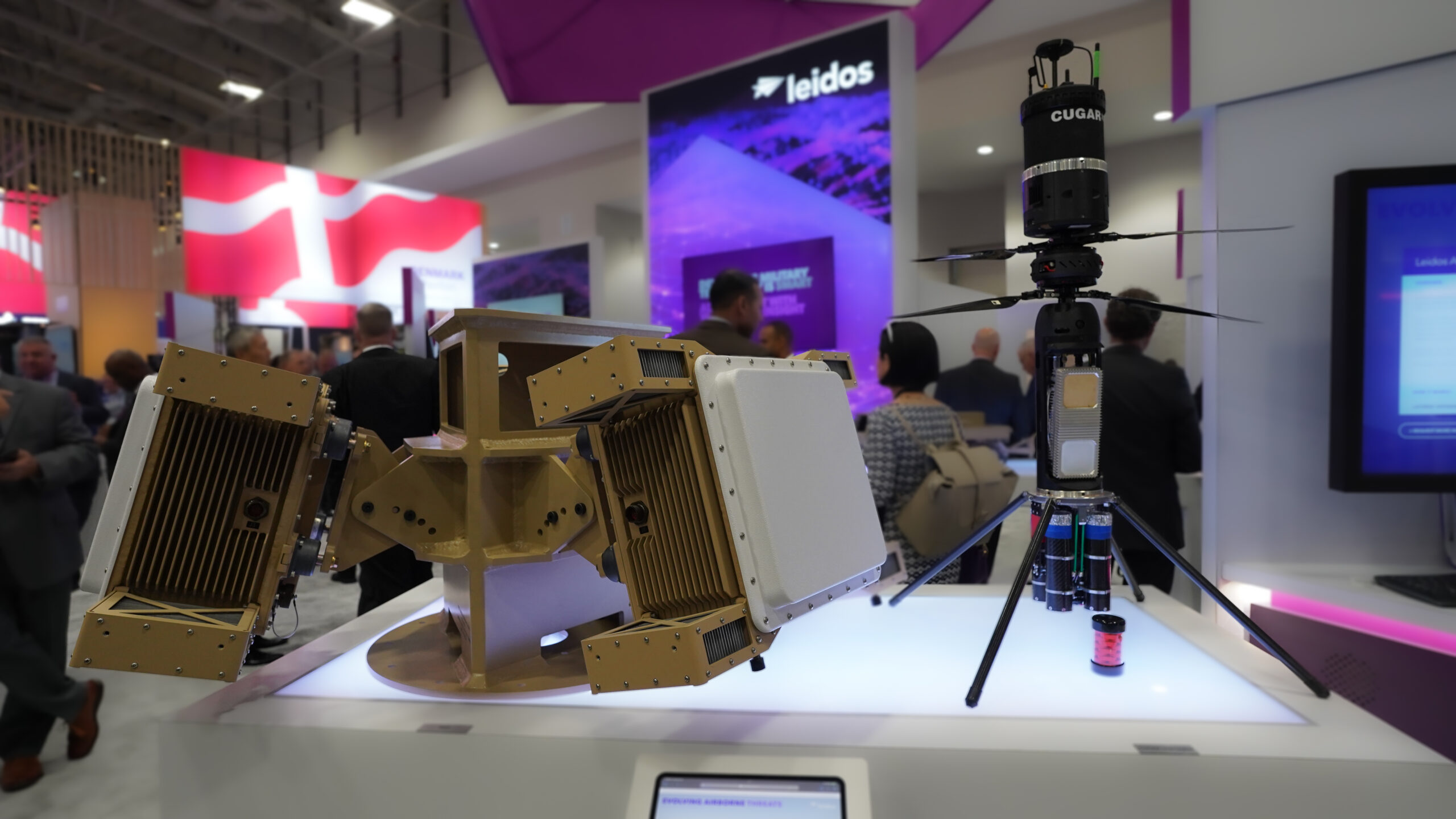
Leidos's Airshield counter-UAS system sits at the company's booth at AUSA 2024. (Brendon Smith / Breaking Defense)
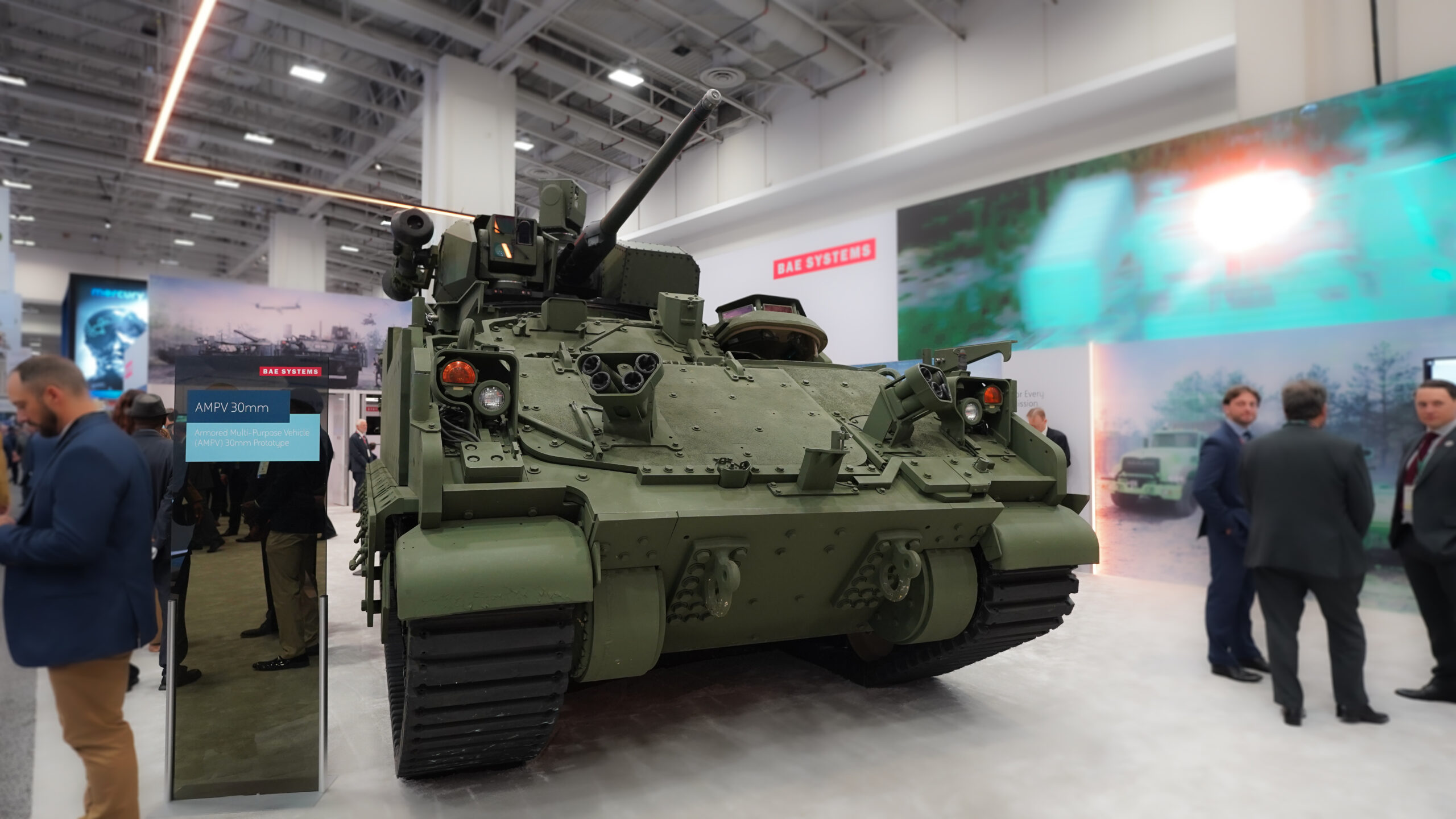
BAE's Armored Multi-Purpose Vehicle (AMPV) with a 30mm gun on display at AUSA 2024. (Brendon Smith / Breaking Defense)
A heavily armed next-gen tactical vehicle on display from GM Defense at AUSA 2024. (Brendon Smith / Breaking Defense)
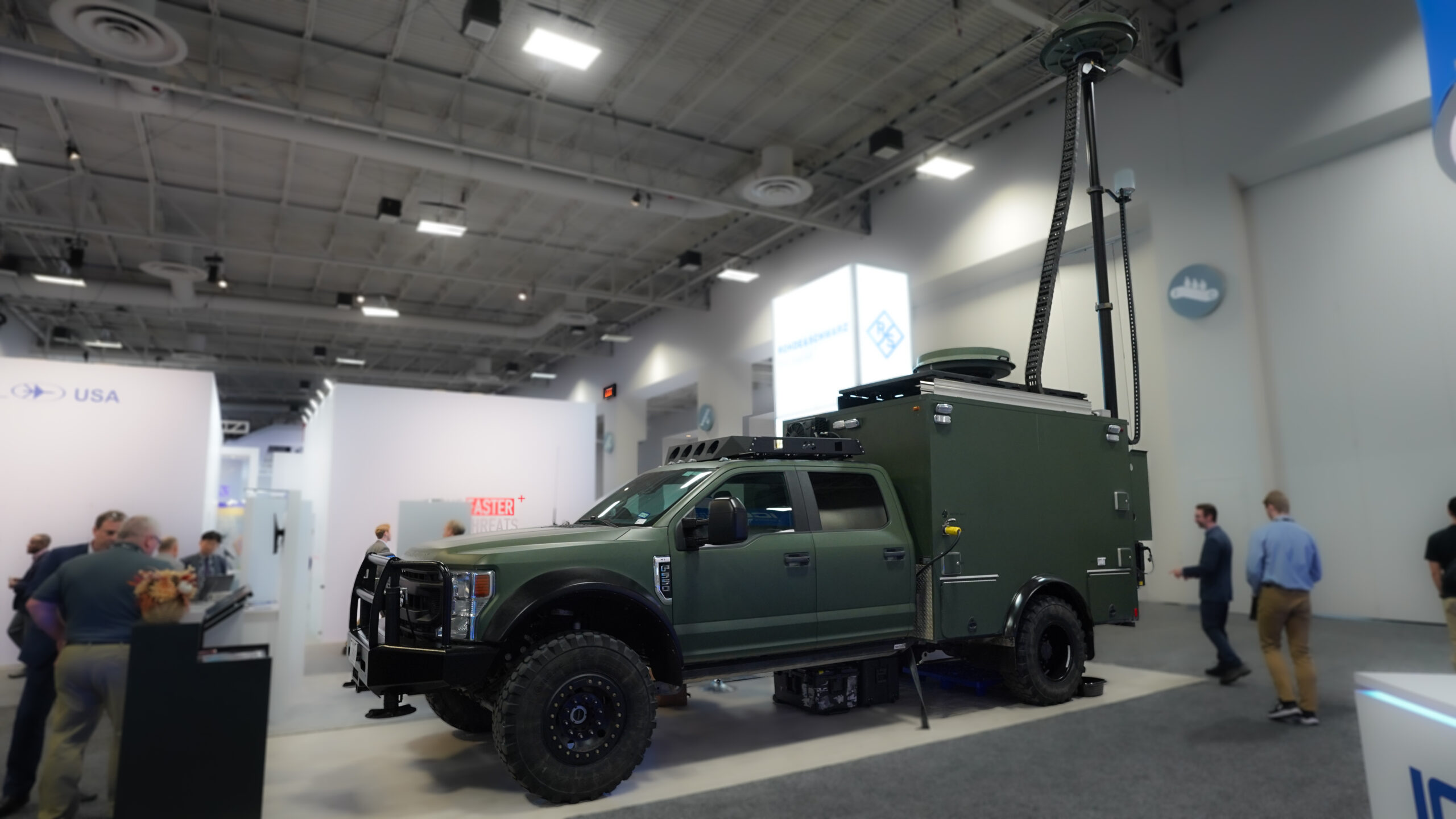
At AUSA 2024, Rohde & Schwarz displays a mobile signals system known as SigBadger. (Brendon Smith / Breaking Defense)