
Army Secretary Stresses Rapid Deployment, Information Warfare
These are huge strategic challenges — and Ryan McCarthy is emphasizing them more than any of his predecessors in at least a decade.
These are huge strategic challenges — and Ryan McCarthy is emphasizing them more than any of his predecessors in at least a decade.

“The US is doing far more than its allies in coming to grips with causing civilian harm,” a human rights NGO representative who has met with Pentagon leaders said. Still, the gap between government estimates and those from groups on the ground is often wide.

Join us 6/24 as experts discuss evolving US research security policy and innovation protection. 1 CPE credit eligible.

This day remains a special marker for all Americans, our friends, allies and our adversaries. It stands on its own, emblazoned in our minds.

Ground robots still lag drones, but the Army thinks both technologies are ready to field to frontline units, just at different levels.
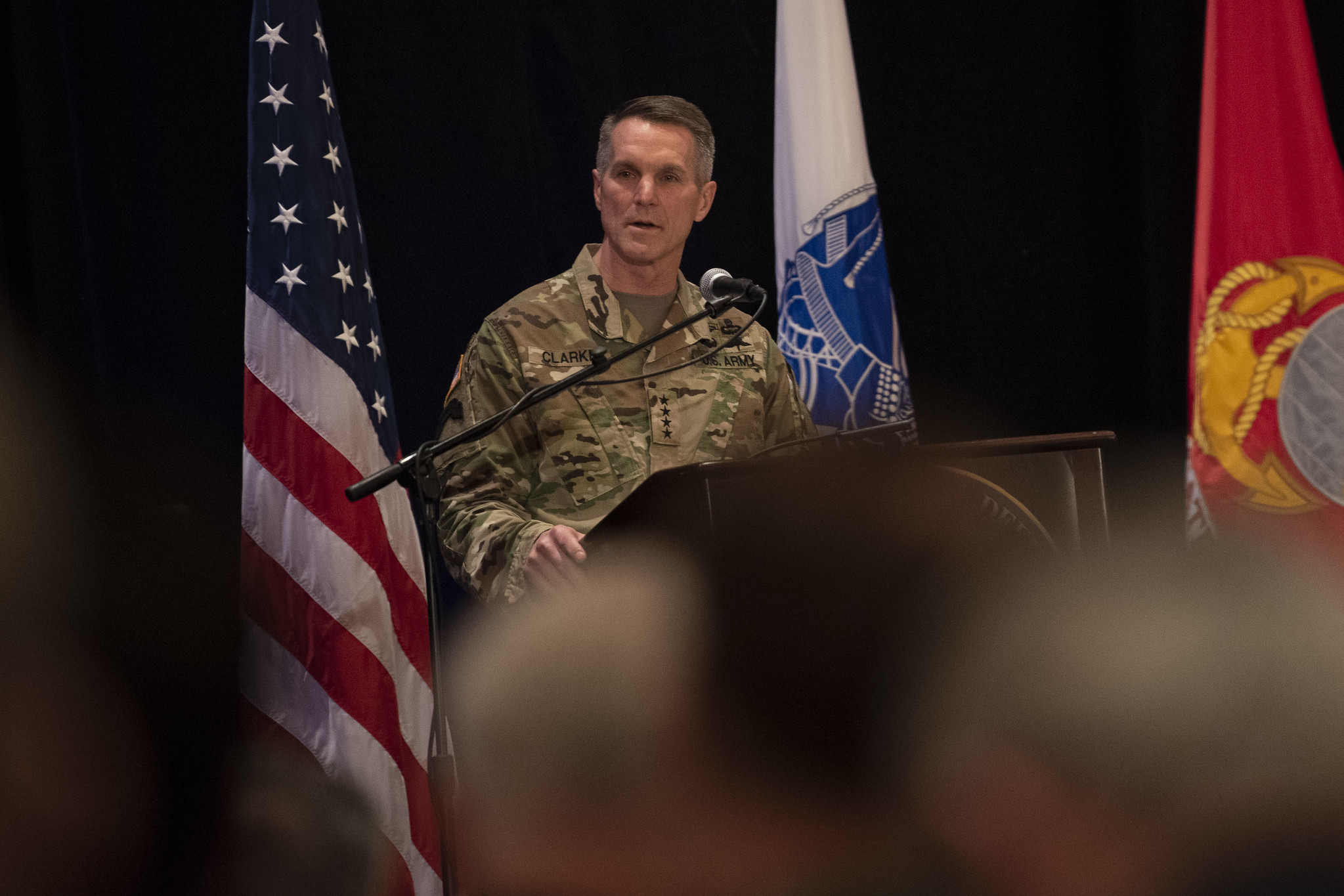
The Pentagon's new Special Ops leader is looking to the defense industry for help in meeting peer adversaries, but he also has a bone to pick.

The Army can cope with regional dangers like Iran even as it refocuses on Russia and China, the secretary said. In fact, he said, the Army's controversial modernization program will help with both sets of threats.

Lockheed Martin’s ACES platform delivers a shared virtual battlespace that strengthens readiness, interoperability, and faster decision-making through advanced, integrated modeling and simulation capabilities designed for evolving global threats.

The Army wants to keep its options open on upgrading its heaviest cargo helicopter. Boeing is worried the window of opportunity -- and its factory -- will close before the Army makes up its mind.
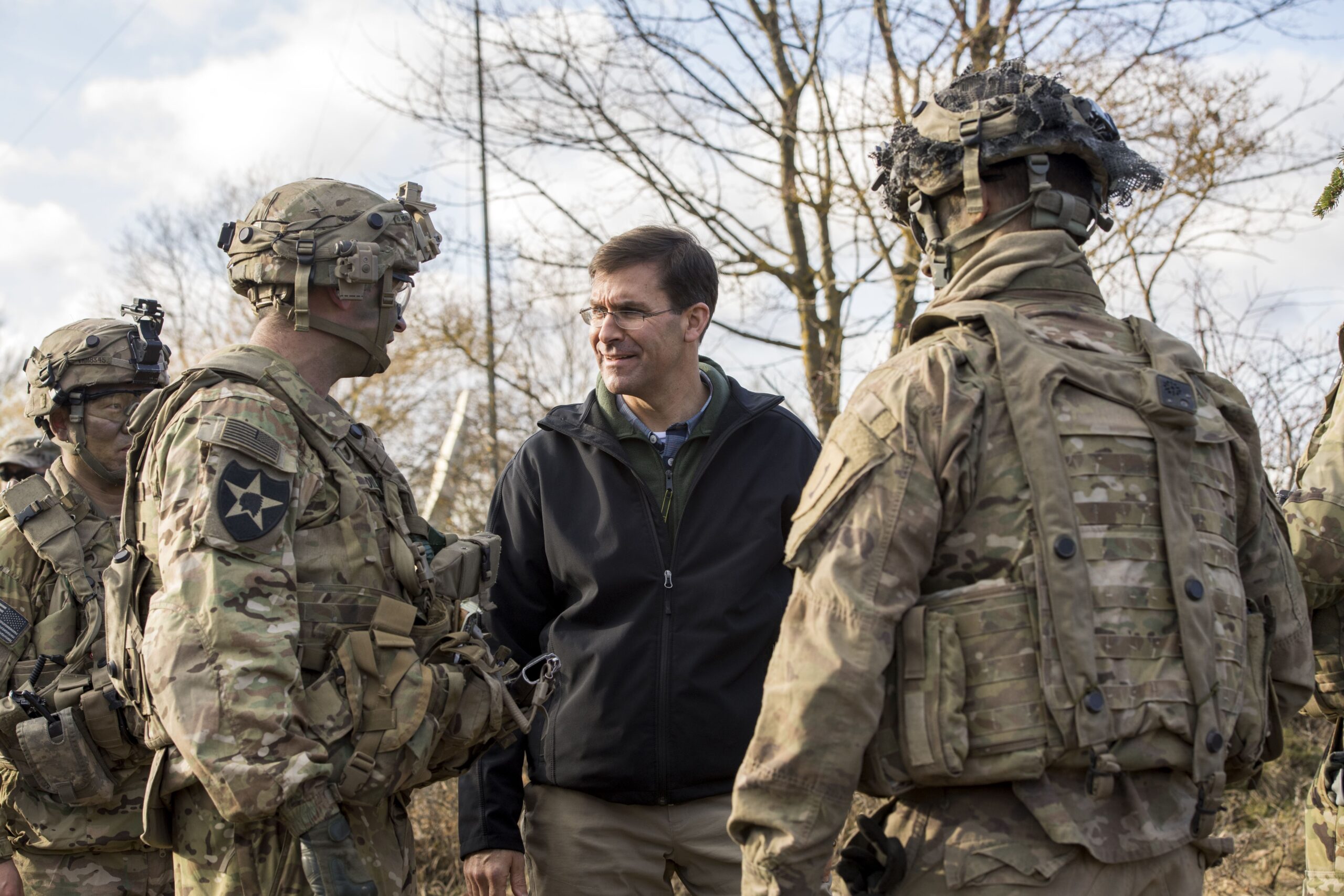
The Army's rebuilding to face China and Russia. That may leave programs designed over the past decade for COIN operations in the dust.

No Army vice-chief has won the top job since Eric Shinseki. But Gen. McConville brings some unique credentials.

Shanahan spent much of his first formal (albeit off-camera) Pentagon pressroom briefing as SecDef emphasizing continuity with his ousted predecessor, Gen. Jim Mattis. He made a point of praising Mattis’s National Defense Strategy, America’s allies, and even the press – not exactly favorites of President Donald Trump.


How Roboze is helping transform additive manufacturing from a prototyping tool into production infrastructure for defense and critical industries.

President Trump is breaking with the past. He’s arguing that Washington must cut its losses, withdraw its forces, climb out of the Middle Eastern and Afghan money pits, and acknowledge that Seoul (with U.S. backing) won the war on the Korean Peninsula. Washington hates him for doing these things, but most Americans and future generations of Americans will love him for it.

Mattis's last message to the troops is three brief, carefully crafted paragraphs packed with historical references and political messages -- which are implicitly critical of President Trump.

Whatever you think of Jim Mattis, his resignation and the outflow of officials that will follow create a major foreign policy problem for the United States. There is not one ally who is applauding Mattis’s departure — but depart he will, all the same. So what must President Trump and his next defense secretary do, […]

After a generation of guerrilla warfare, the Army is issuing new, lighter body armor that can be tailored for a wider range of missions, from plainclothes advisor roles to high-intensity combat. It’s part of a new push to improve infantry equipment, from rifle calibers to targeting optics to augmented reality training, coming from the Secretary […]