ampv

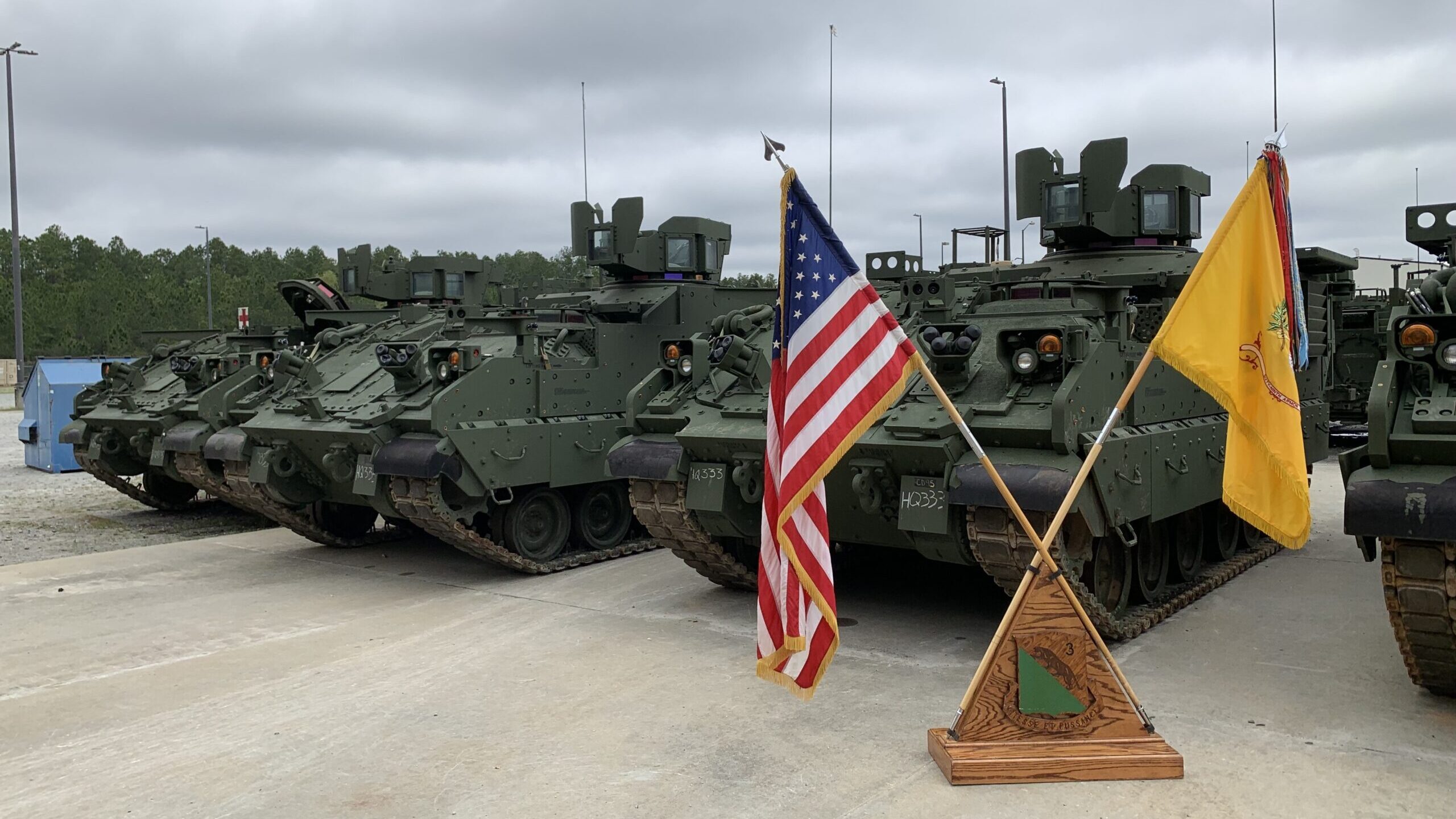
WASHINGTON: After 53 years in service, the Army’s M113 armored transport might finally get replaced. Last night, the Michigan-based Tank-Automotive Command (TACOM) issued a draft Request For Proposals for a new Armored Multi-Purpose Vehicle. The final RFP is expected in June and the contract award in mid-2014. Variants of the General Dynamics Stryker and the BAE Bradley are the leading contenders. Our industry sources are still poring over thousands of pages of documentation, but here are the highlights.

The bottom line: almost $1.5 billion for over 300 vehicles — for a start. The RFP proposes a $1.46 billion contract in two phases: design, develop, and build 29 prototypes over four years — the $388 million engineering and manufacturing development (EMD) phase, 2014 through 2017; and then build up to 289 production models over three years — the $1.08 billion low-rate initial production (LRIP) phase, 2018-2020. Keep reading →

Army issues draft RFP for Armored Multipurpose Vehicle (AMPV): http://http://contracting.tacom.army.mil/majorsys/ampv/RFPwebpage.htm @SydneyFreedberg

WASHINGTON: A $140 million congressional plus-up to the Army’s Bradley fighting vehicle program has made it past every legislative hurdle into the spending bill now headed for the Senate floor. But with amendments and House-Senate conference still to go, and with the Army still (at least officially) unenthused about the unrequested funds, Bradley manufacturer BAE is leaving nothing to chance and has launched a major campaign online, in the media, and on the Hill to ensure all goes well.

Looking ahead, the total 2013 Bradley bill of $248 million — half from the Pentagon’s initial request, half added by Congress — is just the down payment to keep BAE’s York, Penn. plant running until the Army starts building new armored vehicles circa 2017. While a quarter-billion a year is relatively modest in a Pentagon context, it’s scarce funds that the Army is reluctant to spend in the current budget crisis — even though it may cost more in the long term to shut York down only to reopen it three years later. Keep reading →

America’s Army has developed a bit of a split personality of late. On the one hand, the top brass has very publicly embraced the administration’s January 2012 strategic guidance that emphasizes “innovative, low-cost, and small-footprint approaches” and “building partner capacity” in lieu of large ground force deployments. Leaders from Chief of Staff Gen. Ray Odierno on down talk up the Army’s capabilities in cyberspace, missile defense, seaborne operations, and small advisor teams.

At the same time, the service’s biggest new weapons program remains the controversial Ground Combat Vehicle, an estimated $34 billion program to build what could be 70-ton-plus behemoths optimized for all-out land war. “Low-cost” and “small-footprint” it ain’t. (“Innovative” it may be; read on). And GCV is just the tip of the armored iceberg. Keep reading →

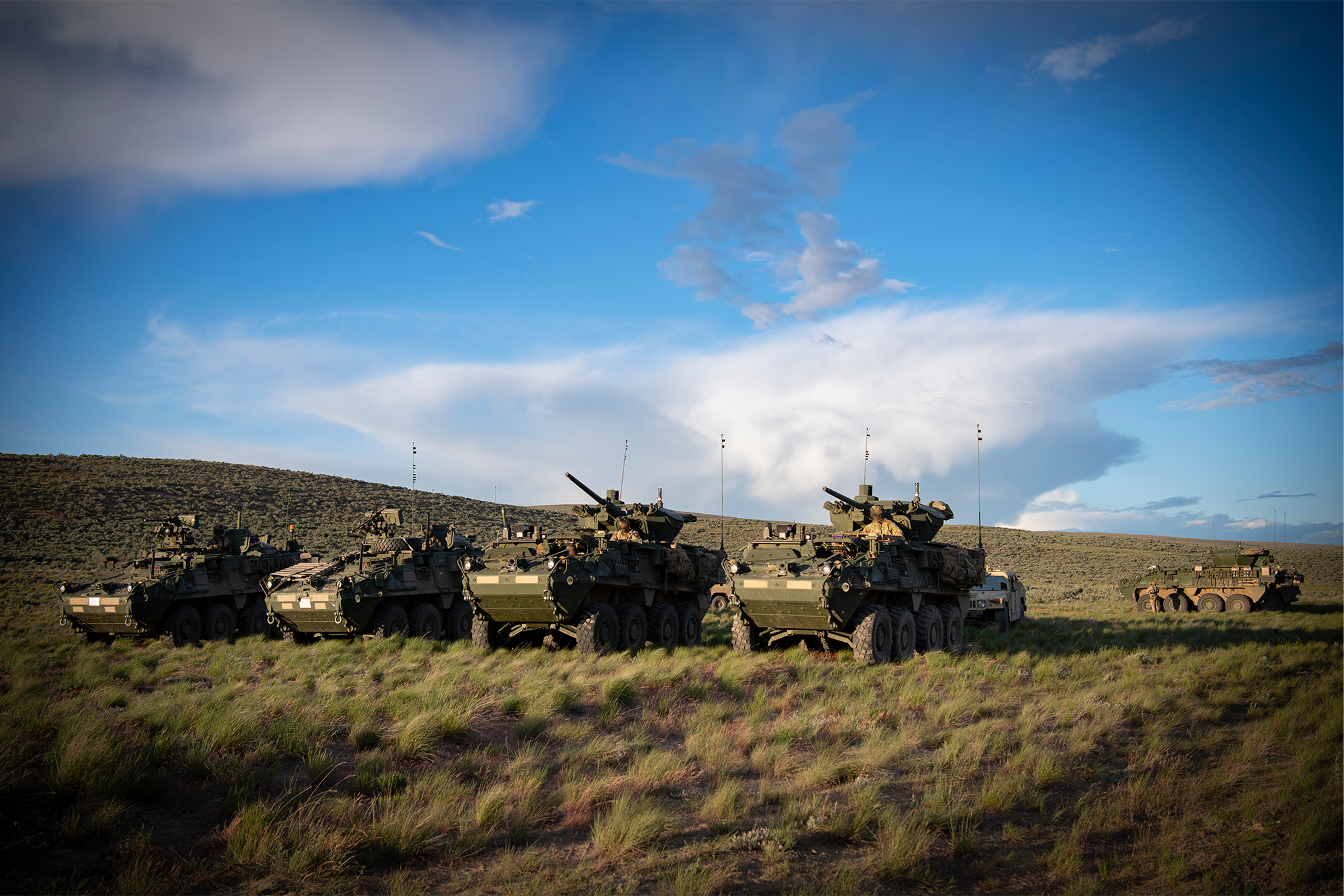
AUSA: BAE has had plenty on its plate lately, what with the failed merger with EADS and all. But at least BAE’s American division was the odds-on favorite for the Army’s Armored Multi-Purpose Vehicle (AMPV). That is, at least until last week. That’s when rival General Dynamics debuted a tracked version of its 8×8 wheeled Stryker at the Association of the US Army conference in Washington, DC.

The backstory: For decades, BAE and General Dynamics had pretty much split the US combat vehicle market. General Dynamics built the massive M1 Abrams main battle tank at its plant in Lima, Ohio, while BAE built the smaller but tank-like M2 Bradley troop carrier (technically, an “infantry fighting vehicle”) and its various variants in York, Penn. Production of new vehicles ceased years ago, but there’s a thriving business in upgrades, especially improved armor and electronics. Both firms worked on developing new vehicles for the Army’s Future Combat Systems program; when FCS failed, they both got contracts to build dueling prototypes for the Ground Combat Vehicle, a better-protected replacement for the Bradley, although the Army is now under some pressure to cut the competition short and pick a winner soon. Keep reading →


WASHINGTON: On the margins of the $550-plus billion defense budget, the Army and the defense industry are quietly working on a program that could potentially replace 3,000 geriatric armored vehicles. So far, in this year’s budget, Congress is going along, but the real money — and the real battle — loom in the years to come.

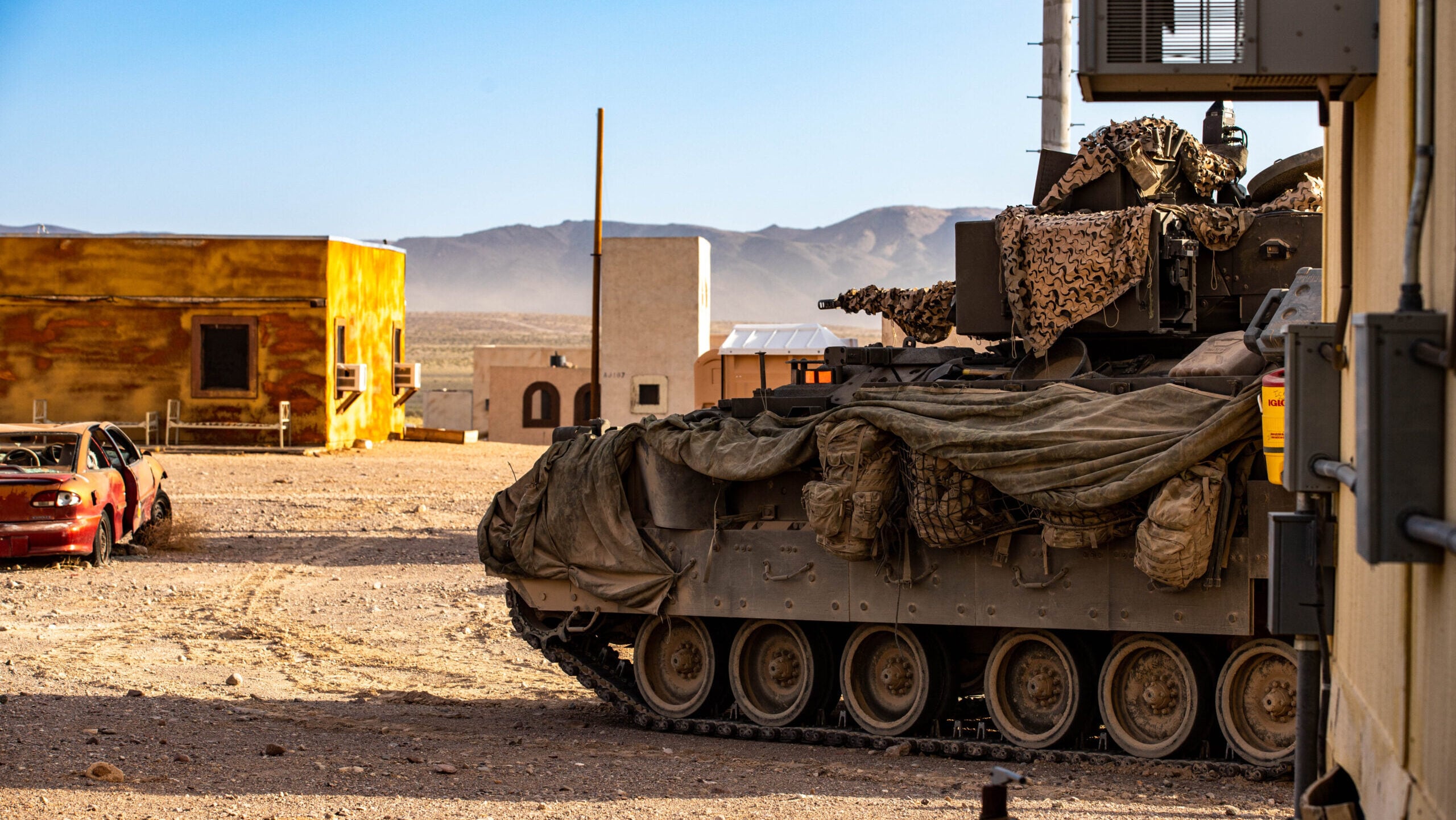
The $1.7 billion Armored Multi-Purpose Vehicle (AMPV) program is the Army’s blandly named initiative to replace the M113, an all-too-lightly armored transport — sometimes called a “battle taxi” — that first entered service in 1961. Over 3,000 M113 variants serve in a host of unglamorous but essential roles from troop carriers to armored ambulances to mobile command posts. Keep reading →

FT. LAUDERDALE: The Army’s sizable combat vehicle fleet will remain largely intact despite ongoing efforts inside the Pentagon to reshape the service into a post-Afghanistan force.

While the Army may not be able to buy the amount of new vehicles or modernize the number of legacy systems it wants, the service’s overall combat vehicle strategy will remain intact, according to Scott Davis, program executive officer for ground combat systems. There is nothing in the Pentagon’s new five year spending strategy or the White House’s new national security strategy “that terribly concerns us,” he told reporters during a briefing at the Association of the U.S. Army’s winter symposium here. “We may [decline] in quantities or distribution, but no real changes,” Davis said. His comments come weeks after Maj. Gen Tim Crosby, head of the Army’s program executive office for aviation, said that his accounts would largely be spared the budget axe across the service’s future years defense plan. Keep reading →