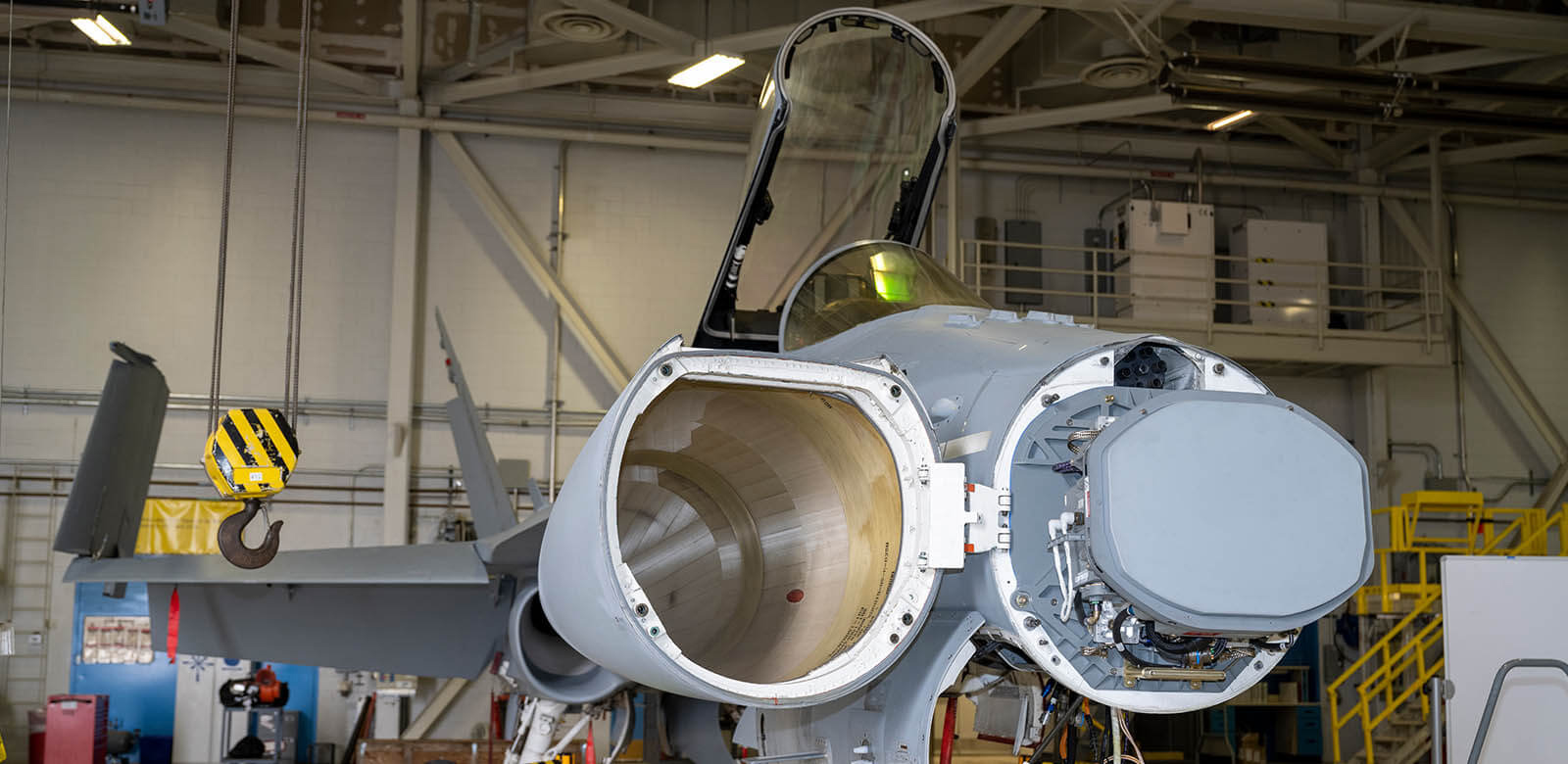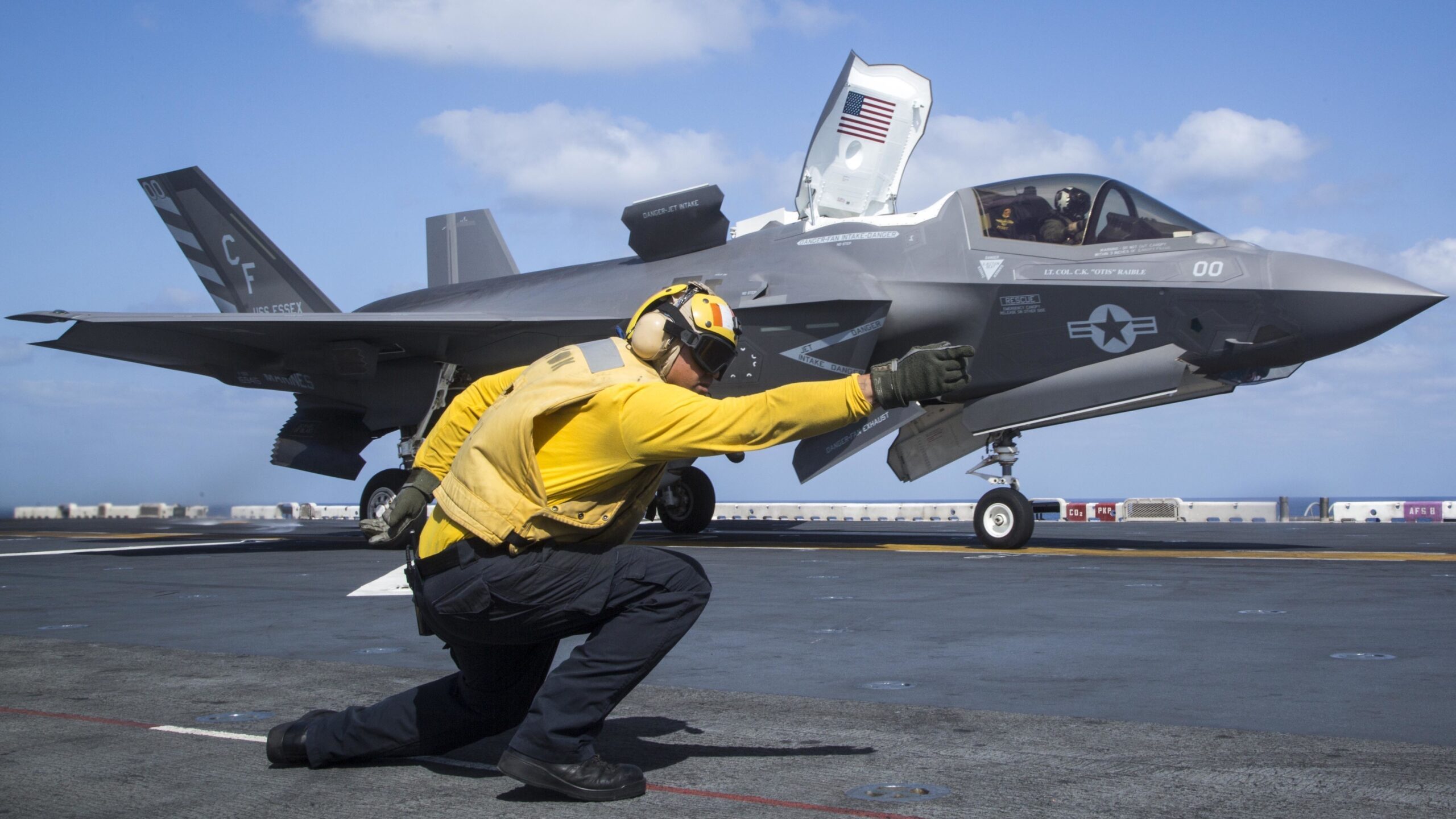
PARIS AIR SHOW: The top Marine aviator, Lt. Gen. Robert Schmidle, announced a “very aggressive program” at the world’s largest airshow to bring down the costs of operating and maintaining the Marines’ F-35B model of F-35 Joint Strike Fighter. His choice of Paris as the venue for the announcement spoke volumes. The international partners in… Keep reading →
marines
PARIS AIR SHOW: Flight hour costs have dropped while readiness rates have improved for the V-22, a rare feat indeed for a modern combat aircraft. Critics have pointed to the V-22′s readiness rates and costs as yet another reason to curtail the program, but when I asked Marine Col. Greg Masiello, manager of the Joint… Keep reading →
[updated with final results] CAPITOL HILL: Bipartisan majorities in the House Armed Services Committee have steamrollered proposals to slow down the F-35 Joint Strike Fighter and to permit the Pentagon to plan for base closures, but reformers at least made a respectable run at the windmill during markup of fiscal year 2014 National Defense Authorization… Keep reading →
[updated with Adm. Greenert comment] House Armed Services seapower chairman Randy Forbes promised a “rebirth” of oversight in my interview with him last week, and he makes a down payment on that in his subcommittee’s markup of the defense bill. It includes a host of new reporting and certification requirements. Top of the deck comes the… Keep reading →
Watch the F-35B, the Marines’ fighter of choice, execute a very cool maneuver in this video, taking off straight up into the sky. While very cool, this is not something the Joint Strike Fighter is actually expected to do very often. For one thing, it requires enormous amounts of fuel. Instead, the B model is… Keep reading →
Army Up, Navy Down, & Pakistan Makes Us Pay In 2013 Reprogramming Request
By Sydney J. Freedberg Jr.What’s a few billion between friends? You can download the details below – more than 100 pages of them – but here are the bottom lines of the 2013 reprogramming requests the Pentagon has submitted to Congress: For fiscal year 2013, the administration wants “reprogramming authority” to reshuffle an extraordinary $9.6 billion between accounts in… Keep reading →

WASHINGTON: What homemade roadside bombs could do to Army and Marine ground vehicles was the ugly surprise of the last decade. What sophisticated long-range missiles could do to Navy aircraft carriers could be the ugly surprise of the next. “I think it would almost follow like the night to the day,” Rep. Randy Forbes told me in a recent interview. “The last decade… we asked a disproportionate sacrifice from the Army and Marine Corps,” he went on. “The next decade’s going to be the decade of seapower and projection forces, [and] some of those ugly surprises we see bits and pieces of already.”
As chairman of the House Armed Services seapower and projection forces subcommittee, Forbes wants to refocus fellow legislators, the Pentagon, and, for that matter, the media from a narrow debate over the troubled F-35 Joint Strike Fighter program to a wider look at all the capabilities that a carrier can support. That includes not just traditional manned fighters like the F-35, but also unmanned drones like the X-47B and the future UCLASS (Unmanned Carrier-Launched Airborne Surveillance and Strike System), electronic warfare aircraft like the EA-18G Growler, and even cyber attacks. Keep reading →
Gen. Amos: Marines Can’t Fight Major War If Sequestered; Navy Short Carriers Too
By Sydney J. Freedberg Jr.
CAPITOL HILL: The commandant of the Marines told Congress today that his service could not handle even one major war if Congress doesn’t undo the $500 billion, 10-year cut to defense spending known as sequestration. The Navy, for its part, would have only one aircraft carrier ready to “surge” in a crisis instead of two or three, allowing it to reinforce only one war zone at a time.
A central tenet of American strategy has been the ability to fight and win two major wars in two theaters at the same time since World War II. How well the military could actually meet that requirement has been open for debate, but it was always upheld as the official ideal — until January 2012, when the Obama administration’s Defense Strategic Guidance downgraded the goal to, in essence, win one, hold one. Keep reading →
[updated 2:30 pm with Hagel, Hale, & Ramsey briefings; Republican responses; and Sharp analysis]
PENTAGON: “NOTE: These program descriptions and dollar values do not reflect potential sequester impacts.” That disclaimer — in boldface italic type and a different color of ink, just to make sure you can’t possibly miss it — blazes across the top of the first seven chapters of the Pentagon Comptroller’s official overview of the fiscal 2014 budget request released at 11:15 today. (Only the last chapter lacks it). The president’s budget is always the beginning of the funding debate, not the last word (we live in a democracy, however dysfunctional, after all), but this year it is no more than “a placebo, a placeholder with no effect” — to quote Center for a New American Security analyst Travis Sharp — pending three crucial decisions:
1) Whether or not the president, hands-off-entitlements liberal Democrats, and no-more-taxes Tea Party Republicans can finally make the “grand bargain” that has eluded them since 2011. Without a deal — and politically one looks painfully unlikely right now — the $527 billion request the Pentagon rolled out today will have to be cut (sequestered) by another $52 billion, throwing into doubt not just the topline figure but the figure for almost every single line item. Keep reading →
NATIONAL HARBOR: The top officers in the Navy and Marine Corps defended their most expensive program, Lockheed Martin‘s troubled F-35 Joint Strike Fighter, while acknowledging the way the Pentagon buys such weapons is not merely broken but “constipated.”
“There’s no alternative for the United States Marine Corps to the F-35B,” Commandant Gen. James Amos said at the opening session of the Navy League’s annual Sea-Air-Space conference. “I want to make that crystal clear to everybody in the audience.” All the great aircraft of the past have gone through teething troubles in development, said Amos, a pilot himself. Keep reading →


Colin Clark
Sydney J. Freedberg, Jr.