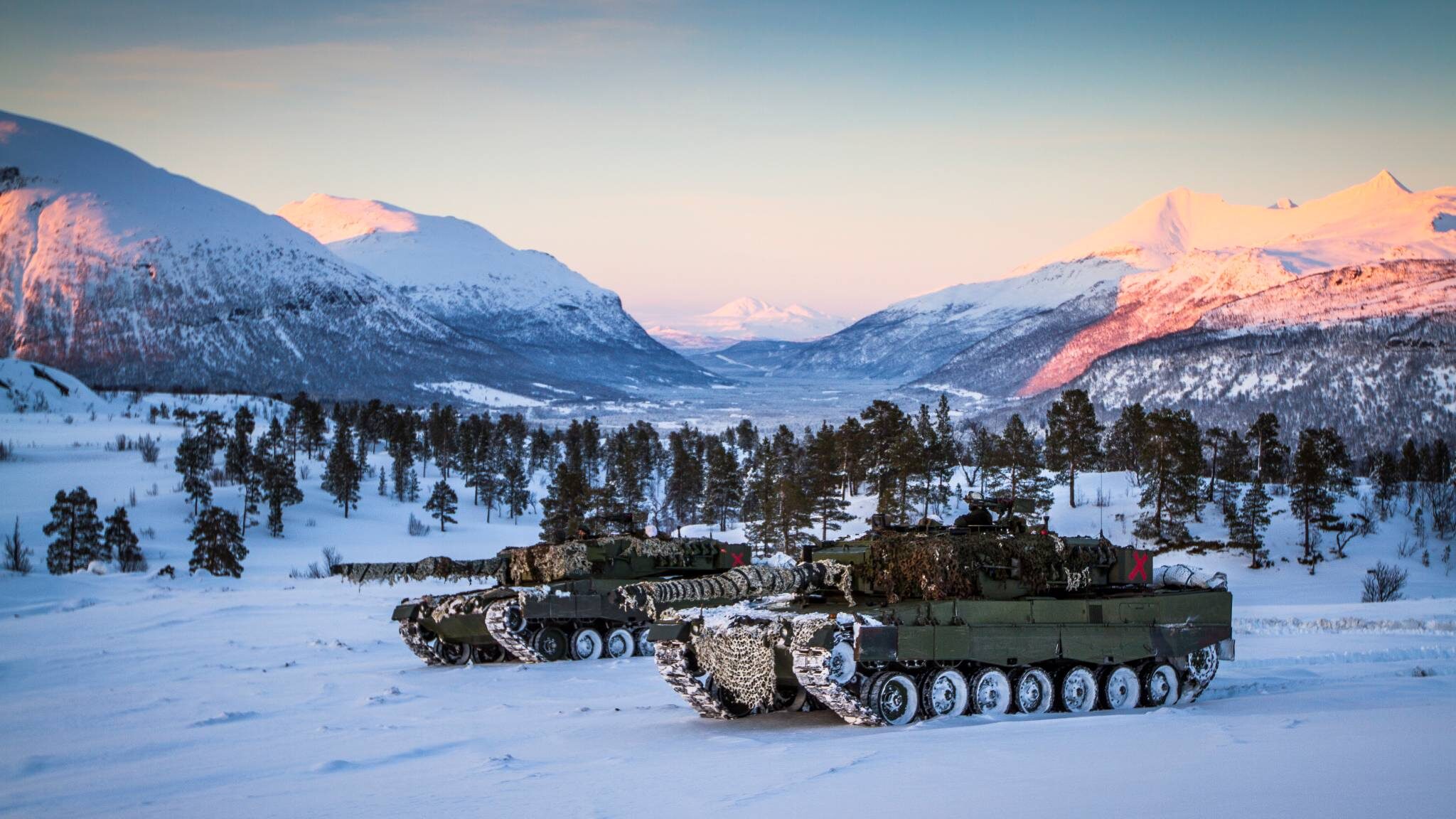
AUSA 2023 — Norway has decided against exercising an option for 18 German-made Leopard 2A8 main battle tanks to instead invest in air defense and long-range fire capabilities, the country’s top army official told Breaking Defense.
Despite turning down the option, Lars Lervik, Chief of Staff of the Norwegian Army, said in an interview that an earlier order of 54 tanks, under contract with manufacturer Krauss-Maffei Wegmann (KMV), would be enough to enable Oslo to stand up a heavy mechanized brigade in line with NATO requirements and fits into national “wartime plans.”
All deliveries of the new Leopard vehicles are expected to be completed by “mid-2027,” according to Lervik.
He also expressed concern about Europe’s ammunition shortage crisis that has left countries across the continent scrambling to restore stockpiles left wanting by supplies made to Ukraine.
The amount of time “it will take to both re-balance the ammunition we have donated, but also to reach the sufficient level of readiness for the future” remains of issue, said Lervik. “What we’re seeing now is that the current war in Ukraine illustrates that we need to be capable of staying in the fight for a longer duration and that requires volume.”
RELATED: Nammo warns industry could ‘break their neck’ without longer production contracts
At a political level, Oslo had considered dropping required levels of ammunition to sustain supplies to Ukraine, subject to approval by lawmakers. Lervik said he could not comment on such a matter because “details on stockpiles” are confidential.
Even so, he stressed that there are “no quick fixes” to the ammunition problem and backed support for longer production contracts for industry, echoing similar calls made by Norway’s national ammunition producer, Nammo.
In addition to spending 10.7 billion NOK ($99 million USD) on military aid to Ukraine in 2022, Oslo has also introduced a multiyear program of assistance that covers 75 billion NOK issued between 2023 through 2027. Fifteen billion NOK will be offered up each year.
That level of support has not been without controversy, with the government coming under pressure to increase aid to Ukraine under a shadow of making substantial natural gas profits after countries across Europe diversified away from Russian gas.
“I don’t have any comment to that, but I think Norway has come up with a five-year plan that recommends substantial money, both military and civilian aid to Ukraine, and I think that Ukrainians are very happy with that approach,” said Lervik. “There’s a long-term commitment.”
Elsewhere, Nordic military co-operation is also expected to be expanded once Sweden joins NATO. Levrik said that when the entry happens, interoperability and “classifications” will be two key items that will change co-operation for the better.
“We are in a very good position at the tactical level to really make that work as soon as both countries are members of NATO,” added Lervik, referring to Sweden and recent entrant Finland.
Additionally, military ties will also be strengthened by Norway, Finland and Sweden taking part in the Nordic Response training exercise next year.
Lervik stressed that one of his main priories at the AUSA expo in Washington, DC, this week will be holding discussions with industry on counter-UAS systems, which could influence how the technology could eventually be integrated into a layered air defense system.
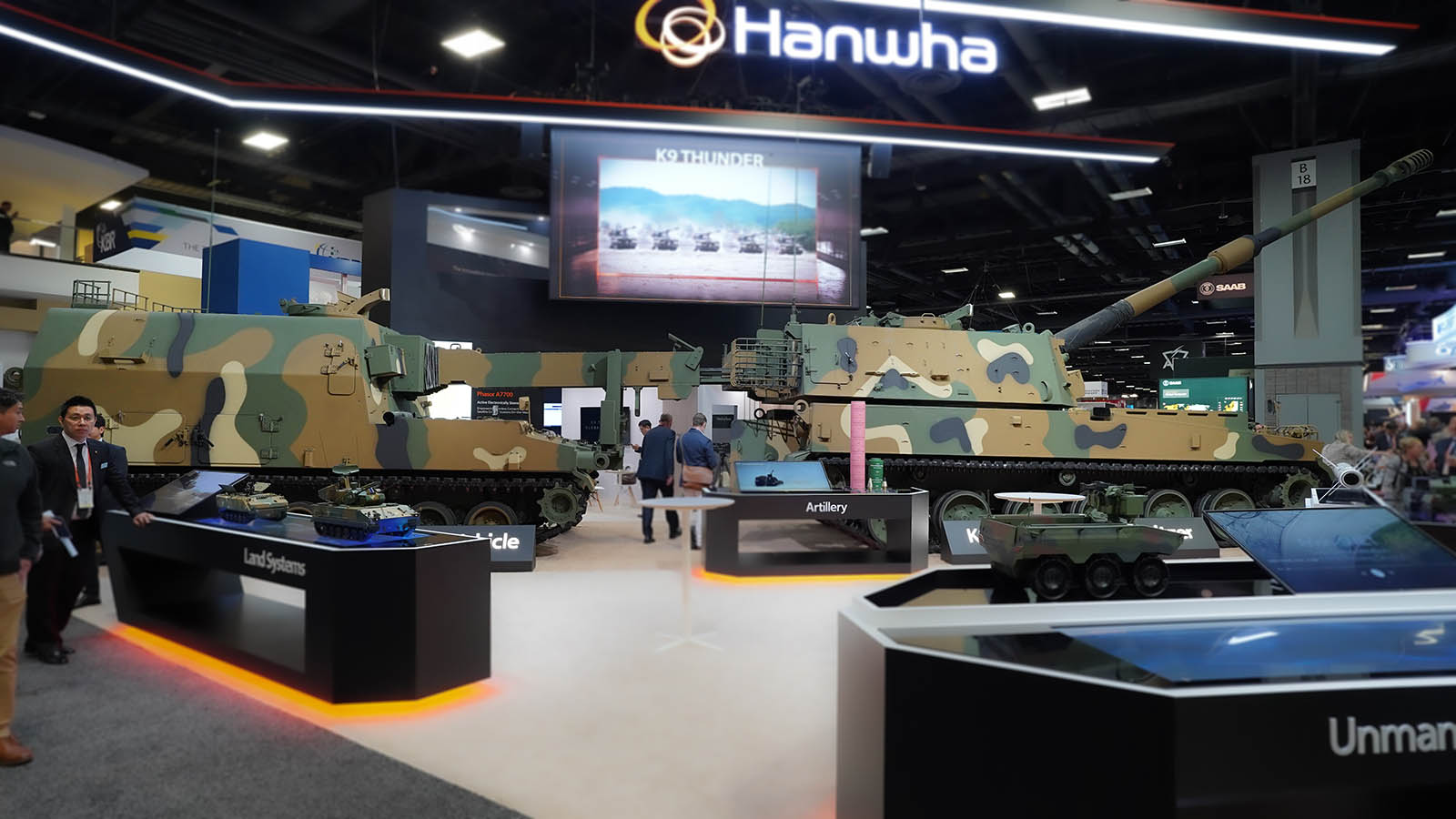
On the acquisition front, he said he hopes to see a long-range fires tender issued to industry as soon as possible, accelerating a previous timeframe that aimed for the end of 2023, and, should additional money be made available, investments approved for additional K9 self propelled howitzers and K10 ammunition resupply vehicles.
PHOTOS: AUSA 2023

 Gallery