Global

Norway edges closer to long-range precision fires selection

Maj. Gen. Lars Lervik, Chief of Staff of the Norwegian Army, told Breaking Defense that Oslo is in the process of receiving offers from industry competitors who have been asked to detail "price, timings, capabilities," and delivery timeframes.

Missiles cut through the sky in HIMARS display in Japan
A High Mobility Artillery Rocket System (HIMARS) with the 1st Battalion, 181st Field Artillery Regiment fires toward a designated target at Yausubetsu Training Area, Hokkaido, Japan (US Army)

AUSA 2024 — Norway expects to take a major step forward with one of its key land warfare acquisition priorities by selecting a new long-range precision fires system, likely in the “summer” of next year and ahead of entry to service in 2027 or 2028, according to the Nordic nation’s top army official.

Maj. Gen. Lars Lervik, Chief of Staff of the Norwegian Army, told Breaking Defense that Oslo is in the process of receiving offers from industry competitors who have been asked to detail “price, timings, capabilities” and delivery timeframes.

“We are currently in the process of considering different options,” he said. “It’s either a FMS [US Foreign Military Sales] case … or we buy from other manufacturers. We are looking at sometime, hopefully before summer next year, we hope to have a [weapon system selection] decision.”

In August, the US State Department approved the potential sale of 16 Lockheed Martin M142 High Mobility Artillery Rocket Systems (HIMARS) and supporting equipment, valued at $580 million, to Norway. But that approval doesn’t mean the sale is final and, as a rival bid, South Korea’s Hanwha Aerospace is pitching the K239 Chunmoo Multiple Launch Rocket System (MLRS).

Moving from the selection decision to entry to service for the long range fires weapons system, as early as 2027 or 2028, would be possible based on “realistic production times,” suggested Lervik.

Norway has already requested technical information from industry under the Long Range Precision Fire System (LRPF) program, including weapon system guidance performance, munitions communications, warhead target sets, maximum range, flight time, test and qualification procedures, according to a request for information solicitation posted online.

The document calls specifically for a “self-propelled” LRPF capable of protecting northern Norway, launching missiles and guided rockets with a range in excess of 300 kilometers (186 miles). The future platform must also be compatible with Norwegian Command, Control, Communication, and Computers (C4I) systems.

In April, Norway announced a “historic” hike in defense spending, based on expenditure of NOK 1.6 trillion ($150 billion) out to 2036, aligned to a new long-term defense plan that includes commitment to a new long-range, ground based air defense (GBAD) and an expansion of the Norweigian Army to three brigades, instead of one.

Despite such a focus, Lervik acknowledged that “most of the money” on offer will be spent on the Royal Norwegian Navy. Still he suggested the country’s parliament, responsible for approving spending, was right to take the “military advice” of Gen. Eirik Kristoffersen, Chief of Defence of Norway, when approving the spending and defense plans.

“What we are going for is a balanced armed forces, still rather small, but balanced,” Lervik added. “That’s been my key, I think that’s important, not to go too much to one direction. I think that’s what we’re doing with what’s been decided.”

At a broader level, he said that the strategic picture in the High North has not changed significantly, of late, as Russia continues to prioritize war against Ukraine.

Lervik noted he was “more optimistic” about Europe’s ammunition crisis, because of investments by the Norwegian government in Nammo, the country’s main ammunition producer.

“I share [the view] with all my partners, all my colleagues, that we need to restock, both from what has been donated to Ukraine, but also to have sufficient [national] stocks,” he added.

PHOTOS: AUSA 2024

PHOTOS: AUSA 2024

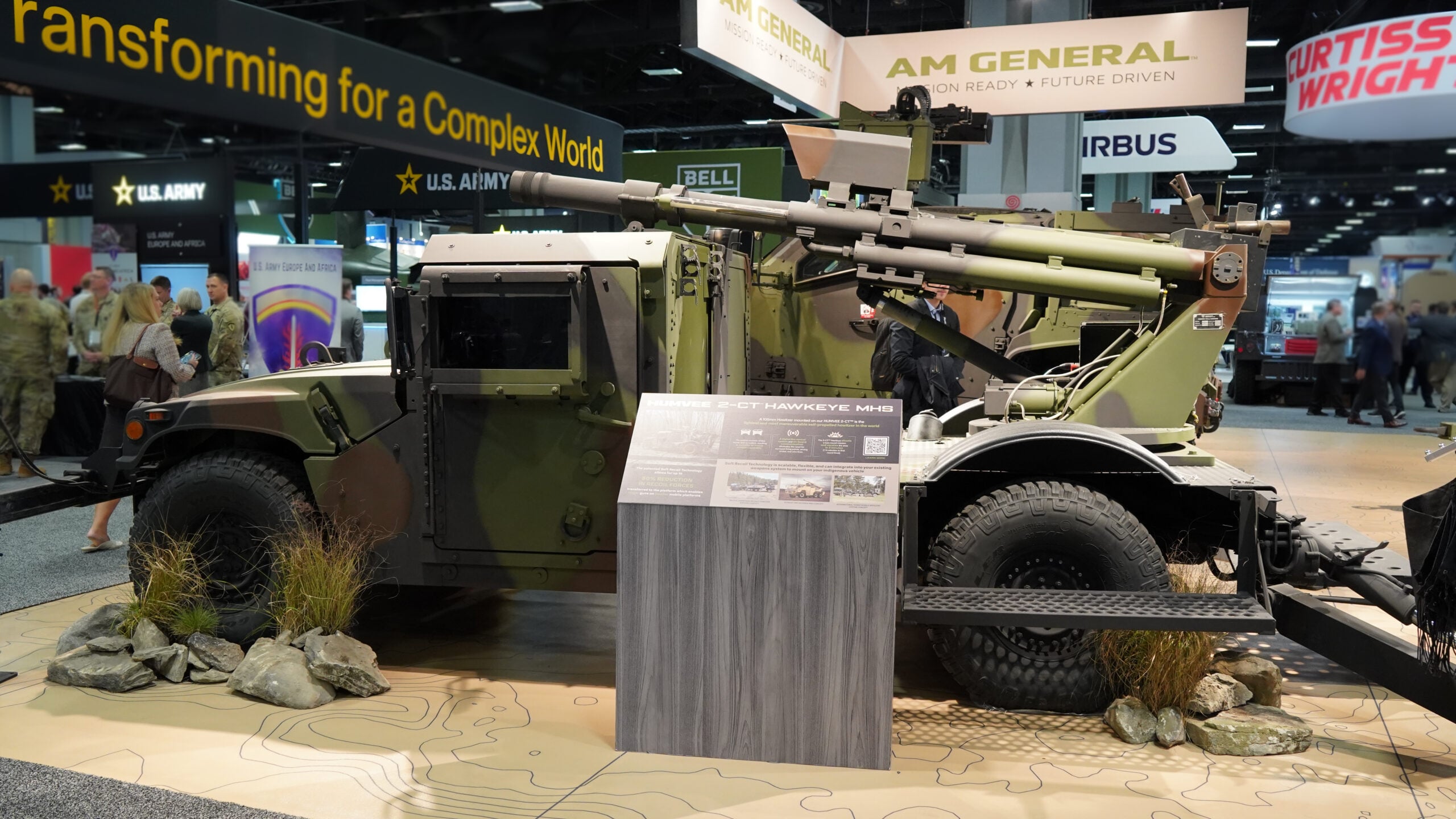
At AUSA 2024, land vehicle giant AM General rolled its HUMVEE 2-CT Hawkeye MHS, featuring a howitzer launcher on a hummer. (Brendon Smith / Breaking Defense)
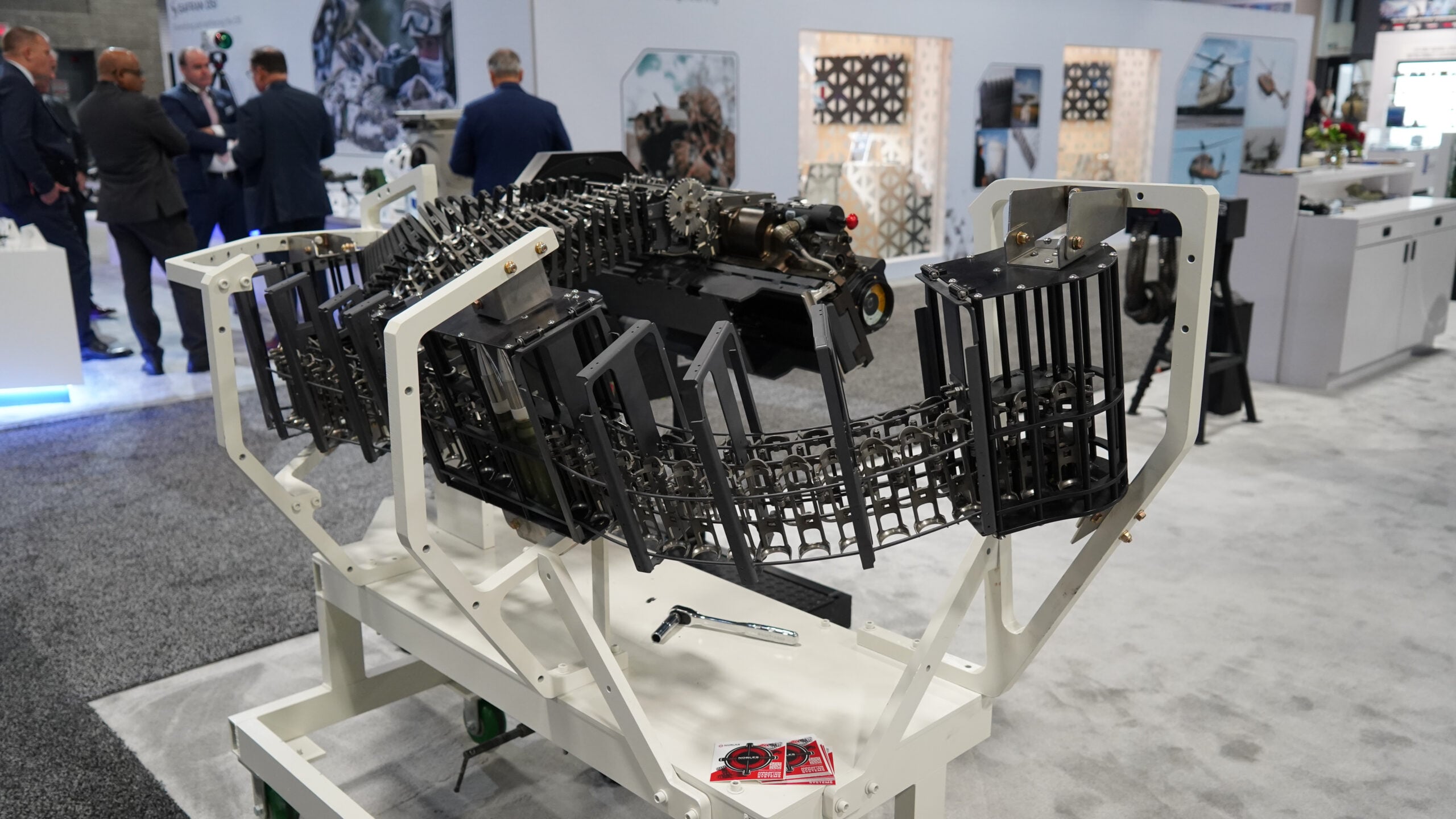
Ammo handling specialists Nobles Worldwide brought its closed loop, linkless ammunition handling system to AUSA 2024. (Brendon Smith / Breaking Defense)
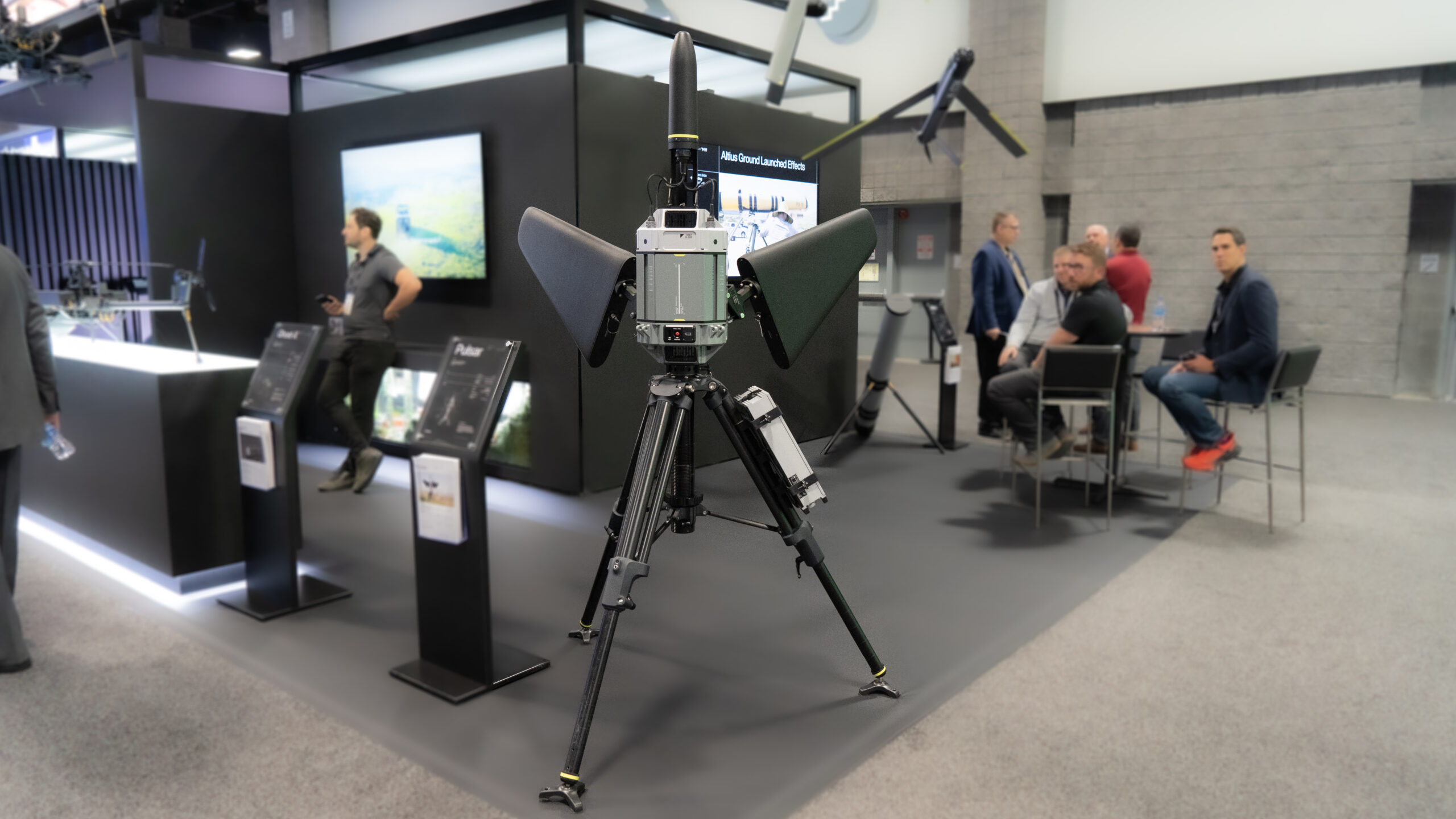
IEC Infrared Systems's Lycan counter-UAS system gazes out at attendees at AUSA 2024. (Brendon Smith / Breaking Defense)
Australian firm EOS was at AUSA 2024, here displaying its Slinger kinetic counter-drone system. (Brendon Smith / Breaking Defense)
Defense start-up Anduril makes a wide range of products and at AUSA 2024, including his platform from its "family of autonomous systems and Electromagnetic Warfare (EW) systems powered by Lattice and AI at the edge." (Brendon Smith / Breaking Defense)
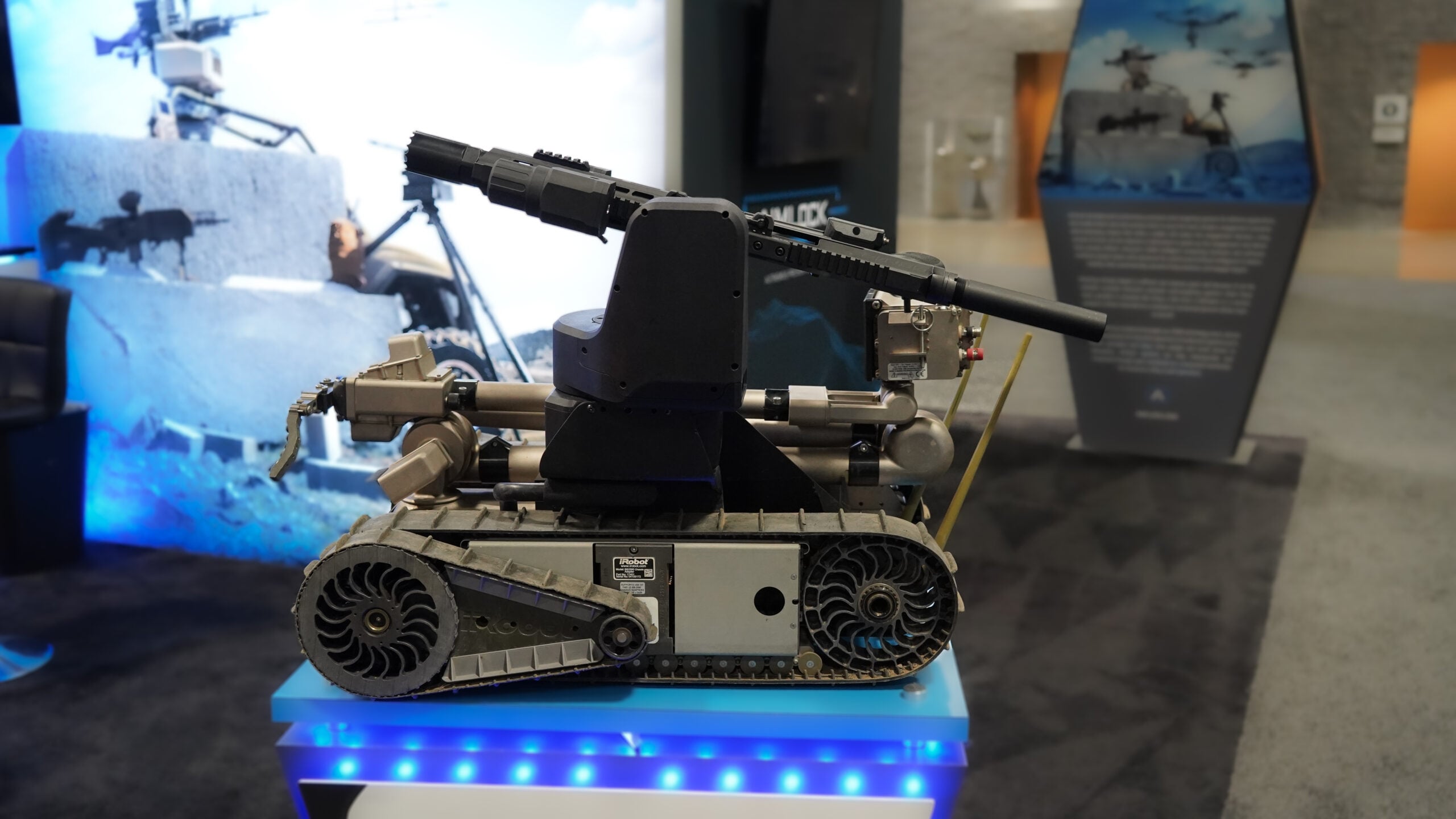
Aimlock, which develops "semi-autonomous precision auto-targeting systems" attached a 12-guage shotgun on a ground robotic vehicle at AUSA 2024. (Brendon Smith / Breaking Defense)
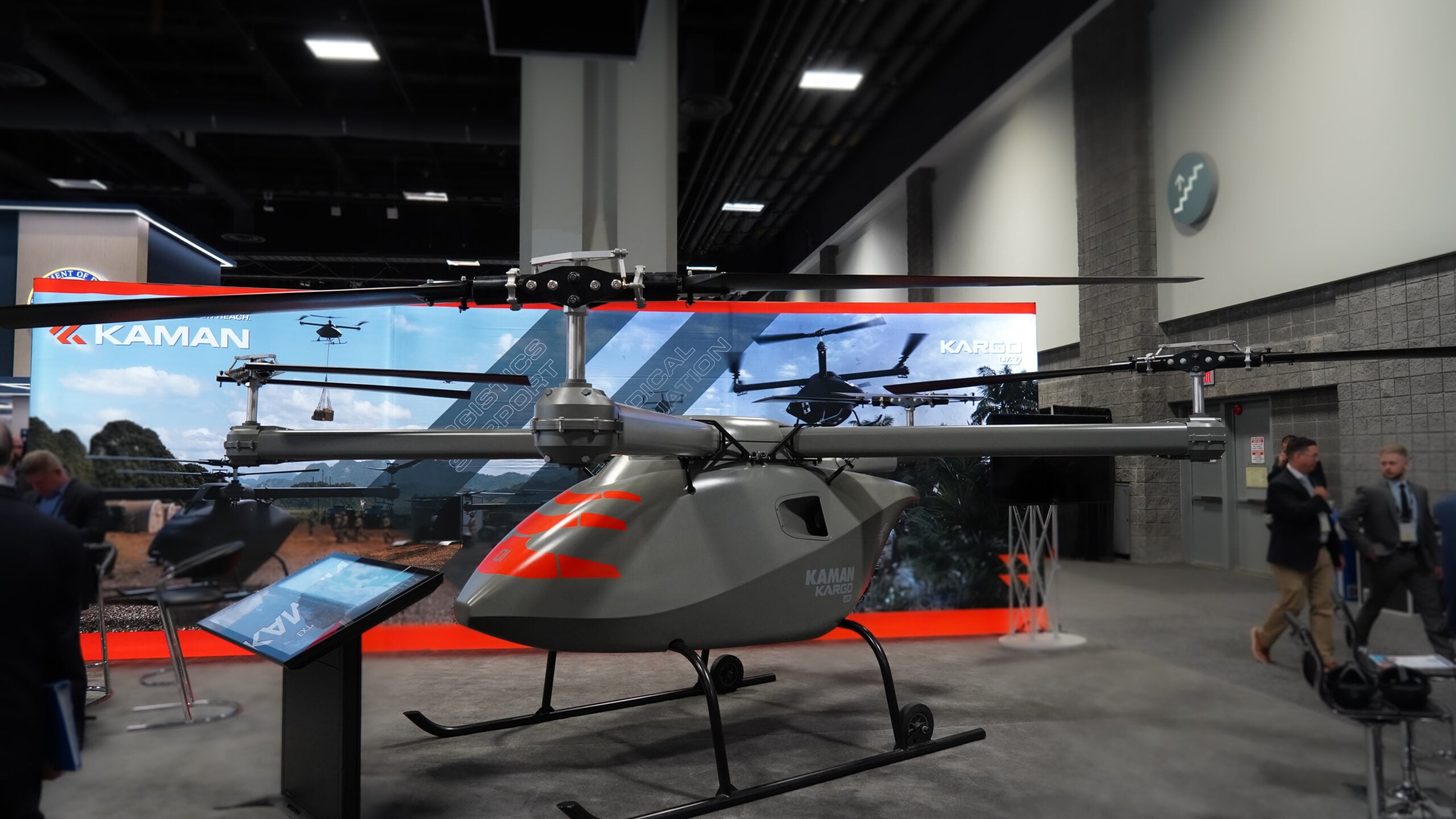
Connecticut-based Kaman Corporation offers unmanned cargo copters, as seen on the show floor at AUSA 2024. (Brendon Smith / Breaking Defense)
Defense giant Northrop Grumman shows off its Next Generation Handheld Targeting System (NGHTS), which the company says is designed to work in GPS-denied environments. (Brendon Smith / Breaking Defense)
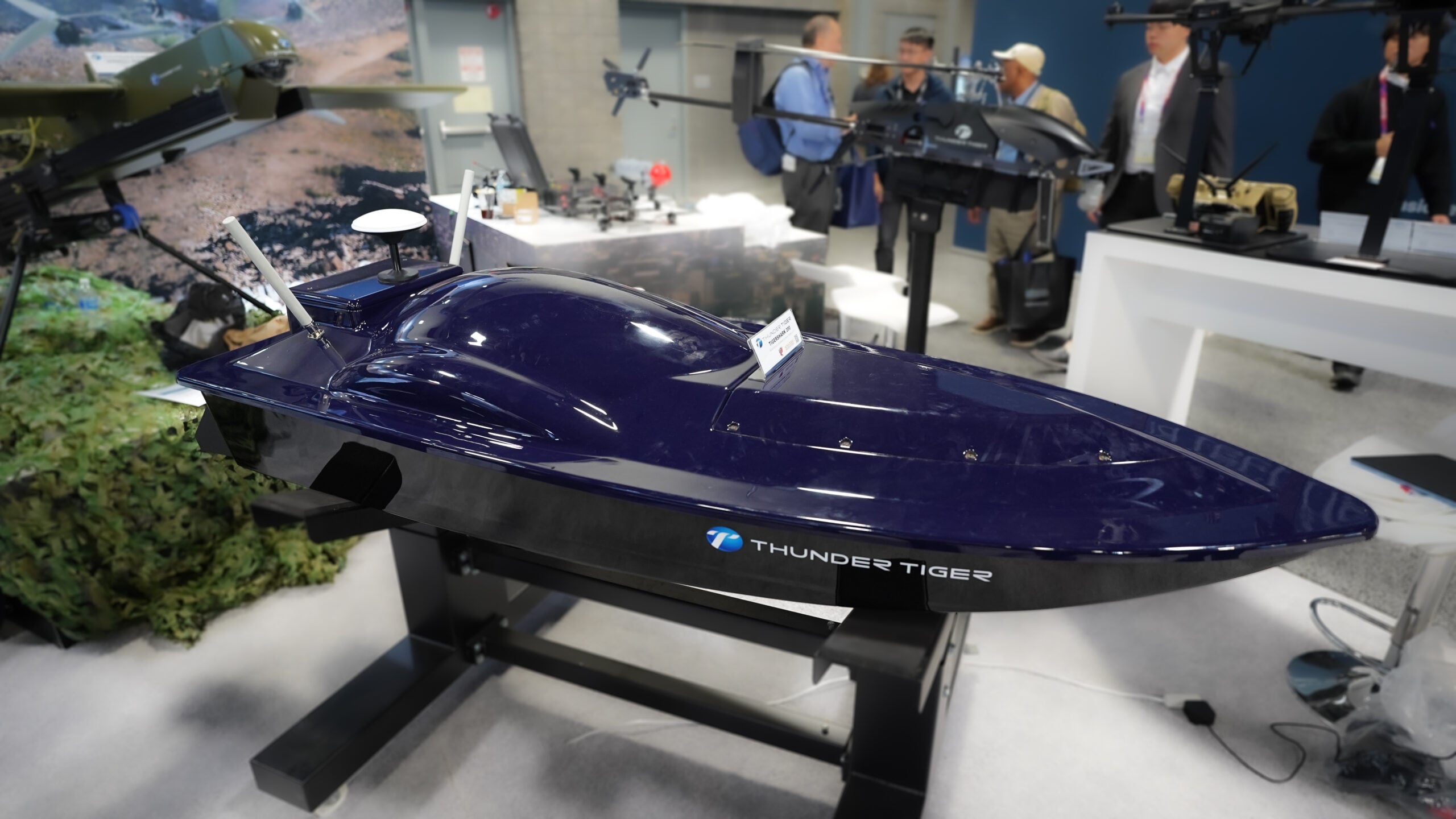
Taiwanese Thunder Tiger displayed an unmanned surface vessel, Seashark, at AUSA 2024. (Brendon Smith / Breaking Defense)
Northrop Grumman shows off its Bushmaster chain gun at AUSA 2024. The company launched a new Bushmaster M230LF (Link Fed) dual-feed chain gun, designed to neutralize UAS and ground threats, with the manufacturer targeting export customers for future orders. (Brendon Smith/Breaking Defense)
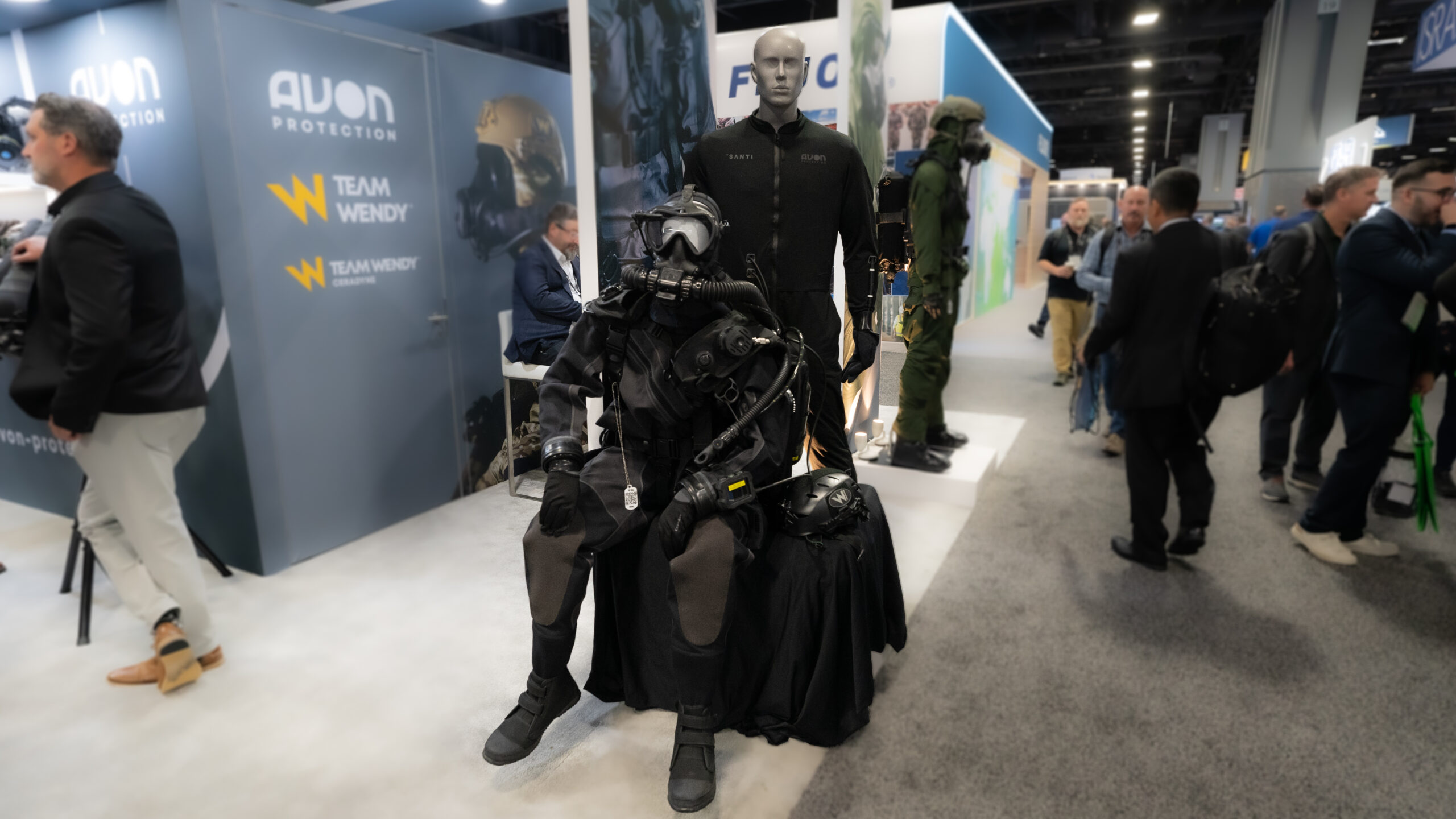
It's less ominous than it looks: Avon Protection's Core Intelligent undersuit and MCM100 Multi-Role Military Diving Rebreather are marketed on the show floor to help military divers keep warm under the water. (Brendon Smith/Breaking Defense)
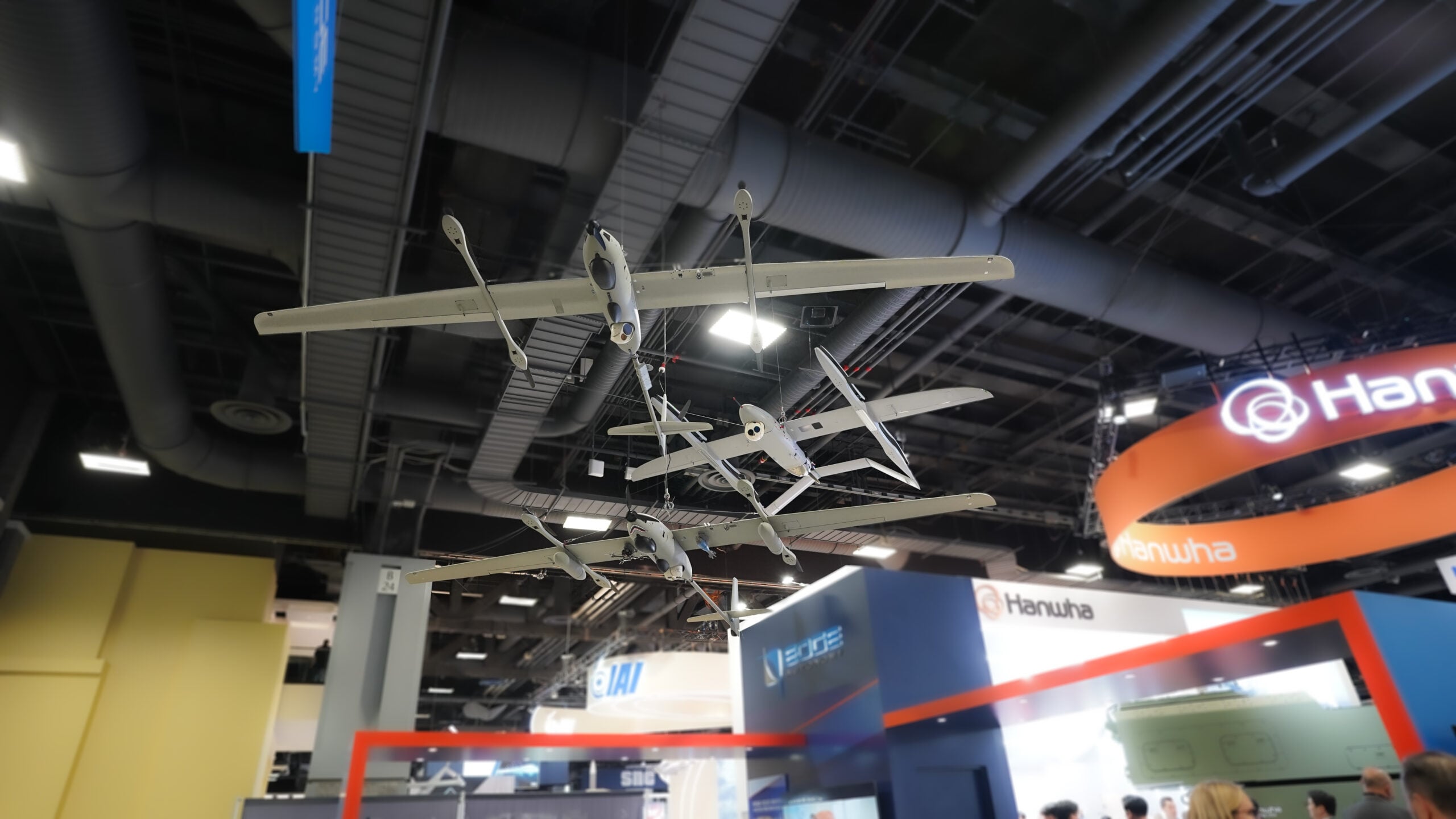
Edge Autonomy shows off its E140Z camera, part of its Octopus surveillance suite. (Brendon Smith/Breaking Defense)
Flyer Defense shows off its Flyer 72 vehicle at AUSA 2024. Selected by SOCOM, the company says it is capable of internal transport in the CH-47 and C-130 aircraft. (Brendon Smith/Breaking Defense)
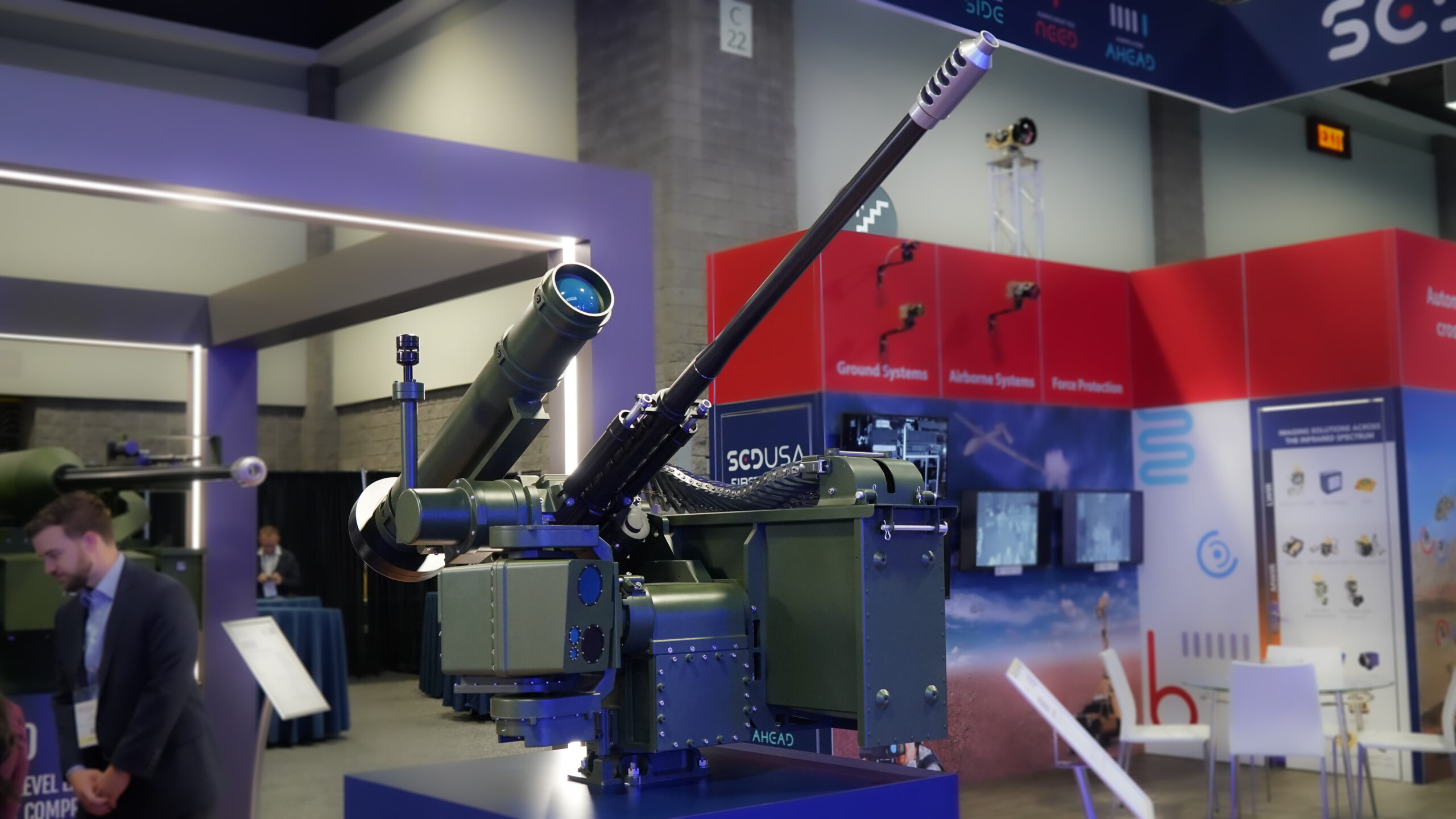
The Kongsberg Protector RS6 is a Remote Weapon System for low-recoil 30mm cannons. The company says it will be able to equip other weapons in the future. (Brendon Smith/Breaking Defense)
Bell helicopters showed off a number of items on the show floor. (Brendon Smith/Breaking Defense)
One of BAE's two AMPV varients on the show floor at AUSA 2024, this one sports the company's Modular Turreted Mortar System. (Brendon Smith / Breaking Defense)
Oshkosh Defense displays its Remotely Operated Ground Unit for Expeditionary Fires (ROUGE-Fires) on the floor at AUSA 2024. (Brendon Smith / Breaking Defense)
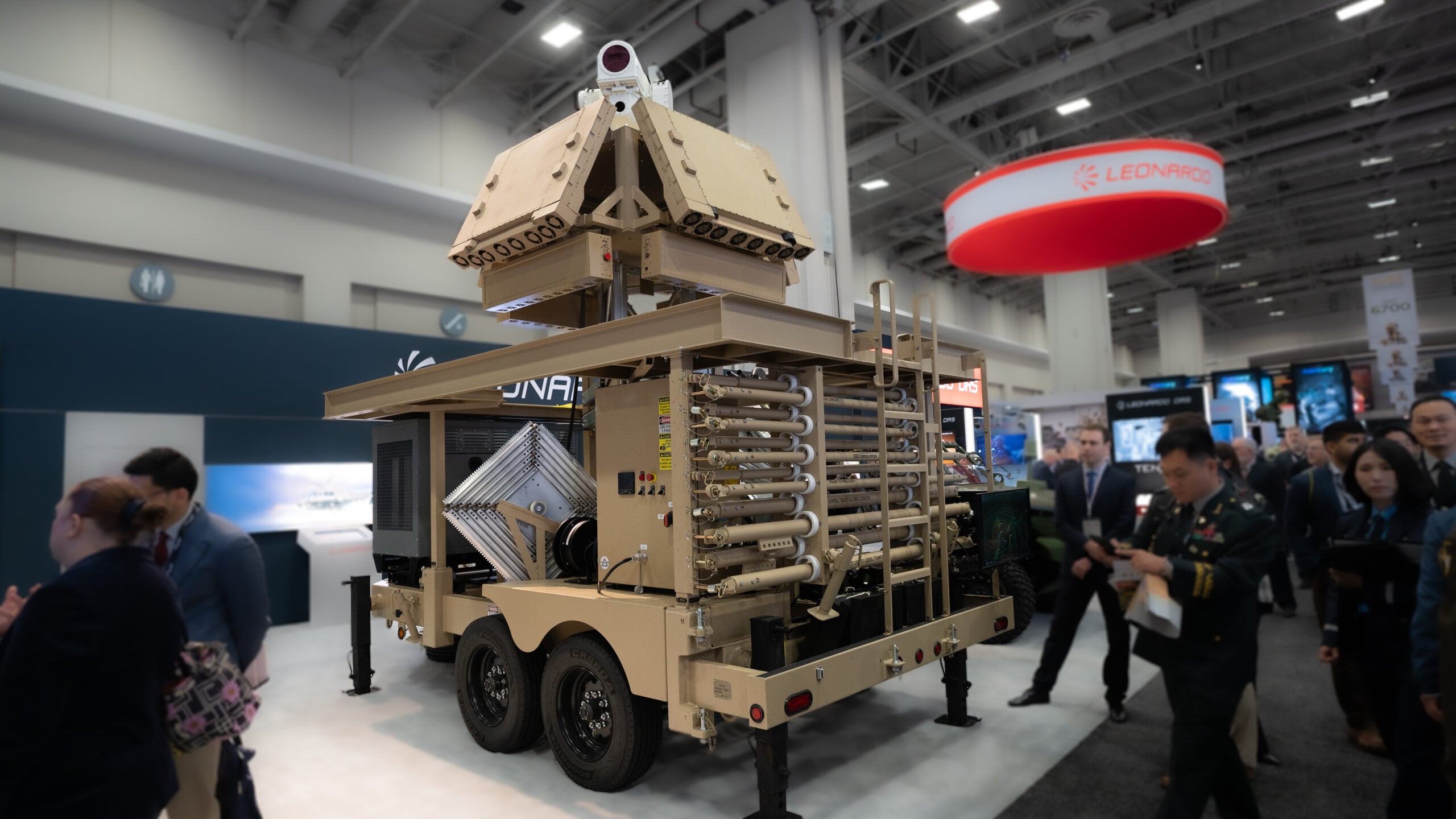
A Leondardo extended mast surveillance system ready to roll into position at AUSA 2024. (Breaking Defense)
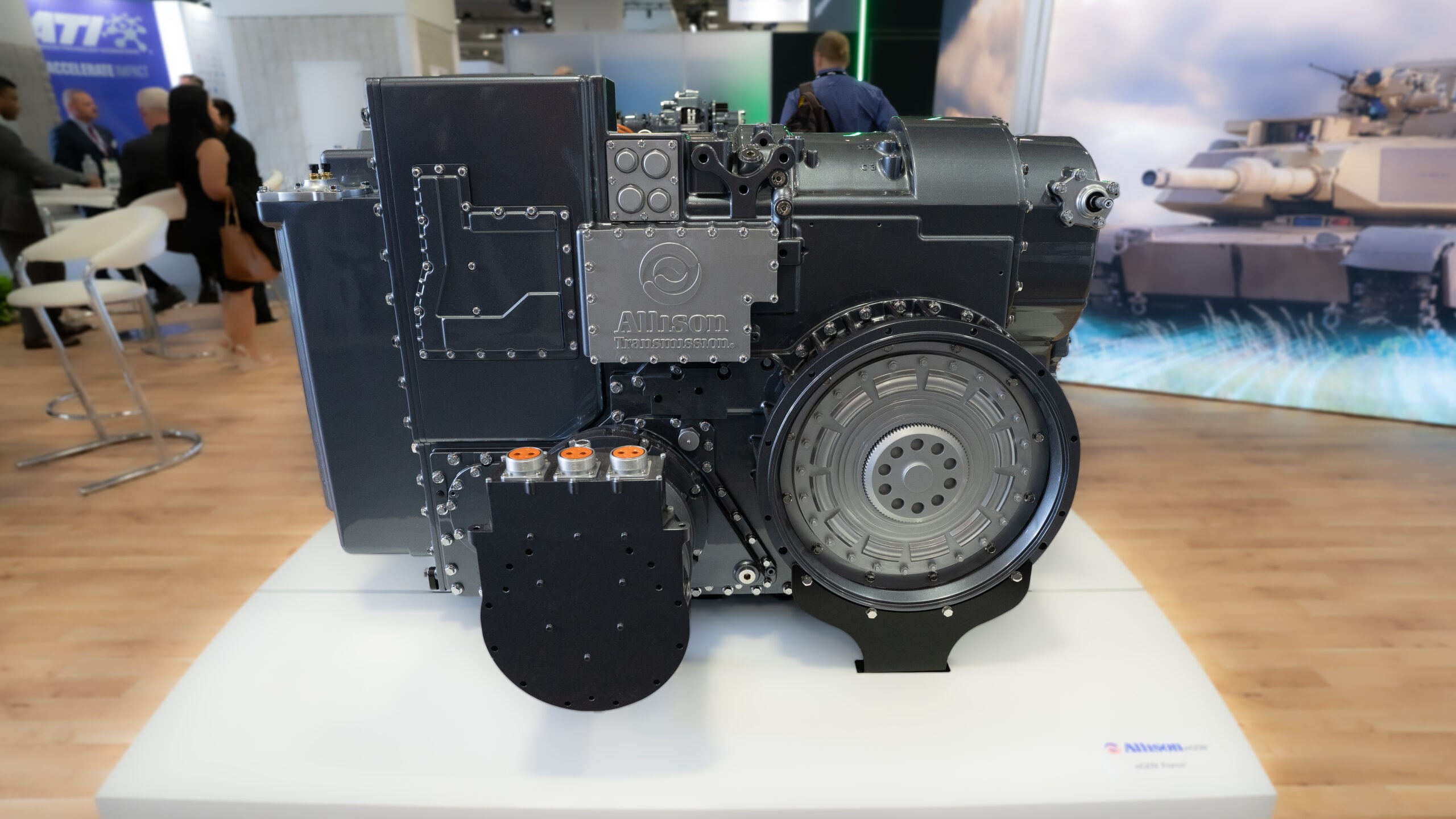
Allison Transmission eGen Power motor on display at AUSA 2024. (Brendon Smith / Breaking Defense)
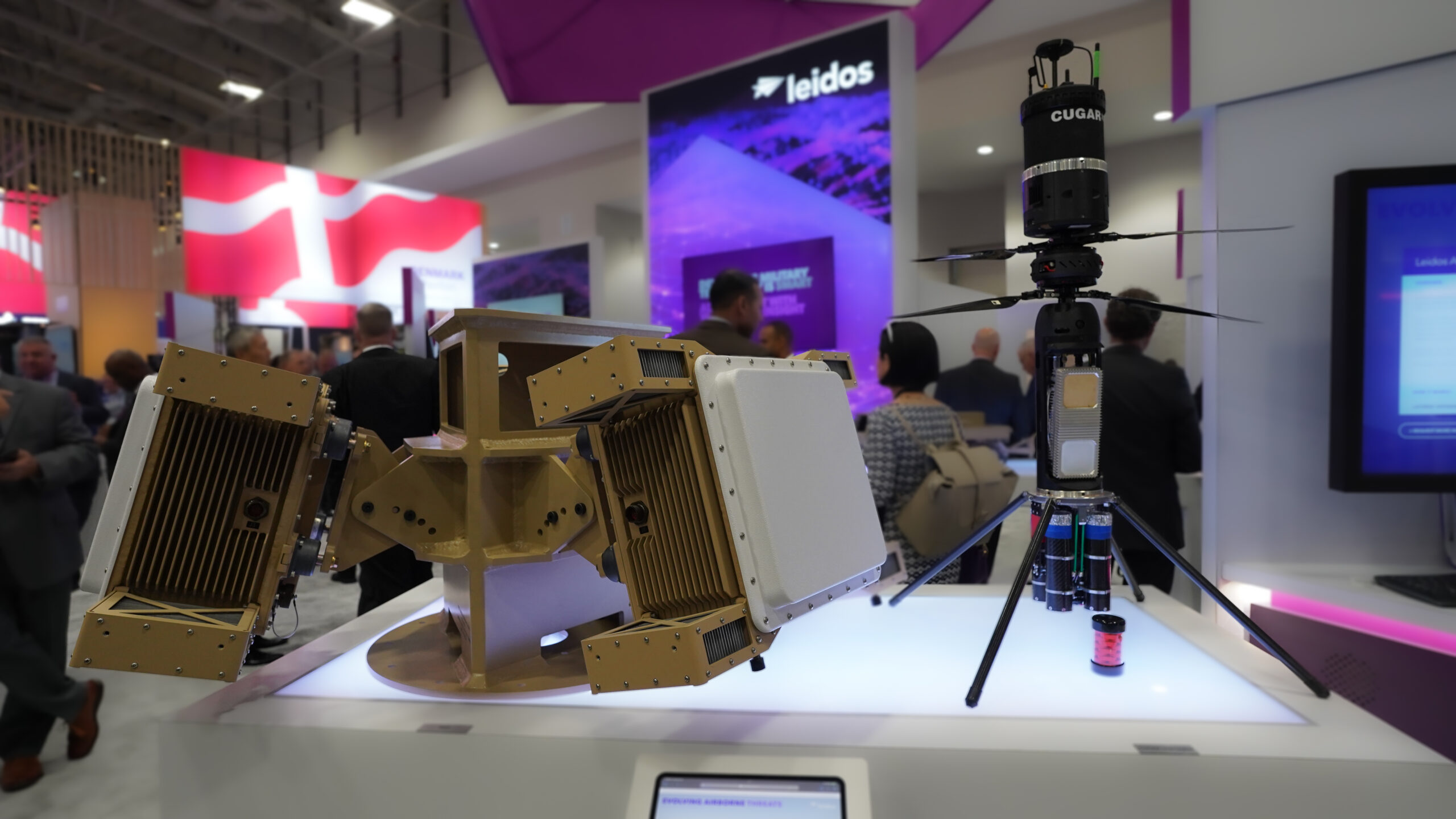
Leidos's Airshield counter-UAS system sits at the company's booth at AUSA 2024. (Brendon Smith / Breaking Defense)
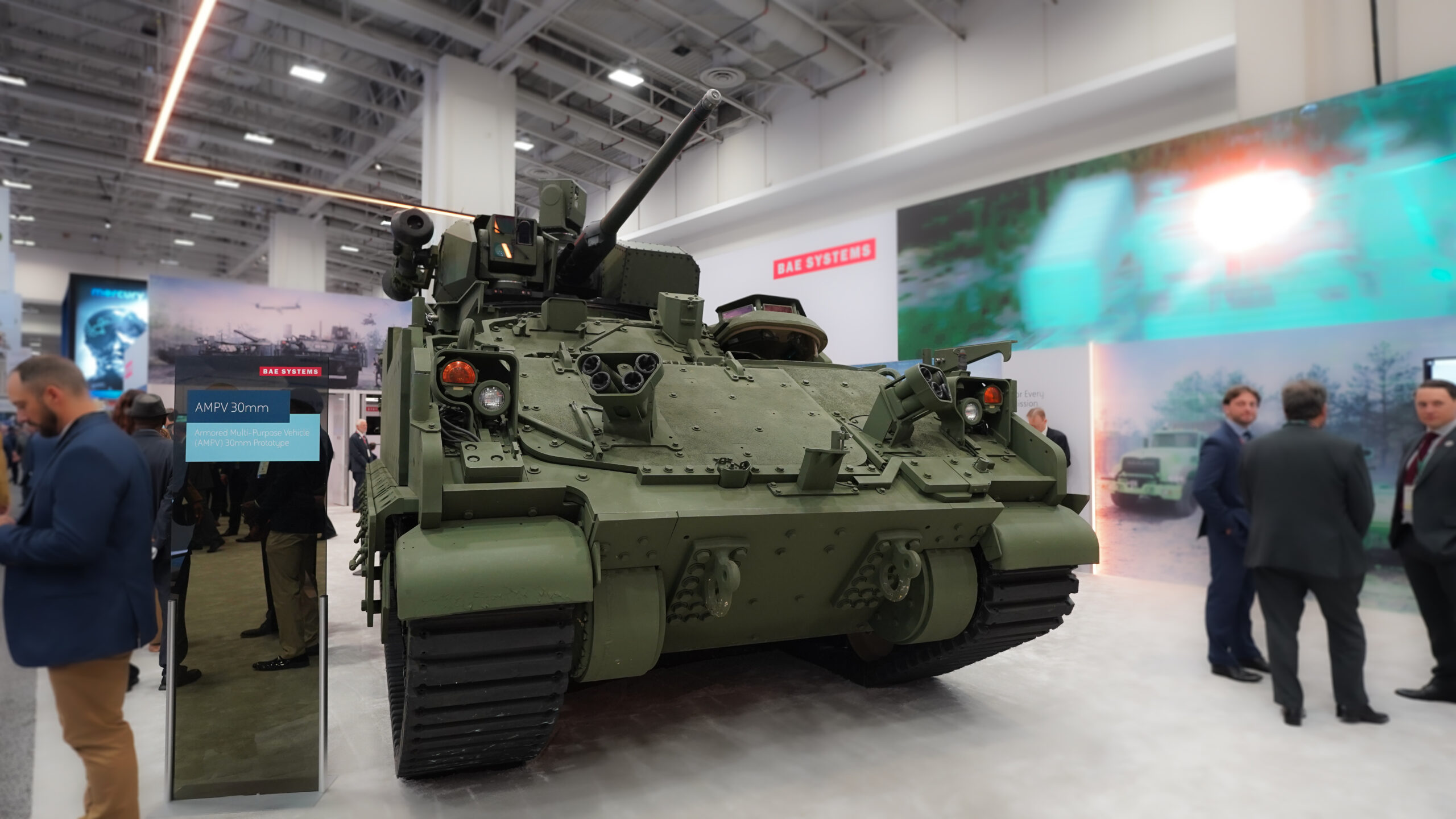
BAE's Armored Multi-Purpose Vehicle (AMPV) with a 30mm gun on display at AUSA 2024. (Brendon Smith / Breaking Defense)
A heavily armed next-gen tactical vehicle on display from GM Defense at AUSA 2024. (Brendon Smith / Breaking Defense)
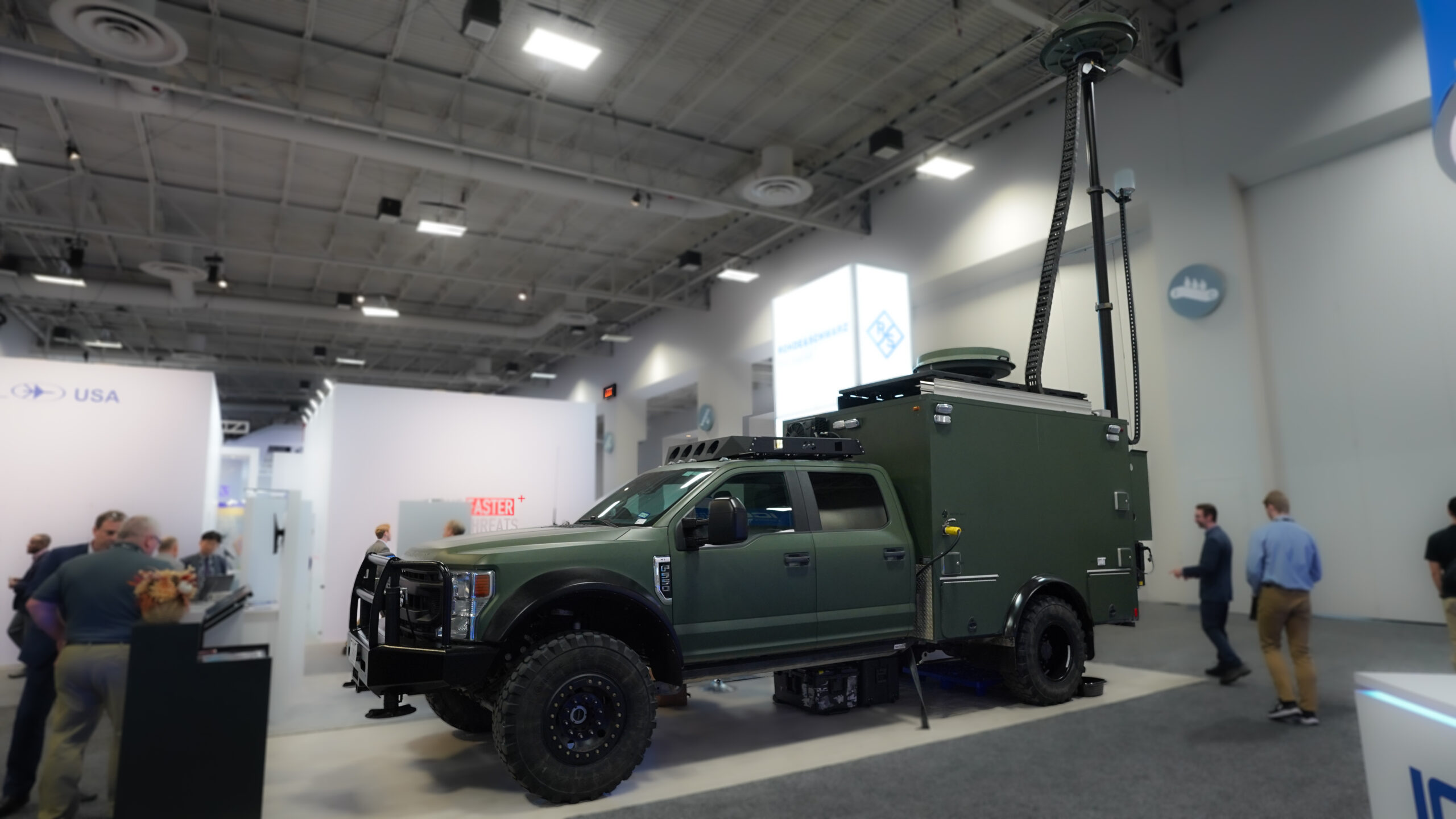
At AUSA 2024, Rohde & Schwarz displays a mobile signals system known as SigBadger. (Brendon Smith / Breaking Defense)