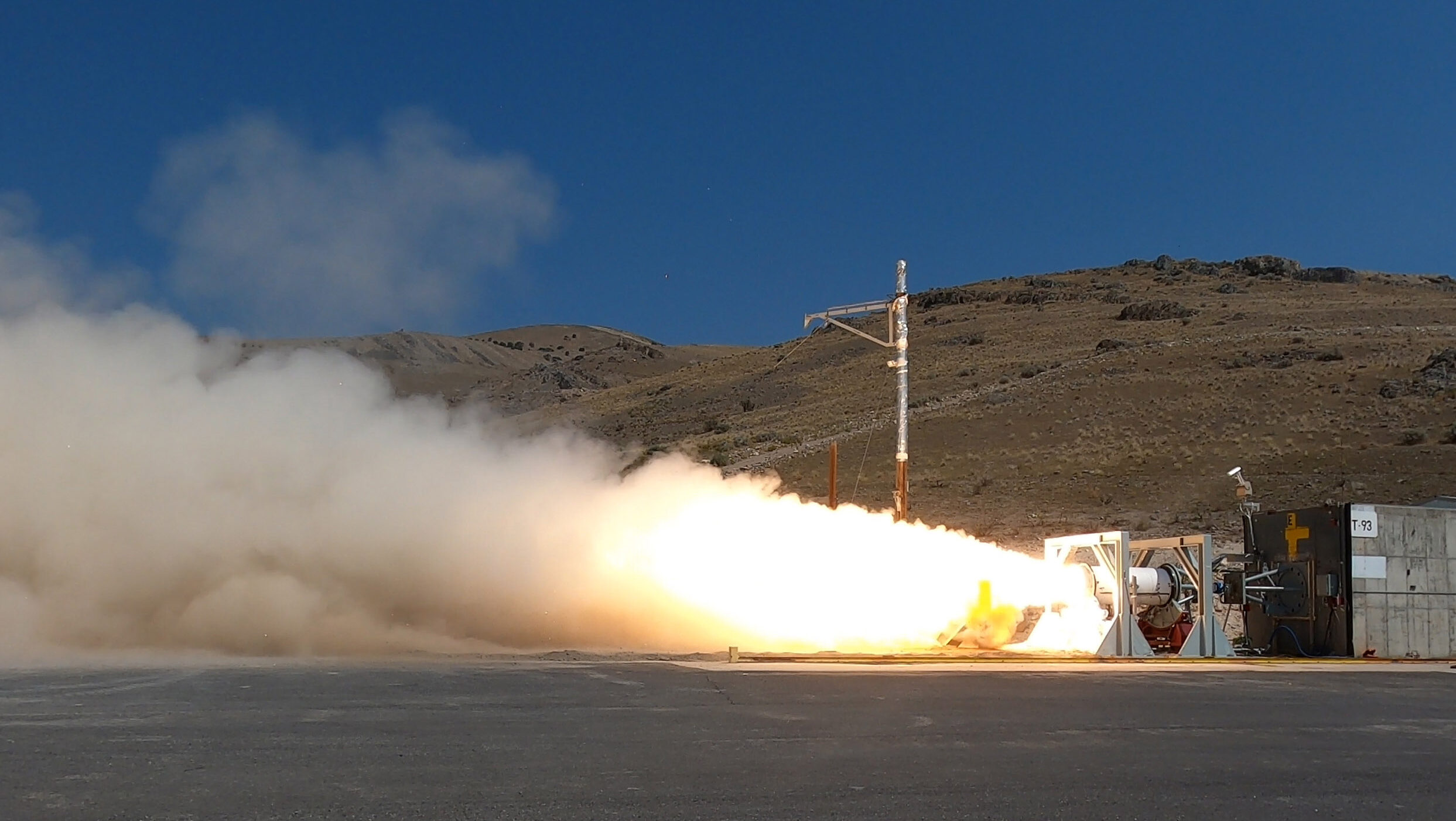
WASHINGTON — The United States, United Kingdom and Australia today signed a new agreement under the AUKUS trilateral security pact that will allow the three countries to use one another’s hypersonic weapons testing facilities as well as share technical information needed to develop and manufacture the technology.
The new agreement has been dubbed the Hypersonic Flight Test and Experimentation (HyFliTE) Project Arrangement, and will include “up to six” trilateral test flight campaigns by 2028 using a $252 million funding pool, according to a US Defense Department statement.
“We are increasing our collective ability to develop and deliver offensive and defensive hypersonic technologies through a robust series of trilateral tests and experiments that will accelerate the development of hypersonic concepts and critical enabling technologies,” Heidi Shyu, the Pentagon’s senior civilian overseeing research and engineering, said in the statement.
“Collaborative efforts are accelerating the development of underpinning enabling technologies, such as high temperature materials, advanced propulsion systems, and guidance and control. Each of these technologies is integral to the performance of hypersonic weapon systems and provides enhanced operational capability,” she continued
All of the American military services have invested heavily into developing hypersonic weapons in recent years, with the Army and Navy designing a common glide body, while the Air Force has started — and closed — several air-launched weapons programs.
“This landmark arrangement with our US and Australian partners demonstrates the commitment of AUKUS partners to staying at the forefront of battle-winning defence technology,” said John Healey, the United Kingdom’s defense secretary. “This work will keep us ahead of our adversaries on the battlefield, enhance our collective security and contribute to maintaining peace and stability in an increasingly complex and dangerous world.”


AI in the loop: Transforming military training and system design through smarter simulation
CAE and General Atomics use AI to enhance warfighter readiness, refine aerospace platforms, and learn from simulations.
The British statement added that the “Hypersonic Technologies and Capabilities Development Framework” was used to source industry support and includes “more than 90 suppliers and has a commercial headroom of” up to 1 billion British pounds, or 1.27 billion USD.