
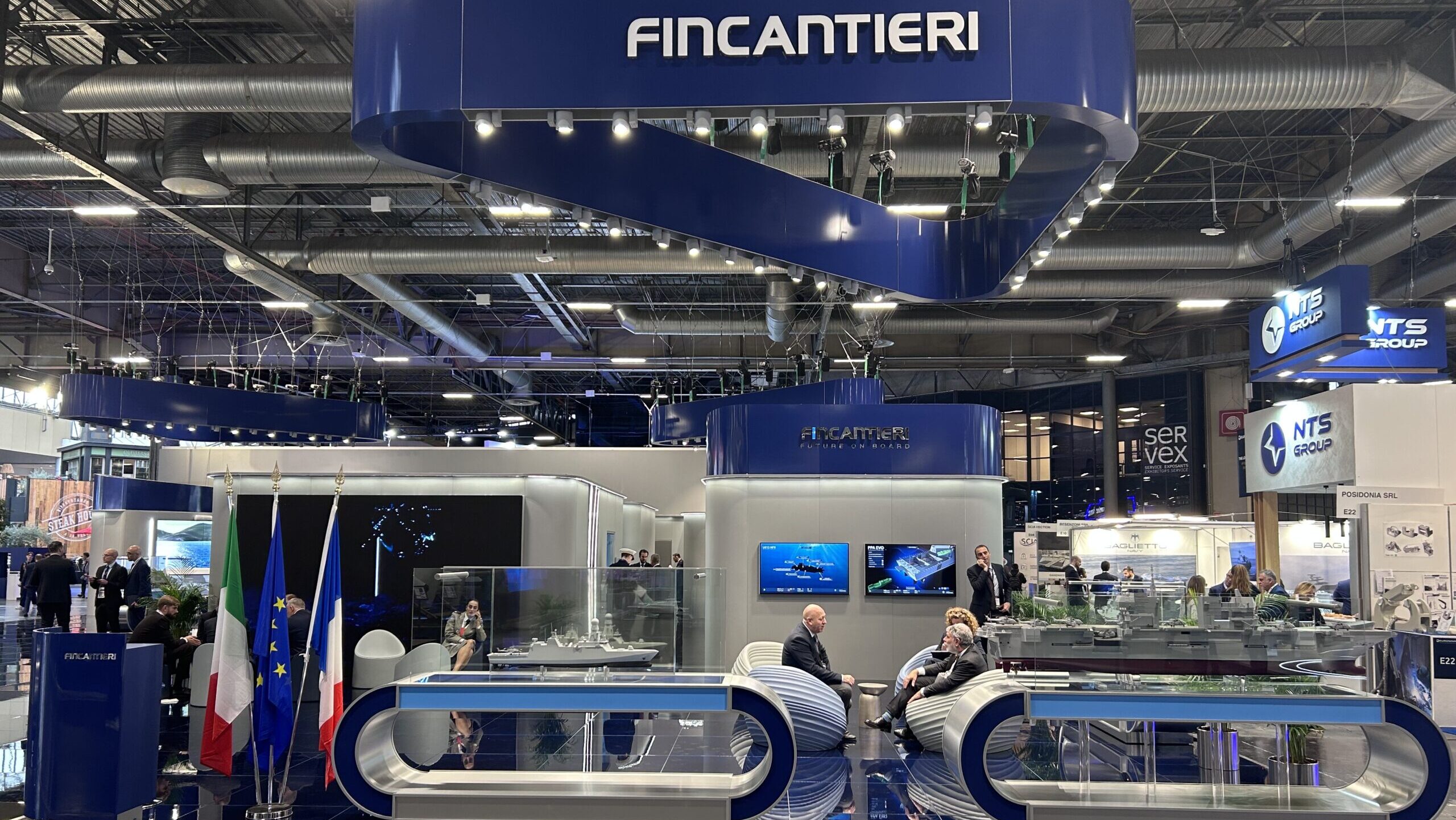
EURONAVAL 2024 — The head of Italian shipbuilder Fincantieri says the company is “giving our availability” to the German government as Berlin looks to secure the sale of Thyssenkrupp Marine Systems (TKMS) in the wake of US investment firm Carlyle withdrawing interest.
Fincantieri CEO Pierroberto Folgiero told reporters at Euronaval that “We don’t have numbers, we don’t have business plans,” because a valorization process “unlocking the value” of TKMS has to first run its course.
“It’s a very strategic and intuitive exercise. Numbers will follow,” he added. “We are at the disposal of the German system as a commercial partner, as an industrial partner, depending on their strategy … we are giving our availability because we believe that from an industrial perspective, it will make huge sense.”
He also spoke in positive terms about Fincantieri’s 25 years of collaboration with TKMS, adding, “We know each other, we have a high respect of the management, respect of the product. Enhancing European collaboration, enhancing defragmentation … is what Europe needs.”
The TKMS surface range includes Class 123, 124, 125 frigates, Class 130 corvettes and MEKO vessels. It also builds the Type 212CD submarine on order by Germany and Norway as part of a six ship deal agreed on in 2021 and valued at approximately €5.5 billion ($5.9 billion).
TKMS’s financial records also indicate that it holds backlog orders worth €11.8 billion.
In October, TKMS CEO Oliver Burkhard said on LinkedIn that Thyssenkrupp had been notified of Carlyle’s decision to “no longer pursue the valuation process for a possible partial sale” of the German naval business, before stressing that the move from the would-be buyer had “nothing to do with the quality and financial performance of our company.”

Based on confidentiality limitations, Burkhard did not outline why Carlyle walked away. The Financial Times reported that the decision was linked to German government “indecision and scepticism,” around the prospect of a private equity firm taking on a major, local defense company.
Burkhard also shared on social media that talks between TKMS and the German government have not finished. TKMS declined to comment.
Parent company Thyssenkrupp has a long history of attempting to sell off its naval division, including rejecting past Fincantieri proposals and passing on interest from France’s Naval Group, according to German business newspaper Handelsblatt.
Elsewhere, Fincantieri launched a new version of its PPA multipurpose combat ship at Euronaval, dubbed PPA Evo, brought to market to deal with emerging threats and distinguished by a modular and reconfigurable design.
The ship can accommodate 64 vertical launcher systems, eight anti-ship missiles, two 76mm guns, secondary 30/40mm Close in Weapon System (CIWS) guns, and can also host one Leonardo AW101 helicopter and one NH90 helicopter or a pair of NH90s, according to a company presentation. The integration of adaptable mission bays also enables the platform to deploy UAVs, UUVs and USVs.
A virtual Anti-Surface Warfare (ASuW) suite mock up shared with media also showed off a range of subsystems for detecting and engaging threats, including a combat management system, dual band radar, Infrared Search and Track (IRST) applications, Omega360 radar, a fire control radar and a decoy launching system.
Lead time for construction, between initial steel cutting through to delivery is expected to last between 48-50 months, said Roberto Olivari, senior vice president of naval vessel development and military innovation and research at Fincantieri.
Italy has ordered seven PPAs but plans on acquiring an additional two, designed to the Evo standard, to make up for two vessels that are committed to Indonesia, following a €1.2 billion deal with Jakarta announced in March.