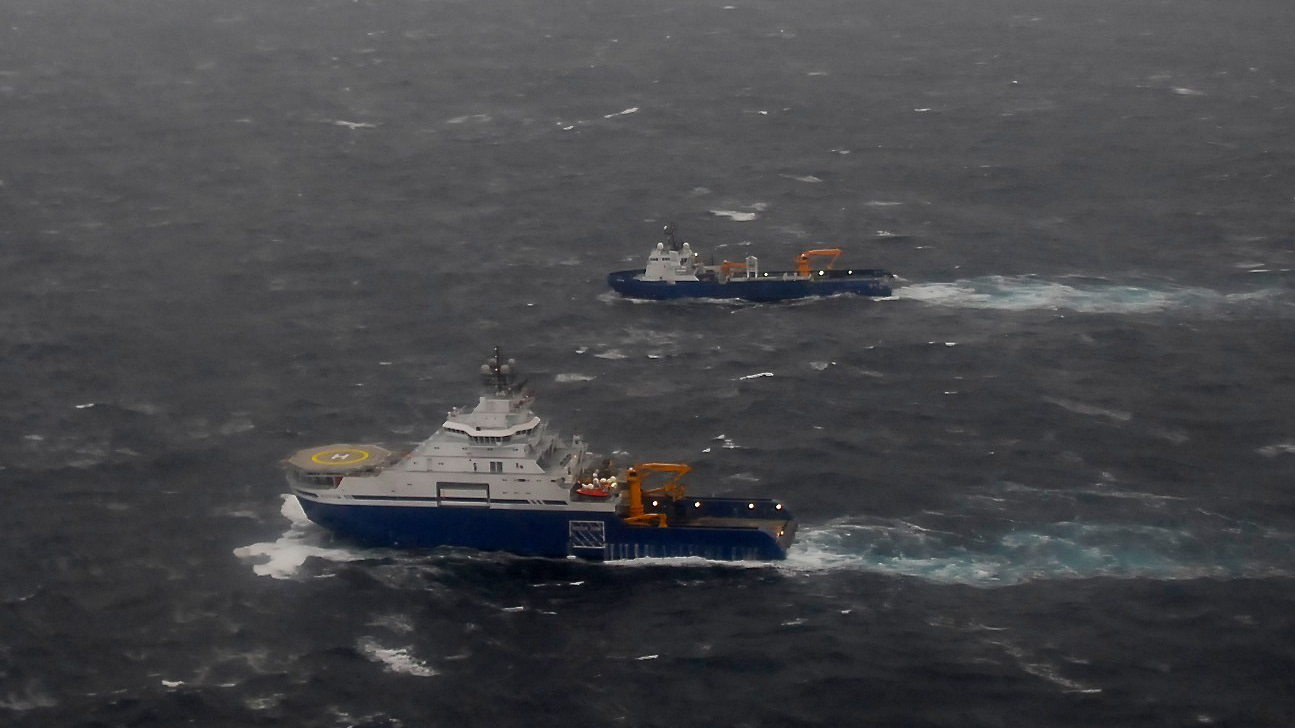
WASHINGTON — The US Coast Guard is seeking information from industry — at home and abroad — about its capability and capacity to build medium-sized icebreakers under a 36-month timeline from contract award to launching the ship.
“The purpose of this [request for information] is to increase the USCG’s understanding of the current status and capability of both the U.S. and broader international maritime industrial base as it pertains to existing icebreaking capable vessels or vessel designs that are ready for construction or already in production,” according to the notice published April 11. “Specifically, the USCG seeks to understand what existing vessels or production ready vessel designs satisfy or closely satisfy the below preliminary capability parameters.”
The Coast Guard’s ship specifications include a maximum length of 360 feet; beam of 78 feet; draft of 23 feet; a helicopter hangar and the ability to break ice with a thickness of 3 feet at a continuous speed of 3 knots. Further, the ship should have a range of 6,500 nautical miles at 12 knots and an endurance of 60 days. Responses are due April 25. Sixty Degrees North, a substack ran by Peter Rybski, a retired US Navy commander, first reported on the USCG’s new RFI.
Icebreakers are categorized based on their size, which roughly corresponds to their capability to break ice in the harshest conditions. The Coast Guard’s current marquee program, the Polar Security Cutter, seeks to build four or five heavy-class icebreakers capable of operating in virtually any climate at any time of the year.
The recent RFI, however, applies to what’s known as the smaller “Arctic Security Cutter” program, which is meant to provide medium-sized icebreakers that would operate in parallel with the PSCs to ensure the Coast Guard and the US Navy’s fleets have reliable access to the High North and Antarctic regions.
RELATED: ICE Pact: Why The US Had To Recruit Help In Race With Russia, China For Arctic Icebreakers


MQ-9B and Gambit Series: Advancing European Defense Capabilities
GA-ASI will build Gambit aircraft in Europe, partnered with European-based companies, with airframes available for international procurement starting in 2027.
The USCG currently operates two polar icebreakers, 18 domestic icebreakers and 16 ice-capable buoy tenders, a service spokesperson previously told Breaking Defense.
“The Coast Guard routinely conducts market research to ensure the service has updated information on the status and capability of the maritime industrial base. This RFI provides domestic and international sources the opportunity to submit information on existing icebreaking capable vessels or vessel designs that are ready for construction or already in production,” a Coast Guard spokesperson told Breaking Defense today. “The Coast Guard will use these responses to inform future program activities to deliver Arctic Security Cutters that address the service’s operational requirements for icebreaking capability in the polar regions.”
The RFI’s issuance follows numerous calls by President Donald Trump to substantially boost the country’s icebreaker count by dozens of ships. The Coast Guard has said it wants four or five heavy icebreakers from the Polar Security Cutter program and, later, about the same number from the Arctic Security Cutter program.
In March, the Coast Guard and Navy’s joint program office awarded. Bollinger Shipyards a contract valued at nearly $1 billion to advance the design and construction of the first Polar Security Cutter. That ship is now scheduled for delivery in May 2030.
Updated 4/15/2022 at 4:18 pm ET with comment from the US Coast Guard.
Breaking Defense Video