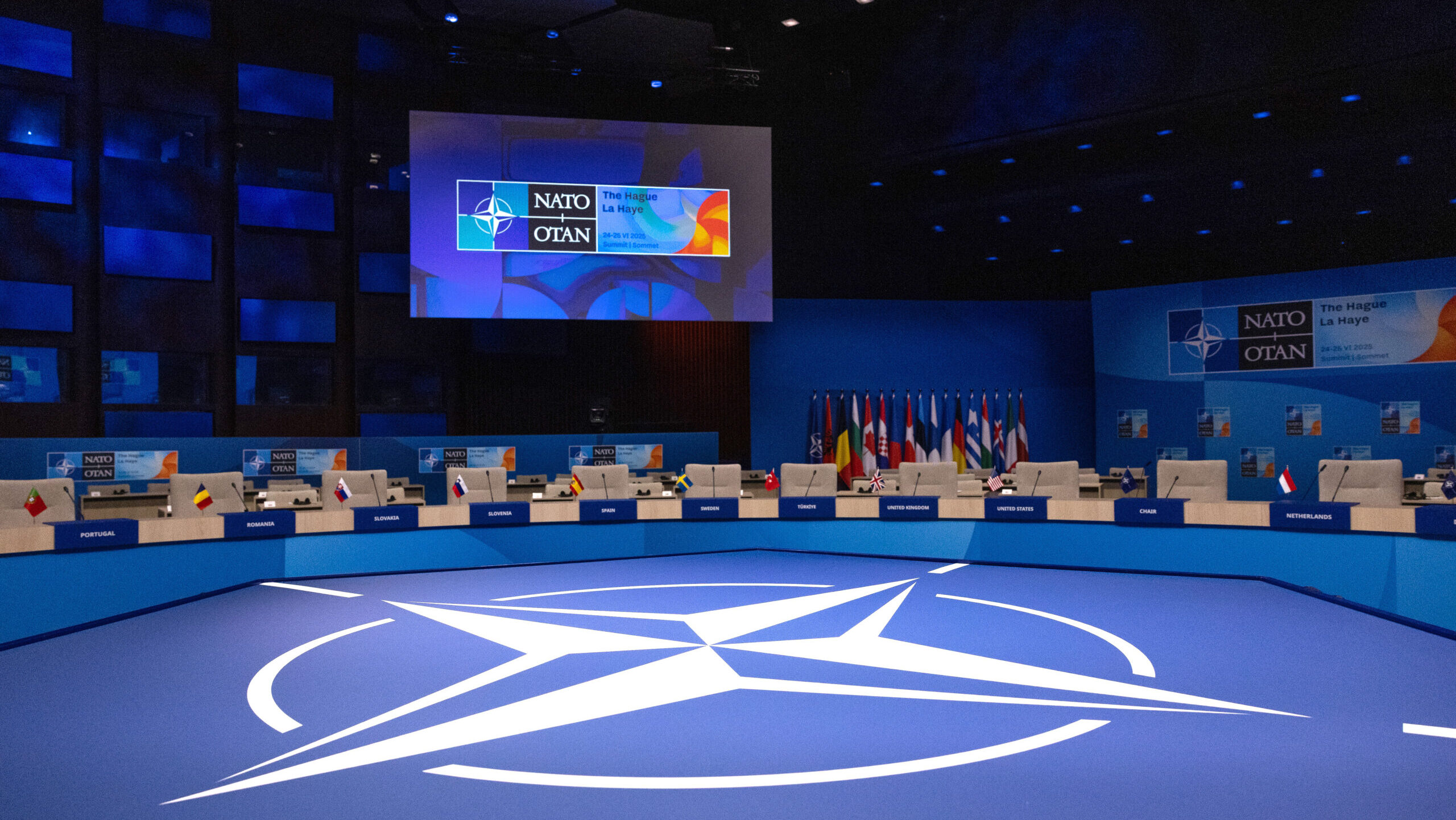
As NATO leaders gathered recently in The Hague to advance the Alliance’s defense innovation agenda, a critical but underappreciated truth came into focus: NATO may be Europe’s most effective — if unconventional — model for scaling technology in an era of strategic uncertainty.
What began as a defense alliance has evolved into something more: a transatlantic engine for dual-use innovation — one that helps overcome the structural barriers long holding back European tech competitiveness.
Across the continent, the challenge is not innovation, but scale. Europe has world-class research institutions, a highly educated workforce, and strong founders. But it struggles to turn those assets into globally significant companies. Worker productivity is slipping. Venture capital remains shallow. Only four of the world’s top 50 tech firms are European.
Entrepreneurs understand the trade-offs. Faced with fragmented markets and complex regulations, many relocate to the US or sell to American buyers. As Berlin-based founder Han Xiao put it: “In Germany, the first thing we talk about with AI is regulation. In the US and China, they talk about scaling.”
NATO, with its mission-focused coordination, offers a different playbook, one driven by alignment — of capital, procurement, and urgency — around a shared strategic mission. That’s a formula Europe’s innovation agenda has struggled to replicate. Through initiatives like the €1 billion NATO Innovation Fund and the Defense Innovation Accelerator for the North Atlantic (DIANA), the Alliance has built a 28-country platform for dual-use innovation, with 23 accelerator sites and 182 test centers.
The results are already compelling. Portugal’s TEKEVER, backed by NATO, has logged over 10,000 combat flight hours in Ukraine and reached unicorn status. Smaller firms like Astrolight (Lithuania), ARX Robotics (Germany), Lobster Robotics (Netherlands), and Space Forge (Wales) are scaling faster inside NATO’s ecosystem than they could within national silos. And while it is not a European-made system, NATO was able to acquire and deploy Palantir’s cutting-edge AI targeting platform in just six months — an acquisition pace few European governments could match.


Localizing tactical communications for sovereign, NATO-ready C3I
Beyond foreign sales, Rafael’s model enables tech transfer, local engineering, and is a template for NATO partners.
And this isn’t only about defense. NATO’s focus on secure AI, quantum sensing, and resilient communications directly benefits civilian sectors. Its new Digital Transformation Strategy and Rapid Adoption Action Plan could serve as a template for continent-wide tech adoption.
Investors are taking notice. Firms like Vsquared and OTB Ventures have received backing from the NATO Innovation Fund, signaling that this space is no longer niche — it’s investable.
We believe Europe should take four bold steps to scale what works. Each is grounded in existing, but still embryonic, efforts. The task now is to move from pilot to platform — building enduring structures with the speed, clarity, and coordination this moment demands.
1. Expand NATO’s Dual-Use Innovation Pipeline
DIANA and the NATO Innovation Fund offer grants, test centers, and early-stage support across 28 countries — but the pipeline remains fragmented. NATO should create a dedicated transition track to help startups move from prototype to deployment. This track would provide regulatory guidance, technical validation, and connections to both military and civilian customers. Paired with patient capital from the NIF, it would accelerate time-to-field and derisk commercialization. The goal: Institutionalize, not just initiate, dual-use pathways.
2. Replicate NATO’s Procurement Model Across Civilian And National Systems
NATO’s six-month deployment of Project Maven shows what’s possible when speed and coordination are mission-aligned. Most national systems can’t match that pace. Europe should adapt NATO’s fast-lane procurement model to sectors like energy, health, and digital infrastructure — using fixed timelines, joint purchasing, and clear demand signals to break the pilot-to-nowhere cycle. The tools exist. Now they must be codified and scaled.
3. Launch A Strategic Dual-Use Growth Facility
With NATO allies now committed to raising defense spending to at least 5 percent of GDP by 2035, this is the time to ensure that innovation and emerging technologies receive a significant share of that investment, not just traditional capabilities. Europe’s capital gap isn’t early-stage — it’s growth. A Strategic Dual-Use Growth Facility, backed by NATO-aligned public and private capital, would fund companies in areas like AI, quantum sensing, and resilient comms. Some funds exist. What’s missing is coordinated scale.
4.Create A NATO–EU Innovation Alignment Forum
Innovation is scattered across NATO, the European Commission, EDA, and national agencies. Coordination is ad hoc and slow. We propose a NATO–EU Innovation Alignment Forum — a standing body to align investments, test infrastructure, and adoption timelines across civil and defense institutions. It would reduce duplication, fast-track deployment, and close the gap between lab and field. Europe does not lack programs — it lacks orchestration. This forum would begin to fix that.
Europe faces a choice: persist with fragmented national strategies — or lean into NATO’s proven model. The Alliance wasn’t designed to be Europe’s most effective innovation platform. But through necessity and design, it may have become exactly that.
Wendy R. Anderson served as Chief of Staff to the late U.S. Deputy Defense Secretary Ash Carter and, most recently, as Senior Vice President at Palantir Technologies. Martijn Rasser is Senior Director for Economy at the Special Competitive Studies Project and formerly Chief Strategy Officer at Datenna.