IDEF 2025 — On the first day of the International Defense Industry Fair (IDEF 2025), host nation Turkey made its presence known not only through the amount of real estate its firms have taken on the show floor, but also by the considerable number of unveilings made.
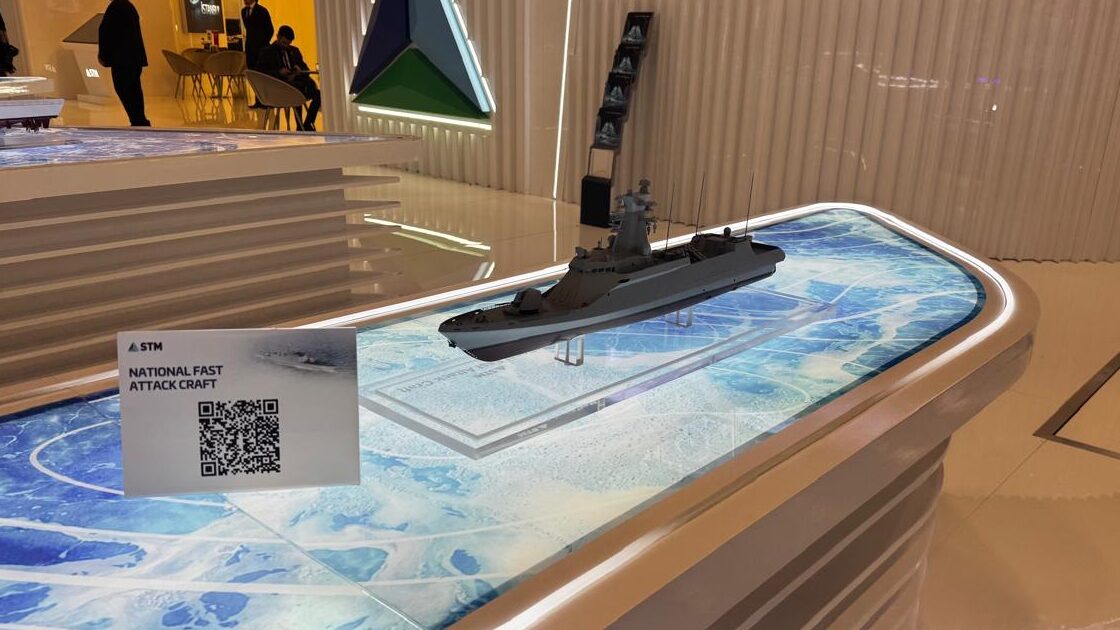
Leading the pack with announcements was STM, which unveiled a model of what it said was the first locally produced Fast Attack Craft (FAC). The company announced that the steel cutting of the vessel officially started earlier this month.
“Until now, our Navy has been operating foreign-designed FACs, particularly those designed by Germany. Following our national corvette and frigate programs, Türkiye has now acquired the capability to design and realize its own indigenous FAC,” said STM General Manager Özgür Güleryüz in a statement.
The model displayed at the show reveals that the vessel is equipped with radars, machine gun, and missile launchers. FAC is expected to be 68m (over 220 feet) long and has a displacement of 700 tons, with maximum speed of 39 knots.
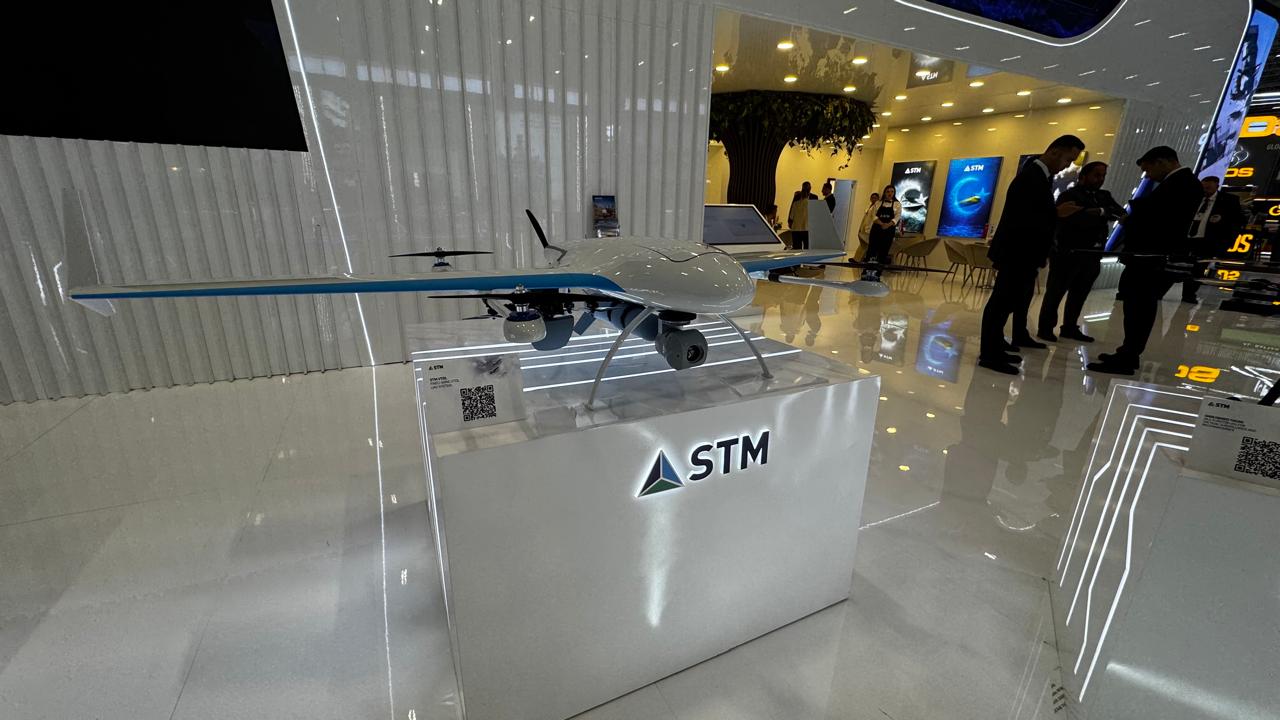
STM also debuted a fixed-wing unmanned aerial vehicle UAV, with scale 1:2 model at its stand at the show. The model suggested the actual drone could be equipped with electro-optical pod for performing Intelligence, Surveillance and Reconnaissance (ISR) missions and is capable of carrying two munitions or a smaller person view (FPV) drone.
The firm also unveiled the advanced version of its Boyga UAV, dubbed as Boyga-B, which is a larger UAV with rotary wings and that can carry larger payload up to 8kg (about 18 pounds). STM also showcased for the first time TUNGA, what it called a smart munition system equipped with a camera in the tip of the missile.
While previously revealed on social media, STM’s KARGU First Person View (FPV) suicide drone made its first actual appearance at the show today.
Another major Turkish defense firm, Havelsan, took the opportunity at the show to exhibit its ADVENT combat management system equipped for the first time with MAIN AI system to enhance efficiency. The system will be equipped on all the modern Turkish vessels, and was selected by nine countries for export, according to the company.
A Havelsan official at IDEF told Breaking Defense that the combat management system can be integrated on 85 platforms, including other than vessels, aerial systems and land vehicles, can execute multiple data links and is NATO compatible.
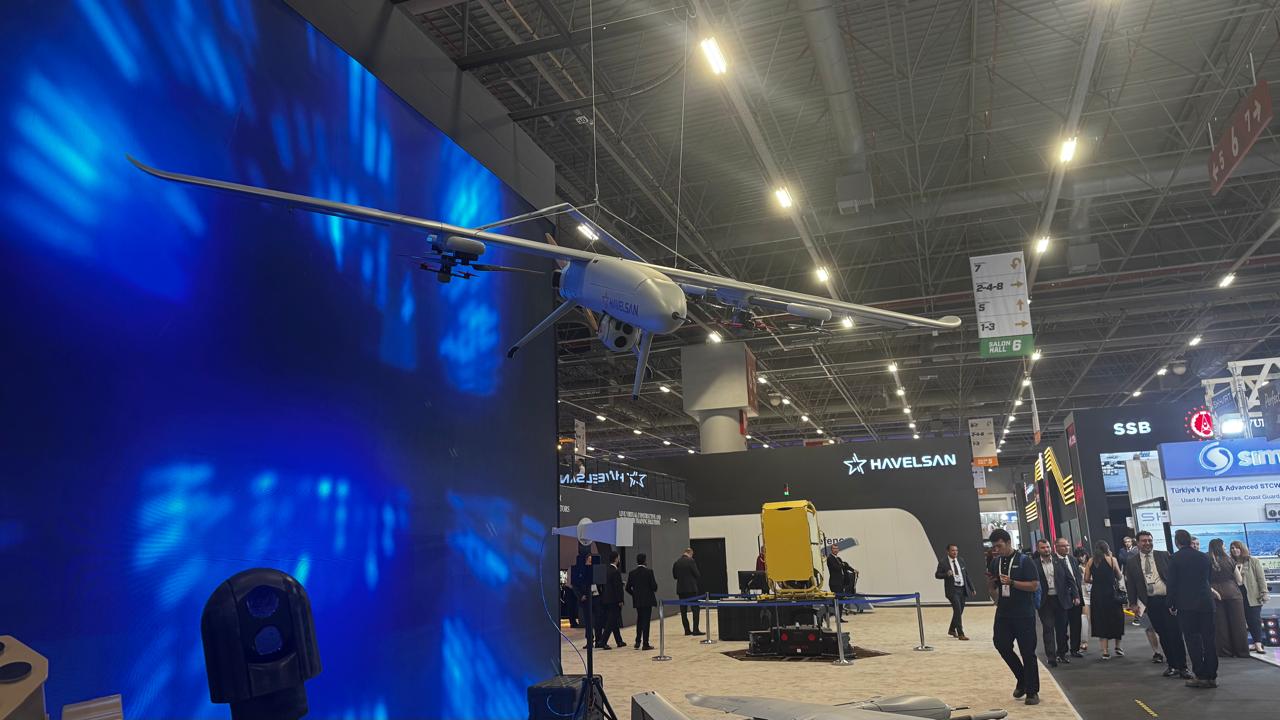
The firm also debuted Bulut UAV, which is a fixed- wing surveillance drone, that the company says has six hours of endurance time, and can fly up to 8,000 feet. The new drone is Havelsan’s latest edition to its swarming unmanned systems capabilities, and will join BAHA UAV, SANJAR USV and Burkan UGV in the company’s digital troops concept.
In another area of the show where armored vehicles are on display, Nurol Makina unveiled the electric version of its NMS vehicle named ENMS-Light. The new armored vehicle is fully electric, equipped with batteries and can perform missions up to eight hours before being recharged. Company officials at the booth told Breaking Defense that this vehicle can mostly be used as an electric transport vehicle.
Meanwhile, Retinar GSR, a new ground surveillance radar, was unveiled by Meteksan. The radar with 12km (7.5 miles) range of human detection has been developed for border security and critical infrastructure protection. The firm also debuted SUVDES, which is a detection system placed under water to detect submarines and underwater vehicles.
