WASHINGTON — Northrop Grumman’s new high-tech testbed for AI and autonomy software will take flight “very shortly,” the company’s director for Advanced Autonomy told reporters ahead of the annual Air Force Association conference.
The crucial component, Dan Salluce said, is a new autonomy software package the company is calling Prism.
Prism will not only fly the testbed aircraft — a modified Model 437 Vanguard — but also allow it to plug-and-play all sorts of specialized software provided by partner companies, Salluce said. These “modules” could vary widely, from relatively straightforward code required to operate a single sensor, to complex “mission planning” AI that tells the aircraft how to achieve a human-designated objective.
“The [Vanguard] airplane will be set to fly with that [Prism] software integrated on it very shortly,” Salluce told reporters on Tuesday. “I think we’ve been saying ‘end of summer,’ but glancing at my inbox in real time … it will be imminent.”
A drone can fly safely from “point A to point B” using Prism alone, Salluce explained, but different military missions, different operational environments, under-wing equipment pods, or new onboard systems require all sorts of specialized software.
To accommodate those add-ons, Prism is built according to a design philosophy called open architecture that makes it easier to add new software modules — not just from Northrop, but from any company that meets certain common technical standards set by the US Air Force, known as the Government Reference Architecture. (The best-known commercial equivalent is how iPhones and Android devices have an “app store” allowing users to download software from a wide variety of third-party vendors).
“We take care of the flight operations, we take care of the safety and air-worthiness [for our partners], and we turn them loose on our computers to write software,” Salluce said.
The benefit for Northrop is that Prism can use software from a wide range of innovative vendors, Salluce said, letting the company tap into the rapidly evolving world of AI companies instead of having to develop all the code it needs in-house. The benefit for the AI companies is that they can plug their software into Prism to get it flight-tested in a real aircraft — without having to build their own testbed, develop all the software required to handle the fundamentals of safe flight, or otherwise reinvent the wheel.
The overall “ecosystem” of the Vanguard aircraft running Prism software, plus various supporting systems on the ground, is called Beacon. Northrop has announced six participating partner firm so far: Applied Intuition, Autonodyne, Merlin, Red 6, Shield AI, and SoarTech (a subsidiary of Accelint).
These aren’t traditional defense suppliers, but software companies working on autonomy and AI. Joining Beacon allows them to piggyback on hardware like the testbed aircraft of an established Pentagon prime contractor like Northrop.
“I think the market is very hungry for autonomous testbeds,” Salluce said. “A lot of companies are innovators in the AI and autonomy space, but they’re not yet hardware vendors.”
This effort has been at least a year in the making, and it won’t reach its full potential immediately, Salluce said.
So far, Salluce said his team has spent “the better part of this year” modifying the Vanguard jet to run Prism. Vanguard first flew last August as a manned jet, without Prism aboard. Even after Prism is installed, there’ll still be a human aboard as a “safety pilot,” able to take control of the aircraft if the autonomy software has a problem, Salluce said. That makes it much easier to get the testbed aircraft certified as safe to fly, an arduous process that can take even longer for drones.
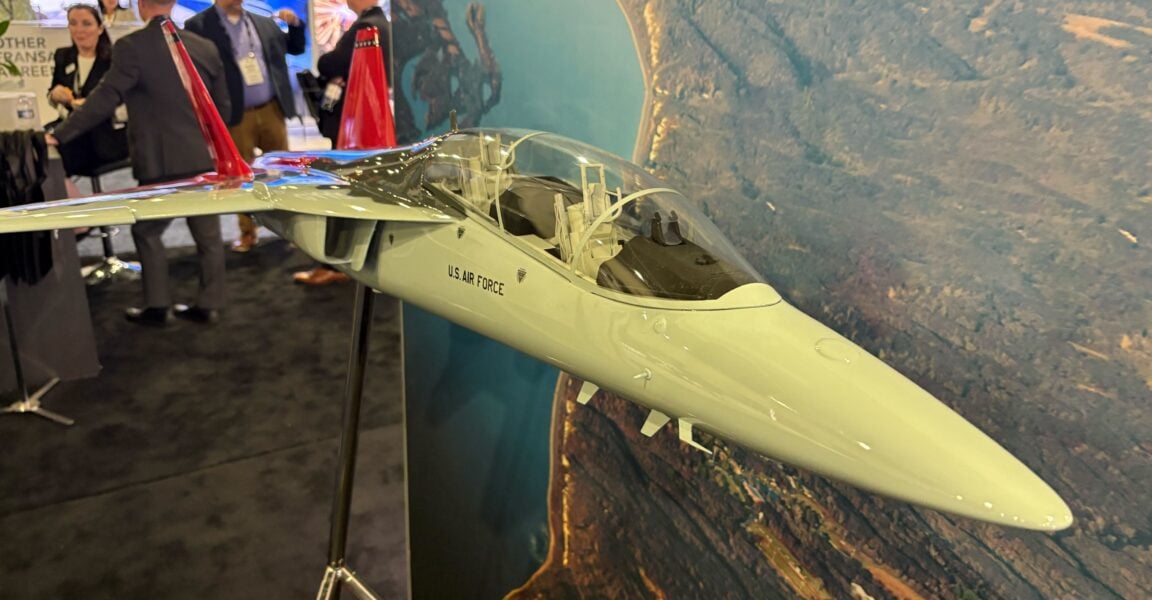
Vanguard itself is a lightweight, agile jet originally touted as a forerunner for the Air Force’s “loyal wingman” Collaborative Combat Aircraft. But, Salluce said, once Prism is fully installed and properly tested, Vanguard will become a versatile flying testbed for software modules that might one day deploy on a wide variety of aircraft, from the high-performance CCA to low-cost “attritable” drones or even helicopters.
In a classic crawl-walk-run approach, the first flights of the modified Vanguard aircraft will just be testing the Prism software itself, Salluce said. Once that foundational capability is proven out, he went on, the Beacon team will start loading software modules from the partner companies and flight-test those.
“It will be a systematic buildup,” Salluce said. “Expect to see a lot more news from us as the year progresses. We’ve got a number of flight plans involving various levels of partner integration, so this very much is 2025 activity rolling into 2026.”
PHOTOS: AFA 2025

 Gallery