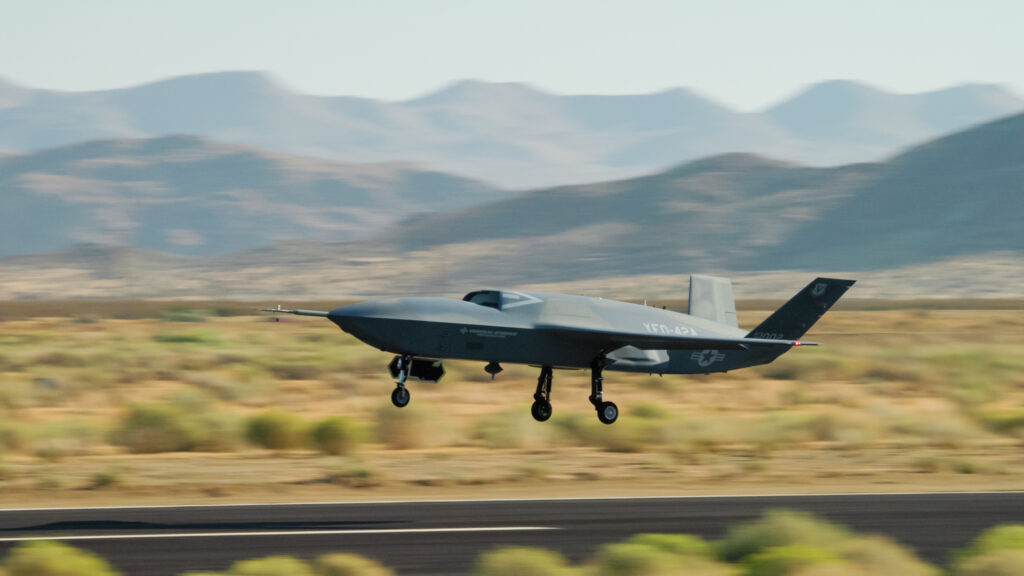
In today’s rapidly evolving security environment, the demand for uncrewed combat air vehicles (UCAVs) has never been greater.
General Atomics Aeronautical Systems, Inc. (GA-ASI) is leading the charge, delivering operational capabilities — not years from now, but today, said GA-ASI President David R. Alexander.
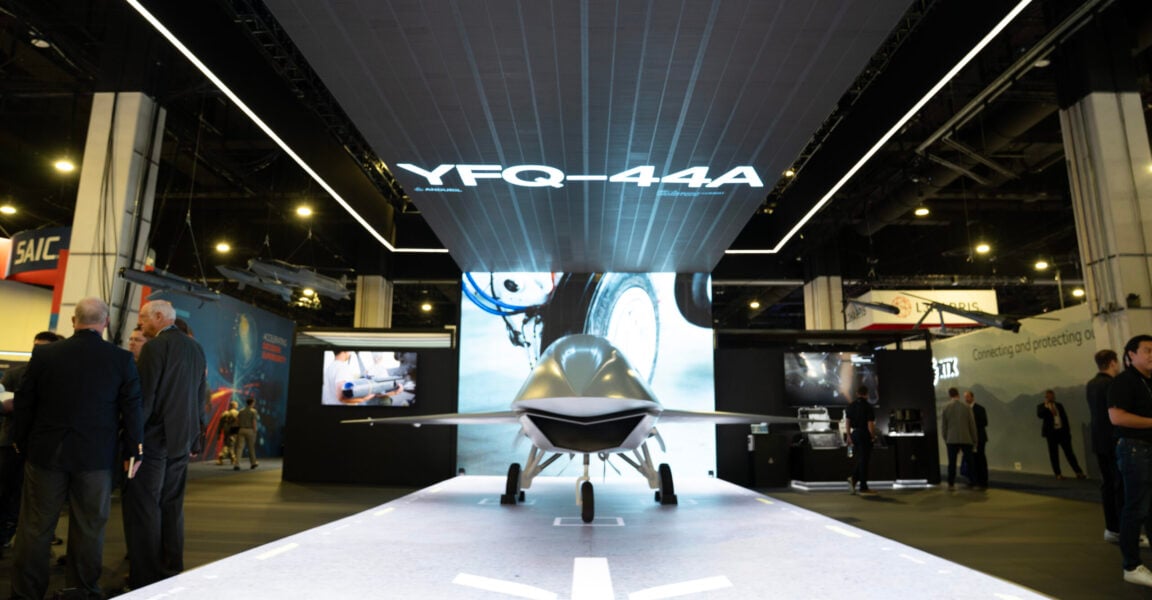
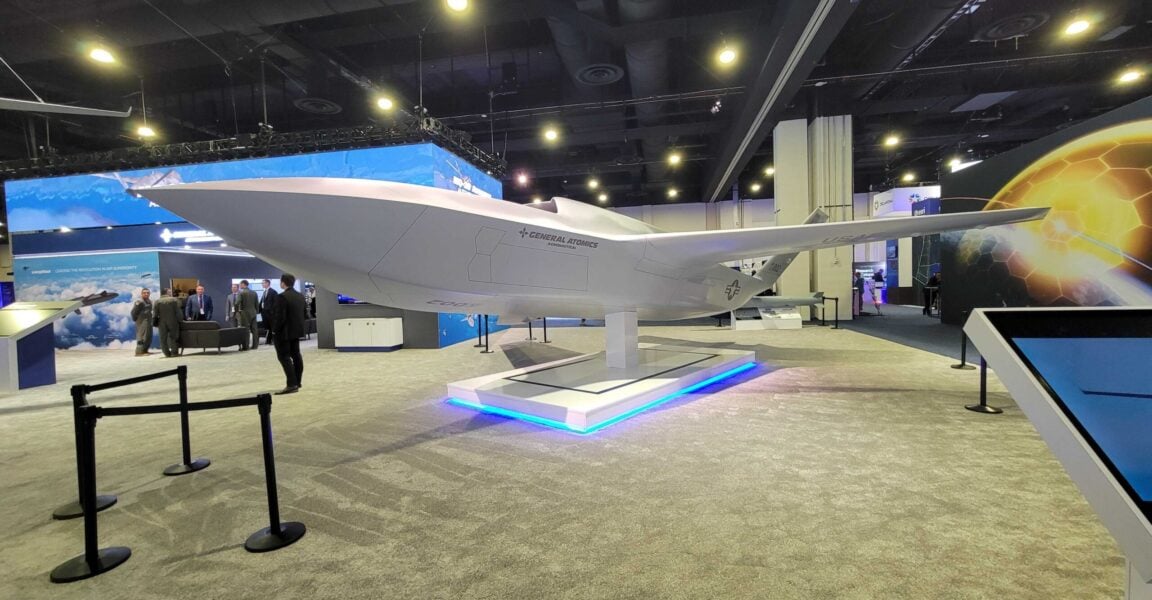
In the wake of the August announcement from the U.S. Air Force that it had begun flight operations with the YFQ-42A Collaborative Combat Aircraft (CCA) built by GA-ASI, Alexander said the company was demonstrating that it can deliver at the pace today’s threats demand.
While some competitors talk a big game, Alexander noted that flashy renderings and ambitious concepts can’t replace capabilities ready and flying today.
“There’s now broad recognition that unmanned systems will need to make up a large portion of future force structures to meet the challenges of 21st century warfare,” Alexander said.
“The concepts we’re talking about are novel, and because they haven’t been done before the door has opened for new starts and even major prime contractors to come forward with ideas that look good on paper but may be years from being fielded, if ever. Other companies are passing off old technology as new and unrelated work as a ‘legacy’ they haven’t earned to seem a less risky option than they are.
“GA-ASI, on the other hand, likes to show and not tell.”
“This is where we’re different,” Alexander continued. “We’re not imagining the future —we’re delivering it. GA-ASI pioneered unmanned aerial systems, and we’ve never stopped pushing them forward.”
“Reality Check”
With the threats posed by near-peer competitors growing by the day, the nation doesn’t have time to waste chasing big ideas from companies without the ability to execute them, Alexander said.
He observed that the discussion around fielding revolutionary new capabilities should not become untethered from practical considerations.
“When it comes to who can deliver these capabilities in the quantities and at the speed needed, I think we could all do with a reality check,” Alexander said.
“The question is, ‘Does X or Y company have the expertise, the track record, and the physical infrastructure today — now — to get these capabilities into production?’ You can’t get there with just one or even two of those.
“For GA-ASI, I know the answer for all three is ‘yes.’ ”
Alexander pointed to three key areas that showcase GA-ASI’s leadership in UCAV development: advanced hardware, including fully operational UCAV systems flying today; cutting-edge autonomy and sensor fusion software that enable warfighters to interpret and navigate the modern battlespace; and physical infrastructure paired with a skilled workforce capable of rapidly manufacturing these systems at scale.
- Hardware. Alexander pointed to two previous generations of GA-ASI jets as evidence the company can deliver on future UCAV requirements. The first generation, the MQ-20 Avenger®, was first flown in 2009 and is still in use by the company today as a test and development platform. The latest generation, represented by the XQ-67A Off-Board Sensing Station (OBSS) developed with the Air Force Research Laboratory, made its first flight in 2024 and is being used as a fully operational engineering model for YFQ-42A, an unmanned fighter currently being developed for the U.S. Air Force.
- Software. GA-ASI has invested heavily in advanced autonomy, building up an arsenal of over 1,000 software engineers with expertise in artificial intelligence, machine learning, and autonomy. The investment has led to several notable accomplishments, including June’s simulated shootdown of live and virtual test targets using MQ-20 Avenger performing combat air patrol, as well as July’s autonomous collaborative engagement demonstration using Avenger and four CCA stand-in aircraft used to investigate and destroy enemy targets.
- Manufacturing. GA-ASI boasts more than 5 million square feet of manufacturing space, including advanced additive manufacturing technology that the company is using to increase its output and lower the cost of its aircraft.
Bringing It All Together
Alexander stressed that delivering real capabilities to warfighters requires seamlessly integrating hardware, software, and production processes.
“It would be wonderful if the assignment was to build a single great aircraft that meets all the requirements the customer is looking for and declare victory,” he said. “But this isn’t a science experiment. Look at the global security landscape — this is an urgently needed capability that must be deployed at scale.”
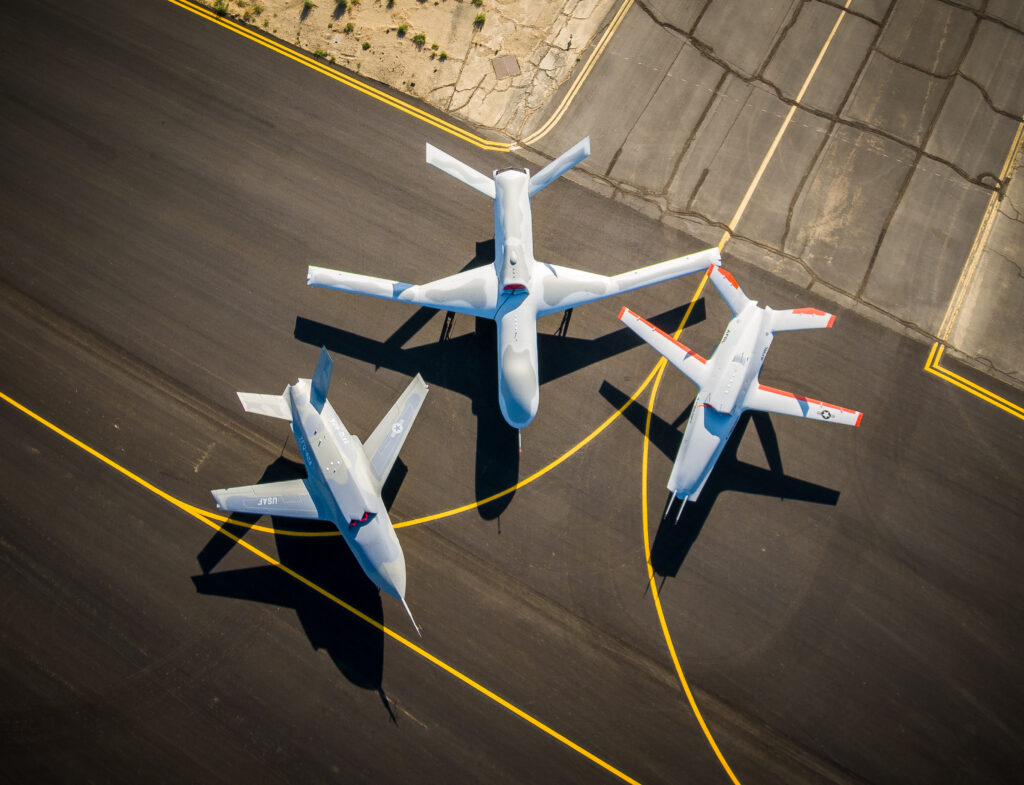
GA-ASI has been fully leveraging its decades of work in UCAV development, Alexander went on.
“To make sure we had an aircraft we could produce quickly and in high numbers, we made the decision early to invest our own money into the planning for YFQ-42A,” he explained.
“We bought down a lot of hardware design risk for that aircraft to ensure that — from nose to landing gear to tail — we had a system that could be mass produced in the company facilities we have today.
“Then there’s the software piece. So, when you see Avenger or XQ-67A used in kill chain or autonomy demonstrations, that’s us dialing in the software piece of this.
“That’s what I mean when I talk about the ability to bring together experience, expertise, and physical infrastructure to deliver for the customer.”
For Alexander, what sets GA-ASI apart from the pack are real aircraft, flying today, that are advancing the capabilities the U.S. and its partners will need to compete and win on the 21st century battlefield, he continued.
“The future of unmanned combat air vehicles like CCA isn’t about concepts or promises — it’s about delivering real operational capabilities today,” Alexander said.
PHOTOS: AFA 2025

 Gallery