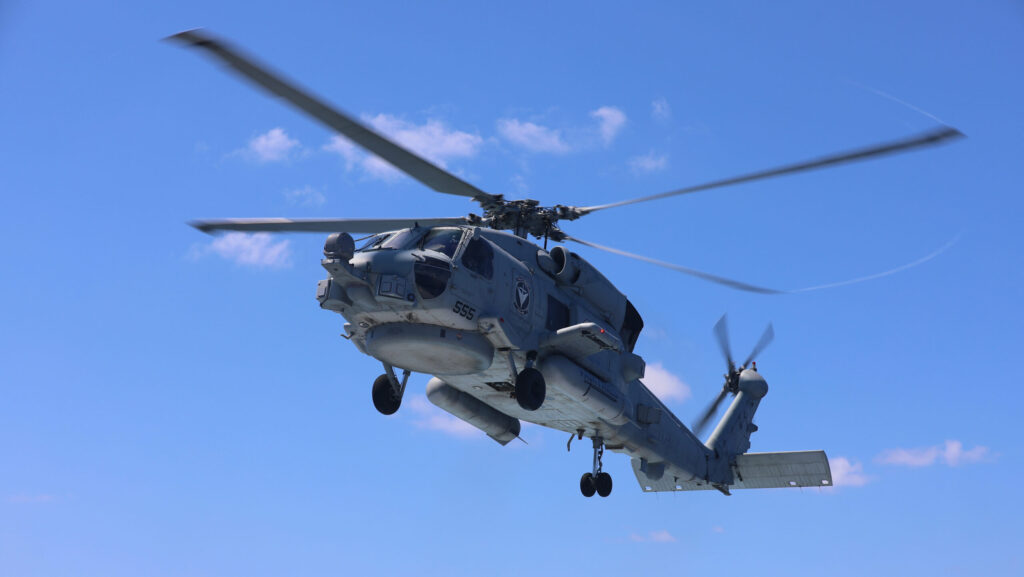
WASHINGTON — A clear picture has not yet emerged of just how much the Pentagon plans to spend on enhanced counter-drug operations inside its US South Command area, but whatever the costs, there will be plenty of wiggle room for the department to shift funding around, according to a pair of former senior defense officials.
“Once there have been deployment orders — this unit is going to go there for 30 days or 60 days, or 90 days — then the Joint Staff works with the Comptroller office to put costs against that,” one senior defense official told Breaking Defense on Thursday.
“That question [of cost] will come up and probably has an answer, not to the decimal point… but someone is thinking about that question, ‘How much is this going to cost me that I didn’t budget for?” the former official said separately.
When the White House delivered its 2026 budget request to Capitol Hill in late June, it estimated that SOUTHCOM would need slightly less funding next year to cover drug interdiction and counter-drug activities — an estimate that dropped from $355 million in fiscal 2025 down to $350 million in the FY26 budget request.
But fast forward two-and-a-half months and the Trump administration is flowing warships and fighter jets into the region, issuing threats of a new “war” against transnational criminal organizations and targeting small boats it believes are carrying drugs, killing the people abroad.
“The enhanced U.S. force presence in the USSOUTHCOM AOR will bolster U.S. capacity to detect, monitor, and disrupt illicit actors and activities that compromise the safety and prosperity of the United States homeland and our security in the Western Hemisphere,” USMC Col Chris Devine, a senior department spokesman, wrote in a statement to Breaking Defense today.
“These forces will enhance and augment existing Joint Interagency Task Force – South and USSOUTHCOM capabilities to disrupt narcotics trafficking and degrade and dismantle TCOs [transnational criminal organizations] and FTOs [foreign terrorist organizations].”


Undersea superiority: ASELSAN’s integrated approach to naval defense
As global navies adapt to evolving underwater threats, ASELSAN’s integrated sonar, countermeasure, and sonobuoy solutions offer a scalable, future-ready approach.
An official, comprehensive list of just what has been sent to the region over the last month is not available, Devine said. However, he noted that among the assets in the region are the Marine Fighting Squadron 225 now in Puerto Rico with F-35B fighters, the Iwo Jima Amphibious Ready Group/22nd Marine Expeditionary Unit and the Ticonderoga-class guided-missile cruiser USS Lake Erie (CG 70).
Joining those vessels in the region, he added, are the Arleigh Burke-class guided-missile destroyers USS Jason Dunham (DDG 109), USS Gravely (DDG 107), USS Sampson (DDG 102) and embarked US Coast Guard Law Enforcement Detachment teams. Additional unspecified air assets are also being used in the region to detect, monitor and strike targets.
So far, the Pentagon has not responded to questions about just how much it expects to spend on this enhanced presence in the region. But depending on the scope and duration of the operations, reshuffling money may not pose a massive hurdle and there are multiple options on the table, according to both former defense officials who spoke with Breaking Defense this week.
The first option, both explained, is shifting operation and maintenance money inside the defense budget. But since combatant commands, like SOUTHCOM, do not control this money, it will be up to the services to reprioritize spending.
“The DoD O&M [operation and management] budget is north of $250 billion,” the first former senior defense official said. “So, if [these new operations hypothetically] cost $100 million, it’s just not that big a problem to find.”
“O&M funding is legally quite flexible … You can take, for example, a Navy O&M budget and say,’ You know what, I was going to sort of have half my ships in the Atlantic this year and half my ships in the Pacific but things have changed. I want them all in the Pacific this year.’ Totally legal as long as you have the money to absorb,” the first former official added.
But there can be tradeoffs, the second former defense official said, and a service, like the Navy, might have to forgo training and exercise plans to pay for the cost of the operations.
This isn’t the only avenue open to the department to pay for its enhanced presence in SOUTHCOM, the duo separately emphasized. The Pentagon could potentially use dollars from the recently approved reconciliation bill that included $1 billion for military missions for border security and counter-drug operations, get financial support from the Department of Homeland Security or request new supplemental funding for the mission.
“There are various ways the DOD could be paid back later for financing the activities now,” the second former defense official said. “All of those are plausible paths.”