Global

Amid European drone incursions, ammo maker Nammo beefs up security: CEO

A spate of Russian drone incursions across Europe along with other uncrewed aerial system sightings disrupting critical infrastructure, including several airports, has led to NATO bolstering its presence on the Eastern Flank.

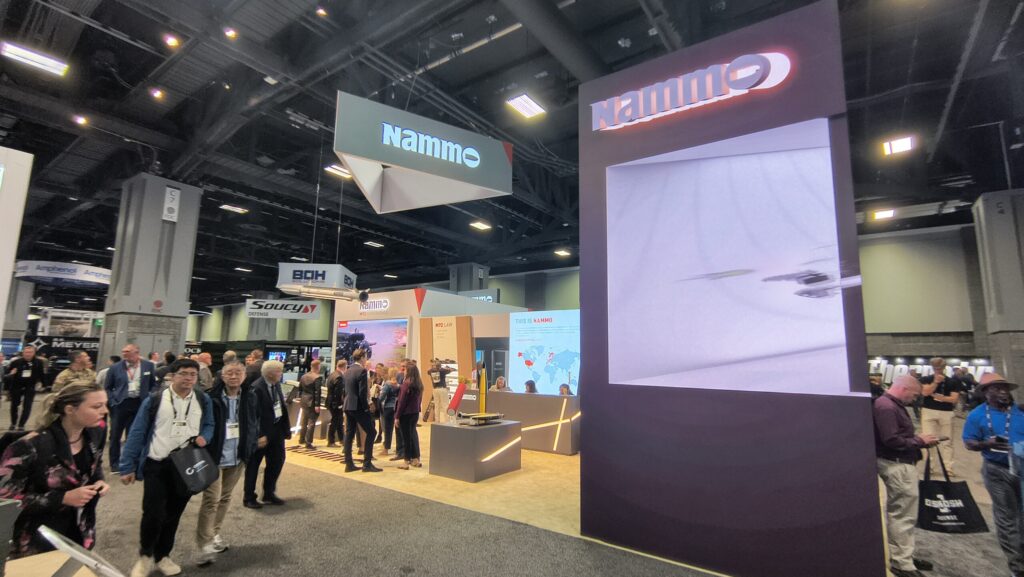
Norway's Nammo displays its assortment of weapon systems at the AUSA show floor (Breaking Defense)

AUSA 2025 — Norwegian-Finnish manufacturer Nammo, one of Europe’s major producers of ammunition, is taking additional measures to protect company production sites and supply chains in response to critical infrastructure threats that have put Europe on high alert, according to the company’s CEO.

Like “some of our [other] Western companies, we are focused more and more on security of our production sites in all kind of forms,” Morten Brandtzæg told Breaking Defense Tuesday. “We are focusing on the security of our personnel. We are making sure that we have robust supply chains and that we have a solid raw material situation.”

He added that based on what “we hear from many local intelligence sources,” Nammo “must be prepared more in the future to protect our production assets.”

The uplift to production base security measures have not involved “extremely costly” investments, said Brandtzaeg, though he did not disclose how specific changes have been implemented.

A spate of Russian drone incursions across Europe along with other uncrewed aerial system sightings disrupting critical infrastructure, including several airports, has led to NATO bolstering its presence on the Eastern Flank. Additionally, the European Union has floated a drone wall initiative, involving a multi-layered, ground-based air defense approach that leans heavily on counter uncrewed aerial system (C-UAS) capabilities.

“The most important thing we produce” for the C-UAS market is air burst ammunition, said Brandtzæg. “We will see a multiple of technologies” take on greater significance going forward, “anything from jamming to changing the direction of it [drone aircraft] to taking it down in all different phases of the flight and so on.”

Regarding other business, Nammo is set to sign a highly lucrative and long-term ammunition contract with a Nordic nation by quarter one 2026, Brandtzæg revealed.

“An example for a possible artillery contract for a Nordic country typically is worth about 1.5 billion euro [1.74 billion USD]” he said.

The new deal follows on from a strategic partnership agreement struck between Denmark, Finland, Norway and Sweden in June, opening the way for a triple production rate of ammunition from the four nations.

And in the US, Nammo broke ground last week on a new motor rocket facility in Perry, Fla.

“The ambition for us is to continue to supply our prime [industry customers] in the US with our rocket motor competence and in order to do that in a good way, we are investing $200 million” of internal funds, said Brandtzæg.

RTX’s Raytheon awarded Nammo and Northrop Grumman contracts in April that could let them each build out Mk72 solid rocket motor production lines. The US Navy relies on the Mk72 for initial thrust on its Standard Missile, but industrial base constraints have led to a push for new sources of solid rocket motors — beyond L3Harris — the current Mk72 manufacturer.


PHOTOS: AUSA 2025

PHOTOS: AUSA 2025

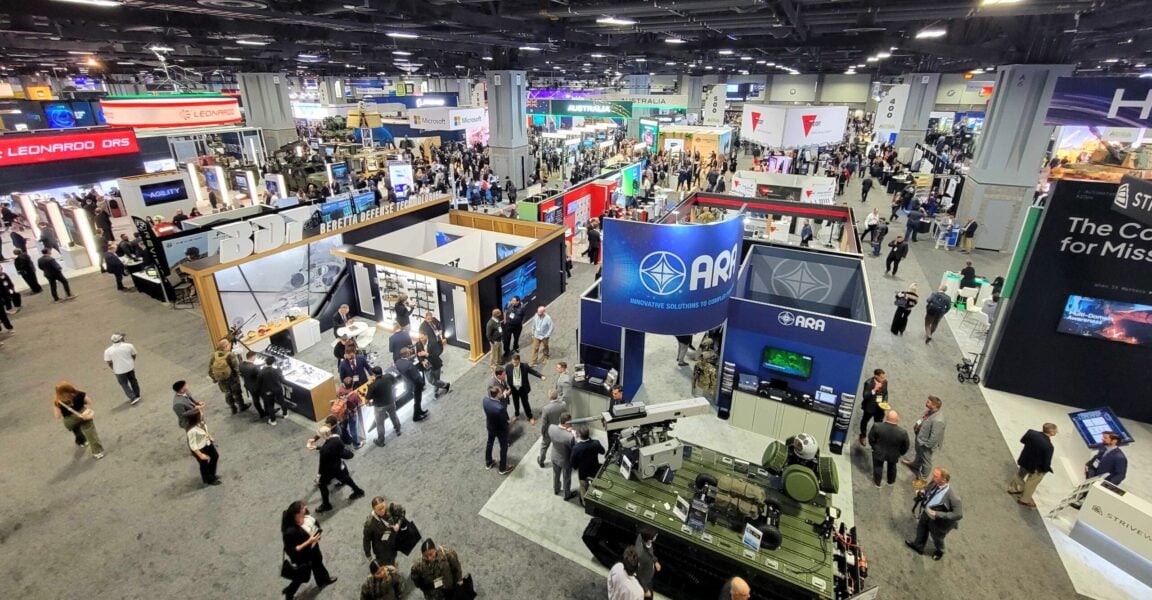
A view of a show floor at the 2025 Association of the US Army's Annual Meeting & Exposition in Washington, DC, Oct. 13, 2025. (Rachel Cohen/Breaking Defense)
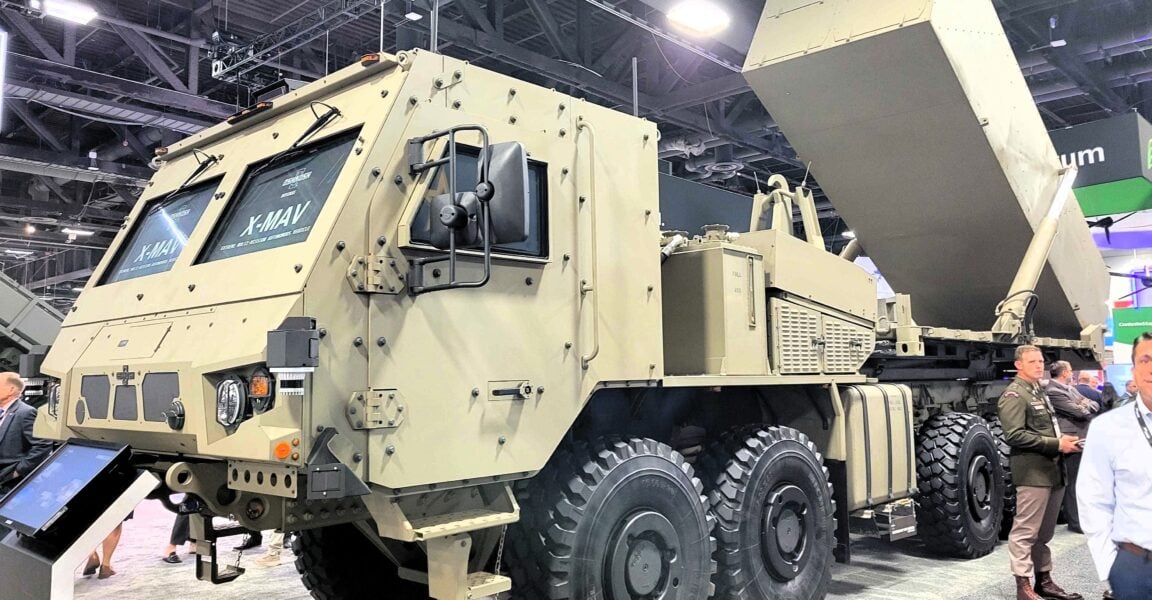
Oshkosh Defense debuts its Extreme Multi-Mission Autonomous Vehicle (X-MAV), an "autonomous-capable launcher solution that is engineered to support the future of long-range munitions," Oct. 13, 2025, at the Association of the US Army's Annual Meeting & Exposition in Washington, DC. (Rachel Cohen/Breaking Defense)
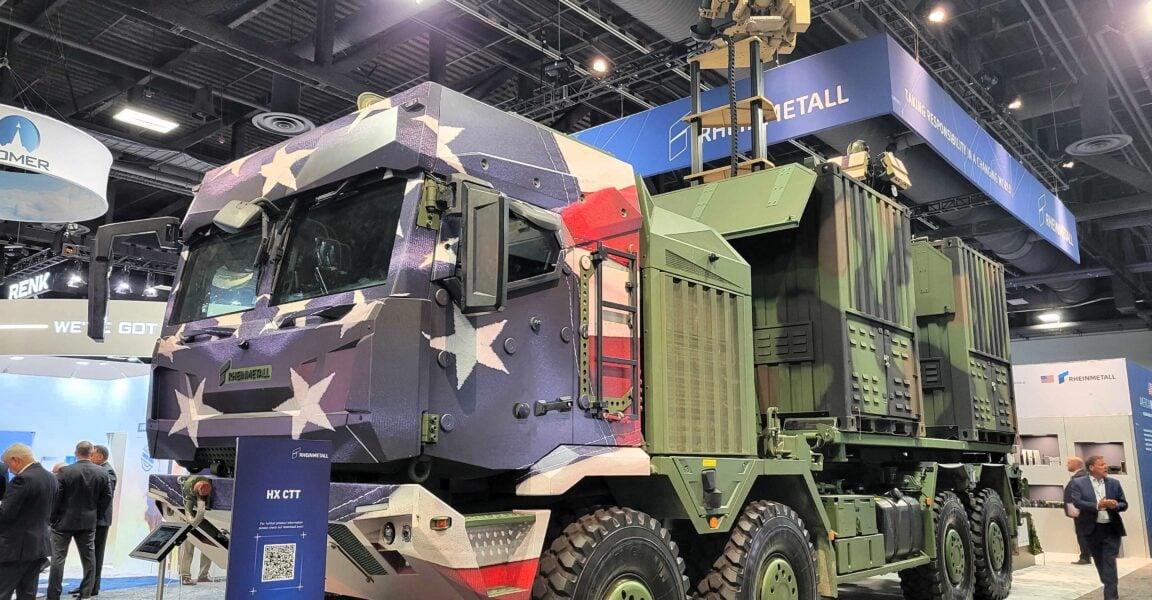
Rheinmetall brought its HX Common Tactical Truck, built in partnership with GM Defense, to the Association of the US Army's Annual Meeting & Exposition, Oct. 13, 2025. (Rachel Cohen/Breaking Defense)
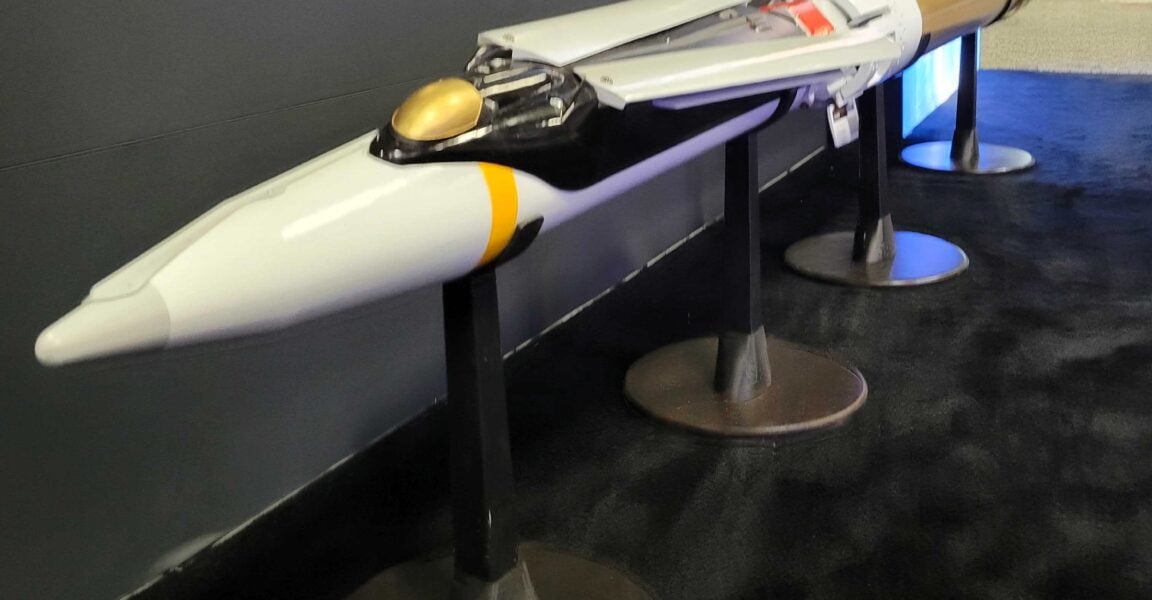
Saab's Ground-Launched Small Diameter Bomb is based on Boeing's SDB and Lockheed Martin's Multiple Launch Rocket System. (Rachel Cohen/Breaking Defense)
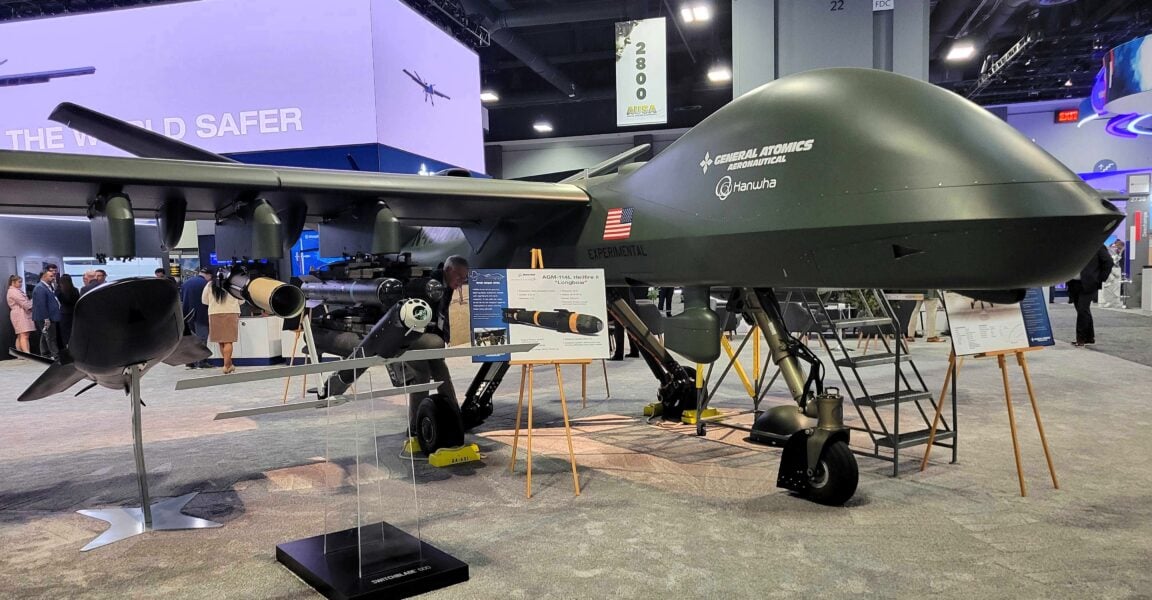
General Atomics Aeronautical Systems and Hanwha Aerospace are collaborating on a short takeoff-and-landing version of the MQ-1C Gray Eagle drone. (Rachel Cohen/Breaking Defense)
Rafael's Iron Beam is a 100kW-class laser weapon on track for operational use this year. (Aaron Mehta/Breaking Defense)
Honeywell's SAMURAI anti-drone system is one of myriad counter-drone technologies on display at AUSA 2025. (Daniel Woolfolk/Breaking Defense)
Hanwha Defense USA pitches its 155 mm, 52-caliber K9 Thunder self-propelled howitzer at the Association of the US Army's Annual Meeting & Exposition in Washington, DC. (Rachel Cohen/Breaking Defense)
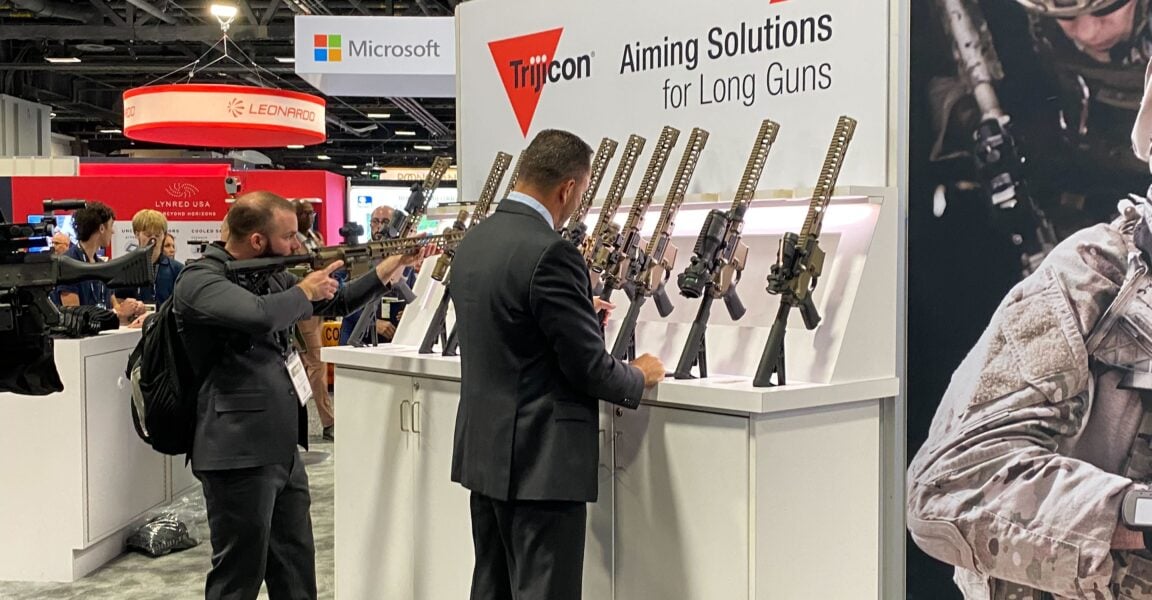
Conference attendees try out Trijicon's firearm sights and scopes. (Aaron Mehta/Breaking Defense)
Attendees roam the halls of the Walter E. Washington Convention Center in downtown Washington, DC, Oct. 13, 2025. (Daniel Woolfolk/Breaking Defense)
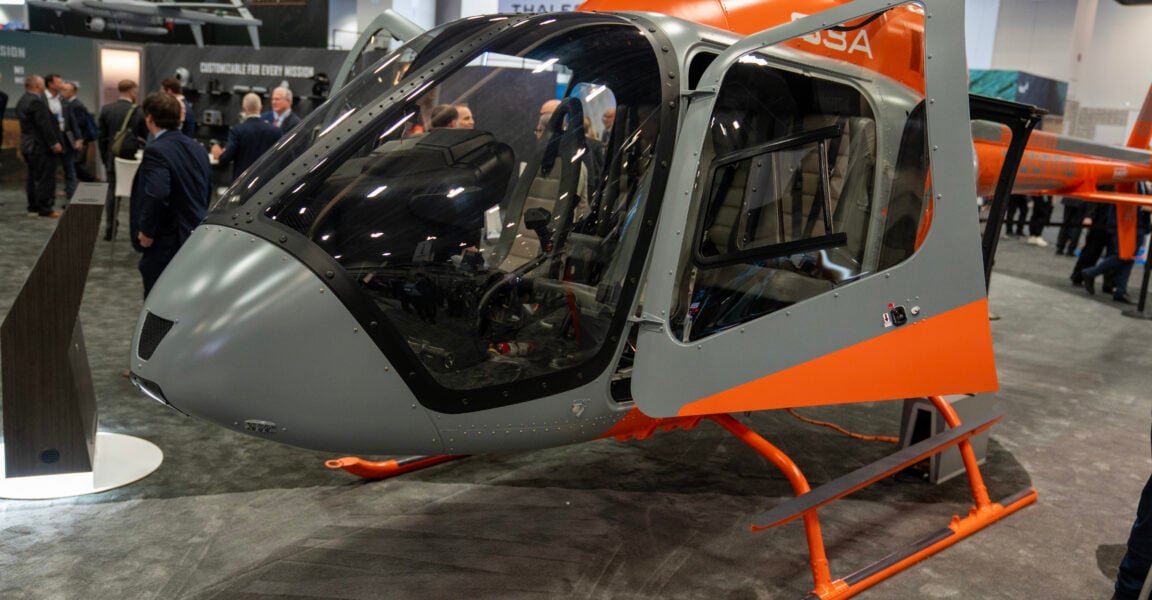
The Bell 505 Jet Ranger X is a contender for the Army's Flight School Next program. (Daniel Woolfolk/Breaking Defense)
GM Defense's Infantry Squad Vehicle-Utility is based on the Chevrolet Colorado ZR2 and can be adapted to carry mortars, counter-drone equipment and more. (Aaron Mehta/Breaking Defense)
Name a more iconic duo. I'll wait. (Aaron Mehta/Breaking Defense)
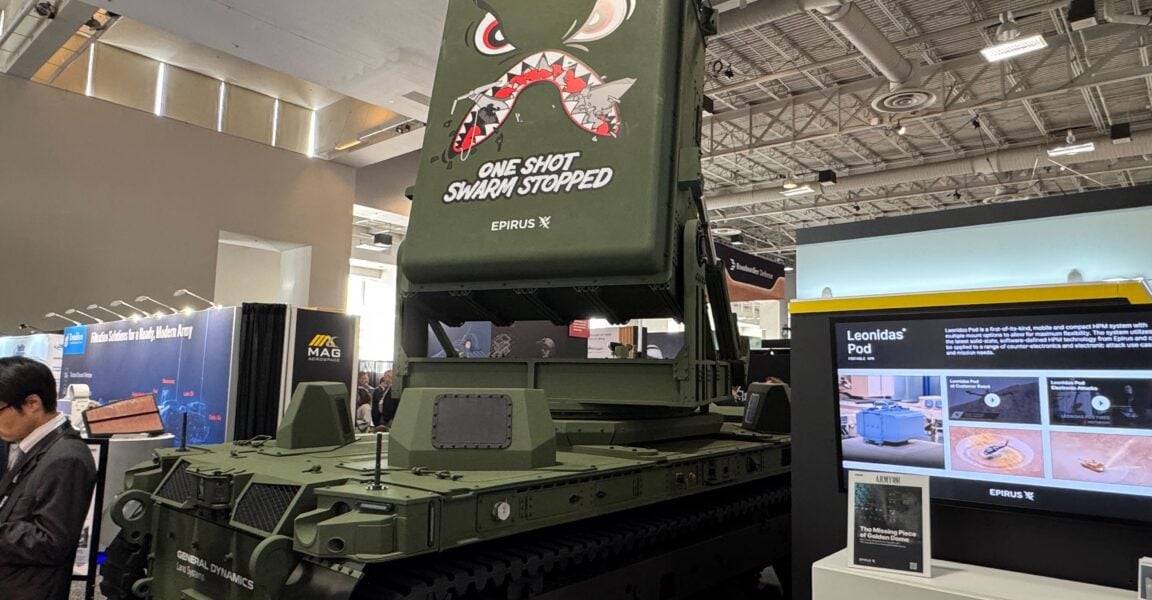
Epirus’s Leonidas high-powered microwave system is mounted on top of a General Dynamics land vehicle. (Michael Marrow/Breaking Defense)
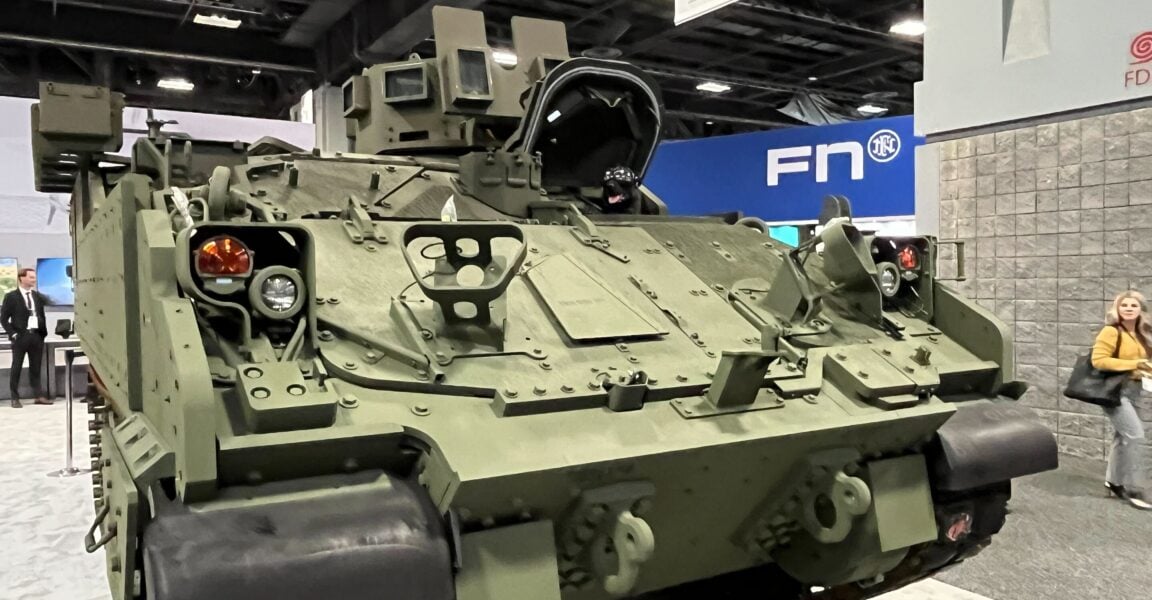
A four-legged attendee checks whether the infantry carrier variant of BAE Systems' Armored Multi-Purpose Vehicle can also carry canines. (Sydney Freedberg/Breaking Defense)
It wouldn't be a defense trade show in 2025 without a robot dog on hand. (Aaron Mehta/Breaking Defense)
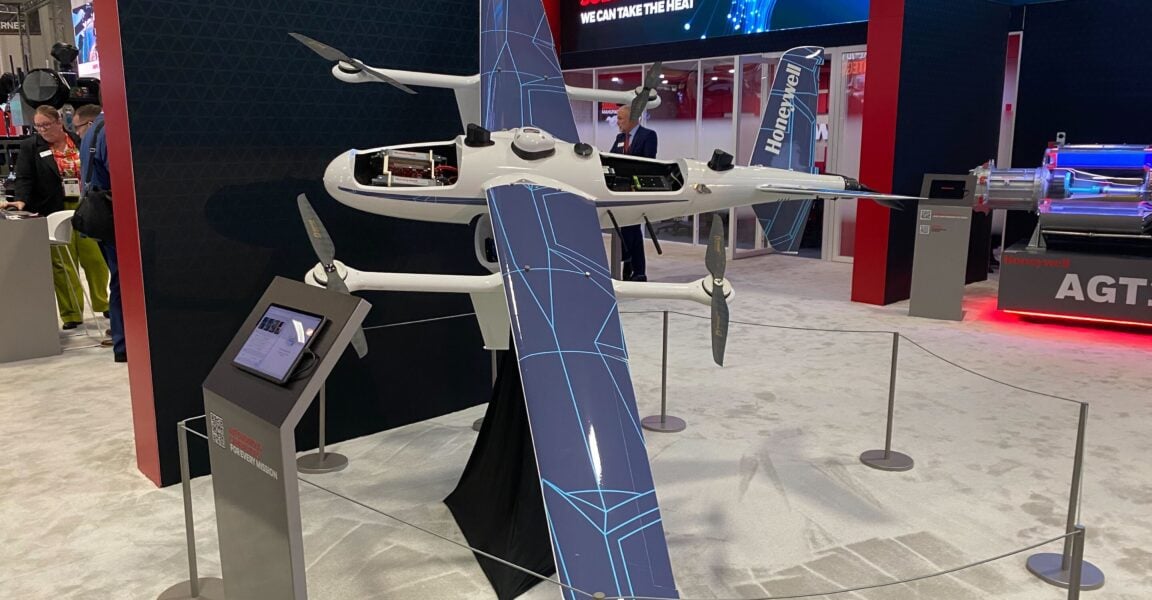
Honeywell showcases a hybrid quadcopter/fixed-wing drone on the show floor. (Aaron Mehta/Breaking Defense)
RTX displays its missiles and a Lower Tier Air and Missile Defense Sensor. (Aaron Mehta/Breaking Defense)