Air Warfare

Lockheed, Germany’s Diehl sign PAC-3 MSE pact to boost supply chain resilience

The Memorandum of Understanding, inked here on the floor of the annual AUSA exposition, puts in motion a push to build out greater supply chain resilience for the in demand weapon system.

A Medium Extended Air Defense System missile is launched to intercept a target during a MEADS test at White Sands Missile Range Nov. 29. (John Hamilton / White Sands Missile Range Public Affairs)

AUSA 2025 — Lockheed Martin and German manufacturer Diehl Defense signed a pact today for “collaboration opportunities” to expand the Patriot Advanced Capability-3 (PAC-3) Missile Segment Enhancement (MSE) interceptor global supply chain.

The Memorandum of Understanding, inked here on the floor of the annual AUSA exposition, puts in motion a push to build out greater supply chain resilience for the in-demand weapon system, which is used for taking out ballistic and cruise missiles as well as neutralizing hypersonic threats.

It is “essential” to have a “dual source, maybe a third source … supply chain management capability in order to ramp up quickly … to bring more material in the market or in Europe supporting Ukrainian civilians for the fight against the Russians,” Torsten Cook, senior vice president for ground-based air defense at Diehl, told Breaking Defense. 

The MoU with Lockheed Martin is a “first step” to delivering on such an ambition, he shared, stressing that sourcing “European components” for PAC-3 MSE will be prioritized.

Cook also shared that Lockheed could “participate” on a “local footprint in Germany” by investing in the supply of thermal batteries. Diehl subsidiary Eagle Pitcher supplies the equipment on PAC-3 and a host of weapon systems including Stinger, IRIS-T and the Evolved SeaSparrow Missile (ESSM), according to company literature [PDF]. 

The US and Germany belong to a group of 17 partner nations that have selected the advanced Patriot interceptor, according to a Lockheed Martin statement.

As Breaking Defense previously reported, the US giant secured a $9.8 billion award for the production of nearly 2,000 PAC-3 MSE interceptors and supporting hardware in September.

In a related development, Boeing announced today that it has been awarded multiyear contracts, valued at an estimated $2.7 billion for additional PAC-3 seekers. More than 3,000 seekers, based on a production rate of 750 units annually through 2030, will be manufactured as a result, the company shared in a statement.

“Boeing is working closely with prime contractor Lockheed Martin and the U.S. Army to further increase production rates and meet new targets for the PAC‑3 interceptor,” added Boeing. “Scaling seeker output is critical to ensuring the Patriot system can continue to defend service members, civilians and critical infrastructure worldwide as threats proliferate.”

PHOTOS: AUSA 2025

PHOTOS: AUSA 2025

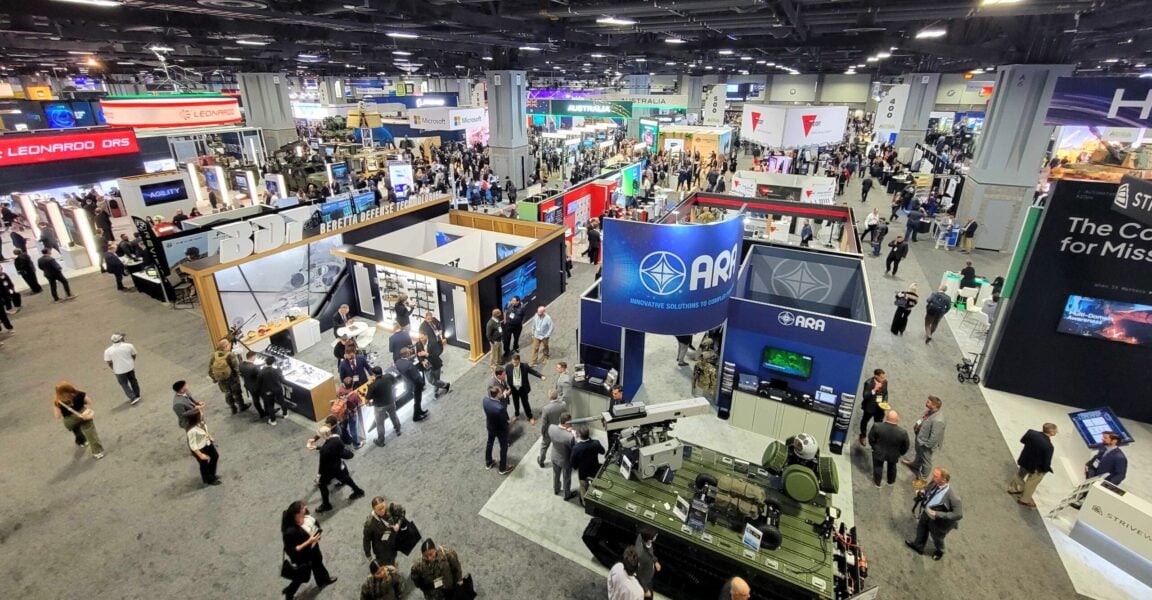
A view of a show floor at the 2025 Association of the US Army's Annual Meeting & Exposition in Washington, DC, Oct. 13, 2025. (Rachel Cohen/Breaking Defense)
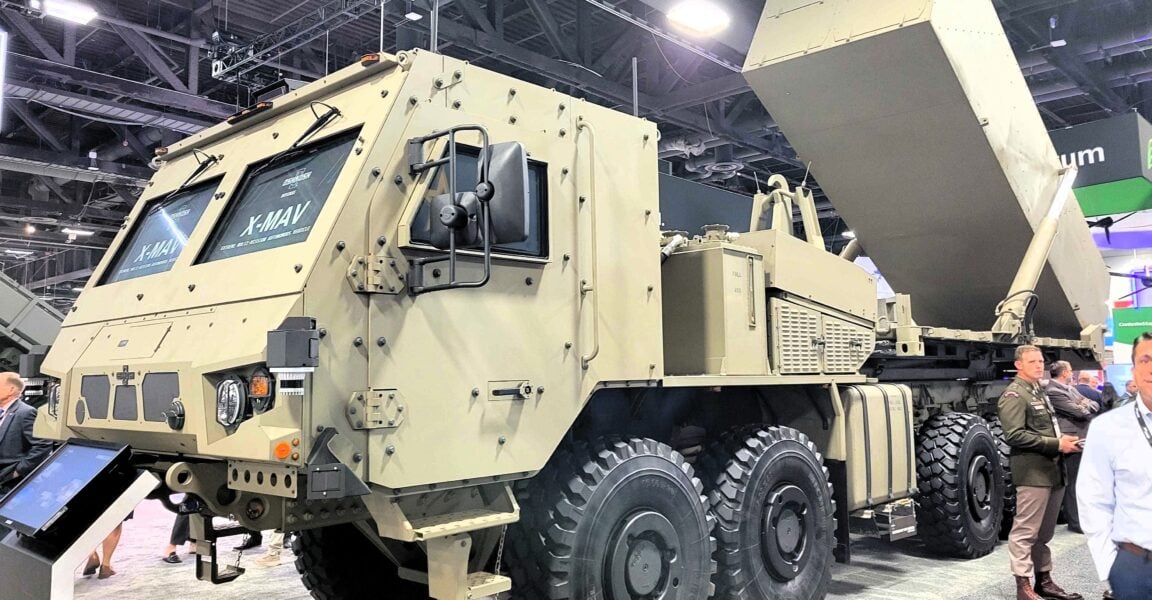
Oshkosh Defense debuts its Extreme Multi-Mission Autonomous Vehicle (X-MAV), an "autonomous-capable launcher solution that is engineered to support the future of long-range munitions," Oct. 13, 2025, at the Association of the US Army's Annual Meeting & Exposition in Washington, DC. (Rachel Cohen/Breaking Defense)
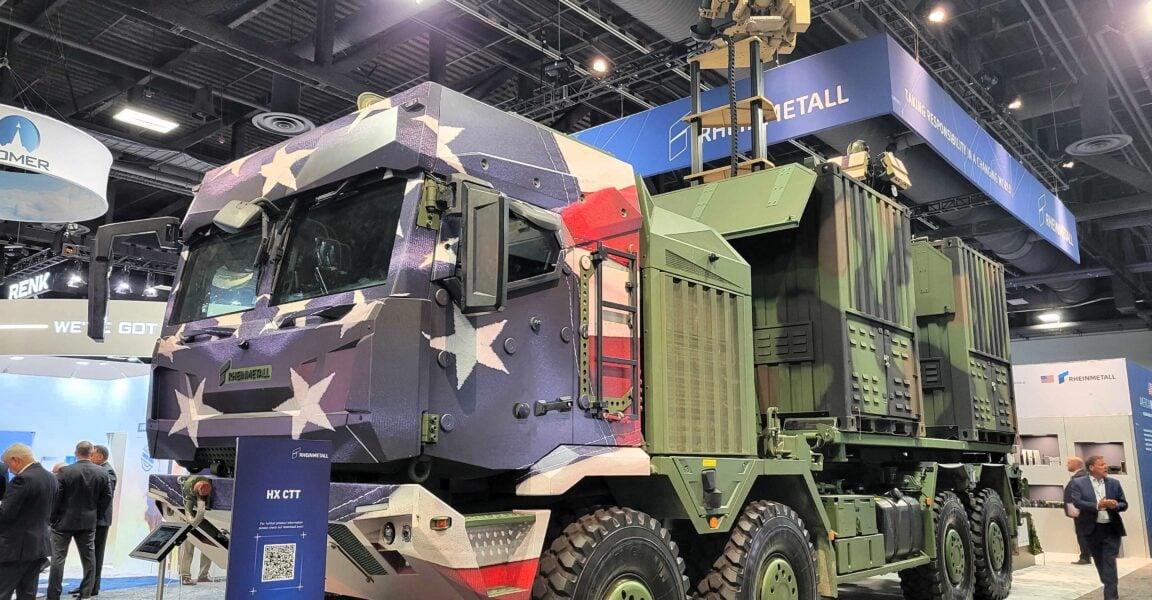
Rheinmetall brought its HX Common Tactical Truck, built in partnership with GM Defense, to the Association of the US Army's Annual Meeting & Exposition, Oct. 13, 2025. (Rachel Cohen/Breaking Defense)
Saab's Ground-Launched Small Diameter Bomb is based on Boeing's SDB and Lockheed Martin's Multiple Launch Rocket System. (Rachel Cohen/Breaking Defense)
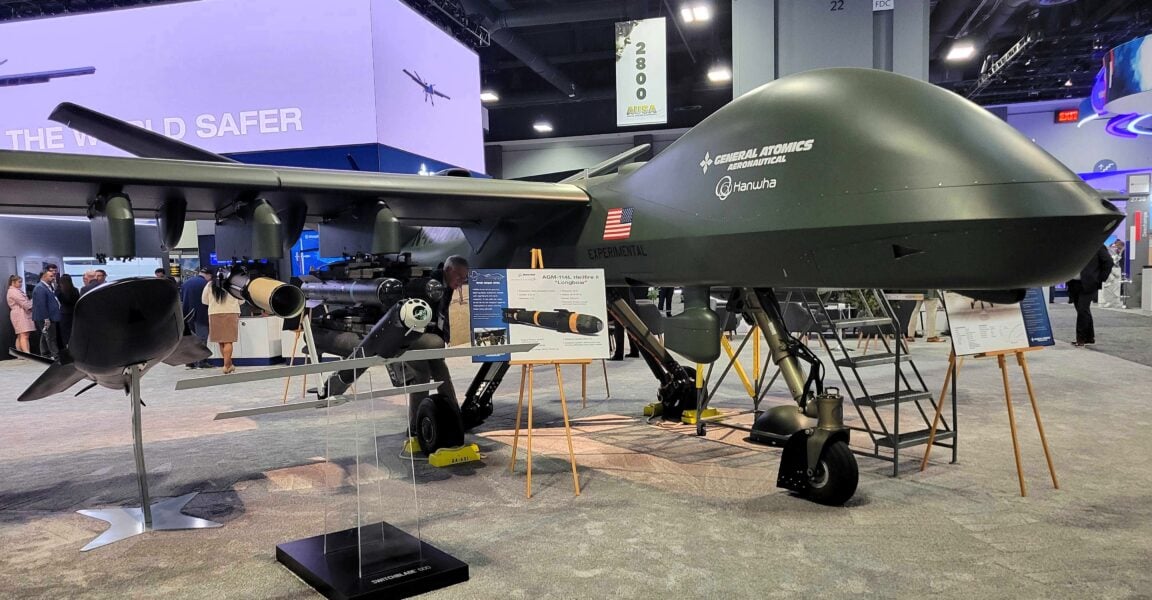
General Atomics Aeronautical Systems and Hanwha Aerospace are collaborating on a short takeoff-and-landing version of the MQ-1C Gray Eagle drone. (Rachel Cohen/Breaking Defense)
Rafael's Iron Beam is a 100kW-class laser weapon on track for operational use this year. (Aaron Mehta/Breaking Defense)
Honeywell's SAMURAI anti-drone system is one of myriad counter-drone technologies on display at AUSA 2025. (Daniel Woolfolk/Breaking Defense)
Hanwha Defense USA pitches its 155 mm, 52-caliber K9 Thunder self-propelled howitzer at the Association of the US Army's Annual Meeting & Exposition in Washington, DC. (Rachel Cohen/Breaking Defense)
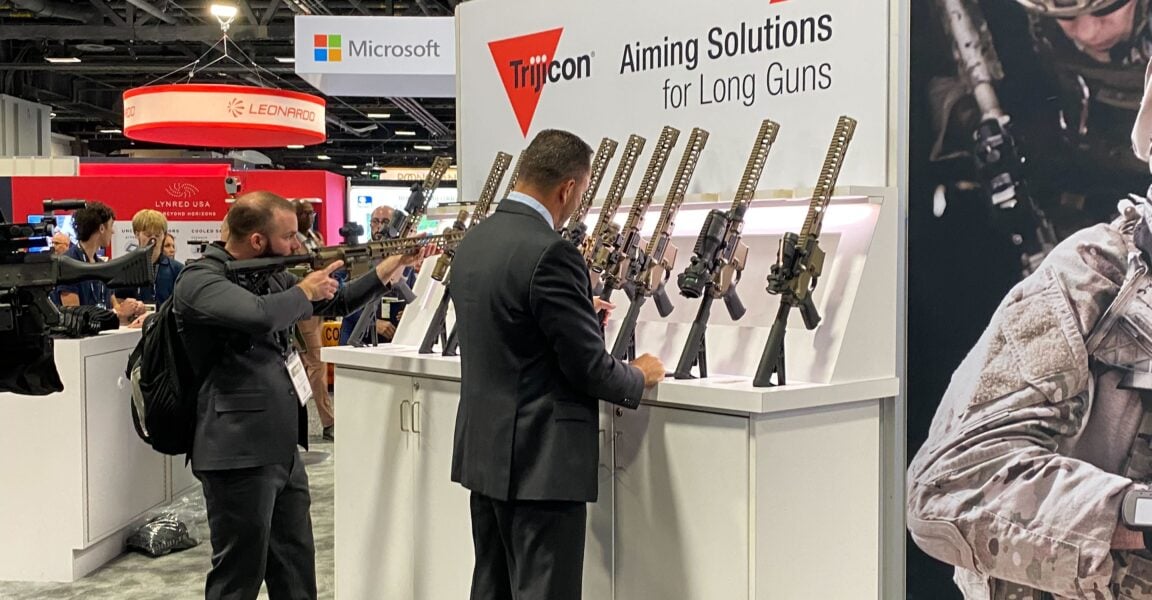
Conference attendees try out Trijicon's firearm sights and scopes. (Aaron Mehta/Breaking Defense)
Attendees roam the halls of the Walter E. Washington Convention Center in downtown Washington, DC, Oct. 13, 2025. (Daniel Woolfolk/Breaking Defense)
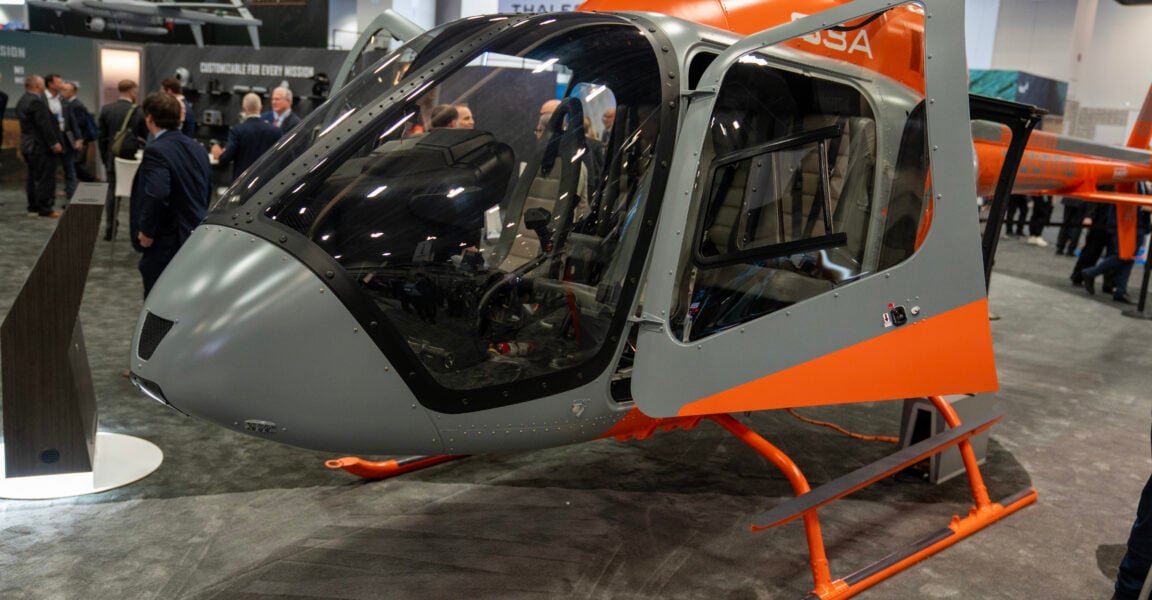
The Bell 505 Jet Ranger X is a contender for the Army's Flight School Next program. (Daniel Woolfolk/Breaking Defense)
GM Defense's Infantry Squad Vehicle-Utility is based on the Chevrolet Colorado ZR2 and can be adapted to carry mortars, counter-drone equipment and more. (Aaron Mehta/Breaking Defense)
Name a more iconic duo. I'll wait. (Aaron Mehta/Breaking Defense)
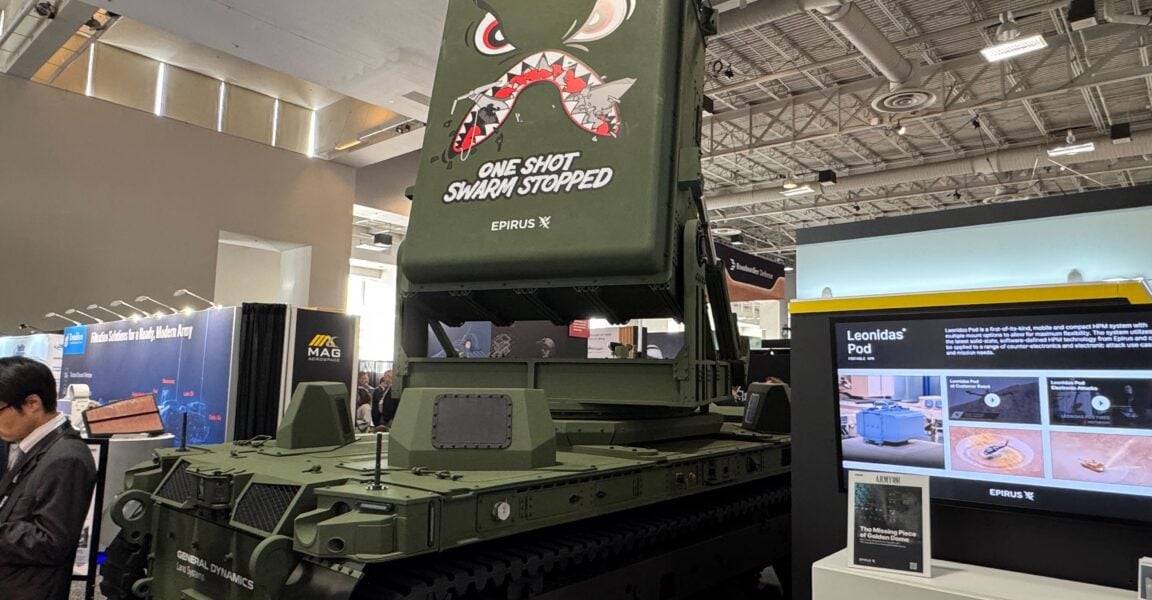
Epirus’s Leonidas high-powered microwave system is mounted on top of a General Dynamics land vehicle. (Michael Marrow/Breaking Defense)
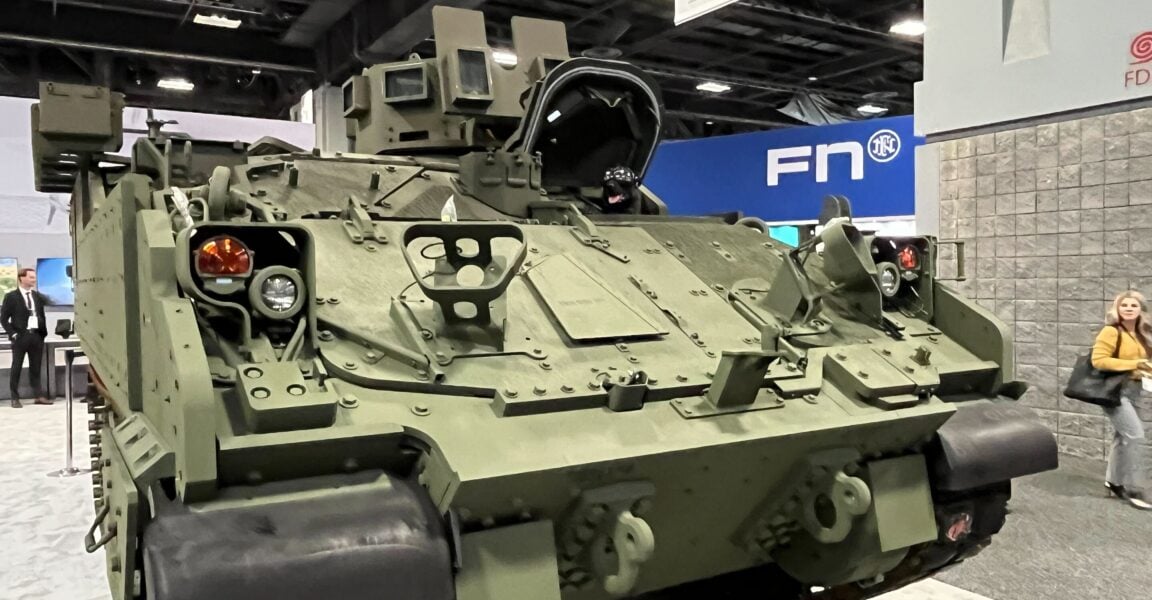
A four-legged attendee checks whether the infantry carrier variant of BAE Systems' Armored Multi-Purpose Vehicle can also carry canines. (Sydney Freedberg/Breaking Defense)
It wouldn't be a defense trade show in 2025 without a robot dog on hand. (Aaron Mehta/Breaking Defense)
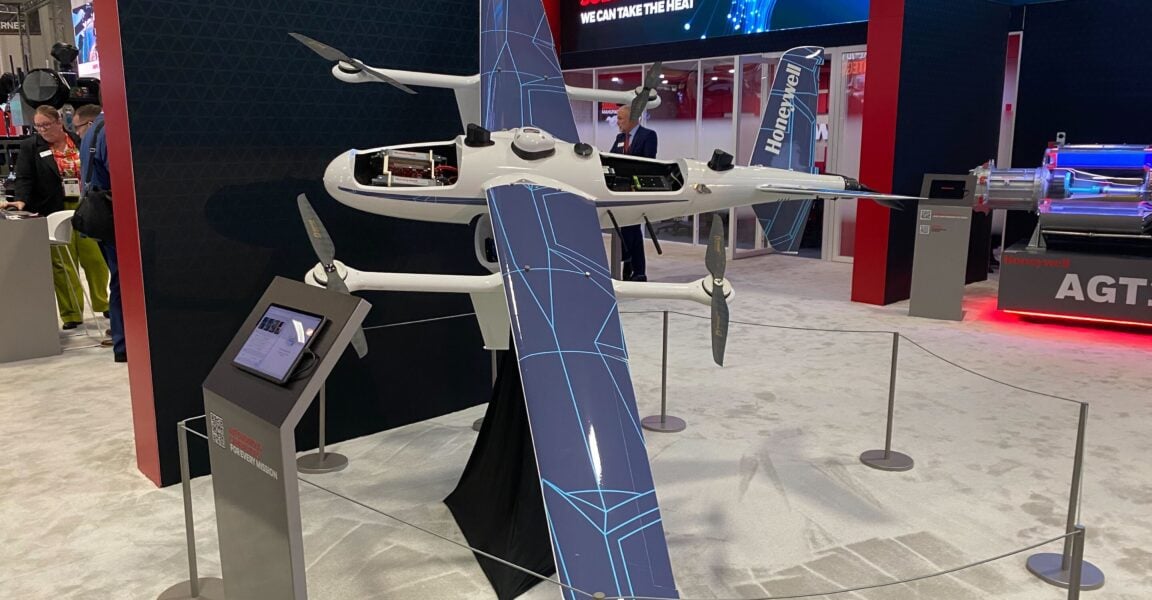
Honeywell showcases a hybrid quadcopter/fixed-wing drone on the show floor. (Aaron Mehta/Breaking Defense)
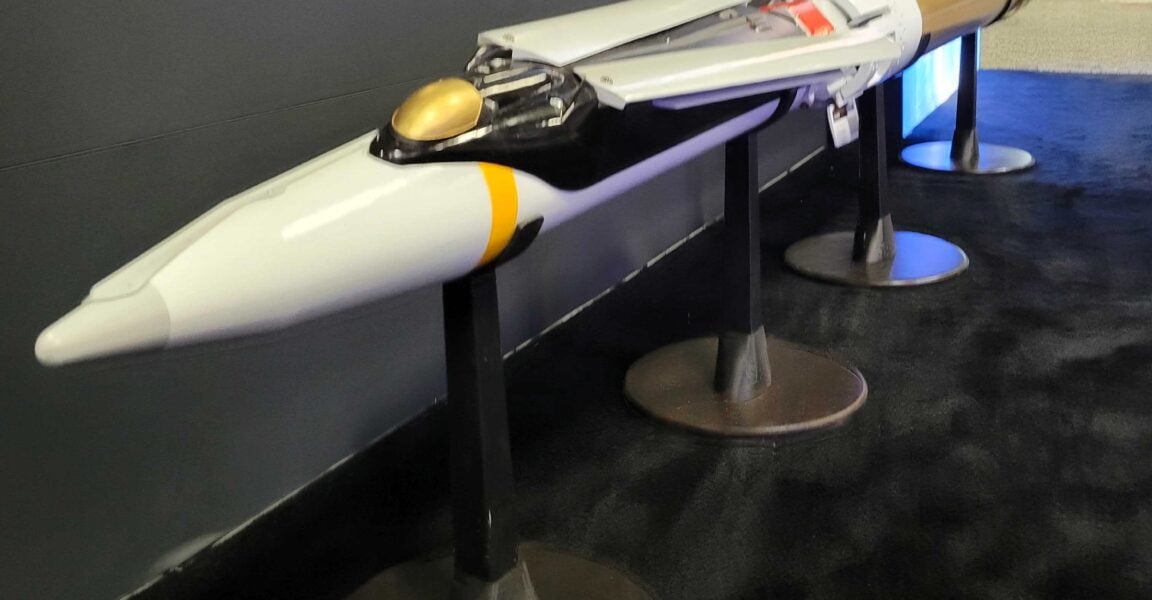
RTX displays its missiles and a Lower Tier Air and Missile Defense Sensor. (Aaron Mehta/Breaking Defense)