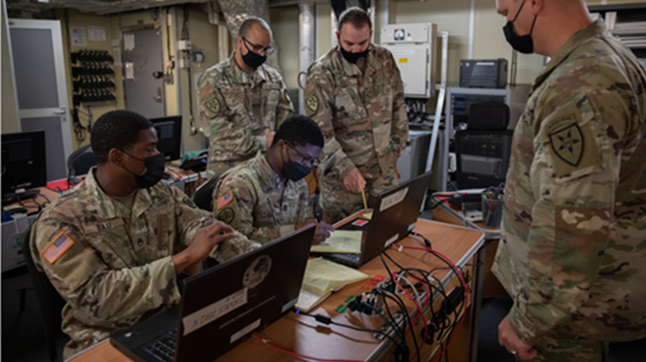
WASHINGTON — Special Operations Command Pacific is running its first ever artificial intelligence boot camp this week, in an effort to familiarize officials with how it can be useful everyday, according to the organization’s commander.
“The reasons why AI adoption has been difficult for us is because we’re creatures of habit, one. A lot of us have been at this for 20 or 30 years, you’ve developed workflows and processes, and we fear change,” Maj. Gen. Jeffrey VanAntwerp said Tuesday at AFCEA’s TechNet Indo-Pacific conference in Hawaii. “We don’t want to do something differently. It seems inefficient at first. At first, potentially, we don’t even trust it. We don’t trust the results. The second one, I think is equally as big, if not bigger, is that we don’t know how. We don’t know how to do the new thing.”
Indo-Pacific Command does not have a choice when it comes to adopting AI, VanAntwerp said, noting that commander Adm. Samuel Paparo has directed INDOPACOM be an AI-enabled command.
The AI boot camp this week will pull in directors and deputy directors for four days with experts teaching them how to make sense of some of the large language models the command has at its top secret, secret and unclassified enclaves.
VanAntwerp said he hopes the excitement of experts and others coming in will “infect” directors and deputy directors to be a catalyst within the headquarters as they metastasize AI usage, given it is an incredibly powerful tool.
But, he clarified, AI won’t be the decision maker, instead serving as an aid to decision making.
Other important technologies for the region include the combination of robotics, autonomy and the network that will enable the command and control of these capabilities.
“The combination of those three things — robotics, autonomy and resilient networks — we think are absolutely critical for us. As I mentioned, the ability to disrupt our adversaries’ ability to target us, that is the oxygen that we require to operate in this theater,” he said.
Lessons from how China is approaching emerging technology and using sensors to process information from the sea floor to space are instructive for how US and friendly forces will have to be successful in the region.
“The really important part … is all that information you gather it’s great, but it’s meaningless if you can’t transport it to somewhere where you can then make a coherent picture out of it,” VanAntwerp said. “If we can’t understand what’s going on and have ability to make a coherent picture out of that information, which does require a resilient network, then it will be ultimately meaningless, or you will have just disparate elements that are operating without awareness of their job within the bigger picture.”